
Anticholinergic Burden Calculator
Calculate Your Anticholinergic Burden
Anticholinergic burden measures the cumulative effect of medications that block acetylcholine. The Anticholinergic Cognitive Burden (ACB) Scale rates drugs from 0 (no effect) to 3 (definite high effect). Total ACB ≥ 3 indicates increased risk of cognitive decline and cardiac issues.
Your Anticholinergic Burden Score
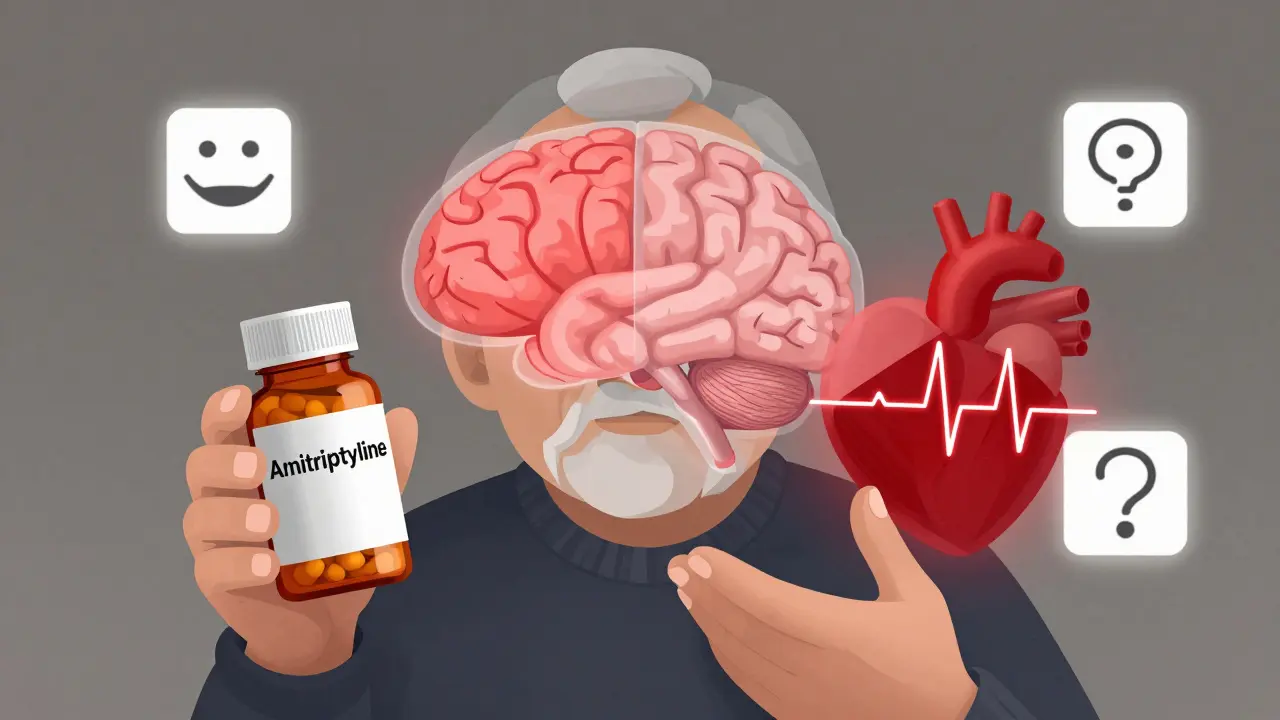
When you take a tricyclic antidepressant like amitriptyline or nortriptyline for depression or nerve pain, you might not realize you're also loading your body with a hidden risk - one that can blur the lines between normal aging and early dementia, or trigger a dangerous heart rhythm without warning. These drugs work by boosting serotonin and norepinephrine, but they also block acetylcholine, a key brain and body chemical. This blockade isn't minor. It’s powerful. And it adds up.
What Is Anticholinergic Burden?
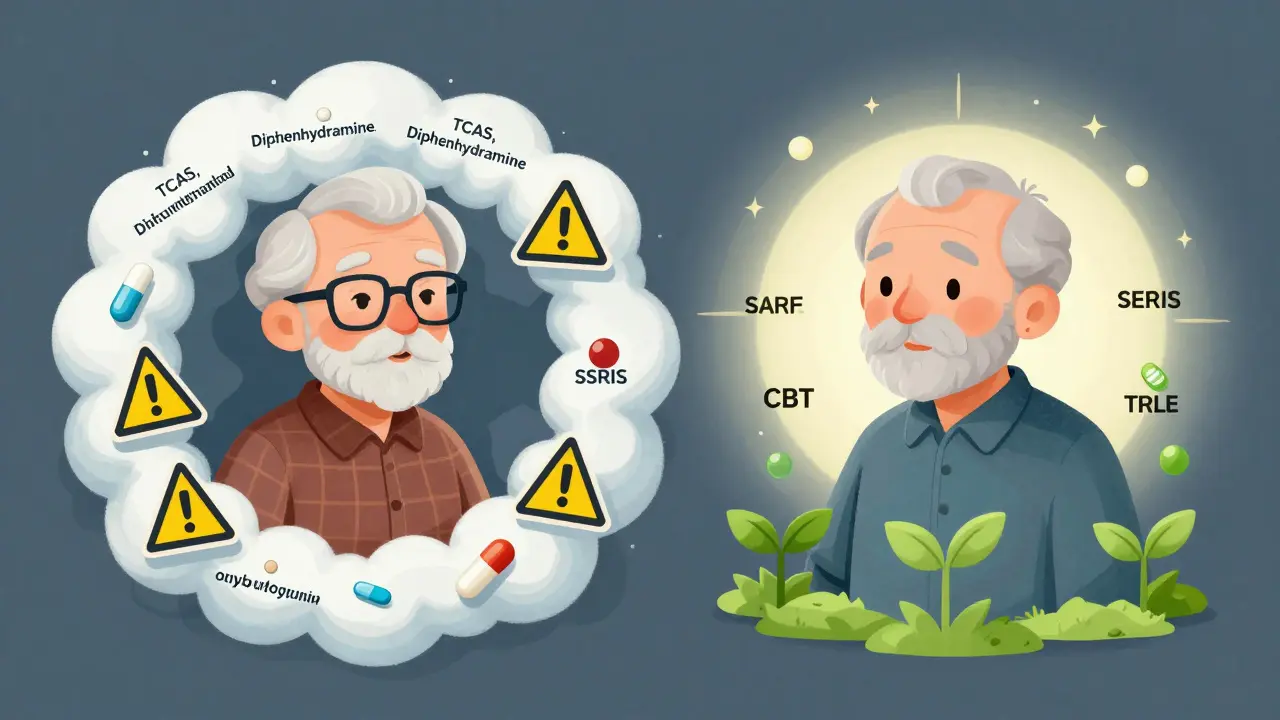
Anticholinergic burden is the total effect of all the medications in your system that block acetylcholine. Think of it like stacking up small doses of dry mouth, blurred vision, constipation, confusion, and racing heartbeat. Over time, these effects don’t just fade - they build. Tricyclic antidepressants (TCAs) are among the worst offenders. On the Anticholinergic Cognitive Burden (ACB) Scale, amitriptyline and nortriptyline get the highest score: 3. That means they’re classified as having definite high anticholinergic activity. A single pill can contribute as much as two or three other medications combined.It’s not just TCAs. Over-the-counter sleep aids like diphenhydramine (Nytol®), allergy pills like chlorphenamine (Piriton®), and bladder meds like oxybutynin also score high. But TCAs are especially dangerous because they’re taken daily for months or years - often in older adults who are already on multiple drugs. When you add up even one TCA with a few other anticholinergics, your total ACB score can hit 3 or higher. And that’s where the real danger starts.
Cognitive Risks: Mimicking Dementia
One of the most troubling things about TCAs is how easily their side effects look like dementia. Memory lapses. Trouble finding words. Forgetting where you put your keys. Slowed thinking. These aren’t just annoying - they’re often mistaken for Alzheimer’s or other neurodegenerative diseases. But here’s the catch: in many cases, they’re reversible.A 2022 study tracking over 3,400 adults over 65 found that those taking medications with an ACB score of 3 or higher had a 54% higher risk of developing dementia over seven years. The risk didn’t go away after stopping the drug - some cognitive damage appeared permanent. Clinicians now know to ask: “Is this dementia… or just the meds?” In Reddit forums and doctor groups, there are dozens of stories where patients were flagged for early dementia, only to have their symptoms vanish after switching off amitriptyline. One patient described waking up after 18 months on nortriptyline and realizing she hadn’t remembered her own daughter’s phone number in over a year. After tapering off, her memory returned - slowly, but fully.
The National Institute for Health and Care Excellence (NICE) now explicitly warns doctors to reduce anticholinergic drugs during dementia assessments. If a patient shows signs of cognitive decline, the first step shouldn’t be a brain scan - it should be a medication review. Many cases labeled as dementia are actually drug-induced cognitive impairment. And it’s preventable.
Cardiac Dangers: When the Heart Gets Confused
While the brain suffers quietly, the heart can go into crisis without warning. TCAs act like class 1A antiarrhythmics - meaning they slow electrical signals in the heart. That sounds helpful, until it’s not. They can prolong the QT interval on an ECG, which can trigger torsades de pointes, a life-threatening irregular heartbeat. Amitriptyline, in particular, can stretch the QRS complex by 10-25% at normal doses. In overdose, that jump can hit 50%.Compared to SSRIs like sertraline, TCAs carry about three times the risk of arrhythmias. A 2023 analysis showed amitriptyline was linked to 2.8 times higher risk of QT prolongation than sertraline. For someone with existing heart disease, high blood pressure, or a history of fainting, this isn’t just a side effect - it’s a red flag. There are documented cases of people ending up in the ER after just three weeks on a TCA, with no prior heart issues, only to find their ECG showing dangerous delays in electrical conduction.
These drugs also reduce heart muscle contractility by 15-20%, making the heart work harder. Combine that with dehydration (common from dry mouth), constipation (which strains the vagus nerve), or electrolyte imbalances, and you’ve got a perfect storm for cardiac events. Older adults, especially those on diuretics or with kidney issues, are at highest risk.
Why Are TCAs Still Prescribed?
If the risks are this high, why do doctors still write these prescriptions? Because for some people, they work - and nothing else does.TCAs are still the most effective option for treatment-resistant depression, especially when other antidepressants have failed. They’re also first-line for certain types of chronic pain, particularly neuropathic pain like diabetic nerve pain or post-herpetic neuralgia. For a 70-year-old with severe, unrelenting pain and no response to gabapentin or duloxetine, amitriptyline might be the only thing that brings relief.
But that’s the key: only when other options have failed. The Beers Criteria, used by geriatricians worldwide, lists TCAs as potentially inappropriate for adults over 65 - unless benefits clearly outweigh risks. And even then, the lowest effective dose is used, and heart function is monitored closely.
What Are the Alternatives?
The good news? There are safer, modern options.- SNRIs like duloxetine or venlafaxine have ACB scores of 0 or 1 - nearly zero anticholinergic activity. They’re just as effective for depression and nerve pain, with far fewer brain and heart risks.
- SSRIs like escitalopram or sertraline are also low-risk (ACB 0-1) and are now the default first choice for depression in older adults.
- Non-drug options like cognitive behavioral therapy (CBT), physical therapy for pain, or even mindfulness-based stress reduction can be powerful when paired with or instead of medication.
Even in pain management, newer agents like pregabalin or topical lidocaine patches offer relief without systemic anticholinergic effects. For depression, light therapy or exercise programs have shown comparable results in older adults, with none of the cognitive or cardiac downsides.
What Should You Do?
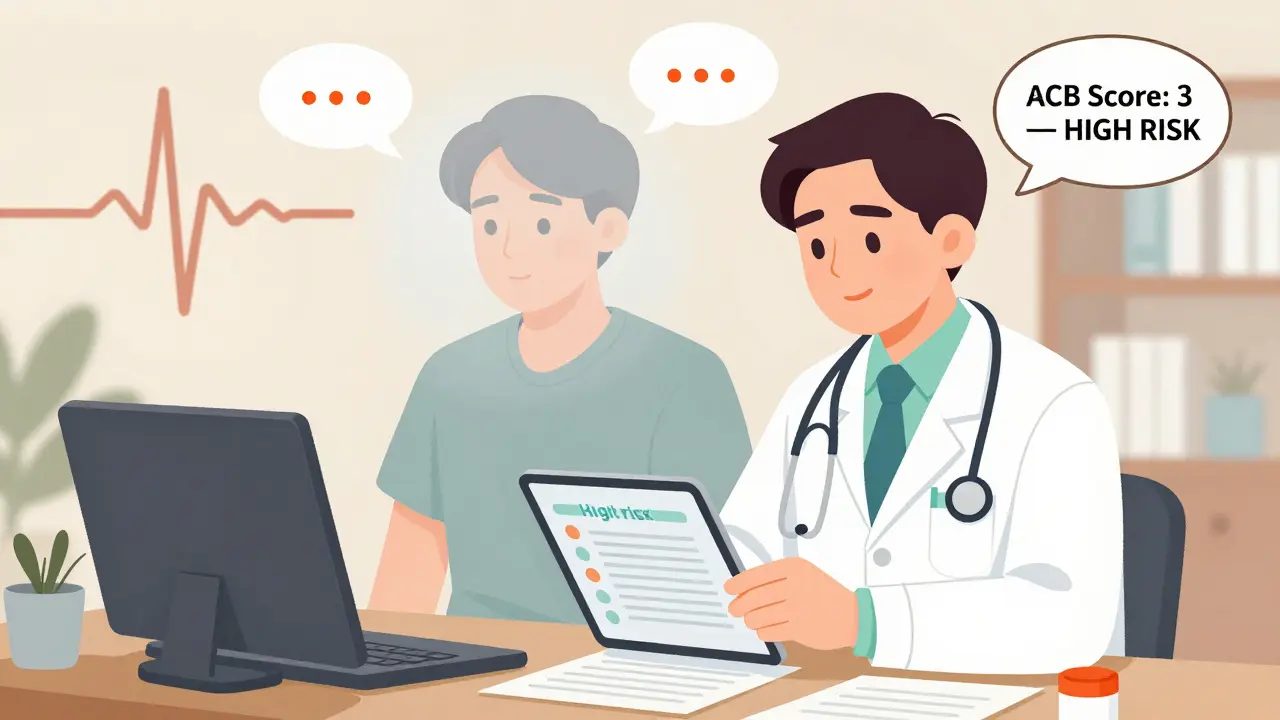
If you’re taking a TCA - especially if you’re over 50 - here’s what to ask your doctor:- What’s my total anticholinergic burden? (Ask for your ACB score - include all prescriptions, OTC meds, and supplements.)
- Is this the best option for me, or have I tried alternatives?
- Can we try lowering the dose or switching to a safer drug?
- Have you checked my heart rhythm (ECG) recently?
- Are my memory issues possibly linked to this medication?
Don’t stop cold turkey. Tapering off TCAs takes 4-8 weeks to avoid withdrawal symptoms like nausea, anxiety, or rebound depression. But if you’re on amitriptyline 75mg daily and have noticed forgetfulness or heart flutters, that’s not normal aging. That’s a signal.
Studies show that when structured deprescribing programs are used - where pharmacists and doctors work together to reduce anticholinergics - 78% of older patients lower their ACB score, and 63% show measurable cognitive improvement within six months. That’s not a miracle. It’s medicine done right.
The Bigger Picture
Prescribing trends tell the story. In 2000, TCAs made up 15% of antidepressant prescriptions in the U.S. By 2020, that number dropped to under 5%. Why? Because doctors learned the cost. It’s not just about side effects - it’s about irreversible harm. The evidence is no longer debatable: long-term anticholinergic exposure increases dementia risk, and cardiac complications are real and deadly.Now, electronic health systems in the UK and U.S. are starting to flag high ACB scores automatically. AI tools are being piloted to warn prescribers before a TCA is even written. The goal isn’t to ban these drugs - it’s to make sure they’re used only when absolutely necessary, and with eyes wide open.
If you’re managing depression or chronic pain, you deserve relief. But you also deserve safety. The days of prescribing TCAs as a first-line option are over. The question now isn’t whether they work - it’s whether the price is worth paying.
Can tricyclic antidepressants cause dementia?
Yes, long-term use of tricyclic antidepressants (TCAs) is strongly linked to increased dementia risk. A major 7-year study of over 3,400 adults over 65 found that those taking medications with a high anticholinergic burden (like TCAs) had a 54% higher chance of developing dementia. The damage may persist even after stopping the drug. TCAs like amitriptyline and nortriptyline are among the most potent anticholinergics, and their effects on acetylcholine can impair memory, attention, and processing speed - symptoms that often mimic early dementia.
Is amitriptyline safe for older adults?
Amitriptyline is generally not recommended for older adults due to its high anticholinergic burden and cardiac risks. It carries an ACB score of 3 - the highest possible - and increases the risk of confusion, falls, urinary retention, constipation, and dangerous heart rhythm changes like QT prolongation. Guidelines like the Beers Criteria and NICE NG97 advise avoiding amitriptyline in people over 65 unless other treatments have failed and the benefits clearly outweigh the risks. Even then, it should be used at the lowest possible dose with regular ECG monitoring.
How do I know if my meds are adding to anticholinergic burden?
Check your medication list against the Anticholinergic Cognitive Burden (ACB) Scale. Common high-score drugs include amitriptyline (ACB=3), nortriptyline (ACB=3), diphenhydramine (Nytol®, ACB=3), chlorphenamine (Piriton®, ACB=3), and oxybutynin (ACB=3). Even one drug with a score of 3 can push your total burden into the danger zone (ACB ≥ 3). Talk to your pharmacist or doctor to calculate your total ACB score - include all prescriptions, over-the-counter meds, and supplements. Many clinics now use digital tools that auto-calculate this during reviews.
What are safer alternatives to tricyclic antidepressants?
For depression, SSRIs like sertraline or escitalopram and SNRIs like duloxetine or venlafaxine are preferred - they have ACB scores of 0 or 1, meaning minimal anticholinergic effects. For nerve pain, duloxetine, pregabalin, or topical lidocaine patches are effective alternatives. Non-drug options like cognitive behavioral therapy (CBT), physical therapy, or exercise programs also show strong results with no drug risks. Always discuss alternatives with your doctor before switching - abrupt changes can cause withdrawal symptoms.
Can stopping a TCA improve memory and heart health?
Yes. Studies show that carefully tapering off high-anticholinergic drugs like TCAs can lead to measurable improvements in both cognitive function and heart rhythm. One trial found that after 6 months of deprescribing, 63% of older adults showed improved memory scores, and ECG abnormalities like QT prolongation often reversed. Cognitive recovery isn’t always complete, but many patients report clearer thinking, better sleep, and fewer palpitations. The key is a slow, supervised taper - usually over 4 to 8 weeks - to avoid withdrawal symptoms like anxiety, nausea, or rebound depression.
Roshan Gudhe
February 4, 2026 AT 11:46It’s wild how we’ve been conditioned to see meds as magic bullets, when really they’re just blunt instruments. TCAs? They’re like using a chainsaw to trim a hedge - works, but at what cost? I’ve seen elderly patients on these drugs slowly vanish into a fog of forgetfulness, and doctors shrug like it’s just part of aging. But it’s not. It’s pharmacology gone unchecked. We need to stop normalizing cognitive decline as inevitable. The science is clear: if your memory’s slipping and you’re on amitriptyline, it’s not dementia - it’s a drug reaction. And that’s fixable.
Joy Johnston
February 5, 2026 AT 23:05As a clinical pharmacist, I review anticholinergic burden daily. One patient - 72, on amitriptyline 50mg, diphenhydramine nightly, and oxybutynin - had an ACB score of 9. She was diagnosed with 'mild cognitive impairment.' After switching to sertraline and stopping the OTC sleep aid, her MMSE score improved by 8 points in 12 weeks. No brain scan needed. Just a med review. This isn’t theoretical - it’s happening in every clinic. We need to make ACB scoring routine, not optional.
Amit Jain
February 6, 2026 AT 17:57My grandma was on nortriptyline for 5 years. She forgot my name once. Then we stopped it. She remembered everything in 3 months. No magic. Just good sense. Why give old people drugs that make them forget their own kids? There are better ways.
Alec Stewart Stewart
February 7, 2026 AT 13:22I get why doctors still prescribe these. I had neuropathic pain for 8 years. Gabapentin did nothing. Duloxetine gave me nausea. Amitriptyline? First week, I cried because the pain finally lifted. But then I started spacing out. Forgot my wedding anniversary. My wife made me see a pharmacist. We tapered slowly. Took 10 weeks. Now I’m on pregabalin + acupuncture. My memory’s back. Heart’s fine. It’s not about fear - it’s about balance.
Geri Rogers
February 9, 2026 AT 09:06STOP PRESCRIBING TCAs TO GRANDMAS. 😤 I’ve seen 3 people in my family go from sharp to confused in 6 months because of these pills. One guy thought his cat was his dead wife. That’s not aging - that’s a chemical assault. NICE and Beers Criteria say NO. Why are we still doing this? Because doctors are lazy. Or because pharma reps still show up with free coffee mugs. Wake up.
Susheel Sharma
February 9, 2026 AT 19:22The data is compelling, yet the narrative remains dangerously simplistic. To dismiss TCAs as 'dangerous relics' ignores the heterogeneity of patient response. For the treatment-resistant, the elderly with comorbid pain and depression, these drugs remain a lifeline. The real issue isn't the drug - it's the systemic failure to individualize care. A 70-year-old with diabetic neuropathy, depression, and renal impairment? Sertraline might be 'safer' - but ineffective. Risk-benefit isn't binary. It's a spectrum. And reducing it to 'ACB score = bad' is reckless reductionism.
Demetria Morris
February 9, 2026 AT 19:31It’s disgusting how casually doctors hand out these neurotoxins like candy. People aren’t just 'forgetting' - they’re being chemically erased. And then the system blames aging, or genetics, or 'just getting older.' No. It’s pharmaceutical negligence. And the fact that AI is only now starting to flag this? That’s not progress - that’s too little, too late. We’ve sacrificed thousands of minds on the altar of convenience. Shame on us.
Caleb Sutton
February 11, 2026 AT 11:20They’re not just hiding the risks - they’re covering up the deaths. I’ve seen the internal pharma emails. TCAs were known to cause sudden cardiac arrest in seniors since the 90s. They kept selling them because they’re cheap. And now they’re pushing 'deprescribing' like it’s some noble breakthrough. It’s damage control. The real crime? They knew. And they didn’t care.
Janice Williams
February 13, 2026 AT 02:31While the author presents a compelling case, the emotional framing undermines the scientific rigor. To label TCAs as 'among the worst offenders' without acknowledging their unique efficacy in treatment-resistant depression and chronic pain syndromes is misleading. The ACB scale, while useful, is not a clinical decision-making tool - it is a population-level heuristic. Dismissing decades of clinical utility based on aggregated risk metrics risks depriving vulnerable patients of effective therapies. The real issue is not the drug - it’s the lack of individualized risk stratification and monitoring protocols.
Rachel Kipps
February 14, 2026 AT 20:08My dr prescribed amitriptyline for my fibro… I thought my brain fog was just stress. Turns out, I was on a 3-point ACB. I switched to venlafaxine. My memory came back. But I’m still scared. What if the damage was permanent? I feel like I lost a year of my life. And no one warned me. Not my doctor. Not the label. Just… silence.
Katherine Urbahn
February 15, 2026 AT 14:11Let me be perfectly clear: prescribing TCAs to anyone over 50 is medical malpractice - and anyone who defends it is complicit in elder abuse. The Beers Criteria exists for a reason. The NICE guidelines exist for a reason. The 54% increased dementia risk exists for a reason. If your doctor still prescribes amitriptyline without a full cardiac workup, a medication reconciliation, and a documented trial of alternatives - find a new doctor. Immediately. This is not a gray area. It’s a red flag. A siren. A warning bell. And you are not safe.
Coy Huffman
February 16, 2026 AT 00:12man i was on nortriptyline for 3 years for back pain… i thought i was just getting old. forgot my password, missed birthdays, spaced out during conversations. then i read this thread and got my med list checked. ACB=4. switched to gabapentin. 6 months later, i remembered my mom’s birthday. i cried. i didn’t know i’d forgotten it. these drugs are quiet killers. don’t let them steal your mind.
Kunal Kaushik
February 16, 2026 AT 07:08My uncle was on amitriptyline for 7 years. He stopped it after his wife showed him this article. He said, 'I feel like I woke up from a 20-year nap.' He started gardening again. Remembered his old songs. Told jokes. He’s 78. He’s alive. Not because of a miracle. Because someone finally asked: 'What are you really on?'
Jamillah Rodriguez
February 17, 2026 AT 09:35Okay but like… why is this even a debate? 😑 I got my grandpa off his TCAs and he started calling me by name again. He didn’t even know he’d stopped recognizing me. I’m not mad. I’m just… sad. That this was so easy to fix, and no one told us. We lost so much time.
Samuel Bradway
February 18, 2026 AT 05:47My mom’s on amitriptyline. She’s 69. She’s got bad sciatica and depression. I’m scared to bring this up. What if she loses her only relief? But she’s forgetting where she put her glasses… every day. I don’t know what to do. Anyone else been here?