
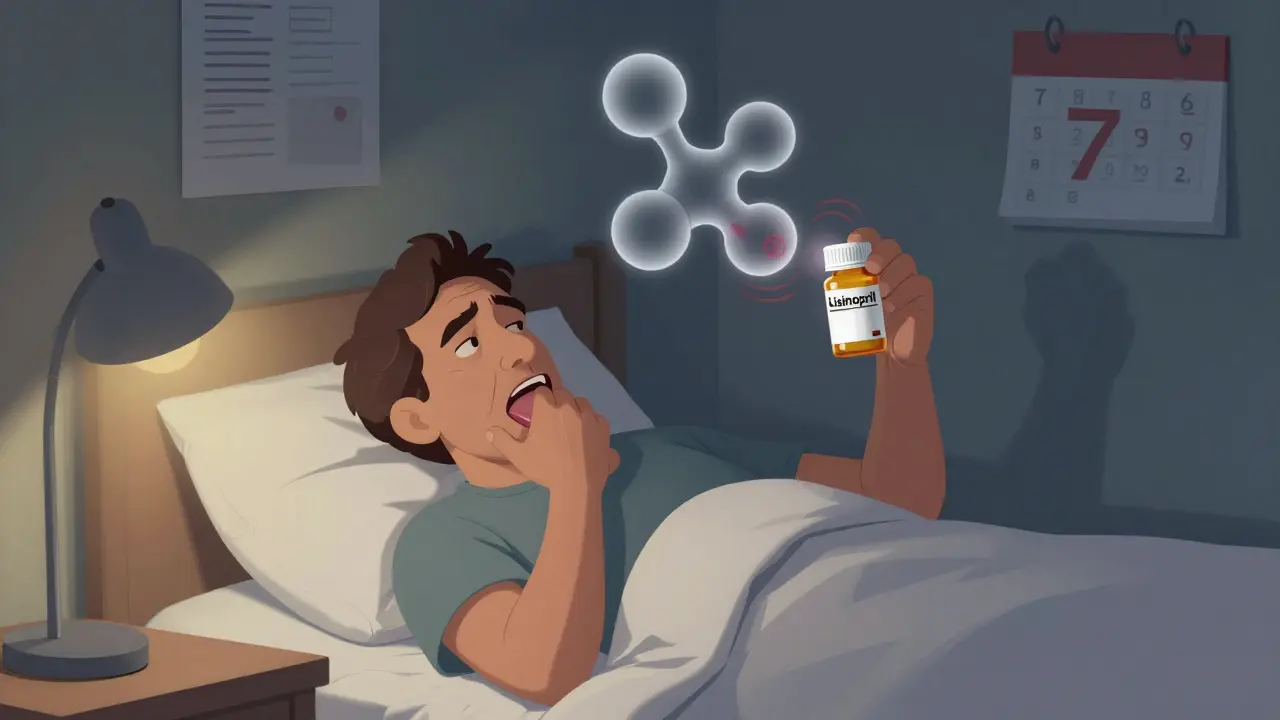
Have you ever taken a medication for months-or even years-without a single problem, only to wake up one day with a rash, swollen tongue, or joint pain you can’t explain? You’re not alone. Many people assume that if a drug hasn’t hurt them yet, it’s safe. But some side effects don’t show up until weeks, months, or even years later. These are called delayed medication side effects, and they’re one of the most dangerous blind spots in modern medicine.
Why Do Some Side Effects Show Up So Late?
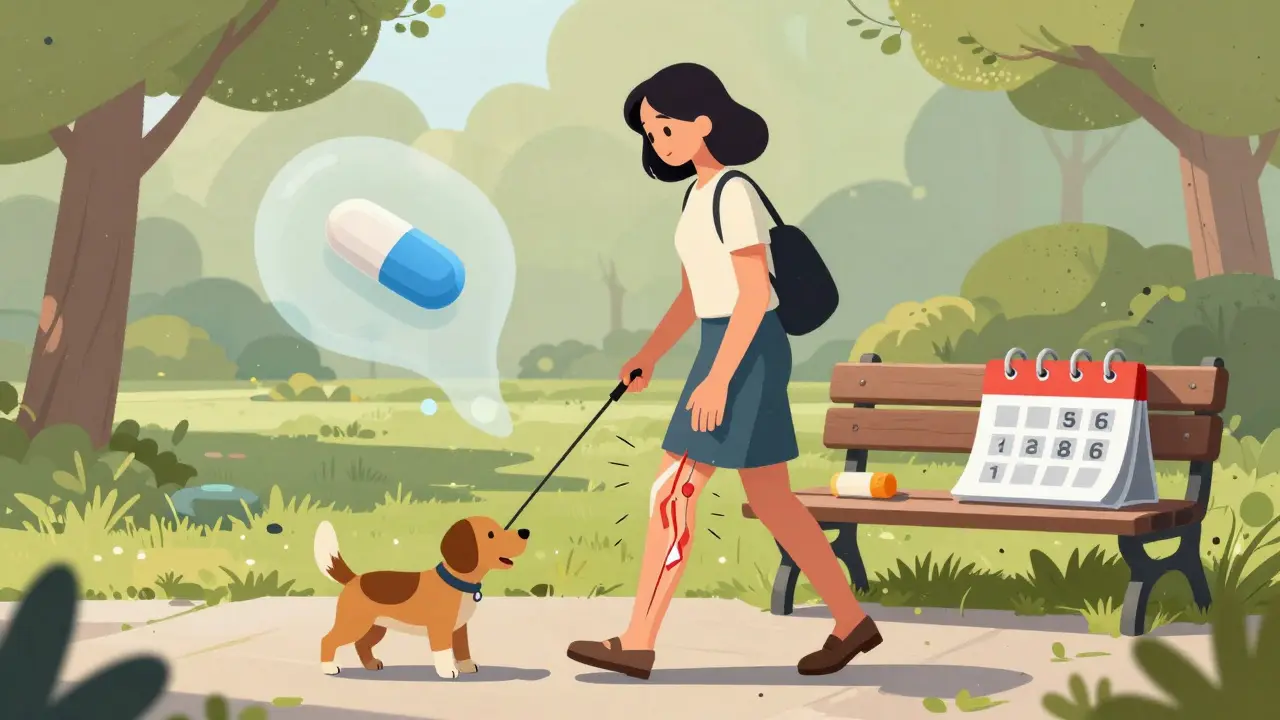
Most people think of side effects as something that happens right after taking a pill. Nausea, dizziness, or a headache within hours. But that’s only part of the story. The body doesn’t always react immediately. Some reactions are slow, sneaky, and built up over time. They happen because your immune system slowly starts recognizing the drug as a threat, or because the drug quietly damages tissues over months of use. Take ACE inhibitors, for example. These are common blood pressure meds like lisinopril or enalapril. For most people, they’re safe for years. But in some, they trigger angioedema-a sudden swelling of the face, lips, or tongue. This can happen after 7 years of use. One patient in Illinois described waking up with his tongue swollen shut at 3 a.m. The ER team almost intubated him before he remembered reading about this delayed reaction. That’s the problem: no one connects the dots. The same goes for fluoroquinolone antibiotics like ciprofloxacin. These are often prescribed for urinary infections or sinusitis. The FDA warned in 2018 that these drugs can cause tendon damage-sometimes months after you’ve finished the course. A 52-year-old woman in New Zealand tore her Achilles tendon while walking her dog, six months after taking cipro for a UTI. Her doctor blamed her age. It wasn’t age. It was the drug.Common Delayed Reactions and When They Show Up
Not all delayed reactions are the same. They follow patterns based on the drug and your body’s response. Here are the most common ones and their timing:- DRESS syndrome (Drug Reaction with Eosinophilia and Systemic Symptoms): Appears 2 to 8 weeks after starting the drug. Often caused by antiseizure meds like phenytoin or carbamazepine, or antibiotics like allopurinol. Symptoms include a widespread rash, fever, swollen lymph nodes, and organ damage-liver, kidneys, or lungs. Mortality can hit 10%.
- Stevens-Johnson Syndrome (SJS) and Toxic Epidermal Necrolysis (TEN): Skin peels off like a burn. Onset: 1 to 4 weeks. Linked to carbamazepine, lamotrigine, sulfa drugs. Mortality: up to 50% for TEN.
- Fluoroquinolone toxicity: Tendon rupture, nerve pain, muscle weakness. Can appear up to 6 months after stopping the drug. The FDA has received over 1,800 reports of this since 2015.
- Proton pump inhibitors (PPIs): Drugs like omeprazole and esomeprazole. Used for heartburn. After 2+ years, they can cause serious nutrient loss: vitamin B12 (risk up 112% after 4 years), magnesium, calcium. This leads to nerve damage, bone fractures, and even slurred speech from low magnesium.
- Metformin: The go-to diabetes drug. After 4+ years, up to 30% of users develop vitamin B12 deficiency. Symptoms: fatigue, numbness, memory problems-often mistaken for aging or diabetes complications.
- Corticosteroids: Used for asthma, arthritis, eczema. After years, they cause osteoporosis, cataracts, diabetes, and glaucoma. These aren’t “side effects”-they’re predictable long-term consequences.
Who’s at Highest Risk?
Not everyone gets these reactions. But some people are far more likely to.- People over 65: They make up 25% of emergency visits for drug reactions-even though they’re only 16% of the population. Their bodies process drugs slower, and they often take multiple meds.
- Women: They experience delayed reactions 1.5 to 2 times more often than men. Hormones may play a role.
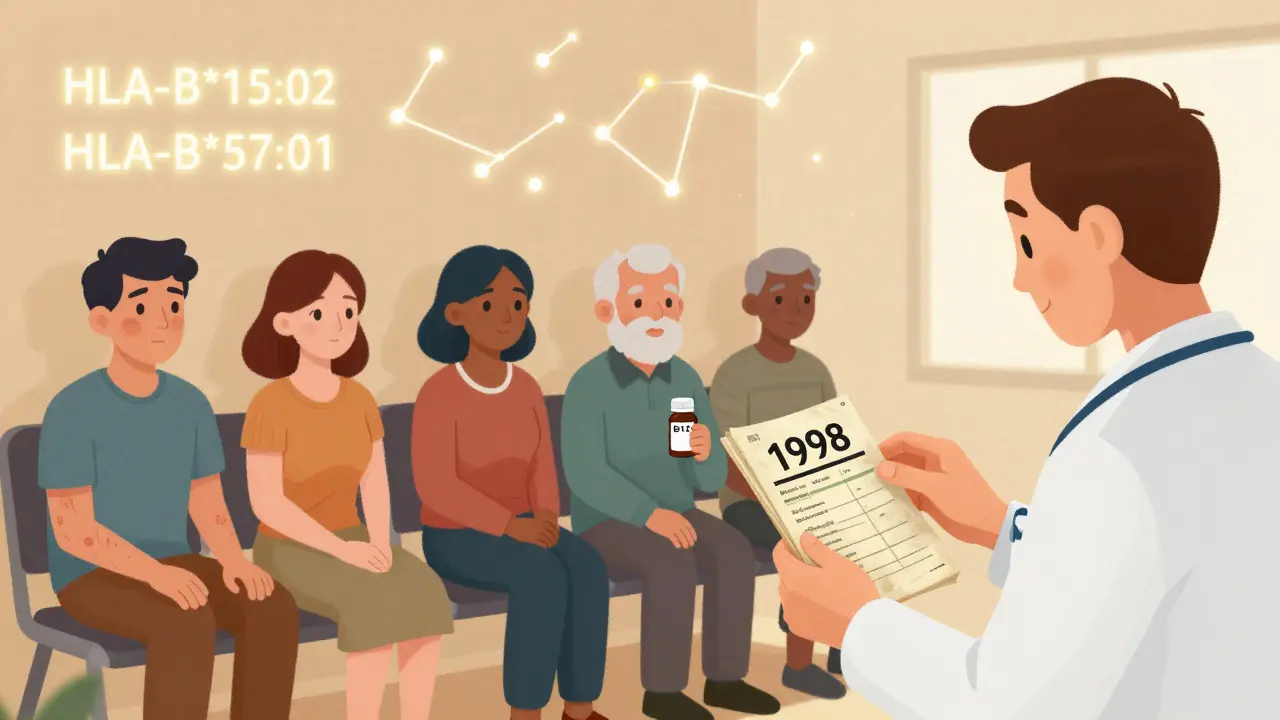
- People with certain genes: If you carry the HLA-B*15:02 gene, your risk of SJS from carbamazepine jumps from 1 in 10,000 to 50-80%. That’s why some countries test for this gene before prescribing.
- Those with autoimmune diseases: If you have Crohn’s or lupus and take thiopurines, your risk of DRESS syndrome is 12 times higher.
One patient in a health forum wrote: “I’ve been on lamotrigine for 11 years. Last year, I got a rash, fever, and my liver enzymes shot up. My doctor said it was a virus. I nearly died before someone finally asked: ‘Have you taken any new meds?’”
How Doctors Miss These Reactions
The system is set up to miss these. Most doctors don’t think to ask: “Did anything new happen after you started this drug?” They look for immediate reactions. They don’t connect a rash that appeared 6 weeks ago to a pill you took 8 weeks ago. The FDA found that 58% of patients with delayed reactions kept taking the drug for 14+ days after symptoms started-because no one recognized it as drug-related. In one study, patients waited an average of 8.2 weeks before getting the right diagnosis. Doctors also rely on outdated drug labels. Many delayed reactions aren’t listed as common side effects. For example, the PPI label doesn’t mention B12 deficiency until you scroll to the fine print. Fluoroquinolone labels warn of tendon damage-but only in small print, and only after years of pressure from patient advocates.What You Should Do
You can’t prevent every reaction. But you can protect yourself.- Keep a running list of every medication you take-including supplements. Update it every time you start or stop something.
- Ask your doctor: “Could this drug cause problems months or years from now?” Don’t assume it’s safe just because it’s been on the market for decades.
- Watch for new symptoms after 2+ weeks of taking a new drug. Even if it’s been months. Even if it’s been years. A rash, joint pain, swelling, numbness, fatigue, or confusion could be linked.
- Get tested if you’re on long-term meds. If you’ve been on metformin for 4+ years, get your B12 checked. If you’ve been on PPIs for 2+ years, get your magnesium and calcium levels tested.
- Report unusual reactions. Use the FDA’s FAERS system or your country’s equivalent. Your report could help someone else avoid a life-threatening delay.
The Future: Genetic Testing and Better Warnings
The good news? We’re getting better at predicting these reactions. The FDA’s Sentinel Initiative is now using data from 200 million patient records to predict who’s at risk before they even get a prescription. In 2023, their algorithm correctly flagged high-risk patients 82% of the time. By 2025, doctors may routinely test for genes like HLA-B*57:01 before prescribing abacavir (for HIV) or HLA-B*15:02 before carbamazepine. That could prevent tens of thousands of severe reactions every year. The European Medicines Agency has already updated labels for 12 high-risk drug classes, including fluoroquinolones and third-gen cephalosporins. New warnings now include timelines: “Tendon rupture possible up to 6 months after stopping.”Final Thought: Your Body Keeps Score
Medications aren’t harmless. Even the ones you’ve taken for years. If something new shows up-rash, swelling, pain, weakness-don’t brush it off. Don’t assume it’s aging, stress, or a virus. Ask: “Could this be the drug?” The truth is simple: if you’ve been on a medication for a long time and something feels off, it probably is. And you’re the only one who can notice it first.Can delayed medication side effects happen after you stop taking the drug?
Yes. Some reactions, like fluoroquinolone tendon damage or DRESS syndrome, can appear weeks or even months after you’ve finished the course. The drug may be out of your system, but the immune or tissue damage it triggered continues to unfold. The FDA has documented cases of tendon rupture up to 6 months after stopping ciprofloxacin.
Are delayed side effects more common in older adults?
Yes. People over 65 account for 25% of emergency visits for drug reactions, even though they make up only 16% of the population. Their kidneys and liver process drugs slower, they often take multiple medications, and their immune systems react differently. This makes them far more vulnerable to delayed reactions like B12 deficiency from metformin, osteoporosis from steroids, or kidney damage from PPIs.
Can genetic testing prevent delayed reactions?
For some drugs, yes. Testing for the HLA-B*15:02 gene before prescribing carbamazepine can prevent life-threatening skin reactions in 99% of carriers. Similarly, HLA-B*57:01 testing prevents abacavir hypersensitivity. By 2025, these tests may become standard for high-risk drugs, potentially preventing 30,000-50,000 severe reactions annually in the U.S. alone.
What should I do if I think a drug is causing a delayed reaction?
Stop the drug immediately and contact your doctor. Don’t wait for it to get worse. Bring your medication list and describe exactly when symptoms started relative to when you began the drug. If your doctor dismisses it, ask for a referral to a pharmacology or allergy specialist. Skin patch tests and lymphocyte transformation tests can confirm delayed hypersensitivity with up to 90% accuracy if done at the right time.
Are delayed side effects listed on drug labels?
Sometimes, but often not clearly. Many delayed reactions appear in the “Warnings and Precautions” section, buried under technical language. For example, PPIs mention B12 deficiency in small print after 3+ years of use. Fluoroquinolones mention tendon damage-but only after years of patient advocacy forced the FDA to update their labels. Always read the full label and ask your pharmacist for clarification.
Can I get tested for risk of delayed reactions before starting a drug?
Currently, testing is only routine for a few drugs-like HLA-B*15:02 for carbamazepine or HLA-B*57:01 for abacavir. But research is moving fast. By 2025, genetic screening may be standard for several high-risk medications. In the meantime, if you have a family history of drug reactions or autoimmune disease, ask your doctor about available testing options before starting long-term therapy.
Delayed side effects aren’t rare. They’re just ignored. By learning the patterns, asking the right questions, and listening to your body, you can avoid becoming another statistic.
Gloria Ricky
February 13, 2026 AT 21:13Stacie Willhite
February 15, 2026 AT 11:58Jason Pascoe
February 16, 2026 AT 14:25Also, fluoroquinolones can mess with mitochondria. That’s why nerve pain and fatigue linger. Not just 'tendons.'
Luke Trouten
February 16, 2026 AT 16:38Our bodies don’t operate on quick fixes. They remember. And they retaliate. We need to stop seeing drugs as 'safe until proven dangerous' and start seeing them as 'dangerous until proven safe.'
Brad Ralph
February 18, 2026 AT 13:07Also, my dog takes more pills than I do. And he’s fine.
Autumn Frankart
February 19, 2026 AT 22:08Did you know the government injects microchips into vaccines through your meds? It’s all connected. Your body gets poisoned slowly so they can track you. That’s why they don’t warn you about B12 deficiency-it’s a distraction from the real issue.
Check your blood. Look for the green glow. It’s there. I saw it.
Skilken Awe
February 20, 2026 AT 14:16Fluoroquinolone toxicity? 1,800 reports out of 200 million prescriptions. That’s 0.0009%. You’re statistically more likely to get hit by lightning while winning the lottery.
And you’re scaring people into stopping life-saving meds because you found a Reddit thread? Pathetic.
andres az
February 20, 2026 AT 18:30Meanwhile, the FDA approved 12 new drugs last year with zero long-term studies. They’re not 'missing' these reactions-they’re ignoring them.
It’s not a medical issue. It’s a profit issue. Drugs are cash cows. Patients are disposable.
Steve DESTIVELLE
February 21, 2026 AT 19:31Stephon Devereux
February 23, 2026 AT 07:32Here’s what works: Keep a physical list. Update it every time you get a script. Bring it to every appointment. Say: 'I’ve been on this for X years. Could it be causing this new symptom?'
And if your doctor rolls their eyes? Find a new one. You’re not being paranoid. You’re being proactive.
Neha Motiwala
February 24, 2026 AT 06:49They didn’t warn me. No one did. I’m alive because I refused to stop asking. If you’re on long-term meds, don’t wait for them to kill you. Be your own advocate.
Alyssa Williams
February 25, 2026 AT 12:00Doctors don’t tell you this. So you have to tell yourself. Thank you for this. I’m sharing it with my whole family.
Ernie Simsek
February 25, 2026 AT 12:48Bro, if you’re on a drug for 10 years and suddenly get a rash, maybe you’re just aging? Maybe your immune system is tired? Maybe you ate a weird mushroom?
Every drug has risks. That’s why they’re regulated.
Also, I’ve been on 12 meds. My kidneys are fine. My liver’s happy. My tendon? Still attached.
Stop fearmongering. We’re not lab rats.
Reggie McIntyre
February 26, 2026 AT 10:50Listen. Write it down. Track it. Connect it. You’re not overreacting. You’re waking up. And if you do? You might save your life. Or someone else’s.