
Expired controlled substances aren’t just old pills sitting in a drawer-they’re legal hazards. If you’re a pharmacist, doctor, vet, or even a researcher handling opioids, benzodiazepines, or other Schedule II-V drugs, improper disposal can lead to fines, investigations, or worse-diversion into the wrong hands. The DEA doesn’t allow flushing, dumping, or throwing these in the trash. And no, mixing them with coffee grounds or kitty litter? That’s fine for your leftover ibuprofen, but not for controlled substances. Here’s exactly how to handle them, step by step, based on current U.S. federal rules and real-world practices as of 2026.
Why You Can’t Just Throw Them Away
Controlled substances are regulated under the Controlled Substances Act (CSA) of 1970, enforced by the DEA. These drugs have a high risk of abuse, addiction, or diversion. Even if a pill is expired, it can still be potent. A 2022 DEA audit found that 14.3% of veterinary drug diversion cases came from improperly stored or discarded narcotics. That’s not just a statistic-it’s a real person who could overdose because someone didn’t follow protocol. The DEA distinguishes between two types of disposal: inventory disposal and wastage. Inventory disposal means getting rid of entire stocks-unused, expired, or damaged. Wastage is small amounts left over after administering a dose (like a few drops from a syringe). The rules for each are very different.Step 1: Know Your Schedule
Controlled substances are grouped into five schedules based on abuse potential and medical use. Your disposal method depends on which one you’re handling.- Schedule I: No accepted medical use (e.g., heroin, LSD). These are rarely handled outside research labs, but if you have them, they must go to a reverse distributor.
- Schedule II: High abuse potential (e.g., oxycodone, fentanyl, Adderall). Strictest rules. Always requires DEA Form 222 and a reverse distributor.
- Schedule III-V: Lower abuse potential (e.g., hydrocodone with acetaminophen, Xanax, codeine cough syrup). Can sometimes be destroyed on-site under supervision.
Don’t guess your schedule. Check the DEA’s official list or your pharmacy’s inventory system. Misclassifying a drug can delay disposal or trigger an audit.
Step 2: Label and Isolate
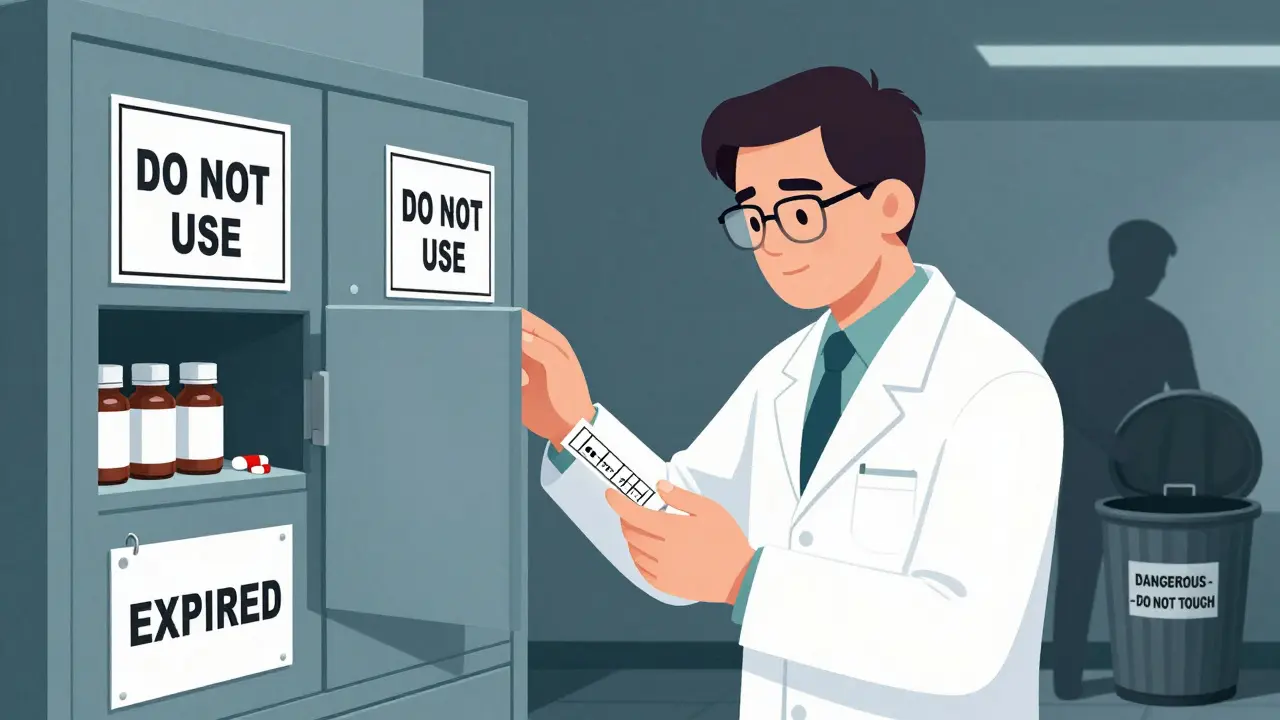
Before anything else, physically separate expired drugs from active inventory. Use clear labels: “DO NOT USE,” “EXPIRED,” or “TO BE DISPOSED.” Store them in a locked, secure cabinet-separate from your regular narcotics storage. This isn’t optional. A 2023 University of Michigan survey showed that 68% of compliance violations started with drugs being stored alongside usable inventory.Step 3: Choose Your Disposal Path
For Schedule I and II substances: You have one option-reverse distributor. These are DEA-registered companies that pick up and incinerate the drugs. You cannot destroy these yourself. You must complete DEA Form 222 (now electronic via the Electronic Registration System, or ERS, since January 2023). Paper forms are no longer accepted for Schedule II. The ERS cuts processing time from over a week to under 24 hours. For Schedule III-V substances: You have two choices:- Reverse distributor: Still the safest, most documented method.
- On-site destruction (wastage only): Only allowed for small amounts (e.g., leftover from a single dose). Requires two authorized personnel to witness the destruction. One must be the DEA registrant or their designated agent. They must sign a log, note the date, quantity, and drug name, and keep it for at least two years.
Important: Never crush, dissolve, or flush Schedule III-V drugs. The DEA explicitly bans pouring them down the drain or mixing them with absorbents like cat litter. This applies even if your state or hospital says otherwise. The FDA’s 2023 guidelines confirm this: flush methods are for non-controlled meds only.

Step 4: Document Everything
Documentation isn’t paperwork-it’s your legal shield. Every disposal must be recorded. For reverse distributor pickups, you’ll get a Chain of Custody Form (like the DLD form used by University of Michigan). For on-site wastage, use a DEA Form 41 or your facility’s internal log. Include:- Date and time of disposal
- Drug name and strength
- Quantity destroyed
- Names and signatures of two witnesses
- Method of destruction (e.g., “incinerated by DLD,” or “poured into biohazard waste container under witness”)
Store these logs for at least two years. DEA inspections are random, and they’ll ask for them. A 2022 audit of 417 dental practices found that 18.7% failed because their records were incomplete or missing.
Step 5: Train Your Team
The DEA requires all personnel handling controlled substances to complete 2 hours of initial training and 1 hour annually. Yet, only 67.3% of facilities meet this standard. If your nurse, vet tech, or pharmacy assistant is handling disposal, they need to know:- Which drugs are controlled
- Which disposal method applies
- Who signs off
- Where logs go
Use real examples. Show them a bottle of expired oxycodone. Ask: “Is this Schedule II? Can we throw it in the trash? What form do we fill?” Make it part of your monthly safety huddle.
What About Take-Back Events?
DEA National Take Back Days collect millions of pounds of medication each year. But here’s the catch: these events only accept non-controlled or Schedule III-V drugs from the public. If you’re a clinic, hospital, or pharmacy, you cannot drop off your expired inventory at a Take Back site. You must use a reverse distributor. Take Back Days are for patients, not providers.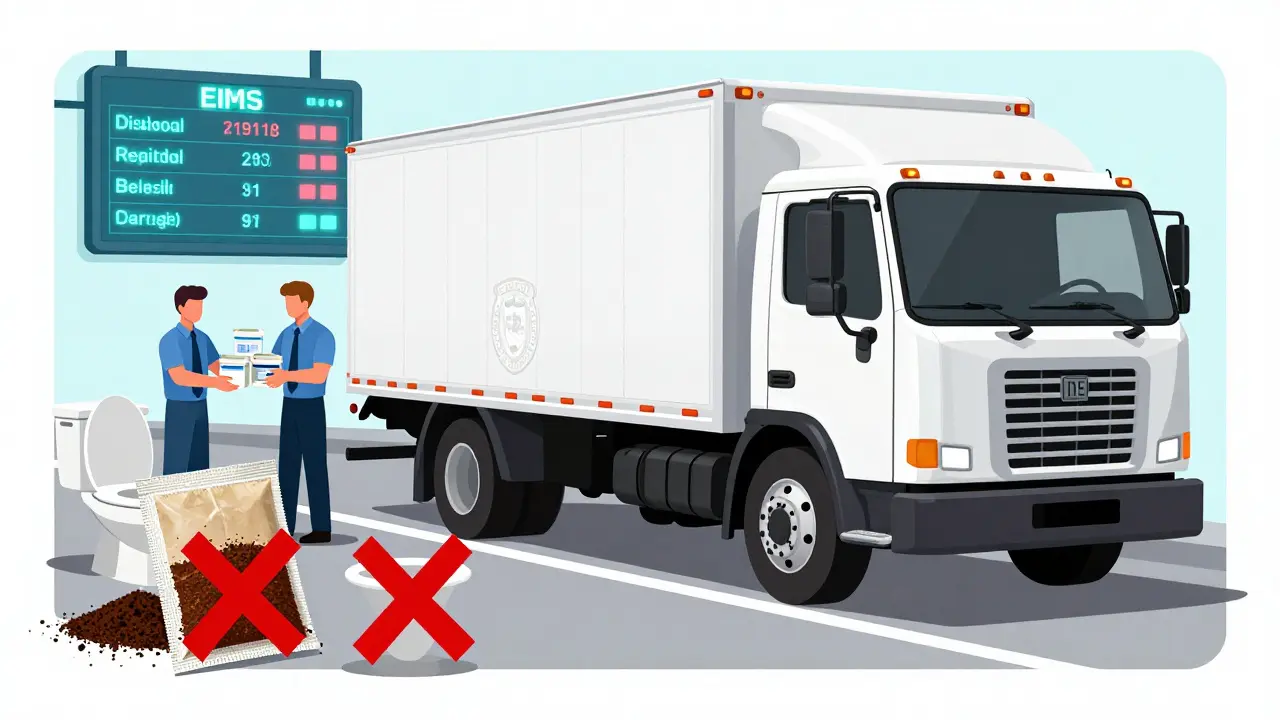
Costs and Logistics
Reverse distributors charge between $250 and $500 per pickup, depending on volume and location. Stericycle, Daniels Health, and Drug and Laboratory Disposal, Inc. (DLD) dominate the market. Smaller practices, especially veterinary clinics, often struggle with wait times-some report 14+ business days for a pickup. That’s why many now use online scheduling tools. The DEA’s online locator (updated November 2022) helps you find registered providers near you.Pro tip: Bundle your disposal. Don’t wait until you have a few expired drugs. Keep a log and schedule a pickup every 60-90 days. It’s cheaper and less risky than letting expired stock pile up.
What Happens If You Don’t Follow the Rules?
DEA inspections increased by 23.6% in 2022. In that year alone, they issued 327 Warning Letters and fined facilities $2.47 million. Penalties aren’t just fines-they can include loss of DEA registration, which means you can’t prescribe or handle controlled substances anymore. For a vet clinic or small pharmacy, that’s a death sentence.Looking Ahead: What’s Changing in 2025?
The DEA is rolling out the Electronic Inventory Management System (EIMS) by 2025. This will require real-time reporting of all controlled substance disposals. No more waiting weeks for a log to be filed. Every drug you destroy will be tracked digitally. If you’re not already using an electronic system, start now. The transition will be mandatory.One thing won’t change: the rules are strict for a reason. Expired narcotics don’t just sit around. Someone will find them. A teenager. A pet owner. A person in crisis. Proper disposal isn’t bureaucracy-it’s prevention.
PRITAM BIJAPUR
February 17, 2026 AT 10:54Tony Shuman
February 19, 2026 AT 09:00Logan Hawker
February 19, 2026 AT 12:48Geoff Forbes
February 20, 2026 AT 15:09Jonathan Ruth
February 21, 2026 AT 08:44Philip Blankenship
February 22, 2026 AT 18:46Oliver Calvert
February 23, 2026 AT 06:08Kancharla Pavan
February 24, 2026 AT 18:50John Haberstroh
February 24, 2026 AT 22:38Digital Raju Yadav
February 26, 2026 AT 22:22Carrie Schluckbier
February 27, 2026 AT 16:41Liam Earney
March 1, 2026 AT 08:15