
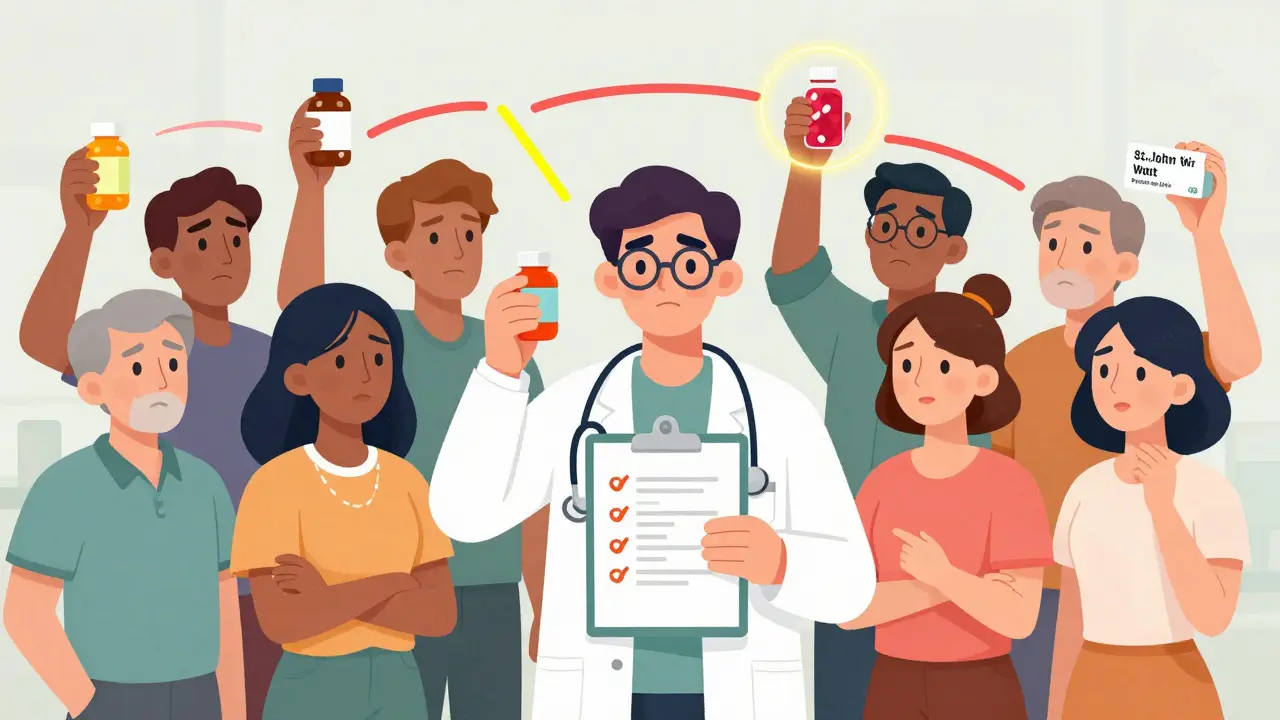
Every year, tens of thousands of people end up in the hospital because of a simple mistake: someone didn’t know what medications they were really taking. It’s not about forgetting a pill. It’s about not telling your doctor about the fish oil, the turmeric capsule, or the over-the-counter sleep aid you’ve been using for months. These aren’t just harmless extras. They can turn a safe prescription into a life-threatening mix.
Why Your Medication List Matters More Than You Think
Most people think their doctor knows what they’re on. They assume the hospital has it all stored somewhere. But here’s the truth: your primary care doctor might have your blood pressure pills. Your cardiologist has your cholesterol meds. Your rheumatologist knows your arthritis drugs. But none of them have the full picture - unless you give it to them.
According to the Agency for Healthcare Research and Quality, sharing a complete list cuts serious drug reactions by 35% to 50%. That’s not a small number. That’s the difference between walking out of the ER and ending up in the ICU.
Why does this happen so often? Because polypharmacy - taking five or more medications - is now the norm, not the exception. Around 40% of adults over 65 are on five or more prescriptions. Add in vitamins, supplements, and OTC painkillers, and you’re looking at 10, 12, even 15 different things in your body every day. Each one has the potential to clash with another.
St. John’s Wort, for example, can make blood thinners like warfarin useless - or dangerously strong. Grapefruit juice can turn a common statin into a toxin. Even something as simple as calcium supplements can block your thyroid medicine from being absorbed. These aren’t rare edge cases. They’re everyday risks.
What Goes on a Complete Medication List
A medication list isn’t just a note on your phone. It’s a living document. And if it’s missing even one thing, it’s incomplete.
Here’s exactly what you need to include for every item:
- Exact name: Both brand and generic. Not just “blood pressure pill.” Write Lisinopril 10 mg - not “the blue pill.”
- Dosage: How much? 5 mg? 10 mg? 20 mg? Don’t guess.
- Frequency: Once a day? Twice a day? Every 8 hours?
- Route: Taken by mouth? Injected? Patch? Inhaler?
- Why you take it: “For high blood pressure,” “for joint pain,” “for sleep.”
- Start date: When did you begin? This helps your doctor spot patterns.
- Prescribing provider: Who wrote the script? Your GP? The specialist?
- Special instructions: “Take on empty stomach,” “avoid grapefruit,” “take with food,” “do not crush.”
And here’s what most people forget - and what causes the most harm:
- Over-the-counter meds: Tylenol, ibuprofen, antacids, cold pills. Even “just a little” can add up.
- Vitamins and supplements: Vitamin D, magnesium, fish oil, CoQ10, melatonin. These aren’t regulated like drugs - but they interact just the same.
- Herbal products: St. John’s Wort, ginkgo, garlic pills, echinacea. Many people think these are “natural,” so they’re safe. They’re not.
- Allergies and reactions: Not just “allergic to penicillin.” Say “hives, swelling, trouble breathing.” Vague answers don’t help.
A 2022 FDA report found that 30% of serious drug interactions involved something patients didn’t even think was a “medication.” That’s the gap you need to close.
How to Keep Your List Updated - And Actually Use It
A list that’s outdated is worse than no list at all. It gives false confidence.
Update it within 24 hours of any change. New prescription? Add it. Stopped a pill? Cross it out. Started a new supplement? Write it in. Don’t wait until your next appointment.
There are three ways to keep it handy:
- Digital app: Use a trusted app like Medisafe or MyMeds. They send reminders and can sync with some pharmacies. But make sure you can access it without Wi-Fi - emergencies don’t wait for a signal.
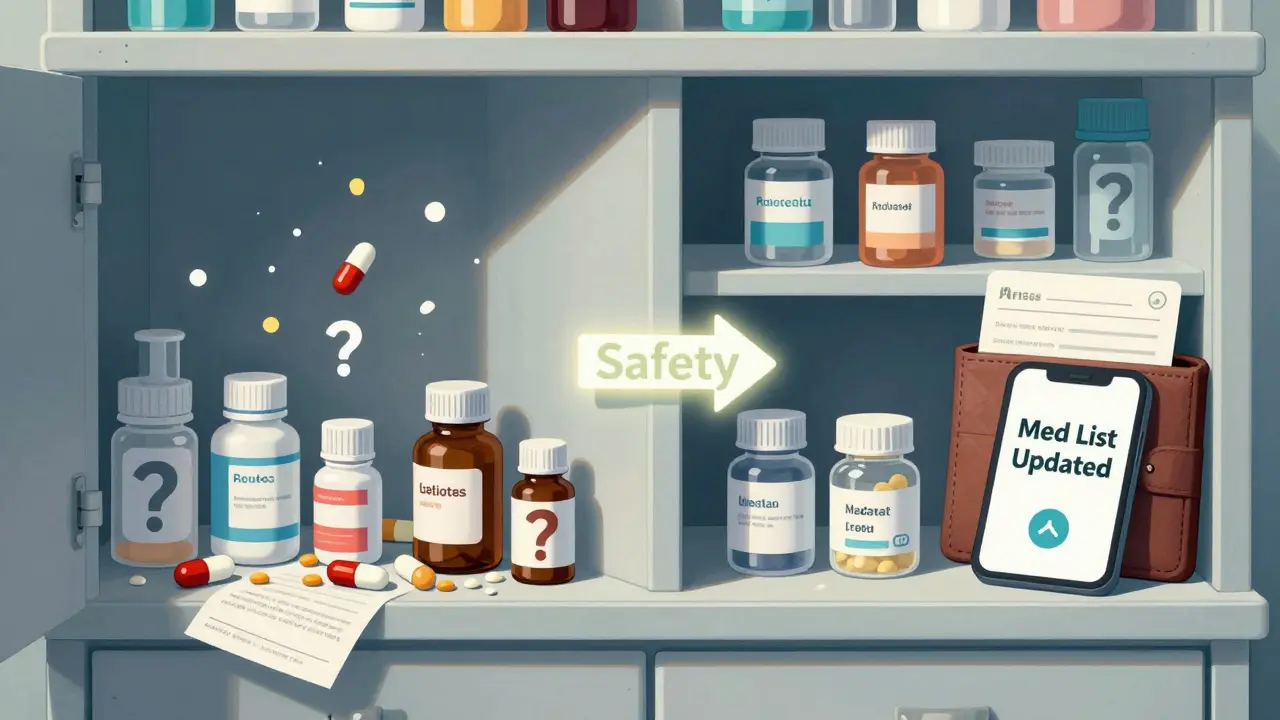
- Photo backup: Take clear pictures of every pill bottle in your medicine cabinet. Include the label. Store them in a folder on your phone. This helps if you forget the name or dosage.
- Printed card: Keep a folded, laminated version in your wallet or purse. Write “Emergency Medication List” on the front. If you’re ever unconscious, first responders will check your wallet. Make sure they find this.
Use the FDA’s free My Medicine Record form if you’re unsure how to structure it. The American Academy of Family Physicians also has a simple template you can print and fill out.
When and How to Share It
Don’t wait to be asked. Bring it to every appointment - even if it’s just for a cold.
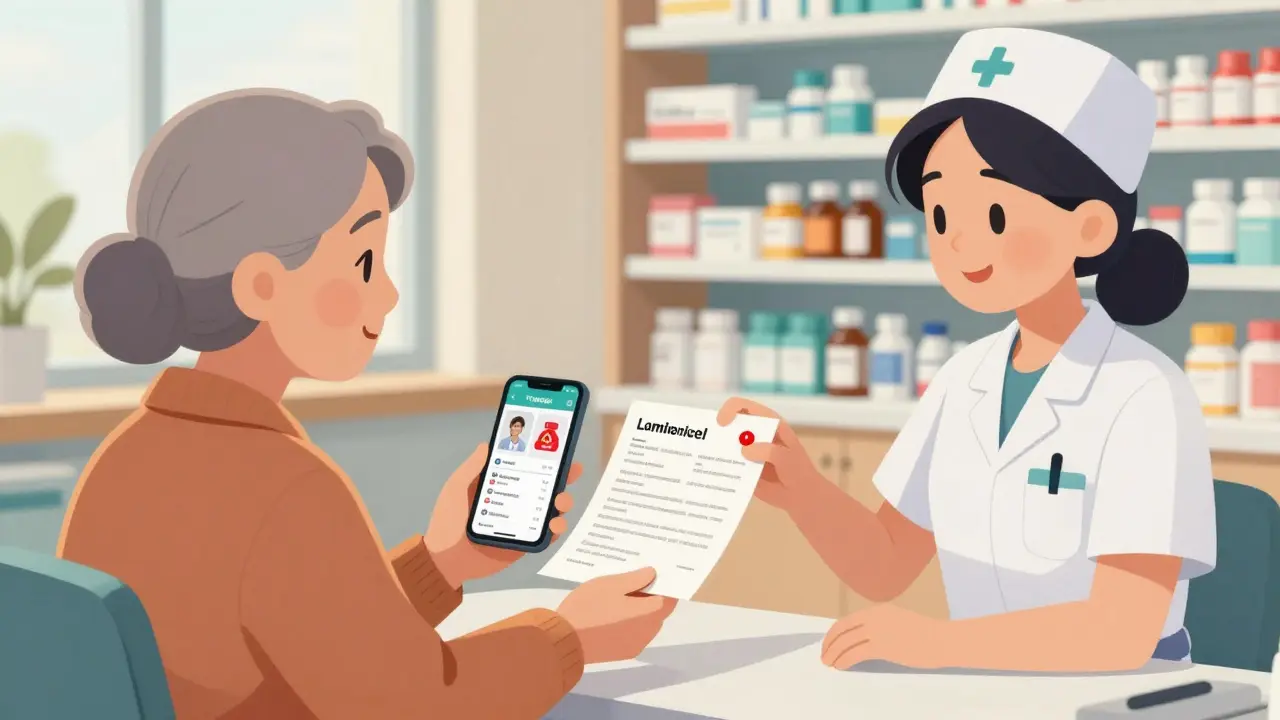
Hand it to the nurse or doctor as soon as you sit down. Say: “Here’s my current list. Can you check if anything here might interact?”
Why? Because 63% of providers don’t routinely ask for it. They assume you’ll tell them. But you might forget. Or think it’s not important. Don’t rely on that.
If you see multiple specialists - a cardiologist, endocrinologist, neurologist - designate one doctor as your medication coordinator. Usually, that’s your primary care provider. Give them the full list and ask them to review it every 3 to 6 months. They can catch duplicates, overlaps, or dangerous combos.
Pharmacists are your secret weapon. If you use one pharmacy for all your prescriptions, they have a full view of your meds and run automatic interaction checks. That system catches 92% of major risks. But only if they know everything you’re taking. Bring your supplements to the pharmacy counter. Ask: “Could any of these cause problems with what I’m on?”
What Doesn’t Work - And Why
Many people think their electronic health record (EHR) has it all. It doesn’t.
Studies show EHRs capture only 52% of over-the-counter meds and 38% of herbal supplements. Why? Because doctors don’t enter them. Patients don’t report them. And systems aren’t designed to ask.
Paper lists in wallets are better than nothing - but only 62% accurate in emergencies. Why? Because they’re outdated. Or handwritten in messy pen. Or missing key details.
Apps are great - but only if you update them. A 2023 study found that 58% of users forgot to update their list after a change. If you’re using an app, set a monthly reminder on your phone: “Check meds.”
And never assume your doctor “knows” what you’re on because you told them once. People change meds. New symptoms come up. New prescriptions get added. Your list must grow with you.
Real Stories - What Happens When You Do It Right
One woman in Auckland, 71, took warfarin for a blood clot. She also took St. John’s Wort for low mood - thinking it was “natural” and safe. Her doctor didn’t ask about supplements. Her pharmacist did. When she brought her full list to the pharmacy, the pharmacist flagged the interaction. Warfarin levels could have spiked, causing internal bleeding. She stopped the supplement. No hospital stay. No scare.
Another man, 68, took metformin, lisinopril, and a daily aspirin. He started taking magnesium for leg cramps. His blood pressure dropped too low. He felt dizzy. He didn’t connect the dots. When he brought his list to his GP - including the magnesium - they adjusted his lisinopril dose. His dizziness vanished.
These aren’t rare. They’re routine. And they’re preventable.
What to Ask Your Provider
Don’t leave your appointment without asking these two questions:
- “Could any of these medications interact with each other?”
- “Are there any foods, drinks, or supplements I should avoid while taking these?”
That’s it. Two simple questions. But they can save your life.
If your provider brushes you off - get a second opinion. Medication safety isn’t optional. It’s basic care.
Final Checklist: Your Medication List Action Plan
Here’s what to do this week:
- Collect every pill bottle, supplement box, and OTC package in your home.
- Write down everything - brand, dose, why, how often, and any special rules.
- Include all vitamins, herbs, and OTC meds - no exceptions.
- Take a photo of each bottle.
- Print a copy and keep it in your wallet.
- Upload it to a phone app you use daily.
- Bring it to your next appointment - and hand it to the provider before they even sit down.
- Set a monthly calendar reminder to review and update it.
This isn’t about being organized. It’s about being alive.
Do I really need to include over-the-counter medicines and supplements?
Yes. Over-the-counter medicines and supplements cause 30% of serious drug interactions. Things like ibuprofen, calcium, fish oil, and St. John’s Wort can interfere with blood thinners, blood pressure meds, thyroid drugs, and antidepressants. If it’s not a prescription, it still affects your body - and can interact dangerously with your other meds.
What if I forget to update my list after a change?
Set a phone reminder for the first day of every month to review your list. If you start or stop a medication, update it within 24 hours. Outdated lists are dangerous because they give false reassurance. A provider might think you’re still taking a drug you stopped - and prescribe something that clashes with what you’re on now.
Can my pharmacist help me with my medication list?
Absolutely. Pharmacists are trained to spot interactions and are often the first to catch problems. If you use one pharmacy for all your prescriptions, they have access to your full history. Bring your supplements and OTC meds with you when you pick up your prescriptions. Ask: “Is there anything here that shouldn’t be taken together?”
Is a digital list better than a paper one?
Digital lists are more accurate - 78% vs. 62% for paper - but only if you can access them. In an emergency, first responders check your wallet. Keep a printed, laminated card in your purse or wallet. Use an app for daily updates, but never rely on it alone. Have both.
What if my doctor doesn’t look at my list?
Politely insist. Say: “I’ve worked hard to get this list right because I want to stay safe. Can you please check it with me?” If they dismiss it, ask for a referral to a clinical pharmacist or ask to speak with a medication safety coordinator. Your health isn’t a suggestion - it’s your right.
Kayleigh Campbell
December 16, 2025 AT 20:01My grandma kept her meds on a napkin in her purse. One day the cat licked it. We still laugh about it. But honestly? She’s been fine since she started using that FDA template. Don’t overthink it. Just write it down.
Dave Alponvyr
December 18, 2025 AT 12:19Stop calling supplements ‘natural.’ That’s just marketing. If it changes how your body works, it’s a drug. Period.
Dan Padgett
December 18, 2025 AT 21:39I used to think fish oil was just for heart health. Then my cousin ended up in the ER after mixing it with warfarin. Turned out the bottle said ‘high potency’-no one told her that meant ‘could make you bleed out if you’re on blood thinners.’ Now I carry my list in my phone and my wallet. No excuses.
It’s not about being paranoid. It’s about being alive. Your body doesn’t care if something’s ‘organic’ or ‘vegan.’ It only cares what’s in it-and what it’s mixing with.
I even started labeling my supplement bottles with little stickers: ‘TAKEN WITH LISINOPRIL’ or ‘AVOID WITH WARFARIN.’ My pharmacist laughed at first. Then he started handing them out to other patients.
Doctors don’t ask because they’re rushed. Pharmacists don’t know because you don’t tell them. So you have to be the one who shows up with the list. Not the ‘maybe I’ll bring it next time’ version. The real one.
My mom didn’t tell her doctor about the magnesium she took for cramps. Three weeks later she was dizzy, falling, and her BP was in the toilet. Turned out it was interacting with her blood pressure med. She’s fine now. But she almost didn’t make it.
It’s not complicated. It’s just inconvenient. And inconvenient is exactly what kills people.
Take a photo of every bottle. Write the name, dose, reason, and time. Don’t trust your memory. Your memory is a liar. Your phone? It remembers everything.
And if someone says ‘I don’t need to tell them about the turmeric’-tell them to Google ‘turmeric warfarin interaction.’ Then come back and tell me they still think it’s harmless.
This isn’t about being organized. It’s about not dying because you thought something was ‘too small to matter.’
My brother didn’t list his OTC sleep aid. He got prescribed a new antidepressant. Three days later he was in the psych ward. The interaction was in the drug handbook. It was obvious. But no one asked. No one told. And now he’s got a story that’ll haunt him forever.
Just do the damn list. Today. Not tomorrow. Not next week. Today.
Hadi Santoso
December 19, 2025 AT 14:23My cousin in Nigeria told me her uncle died because he took garlic pills with his blood thinner. No one thought to ask. He just thought ‘natural = safe.’ I showed her this post. She printed it out and gave it to her whole family. We’re all doing the list now.
Tiffany Machelski
December 21, 2025 AT 05:43i forgot to add my gummy vitamins to my list last time and my dr prescribed me something that made me feel like i was on acid for 3 hours. lesson learned. now i take pics of everything.
Josias Ariel Mahlangu
December 21, 2025 AT 15:25People think they’re being responsible by taking supplements. What they’re really doing is playing Russian roulette with their liver. No one checks these things. No one regulates them. You’re a walking experiment.
anthony epps
December 22, 2025 AT 16:44Does anyone else use Medisafe? I’ve been using it for two years. It reminds me when to take things, and I can share the list with my kids if I ever pass out. It’s saved me twice already.
Andrew Sychev
December 23, 2025 AT 12:22They’re not telling you the real reason they don’t ask about supplements. It’s because if they did, they’d have to admit they have no idea what they’re prescribing. The system is broken. You’re on your own.
Arun ana
December 23, 2025 AT 21:08🙏 I started doing this after my dad had a bad reaction. Now I have a laminated card in my wallet and a digital copy on my phone. Also added emojis to each item for quick reference: 💊 for pills, 🌿 for herbs, 🍋 for grapefruit warnings. Works like a charm!
Randolph Rickman
December 24, 2025 AT 05:42This is the most important post I’ve read in years. I printed this out and gave it to my entire family. My mom, my sister, my uncle-all of them. We’re doing this together now. No one gets left behind. You’re not just protecting yourself-you’re protecting everyone who loves you.
SHAMSHEER SHAIKH
December 25, 2025 AT 17:23It is imperative, nay, non-negotiable, that every individual who consumes any pharmaceutical agent-whether prescribed, over-the-counter, or derived from botanical sources-maintains a meticulously curated, chronologically updated, and universally accessible pharmacological inventory. Failure to do so constitutes a profound dereliction of personal and communal health stewardship.
Moreover, the assertion that ‘natural’ equates to ‘safe’ is not merely erroneous-it is an affront to the very principles of pharmacological science.
One must, therefore, treat one’s medication list with the solemnity of a legal contract, the precision of a scientific journal, and the urgency of a life-or-death imperative.
May you never be the statistic.
James Rayner
December 27, 2025 AT 12:23I used to think my list was fine until my pharmacist said, ‘You’re missing six things.’ Six. I thought I had it all. Turns out I forgot the melatonin, the fish oil, the magnesium, the ginger tea packets, the calcium gummies, and the ‘herbal energy boost’ powder I got from a guy at the farmers market.
He looked at me like I’d just admitted I drive with my eyes closed.
Now I update it every Sunday night. Like a prayer.
Souhardya Paul
December 27, 2025 AT 21:07I showed this to my sister. She said, ‘But I only take one supplement.’ I said, ‘Which one?’ She said, ‘Vitamin D.’ I said, ‘And the CoQ10?’ She said, ‘Oh… that’s not a supplement, it’s just… for my heart.’ Yeah. Exactly. That’s the problem.
Kitty Price
December 29, 2025 AT 10:34My mom’s list had ‘blue pill’ written 8 times. I had to go through her medicine cabinet and ID each one. Now she has a color-coded chart. She says it feels like a game. I say it saved her life.
❤️
Cassandra Collins
December 29, 2025 AT 16:52They’re all lying. The FDA doesn’t want you to know that 90% of these ‘interactions’ are made up so they can sell you more drugs. Your supplements are fine. Your doctor just doesn’t want you to be healthy without them.
Why do you think they never ask about your vitamins? Because if you were taking turmeric and felt better, they’d lose you as a patient. They want you dependent. This whole list thing? It’s a trap.