
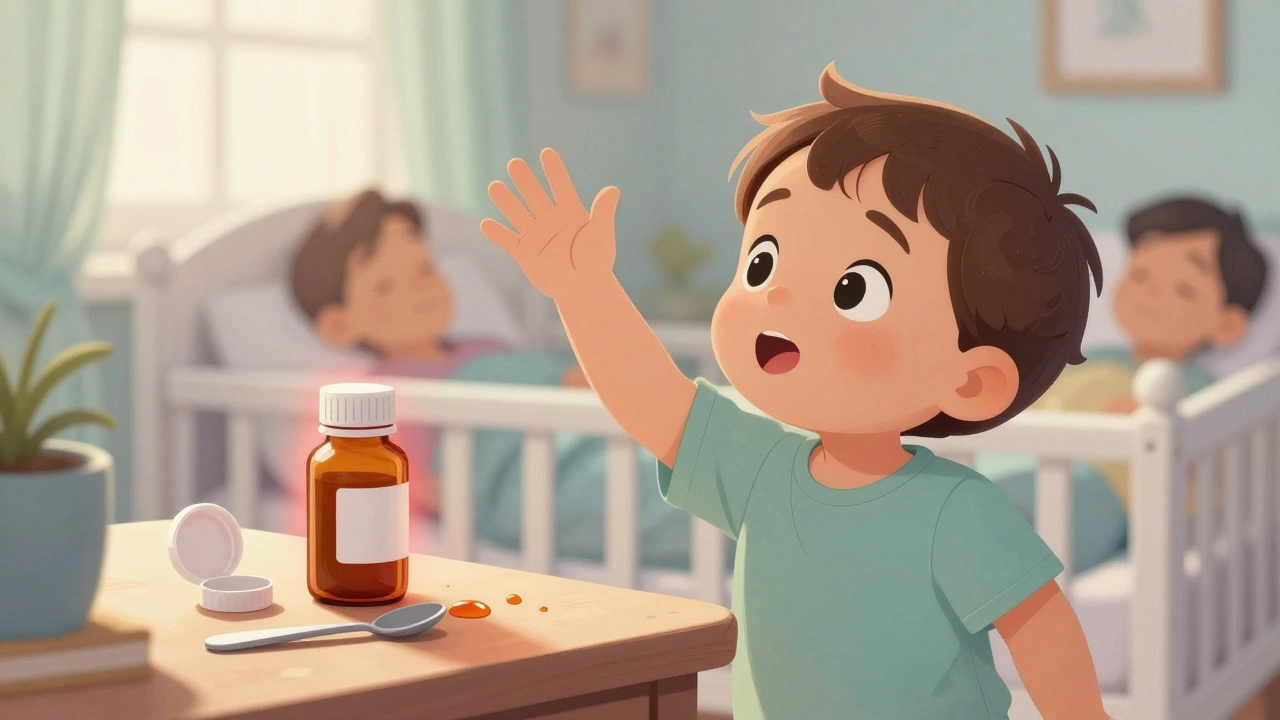
Every year, tens of thousands of children under five end up in emergency rooms because they got into medicine they weren’t supposed to. Not because their parents are careless - but because it’s so easy to make a mistake. A bottle left on the nightstand. A teaspoon used instead of the syringe that came with the medicine. Confusing infant and children’s formulas. These aren’t rare accidents. They’re predictable, preventable, and happening right now in homes across the country.
Why Kids Under Five Are at Highest Risk
Children under five are natural explorers. They put things in their mouths to learn about the world. That’s developmentally normal. But when that curiosity meets medicine - especially liquid medications that look like juice or candy - the results can be deadly. According to CDC data, emergency visits for unsupervised medication exposures in this age group peaked at 76,000 in 2010. While numbers have dropped since then, the risk hasn’t disappeared.The problem isn’t just access. It’s confusion. Many parents don’t realize that "child-resistant" doesn’t mean "child-proof." In fact, 10% of kids can open those caps by age 3.5. And even when caps are properly secured, kids still find ways - climbing on chairs, pulling down cabinets, or crawling under beds where meds were "hidden."
The PROTECT Initiative: How We’re Fighting Back
In 2008, the CDC launched the PROTECT Initiative - a national effort to reduce pediatric medication overdoses. It’s not just a campaign. It’s a system. And it works because it attacks the problem from three sides: packaging, labeling, and education.Packaging: Child-resistant caps must now twist until they click. Many liquid medications also include flow restrictors - small plastic inserts that limit how fast medicine can pour out. These aren’t optional anymore. Thanks to the CARES Act, 95% of manufacturers now use milliliters (mL) on labels instead of teaspoons or tablespoons. That’s huge. Kitchen spoons vary wildly in size. A tablespoon from your kitchen might hold 18 mL - but the correct dose is 10 mL. That’s an 80% overdose right there.
Labeling: All pediatric liquid meds must now show dosage in mL only. No more "1 tsp" or "½ tbsp." This standardization cut dosing errors by nearly half in clinical studies. But it’s not perfect. Some older bottles still have dual markings, and not all pharmacies replace old stock immediately.
Education: The Up and Away and Out of Sight campaign tells parents one simple rule: Keep medicine locked up, out of sight, and at least four feet off the ground. That’s higher than most toddlers can reach. But here’s the kicker - only 32% of households actually do it. Most still keep meds in bathroom cabinets, on nightstands, or in purses.
Top Medications That Cause Overdoses
Not all medicines are equally dangerous. Some are far more likely to land a child in the ER.- Liquid acetaminophen - responsible for 31.7% of cases. Why? Because there are two concentrations: infant drops (80 mg/mL) and children’s suspension (160 mg/mL). If you give a dose meant for infant drops to a child on the children’s formula, you’re giving double the dose. Parents often don’t know the difference.
- Diphenhydramine (Benadryl) - 12.4% of cases. Parents think it’s "safe" because it’s an OTC sleep aid or allergy med. But a few extra milliliters can cause seizures, coma, or death in young kids.
- Opioids - even a single pill can be fatal. Fentanyl patches, leftover painkillers from surgeries, or prescriptions for wisdom teeth removal are often left unsecured. The AAP now recommends co-prescribing naloxone with any opioid for children, but only 38% of providers do it consistently.
What You Can Do Right Now
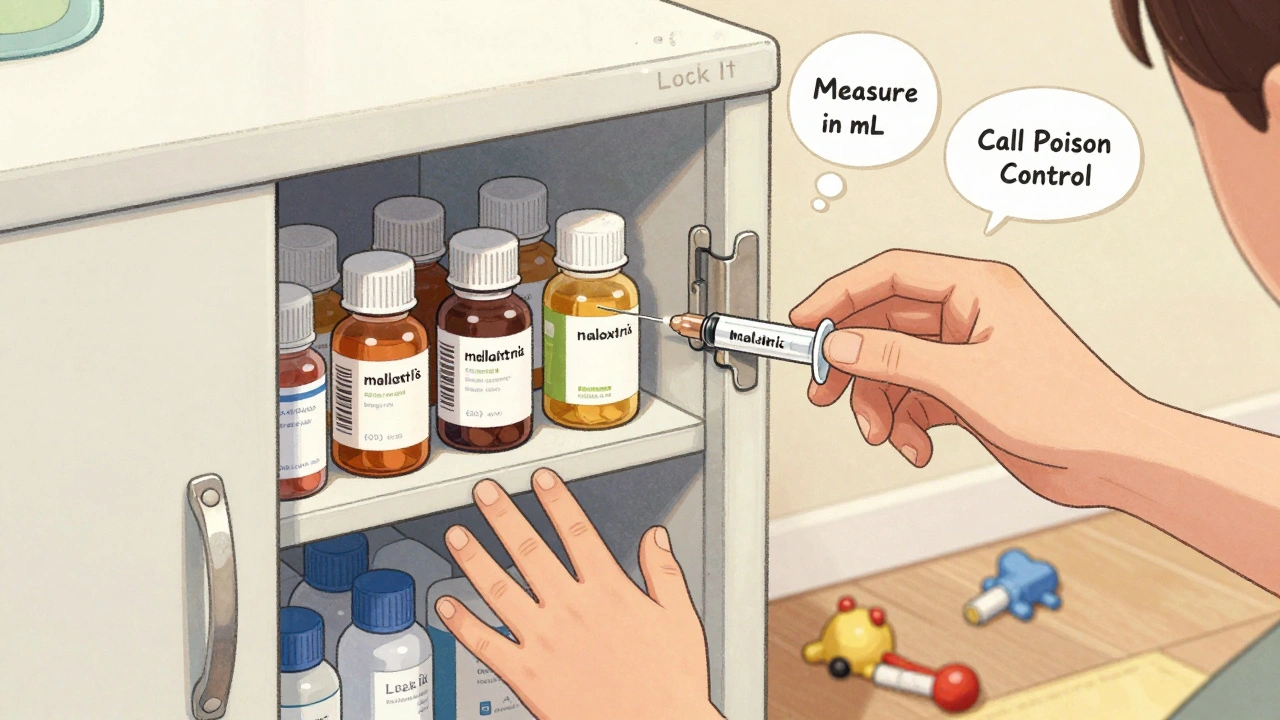
You don’t need fancy tech or expensive gadgets. You just need to change three habits.- Use only the dosing tool that comes with the medicine. Never use a kitchen spoon, shot glass, or eyedropper unless it’s marked in mL. If the bottle didn’t come with a syringe or cup, ask your pharmacist for one. They’ll give it to you free.
- Store everything in a locked cabinet - not just opioids. Keep all meds - even vitamins and cough syrup - in the same locked space. High up. Out of reach. Out of sight. If you don’t have a lock, use a latch or a childproof box. A simple $12 cabinet lock from the hardware store saves lives.
- Dispose of unused meds immediately. Don’t wait until the bottle’s empty. Leftover painkillers, old antibiotics, expired allergy meds - they’re all hazards. Use a take-back program at your pharmacy if available. If not, mix pills with coffee grounds or cat litter, seal them in a bag, and throw them in the trash. Never flush them.
What to Do If Your Child Gets Into Medicine
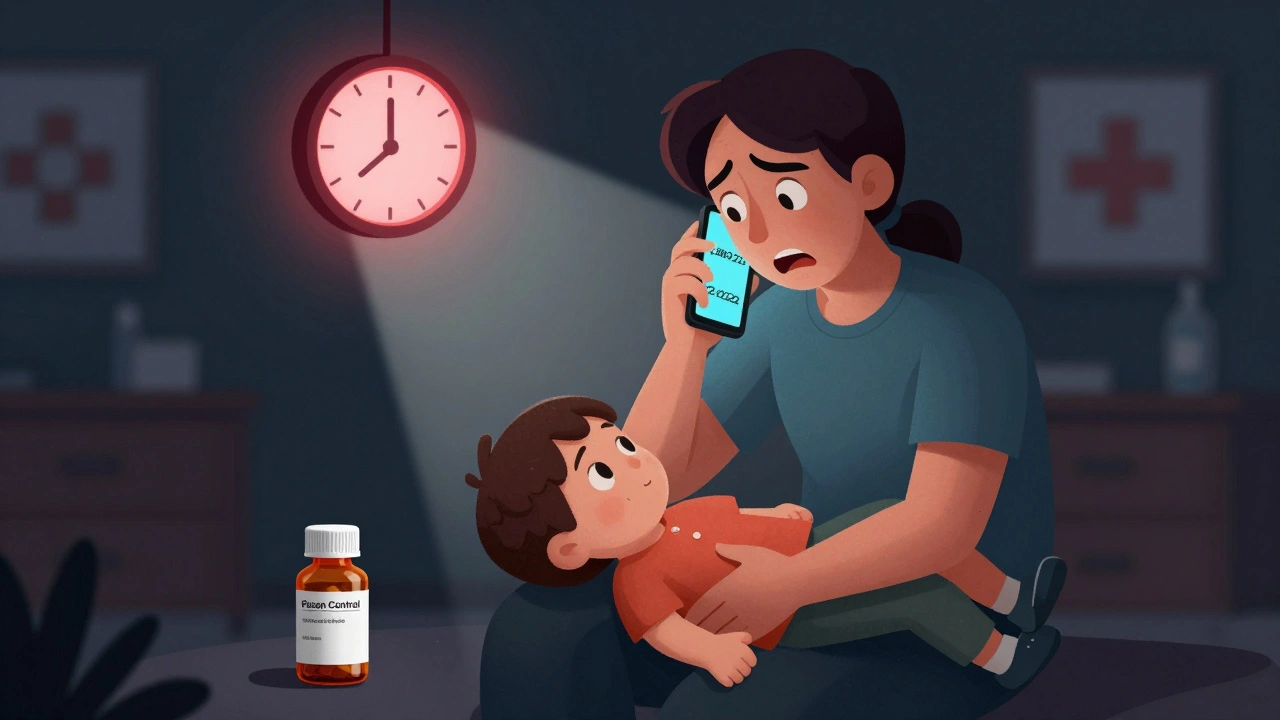
If you suspect your child swallowed medicine - even if they seem fine - act fast.- Call Poison Control immediately. In the U.S., it’s 1-800-222-1222. It’s free, confidential, and available 24/7. Don’t wait for symptoms. Don’t try to make them throw up. Just call.
- Have the medicine bottle ready. When you call, they’ll ask for the name, strength, and how much was taken. Write it down ahead of time so you’re ready.
- If it’s an opioid and your child is unresponsive or not breathing: Administer naloxone if you have it. Intranasal sprays (like Narcan) are safe for kids. Follow the instructions on the box. Even if they wake up, you still need to go to the ER - naloxone wears off before the opioid does, and they could go into overdose again.
Many parents panic and wait. They think, "Maybe they’re fine." But the window to act is small. In one case from a 2022 poison control report, a child ingested liquid diphenhydramine. The parent waited 45 minutes before calling. By then, the child was having seizures. Another parent called immediately - the child was fine after one dose of activated charcoal. Timing saves lives.
Why Smart Packaging Isn’t Enough
You might think, "I’ll just buy the smart bottle that texts me when it’s opened." But here’s the truth: those devices cost $150-$300. They’re not covered by insurance. And 87% of low-income families can’t afford them. The PROTECT Initiative’s real strength isn’t tech - it’s simple, free, and repeatable actions anyone can do.Even with all the advances, we still have gaps. Only 63% of pediatricians talk about safe storage during checkups. Many parents don’t know that child-resistant caps can be opened by toddlers. And naloxone for kids? It’s FDA-approved - but most pharmacies won’t hand it out unless you ask for it by name.
What’s Coming Next
By 2025, the FDA will require flow restrictors on all liquid opioid medications - a big win. The CDC plans to expand the Up and Away campaign into 12 new languages by 2026. And in late 2024, the American Society of Health-System Pharmacists will release its first-ever Pediatric Medication Safety Best Practices Guide - a clear roadmap for pharmacists, doctors, and parents.The goal? Reduce pediatric medication overdose visits by 10% from 2019 levels by 2030. We’re halfway there. But progress stalls when people think, "It won’t happen to me." It can. And it does.
Can child-resistant caps really keep my toddler out of medicine?
No - they’re not foolproof. About 10% of children can open child-resistant caps by age 3.5, according to Consumer Product Safety Commission testing. That’s why storage matters more than caps. Always lock medicine away, even if the cap is "child-resistant."
Is it safe to use a kitchen spoon to measure medicine?
Never. A kitchen teaspoon holds anywhere from 3-7 mL - but the correct dose for most pediatric liquids is exactly 5 mL. Using a spoon can lead to a 40% overdose or more. Always use the syringe, dropper, or cup that came with the medicine - and only measure in milliliters (mL).
What’s the difference between infant and children’s acetaminophen?
Infant drops are 80 mg per mL. Children’s suspension is 160 mg per mL. If you give a dose meant for infant drops using the children’s formula, you’re giving double the medicine. Always check the label for concentration and match it to your child’s weight. Never assume they’re the same.
Should I keep naloxone at home if my child is on opioids?
Yes - if your child is prescribed opioids, ask your doctor for naloxone. It’s safe for kids and can reverse an overdose in minutes. The AAP now recommends it for all pediatric opioid prescriptions. Keep it in your first aid kit and know how to use it. Intranasal sprays are easiest for non-medical caregivers.
How do I dispose of old or unused medicine safely?
Use a drug take-back program at your pharmacy if possible. If not, mix pills with used coffee grounds or cat litter in a sealed bag, then throw them in the trash. Never flush them down the toilet - they contaminate water supplies. For liquids, pour them into a sealable container with kitty litter or sawdust before discarding.
What if my child only took one pill? Do I still need to call?
Yes. Even one pill can be dangerous for a young child. Some medications, like blood pressure pills or opioids, are deadly in tiny doses. Call Poison Control at 1-800-222-1222 immediately. They’ll tell you whether to wait, watch, or go to the ER. Don’t guess.
Emily Haworth
December 13, 2025 AT 00:12kevin moranga
December 13, 2025 AT 02:56Tyrone Marshall
December 14, 2025 AT 20:19Keasha Trawick
December 15, 2025 AT 22:55Alvin Montanez
December 16, 2025 AT 14:19Lara Tobin
December 18, 2025 AT 09:31Bruno Janssen
December 18, 2025 AT 21:06John Fred
December 20, 2025 AT 20:59Tom Zerkoff
December 22, 2025 AT 20:52Scott Butler
December 23, 2025 AT 09:55