

Air pollution is not just an environmental statistic; for the estimated 339 million people worldwide living with asthma, it is a daily trigger that inflames airways, increases medication use, and drives emergency room visits. Recent data shows that outdoor pollutants like particulate matter (PM2.5) and nitrogen dioxide directly worsen respiratory symptoms. However, you do not have to simply accept this risk. By combining behavioral changes, specific indoor filtration technologies, and awareness of policy-level standards, you can significantly reduce your exposure and improve your lung health.
Understanding the Pollutants That Trigger Asthma
To protect yourself, you first need to know what you are avoiding. Not all air pollution is created equal, but several key pollutants are particularly dangerous for asthmatics. The most critical culprits include particulate matter, specifically PM2.5 and PM10, which are tiny particles small enough to penetrate deep into the lungs. Other major triggers include nitrogen dioxide (NO2), often emitted from vehicle exhaust, ozone (O3), which forms on hot, sunny days, and sulfur dioxide (SO2). A 2024 systematic review confirmed that these pollutants cause inflammatory responses in the airways, leading to increased morbidity. Understanding these specific entities helps you identify when and where your risk is highest, such as near busy roads or during high-ozone summer afternoons.
Monitoring Outdoor Air Quality Effectively
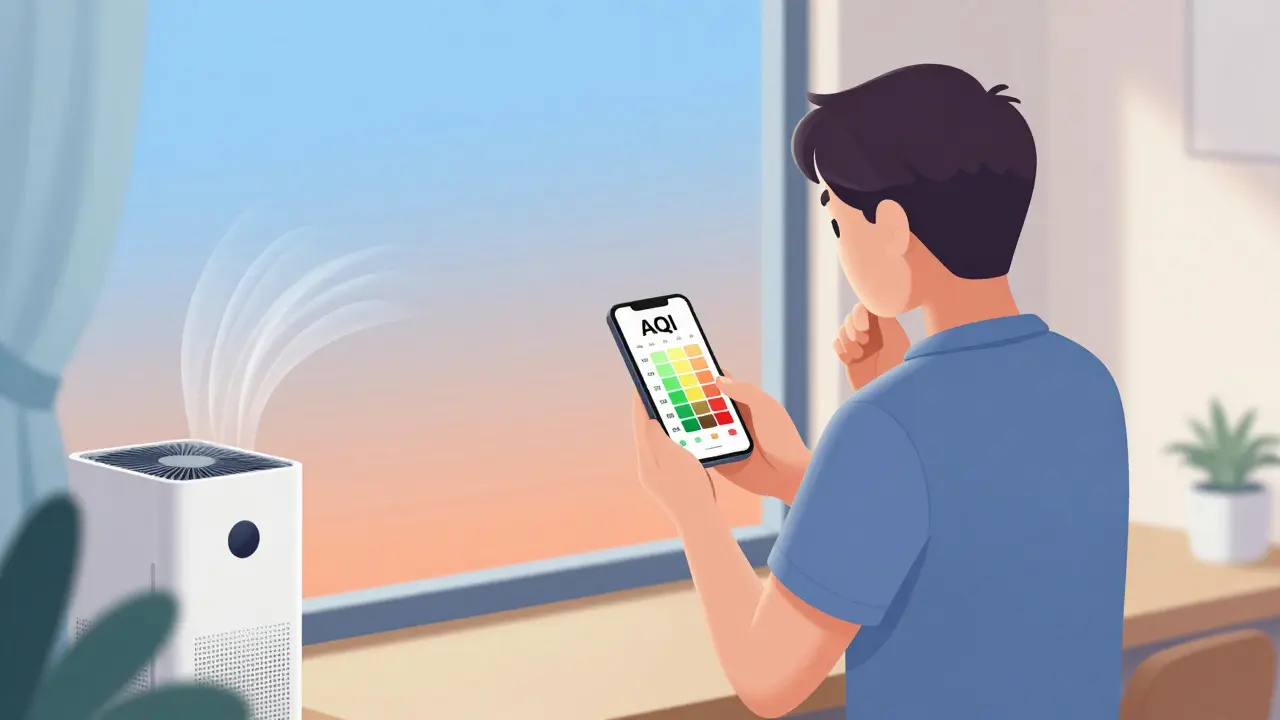
You cannot manage what you do not measure. Checking the Air Quality Index (AQI) before heading outside is one of the most effective individual-level interventions available. The EPA’s platform, AirNow.gov, provides real-time data that translates complex pollutant concentrations into simple color-coded categories. Here is how you should interpret these numbers for asthma management:
- AQI 51-100 (Moderate): Sensitive groups, including those with asthma, should consider reducing prolonged outdoor exertion.
- AQI 101-150 (Unhealthy for Sensitive Groups): All asthma patients should reduce prolonged outdoor activities.
- AQI 151-200 (Unhealthy): Avoid prolonged outdoor exertion entirely.
- AQI 201-300 (Very Unhealthy): Avoid all outdoor exertion.
Optimizing Indoor Air Quality with Filtration
When outdoor air is poor, your home should be a sanctuary. However, indoor air quality is often compromised by infiltration from outside. During wildfire events, research from the California Air Resources Board indicates that even with windows closed, indoor PM2.5 levels can reach 60-80% of outdoor levels within an hour. To combat this, you need robust filtration. HEPA filters are the gold standard, capable of capturing 99.97% of particles as small as 0.3 microns. When selecting a system for your HVAC, look for a Minimum Efficiency Reporting Value (MERV) rating of 13-16. For portable units, focus on the Clean Air Delivery Rate (CADR). The Association of Home Appliance Manufacturers recommends a CADR equal to at least two-thirds of your room's square footage. For example, a 300-square-foot bedroom requires a purifier with a CADR of at least 200. Studies show that proper HEPA filtration can reduce indoor PM2.5 concentrations by 55-67% compared to homes without filtration.
| Feature | Portable HEPA Purifier | HVAC MERV Filter Upgrade | N95 Respirator |
|---|---|---|---|
| Filtration Efficiency | 99.97% at 0.3 microns | Varies by MERV (13-16 recommended) | 95% of airborne particles |
| Cost Range | $50 - $800 unit; $20-$100/filter | $20 - $100 per filter | $1 - $3 per unit |
| Best Use Case | Single rooms, bedrooms | Whole-house protection | Short-term outdoor exposure |
| Maintenance Frequency | Replace every 3-6 months | Replace every 3-6 months | Single-use or limited reuse |
The Role of Policy and Community Interventions
Individual actions are powerful, but they have limits. You cannot control traffic emissions or industrial output alone. This is why policy-level interventions are crucial. The EPA’s National Ambient Air Quality Standards (NAAQS) set legal limits for pollutants, though experts argue these are not strict enough. As of 2023, the annual PM2.5 standard was 12 μg/m³, while the American Thoracic Society recommends a stricter limit of 8 μg/m³ annually. Community efforts also yield results. School-based interventions, such as relocating bus parking zones and implementing anti-idling policies, have reduced indoor PM2.5 levels by 22-35% according to Massachusetts Department of Environmental Protection monitoring. Furthermore, urban planning initiatives in 47 U.S. cities now require new schools to be located at least 500 feet from major roadways, directly protecting children from traffic-related pollutants.

Practical Implementation and Common Pitfalls
Knowing what to do is different from doing it consistently. Many users face barriers such as work obligations or childcare responsibilities, with surveys showing only 32% of asthma patients consistently modify activities based on air quality readings. To overcome this, integrate checks into your daily routine. Proper placement of air purifiers is another common mistake; placing them against walls can reduce effectiveness by 30-50%. Ensure there is adequate airflow around the unit. Additionally, filter maintenance is critical-only 43% of users replace HEPA filters on schedule. Set calendar reminders for filter changes. For workplace environments, maintaining indoor humidity between 30-50% can help reduce dust mites and mold, achievable with affordable dehumidifiers. Remember that personal protective equipment like N95 masks provides incomplete protection and may create a false sense of security, especially for children who often wear them improperly.
Future Directions in Asthma Management
The landscape of air pollution management is evolving rapidly. Technology is becoming more personalized. The NIH’s ECHO program is developing wearable sensors and machine learning models to provide personalized air pollution exposure alerts for children with asthma. On the policy front, electric school bus adoption is accelerating, with California allocating $1.5 billion to replace diesel buses by 2035, expected to reduce children's exposure to traffic pollutants by up to 60%. Looking ahead, integrating air quality data with electronic health records could allow doctors to adjust treatments proactively based on local pollution forecasts. While climate change poses long-term risks, such as potential increases in ozone-related asthma cases, current interventions offer immediate relief. By staying informed and taking proactive steps, you can significantly mitigate the impact of air pollution on your respiratory health.
What is the best type of air filter for someone with asthma?
The best type of filter is a True HEPA filter, which captures 99.97% of particles as small as 0.3 microns. For central HVAC systems, look for filters with a MERV rating of 13-16. These specifications ensure that fine particulate matter, a major asthma trigger, is effectively removed from the air.
How often should I check the Air Quality Index (AQI)?
You should check the AQI daily, especially before planning outdoor activities. Apps like AirNow or AirVisual provide real-time updates. If the AQI is above 100 (Unhealthy for Sensitive Groups), you should consider limiting prolonged outdoor exertion to prevent asthma symptoms.
Can closing windows protect me from outdoor air pollution?
Closing windows helps, but it is not a complete solution. During high pollution events like wildfires, indoor PM2.5 levels can still reach 60-80% of outdoor levels within an hour due to infiltration. Using a HEPA air purifier and setting your HVAC to recirculation mode is necessary to maintain safe indoor air quality.
Are N95 masks effective for preventing asthma attacks from pollution?
N95 respirators can filter out 95% of airborne particles, but they provide incomplete protection and are difficult to wear correctly, especially for children. Experts caution that they may create a false sense of security. They are best used for short-term, high-exposure situations rather than as a primary long-term strategy.
What CADR should I look for when buying a portable air purifier?
Look for a Clean Air Delivery Rate (CADR) that is at least two-thirds of the room's square footage. For example, if your bedroom is 300 square feet, you need a purifier with a CADR of at least 200. This ensures the device can clean the air efficiently within the space.