
Why biologics aren't just "generics"
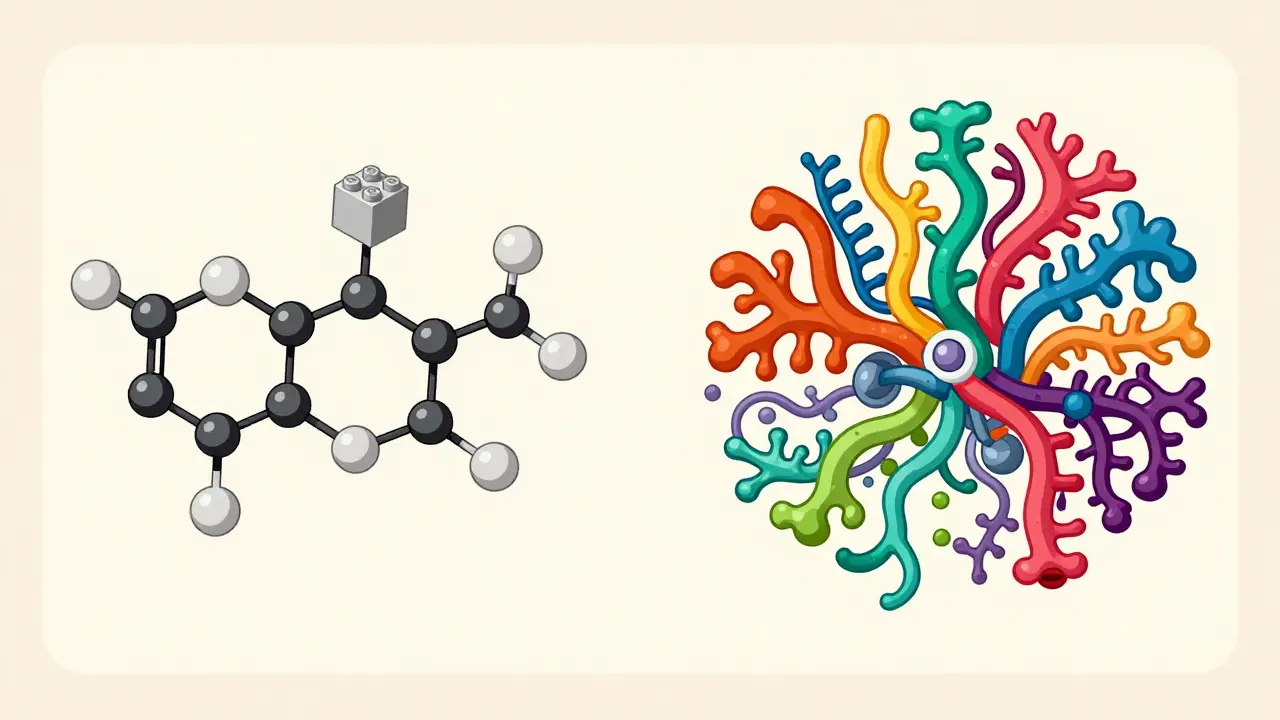
To understand why we need a different category for biologics, we have to look at the science. Most traditional drugs, like aspirin or blood pressure meds, are small molecules. They have a simple, stable structure that is easy to replicate. A generic version is chemically identical to the brand name. Biologics are a different beast. They are large, complex proteins produced in living cells-like microorganisms or animal cells. Because they are grown, not just mixed in a beaker, they are inherently heterogeneous. Even the original brand-name product has slight differences between lots. This is why a true "generic" biologic is scientifically impossible. Instead, we have Biosimilars, which are designed to be "highly similar." They must have the same mechanism of action, the same strength, and the same route of administration (like an injection or infusion) as the reference product.The "Authorized Generic" equivalent: Interchangeable Biosimilars
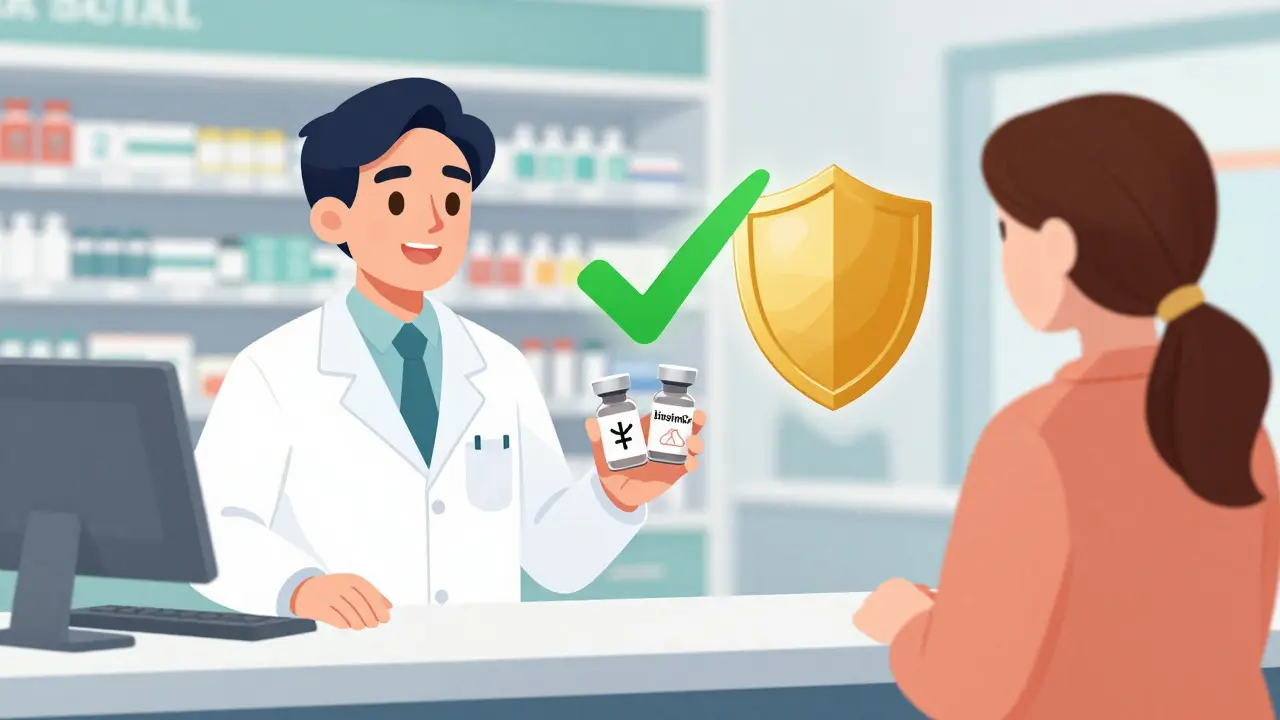
In the world of small-molecule drugs, an authorized generic is simply the brand-name drug sold under a generic label. It's the same exact product. The closest equivalent in the biologics world is the Interchangeable Biosimilar. While a standard biosimilar requires your doctor to switch your prescription, an interchangeable biosimilar meets an even higher regulatory bar. The FDA requires extra data to prove that switching between the reference product and the biosimilar doesn't cause any change in the patient's clinical outcome. This is a huge deal for patients because it allows for automatic substitution at the pharmacy level in many states. If a drug is deemed interchangeable, your pharmacist might be able to give you the lower-cost version without your doctor needing to write a brand-new prescription. For example, the recent approval of Amjevita as an interchangeable version of Humira is a major step in making these treatments more accessible.| Feature | Small Molecule Generic | Biosimilar | Interchangeable Biosimilar |
|---|---|---|---|
| Structure | Simple, chemical | Complex, protein-based | Complex, protein-based |
| Similarity | Identical copy | Highly similar | Highly similar + switching data |
| Pharmacy Substitution | Commonly automatic | Requires doctor's order | Possible automatic (state dependent) |
| Typical Cost Saving | 80% - 85% | 10% - 50% | 10% - 50% |
How the FDA ensures these drugs are safe
You might wonder if "highly similar" is a fancy way of saying "almost as good." In reality, the approval process for biosimilars is incredibly rigorous. Manufacturers don't just show that the drug looks the same under a microscope; they provide a massive body of evidence. This includes data on pharmacokinetics (how the drug moves through your body) and immunogenicity (whether your immune system reacts to the drug). Experts like Dr. Peter L. Salgo from Columbia University have noted that this "totality of evidence" approach provides high confidence in safety and efficacy. The goal is to ensure that patients don't experience new or worsening side effects when switching. For most, the transition is seamless. For instance, some breast cancer patients switching to biosimilar versions of trastuzumab have reported identical results while seeing their out-of-pocket costs drop from $1,200 to $450 per infusion.The hurdles to wider adoption
If biosimilars are safe and cheaper, why aren't they used as widely as generics? While generic drugs make up about 90% of U.S. prescriptions, biosimilars still hold a market share below 20%. There are a few reasons for this gap. First, there is physician and patient hesitancy. In oncology, some doctors are reluctant to switch a patient who is doing well on a brand-name drug, fearing any change might disrupt the treatment. Second, there is the "patent cliff" and legal battles. Brand-name companies often file dozens of patents to block competitors. The FTC has noted that some companies file nearly 15 patent challenges per biosimilar to delay their entry into the market. Lastly, insurance complexity plays a role. Some plans place biosimilars on a "preferred specialty tier," making them cheaper, while others keep them on the same tier as the brand drug, removing the financial incentive for the patient to switch.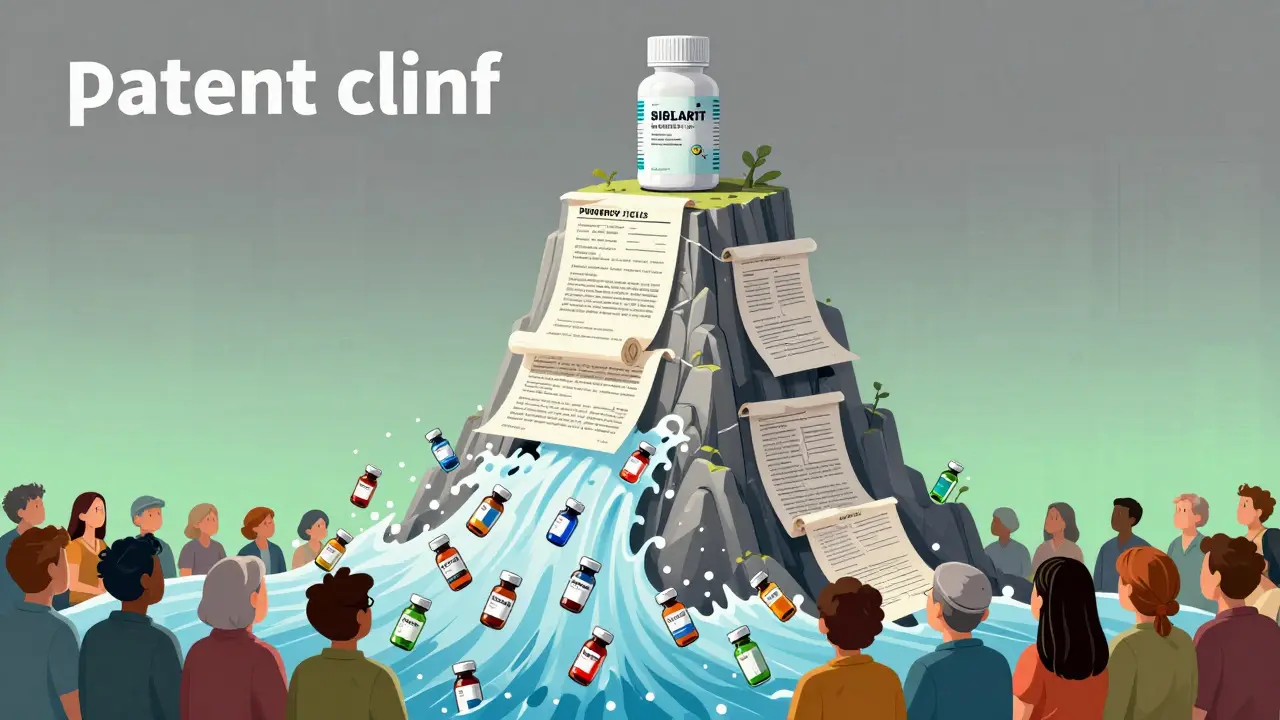
Practical tips for switching to a biosimilar
If your insurance or doctor suggests a switch, it's normal to have questions. Here is a practical way to handle the transition:- Check the status: Ask your pharmacist if the alternative is an "interchangeable biosimilar." If it is, the substitution process is much simpler.
- Monitor your reaction: While rare, some patients report new injection site reactions during multiple switches. Keep a log of any new symptoms to share with your doctor.
- Review the cost: Check with your insurance provider to see if the biosimilar puts you in a lower cost-sharing tier.
- Ask about the "reference product": Know the name of the original brand-name drug the biosimilar is based on. This helps you track the evidence and guidelines for that specific treatment.
The future of biologic alternatives
We are currently seeing a massive shift in the market. The global biosimilars market is projected to grow to nearly $59 billion by 2030. As more patents expire, the "patent cliffs" will lead to a flood of more affordable options. The Congressional Budget Office estimates that biosimilars could save the U.S. healthcare system over $314 billion over the next decade, with a huge chunk of that coming from Medicare savings. As the FDA continues to simplify labeling and clarify the path to interchangeability, we can expect the gap between generic adoption and biosimilar adoption to close. The shift toward these authorized biologic alternatives isn't just about saving money; it's about making life-saving treatments sustainable for the entire healthcare system.Are biosimilars exactly the same as generics?
No. Generics are chemically identical copies of small-molecule drugs. Biosimilars are "highly similar" versions of complex proteins. Because biologics are made from living cells, they cannot be exact copies, but they are proven to have no clinically meaningful differences in safety or effectiveness.
Can a pharmacist switch my biologic to a biosimilar without my doctor's permission?
Only if the drug is approved as an "interchangeable biosimilar" and if your state law allows it. Standard biosimilars always require a prescriber's intervention or a new prescription to be switched.
Will switching to a biosimilar affect my treatment results?
For the vast majority of patients, there is no difference in clinical outcome. The FDA requires rigorous testing to ensure that biosimilars provide the same efficacy and safety as the reference product.
Why are biosimilars not as cheap as traditional generics?
The manufacturing process for biologics is far more expensive and complex than for small-molecule drugs. While generics can offer 80% savings, biosimilars typically offer reductions between 10% and 50% because of these higher production costs.
What is a "reference product"?
The reference product is the original brand-name biologic drug that was first approved by the FDA. The biosimilar is developed and tested to be highly similar to this specific original product.
Amber McCallum
April 28, 2026 AT 01:03Typical corporate talk. They just want us to think everything is fine while they play with our biology. It's all about the money, not the soul.
Kali Murray
April 28, 2026 AT 12:25honestly sounds fine to me 🤷♀️💸
Aubrey Johnson
April 29, 2026 AT 10:53It is frankly embarrassing that most people cannot distinguish between a simple molecule and a complex protein. The ignorance regarding the basic biochemistry of these drugs is staggering.
prince king
May 1, 2026 AT 07:26It's actually really cool how science works to make these things more accessible 🌟 I think we're moving in a great direction for global health! 😊
Abhishek Charan
May 2, 2026 AT 08:15Actually, the "totality of evidence" is just a convenient loophole for the FDA!!! 🙄 Why should we trust these companies when they are just trying to undercut the original creators??? 🤨
Darrin Oneto
May 3, 2026 AT 10:30Man, these pharma giants are just playing a wild game of musical chairs with patents, it's absolute madness lol. Total circus!
Ryan Wilson
May 3, 2026 AT 10:43The absolute audacity of these pharmaceutical vampires to file 15 patents just to keep the profit margins bloated is a moral vacuum of the highest order. It's a parasitic relationship where the patient is the host being bled dry by legal gymnastics and corporate greed. We're talking about life-saving medicine being treated like a luxury handbag by these ghouls. The system isn't broken; it's designed to be this way so a few suits can buy another yacht while patients pray for a biosimilar to actually be affordable. It's a grotesque display of late-stage capitalism at its most vile. They don't care about
Thomas Jorquez
May 4, 2026 AT 20:02The distincshion between generic and biosimilar is quite importent for the consumer to grasp.
Trish Perry
May 6, 2026 AT 06:09Makes you think about how we define 'identical' in a biological sense. Nature is never really a carbon copy, is it?
Jean Robert
May 6, 2026 AT 10:52I really feel for those of you who are nervous about switching your meds because it's such a scary process to feel like your stability is at risk, but please know that there is a whole team of researchers working to make sure you stay safe. Just take it one day at a time and keep a detailed log of how you feel, and you'll find that the transition is usually much smoother than we imagine it to be in our heads. You've got this, and your health is the most important thing, so keep leaning on your doctors for support during this change.
Stephen Johnson
May 8, 2026 AT 01:11The nuance here is that the system is evolving to accept that perfection is impossible in biology.
Steve Grayson
May 8, 2026 AT 03:36I agree that the cost savings are the most important part for most people.
Timothy Brown
May 9, 2026 AT 08:21Honestly, if your doctor is still scared to switch you, maybe it's time for a new doctor who actually keeps up with the science.
Jonathan Hall
May 10, 2026 AT 07:31While I generally strive for a peaceful understanding between the pharmaceutical industry and the patients, the sheer aggressiveness of the patent-filing strategy is an absolute travesty that needs to be dismantled by legal force because it is simply not acceptable to hold health hostage for the sake of a quarterly report, and it is frankly disgusting that we even have to explain the difference between a generic and a biosimilar when the goal should simply be affordable access for every single human being regardless of their socioeconomic status or the complex nature of the protein they need to survive.