
What Happens in a Benzodiazepine Overdose?
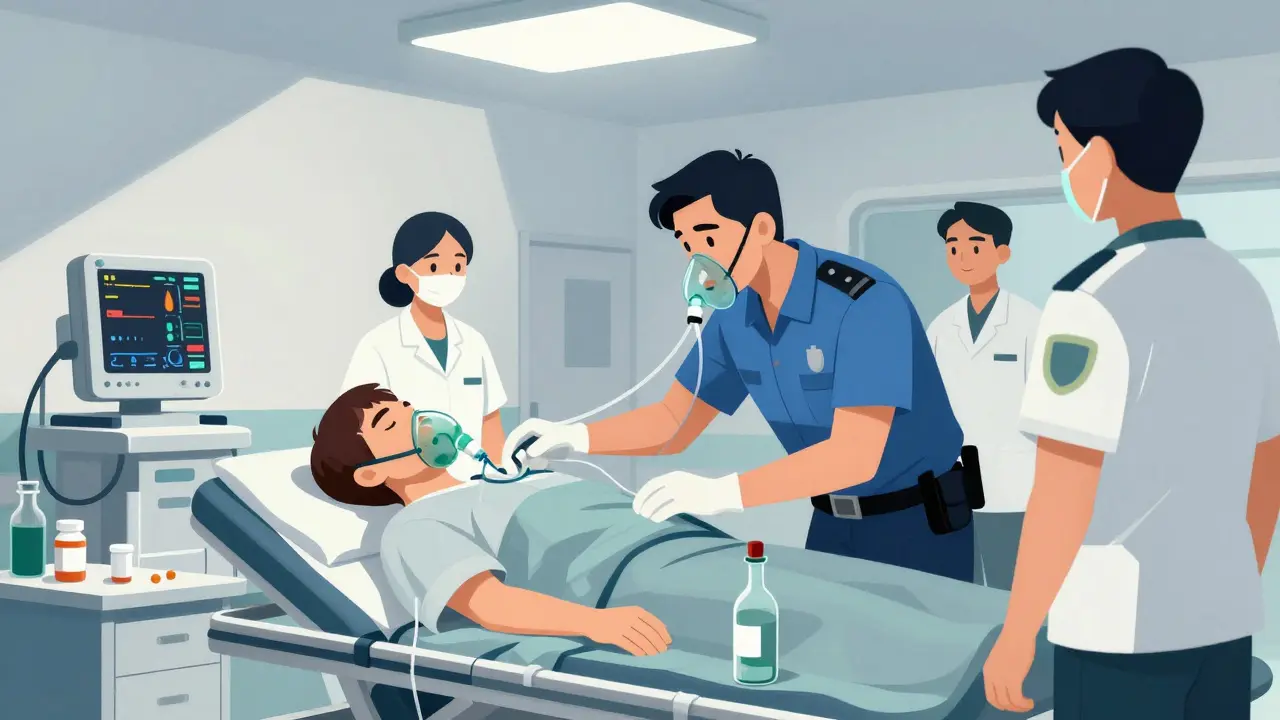
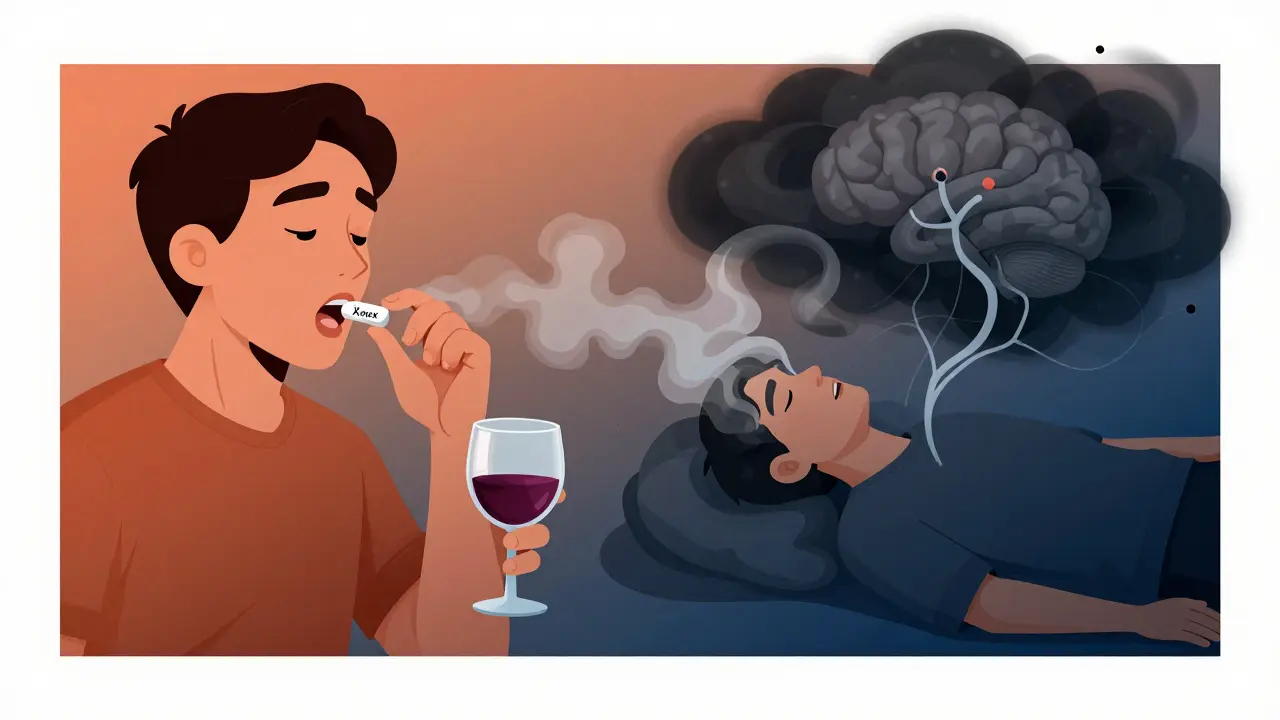
When someone takes too much of a benzodiazepine-whether it’s diazepam, alprazolam, or lorazepam-their brain slows down too much. This isn’t just feeling sleepy. It’s respiratory depression, where breathing becomes shallow, slow, or stops entirely. The risk skyrockets when benzodiazepines are mixed with opioids, alcohol, or sleep aids. In fact, 92% of deaths linked to benzodiazepines involve another CNS depressant, according to CDC data from 2022. Pure benzodiazepine overdoses rarely kill on their own, but they can leave someone unconscious, unable to protect their airway, and vulnerable to choking or aspiration.
Alprazolam is especially dangerous. Studies show it’s 3.2 times more likely to require intubation than other benzodiazepines. That’s because it hits the brain faster and harder. People who take it regularly for anxiety might not realize how quickly tolerance builds-and how easily a "normal" dose can turn into an overdose when combined with even a small amount of alcohol or painkillers.
First Response: ABCDE Protocol
Emergency teams don’t guess. They follow the ABCDE approach: Airway, Breathing, Circulation, Disability, Exposure. It’s simple, structured, and saves lives.
- Airway: Is the person responsive? Can they cough or speak? If not, they need immediate airway support. A Glasgow Coma Scale score of 8 or lower means you’re looking at a patient who may need intubation within minutes.
- Breathing: Check the rate. Fewer than 10 breaths per minute is a red flag. Oxygen is given via non-rebreather mask at 15 liters per minute-unless the patient has COPD and retains CO2. Then, a Venturi mask is used to avoid worsening respiratory failure.
- Circulation: Heart rate and blood pressure are monitored continuously. Most patients stay stable, but low blood pressure can signal a mixed overdose involving other drugs.
- Disability: Is the person confused? Unresponsive? Pupils are checked. Glucose is tested immediately. Hypoglycemia can mimic overdose symptoms.
- Exposure: Look for signs of other drug use. Pills scattered nearby? Empty vials? Needle marks? This isn’t just curiosity-it changes everything.
What Tests Are Done in the ER?
Doctors don’t rely on guesswork. They run specific tests to rule out other causes and find hidden dangers.
- Point-of-care blood glucose test-every time. Low sugar can look exactly like overdose.
- Serum levels of acetaminophen and aspirin-because people often mix pills.
- Serum ethanol level-alcohol is involved in nearly half of all benzodiazepine overdoses.
- Urine toxicology screen-this catches illicit benzodiazepines like etizolam and clonazolam, which are 3-10 times stronger than prescription versions.
These tests aren’t optional. A 2022 BMJ Best Practice review found that 28% of overdose cases missed co-ingestants because providers didn’t test thoroughly enough. Missing one drug can cost someone their life.
Flumazenil: The Antidote That’s Often Dangerous
You might have heard of flumazenil-the drug that reverses benzodiazepines. It sounds perfect. But here’s the truth: it’s rarely used, and when it is, it can backfire.
Flumazenil works fast, but it only lasts about 41 minutes. That means if someone took a long-acting benzodiazepine like diazepam, the sedation comes back after the flumazenil wears off. Worse, if the person is dependent on benzodiazepines-say, they’ve been taking them daily for months-flumazenil can trigger seizures in 38% of cases, according to StatPearls.
And if opioids are involved? Flumazenil does nothing for the opioid part. But it can still cause seizures. That’s why the American College of Medical Toxicology says flumazenil is appropriate in only 0.7% of cases. Most emergency departments stopped stocking it by 2022. A 2022 survey found only 12.3% of emergency physicians had ever given it. One ER nurse on Reddit reported a patient seizing 90 seconds after flumazenil was given-because they’d been taking trazodone with their alprazolam. No one knew until it was too late.
Why Activated Charcoal Doesn’t Help (Most of the Time)
People assume charcoal absorbs drugs. It does-but only if given within an hour of ingestion. Benzodiazepines are absorbed so quickly that after 60 minutes, charcoal has no effect. Emergency Care BC’s 2021 data shows a 45% drop in absorption only if given early. After that? Zero benefit.
And here’s the kicker: single-dose or multi-dose charcoal, hemodialysis, and whole bowel irrigation are no longer recommended in any major guideline. They don’t work. They waste time. And they distract from what actually matters: watching the patient breathe.
How Long Do You Need to Monitor?
You can’t just discharge someone when they wake up. Sedation fades faster than ataxia-the wobbly, uncoordinated movement that makes people fall. That’s why observation time matters.
- Asymptomatic patients: minimum 6 hours of monitoring.
- Symptomatic patients: stay until all signs of CNS depression are gone. For most, that’s 12 hours.
- Elderly patients or those with liver disease: up to 48 hours. Their bodies clear the drug slowly.
One ER director in Phoenix cut transfer rates by 34% just by enforcing a 4-hour minimum observation rule. That’s not luck. It’s protocol.
What’s New in 2026?
The landscape is changing fast. Illicit benzodiazepines like etizolam and clonazolam are flooding the market. They’re stronger, cheaper, and often sold as fake Xanax. In the Western U.S., they now cause 68% of severe overdoses, according to the California Poison Control System.
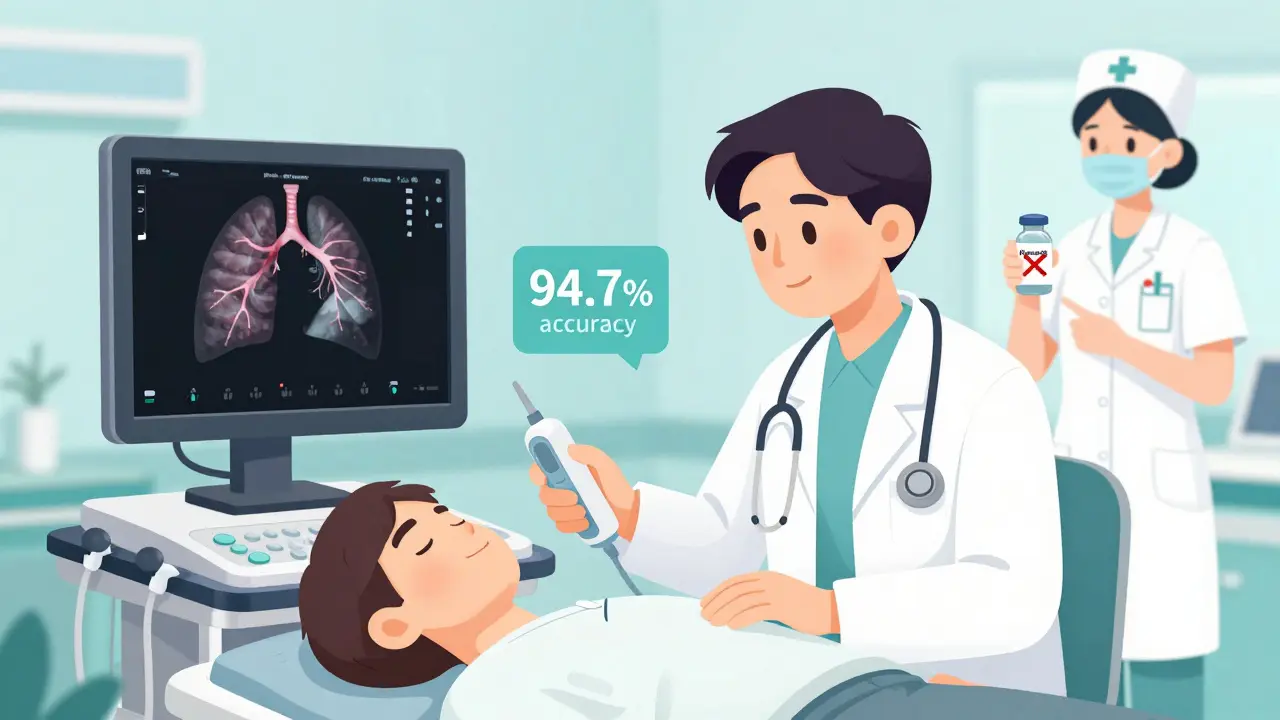
Technology is catching up. The FDA approved the first continuous benzodiazepine blood monitor, BenzAlert™, for clinical trials in early 2023. It predicts when sedation will wear off with 94.7% accuracy. That means less guesswork, fewer unnecessary intubations.
Emergency teams are also using point-of-care ultrasound (POCUS) to check lung movement in real time. Studies show it cuts intubation delays by 22 minutes. That’s 22 minutes where someone might have stopped breathing.
And harm reduction is expanding. As of January 2023, 37 U.S. states now include benzodiazepine recognition in naloxone distribution programs. That’s up from 12 in 2020. First responders are being trained to spot signs of benzodiazepine overdose-not just opioids.
What You Need to Remember
- Don’t assume a person overdosed on just one drug. Always test for others.
- Flumazenil is not a magic fix. It’s risky and rarely needed.
- Time is your best tool. Watch. Wait. Monitor. Don’t rush discharge.
- Ataxia lingers longer than sedation. A person who seems awake can still fall and break a hip.
- Illicit benzodiazepines are deadlier than ever. Assume the worst until proven otherwise.
The goal isn’t to reverse the overdose. It’s to keep the person alive until their body clears the drug. That’s it. Everything else is support.
Can you die from a benzodiazepine overdose alone?
It’s extremely rare. Isolated benzodiazepine overdoses have a mortality rate of only 0.01% to 0.05%. Death almost always happens when benzodiazepines are mixed with other depressants like opioids, alcohol, or barbiturates. The real danger is respiratory failure-not the drug itself.
Why is flumazenil not recommended in most cases?
Flumazenil has a short half-life, meaning sedation can return after it wears off. It also triggers seizures in 38% of people who are physically dependent on benzodiazepines. In mixed overdoses-where opioids or other drugs are involved-it doesn’t help and can make things worse. Most emergency departments stopped stocking it because the risks outweigh the benefits.
How long should a patient be monitored after a benzodiazepine overdose?
Asymptomatic patients need at least 6 hours. Symptomatic patients should be watched until all signs of CNS depression are gone, which usually takes 12 hours. For older adults or those with liver problems, monitoring may last 24 to 48 hours. Ataxia (loss of coordination) can persist even after someone seems awake, so discharge too early can lead to falls and injuries.
Are newer benzodiazepines like etizolam more dangerous?
Yes. Illicit benzodiazepines like etizolam and clonazolam are 3 to 10 times more potent than prescription versions. They’re often sold as fake Xanax or Klonopin, and users don’t know the dose. These drugs are now responsible for 68% of severe overdose cases in the Western U.S. They’re harder to detect with standard urine tests and cause deeper, longer-lasting sedation.
Can activated charcoal help treat a benzodiazepine overdose?
Only if given within 60 minutes of ingestion-and even then, it’s rarely used. Benzodiazepines are absorbed very quickly in the gut. After an hour, charcoal has no effect. Major guidelines, including those from StatPearls and the American College of Medical Toxicology, no longer recommend it. Time is better spent monitoring breathing and oxygen levels.
What should family members do if they suspect a benzodiazepine overdose?
Call emergency services immediately. Do not try to make the person vomit or give them coffee or cold showers. Keep them awake and in a side-lying position to prevent choking. If naloxone is available and you suspect opioids are involved, administer it-but know it won’t reverse benzodiazepine effects. Stay with them until help arrives. Bring any pill bottles or packaging to the hospital.
What Comes Next After the ER?
Surviving an overdose is just the first step. Many people who overdose on benzodiazepines are struggling with anxiety, insomnia, or addiction. The ER isn’t the end-it’s the beginning of a longer conversation.
Patients should be connected to mental health services, addiction counseling, or harm reduction programs. The FDA now requires warning labels on all benzodiazepine prescriptions about the risks of combining them with opioids. And with illicit benzodiazepines on the rise, education is more important than ever.
Emergency departments are starting to partner with community health workers to follow up with overdose survivors within 72 hours. Early intervention reduces repeat overdoses by nearly 50%, according to a 2023 study in the Journal of Substance Abuse Treatment.
The future isn’t about more drugs. It’s about better monitoring, smarter protocols, and recognizing that overdose is often a symptom of something deeper.