
What CBT for Chronic Pain Really Does
Chronic pain isn’t just a physical sensation. It’s a cycle - pain leads to fear, fear leads to inactivity, inactivity leads to more pain, and the mind starts believing the pain will never get better. That’s where CBT for chronic pain comes in. It doesn’t erase the pain, but it changes how you relate to it. Developed in the 1970s by pain psychologists like Dennis Turk and Robert Kerns, Cognitive Behavioral Therapy for Chronic Pain (CBT-CP) is now the most studied psychological treatment for long-term pain conditions like lower back pain, fibromyalgia, and arthritis.
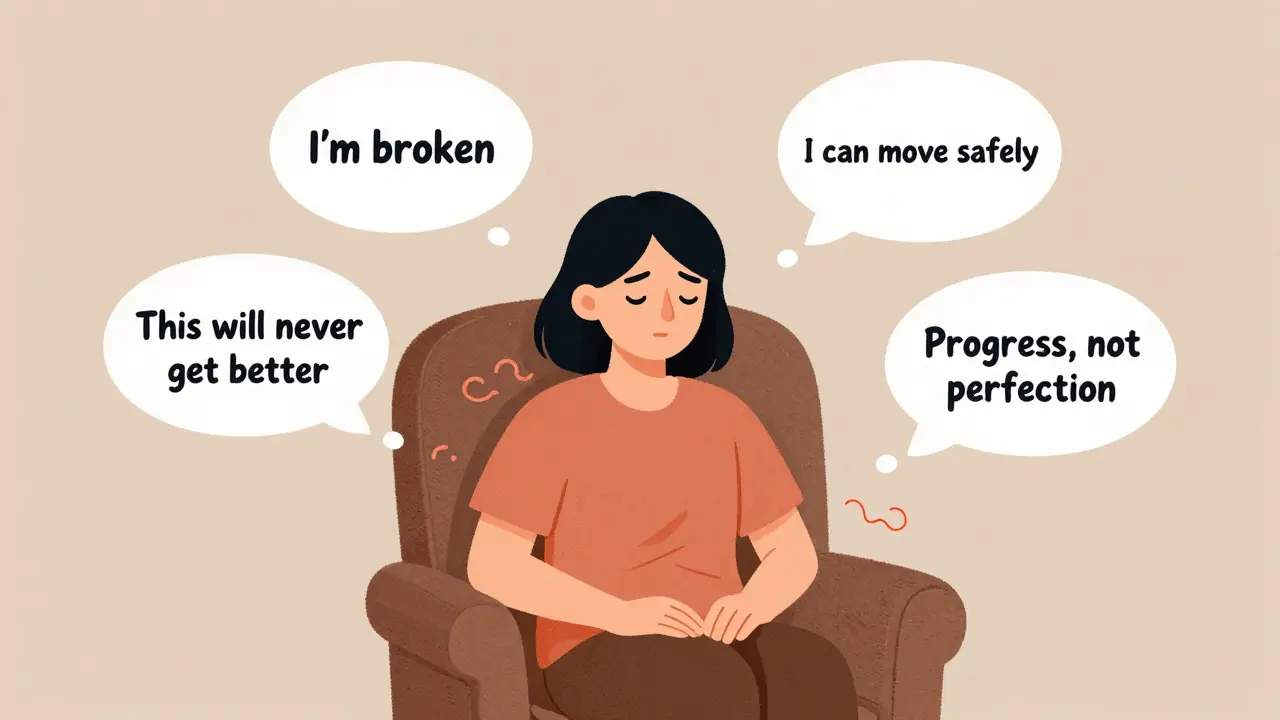
Unlike medications that target nerves or inflammation, CBT works on the thoughts and habits that keep pain stuck. If you’ve ever thought, “I can’t do anything because of this pain,” or “This will never get better,” you’ve already experienced the kind of thinking CBT helps untangle. It’s not about pretending the pain isn’t there. It’s about stopping the mental habits that make it worse.
How CBT for Chronic Pain Actually Works
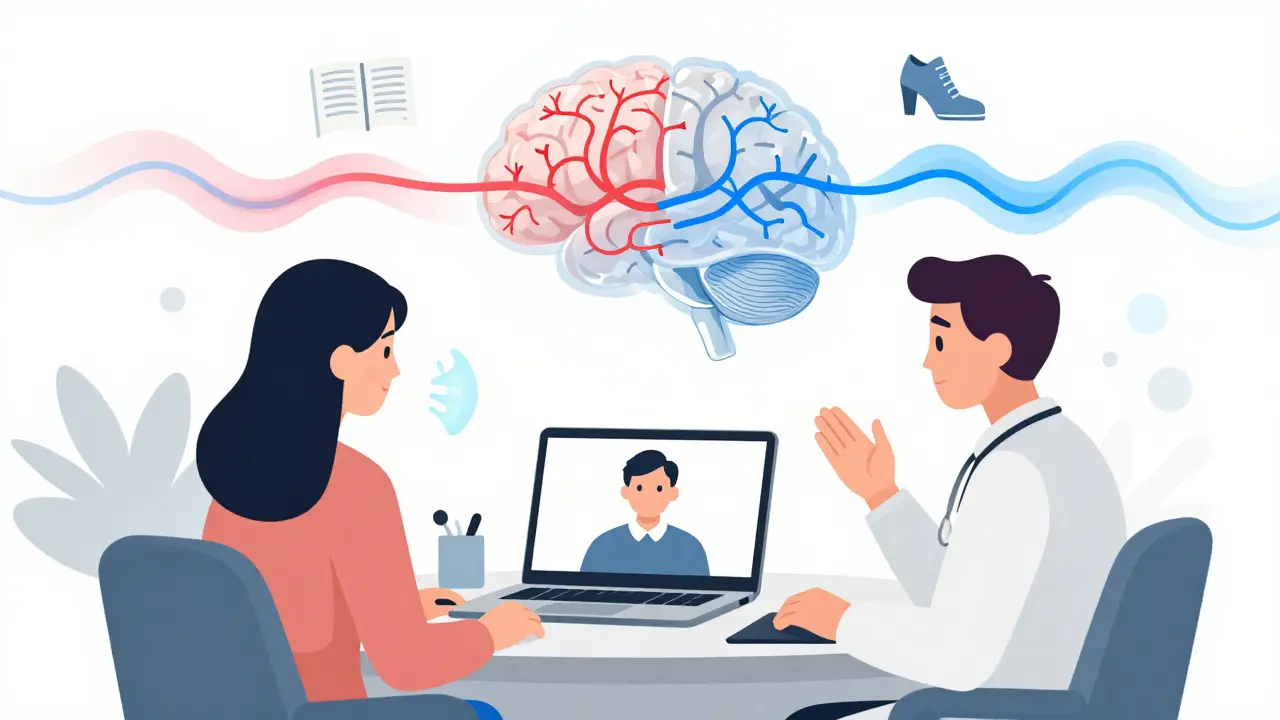
A typical CBT-CP program runs for 8 to 12 weekly sessions, each about an hour long. You’ll work with a trained therapist - either in person or via video call - using a structured plan. Here’s what you’ll actually do:
- Pain education: You’ll learn how pain signals work in the brain, not just the body. This helps take the mystery out of why pain lingers even after an injury heals.
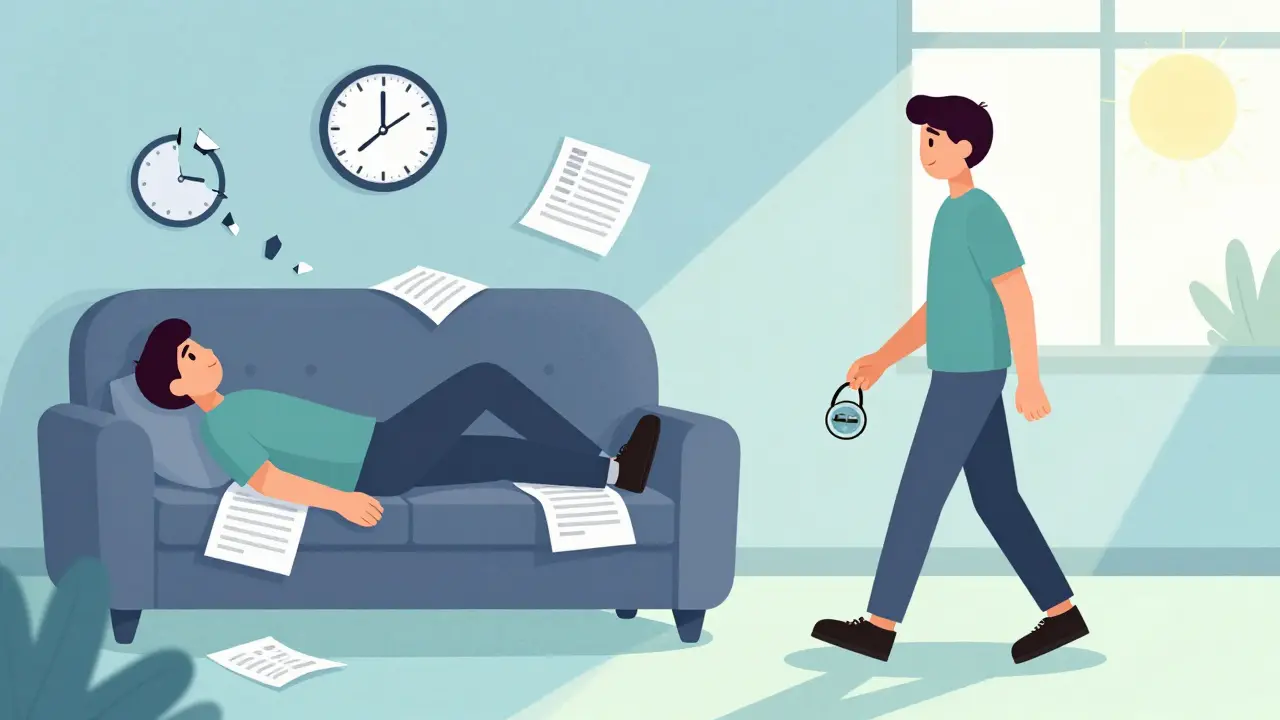
- Activity pacing: Instead of pushing through pain until you crash (boom-bust cycle), you learn to spread activity evenly across the day. A 2023 Veterans Health Administration study found this single change improved daily function for 73% of participants.
- Cognitive restructuring: You identify negative thoughts like “I’m broken” or “Movement will damage me,” and replace them with more realistic ones: “My body is sensitive right now, but I can move safely.”
- Relaxation training: Techniques like diaphragmatic breathing and progressive muscle relaxation reduce the body’s stress response, which often amplifies pain.
- Behavioral activation: You rebuild activities you’ve avoided - walking, gardening, socializing - not because the pain is gone, but because you’ve learned to manage it while doing them.
The U.S. Department of Veterans Affairs uses a standardized workbook for this, and research shows it works. A 2023 review of 13 studies found CBT-CP improved depression and anxiety in most patients, with effect sizes nearly twice as strong as for pain intensity alone.
What CBT Can and Can’t Do for Pain
Let’s be clear: CBT won’t make your chronic pain disappear. A 2023 systematic review found only 25% of studies showed significant pain reduction compared to usual care. But that’s not the point.
Where CBT shines is in what it does change:
- Depression and anxiety: 6 out of 8 studies showed big improvements. If pain has made you feel hopeless or isolated, CBT helps rebuild your emotional resilience.
- Function: People report being able to walk farther, sleep better, and return to hobbies - even if pain levels stay the same.
- Opioid use: In the 2024 STAMP trial, 36% of people in CBT reduced their daily opioid dose, compared to just 17% in standard care. That’s a major win in a time when opioid dependence is a leading public health issue.
It doesn’t work as well for neuropathic pain (like diabetic nerve pain) compared to musculoskeletal pain (like back or joint pain). And it’s less effective if you’re in the middle of a severe flare-up - it’s designed for steady, long-term management, not crisis intervention.
CBT vs. Other Pain Treatments
How does CBT stack up against other options?
| Treatment | Effect on Pain Intensity | Effect on Function | Effect on Mood | Risks |
|---|---|---|---|---|
| CBT for chronic pain | Moderate to low | High | High | Low (requires effort) |
| Mindfulness-Based Therapy | Moderate | High | High | Low |
| Physical Therapy | Moderate | High | Low | Low (risk of overexertion) |
| Opioid Medications | High (short-term) | Low | Low | High (addiction, tolerance, overdose) |
| CBT + Physical Therapy | High | Very High | Very High | Low |
Studies show CBT combined with physical therapy works better than either alone. Patients who did both reported 40% greater improvement in daily function than those who did CBT alone. And unlike opioids, CBT doesn’t carry the risk of addiction or overdose - which is why it’s now recommended as a first-line treatment in 92% of global pain guidelines.
Who Benefits Most From CBT for Chronic Pain?
Not everyone responds the same way. Data shows CBT works best for people who:
- Have chronic pain with depression or anxiety (81% of CBT users have these comorbidities)
- Are motivated to change their habits, not just find a quick fix
- Have access to a trained therapist - therapist expertise was rated as “critical” by 87% of patients in VA studies
- Complete at least 80% of sessions - those who did had 2.3 times higher success rates
It’s less effective for people who believe their pain is “all in their head.” That’s a common misunderstanding. CBT doesn’t deny physical pain - it helps you stop letting fear and negative thoughts control your life because of the pain.
Women make up 65% of CBT users, likely because they’re more likely to seek psychological help. College-educated patients are also more likely to engage, possibly due to greater health literacy. But the biggest barrier isn’t demographics - it’s access.
Barriers to Getting CBT for Chronic Pain
Even though it’s proven effective, most people never try it. Why?
- Therapist shortage: Only 15% of eligible U.S. patients can access a trained CBT-CP therapist.
- Insurance gaps: Medicare covers only 10 sessions a year - but most programs need 10 to 12. Private insurers vary wildly: Aetna covers 8, UnitedHealthcare covers 12, others cover nothing.
- Stigma: 32% of patients initially think CBT means “your pain isn’t real.” Therapists combat this with pain neuroscience education upfront.
- Low referral rates: Only 44% of primary care doctors routinely refer patients to CBT-CP.
Telehealth has helped. A 2021 study found video-based CBT (vCBT) worked just as well as in-person sessions. For people in rural areas or with mobility issues, this is a game-changer. Digital CBT apps have grown 47% since 2023, though they’re best used as supplements - not replacements - for live therapy.
Real Stories From People Who Tried CBT
Reddit’s r/ChronicPain community has thousands of posts about CBT. The sentiment is mostly positive: 62% of comments were favorable.
One woman, 45, with chronic lower back pain said: “Learning to pace activities prevented my boom-bust cycles. I used to do everything on weekends, then be bedridden for days. Now I walk 10 minutes after breakfast every day. It’s not much, but it’s consistent.”
Another man, 58, reduced his opioid use from 3 pills a day to none after 10 sessions: “I thought I needed the pills to function. Turns out, I just needed to believe I could function without them.”
But not everyone had success. Some said: “It felt like they wanted me to ignore my pain,” or “It didn’t help when I was in a flare-up.” That’s true - CBT isn’t a magic wand. It’s a skill you build over time. The tools work best when pain is stable, not during acute flares.
How to Get Started With CBT for Chronic Pain
If you’re considering CBT, here’s how to begin:
- Ask your doctor: Request a referral to a psychologist trained in CBT for chronic pain. Look for credentials like “licensed clinical psychologist” with experience in pain management.
- Check insurance: Call your insurer. Ask: “Do you cover CBT for chronic pain? How many sessions? Is there a deductible?”
- Look for VA or academic programs: If you’re a veteran, the VA offers free CBT-CP. Universities with pain clinics often have low-cost programs.
- Consider telehealth: If you can’t find someone nearby, search for licensed therapists offering video sessions. The American Psychological Association has a referral tool.
- Be ready to do the work: CBT isn’t passive. You’ll get homework: journaling thoughts, tracking activity, practicing breathing. It’s not easy - but it’s effective.
Don’t wait for your pain to get worse. Start now. Even small steps - like writing down one negative thought about your pain each day - can begin to shift the cycle.
What’s Next for CBT in Pain Management?
The future of CBT-CP is personalization. Researchers are now using AI to match patients with the right CBT techniques based on their pain type, mood patterns, and lifestyle. Wearables that track movement and heart rate are being tested to give real-time feedback on pacing. Shorter versions - just 4 to 6 sessions - are showing promise in early trials.
The NIH has invested $14.2 million through 2026 to improve CBT for opioid-treated patients. And as healthcare shifts toward value-based care - paying for outcomes, not just visits - CBT will become more accessible. By 2030, the American Pain Society predicts usage will triple.
For now, the best advice is simple: If you have chronic pain and feel stuck, CBT isn’t a last resort. It’s one of the most powerful tools you haven’t tried yet.
Does CBT for chronic pain mean my pain isn’t real?
No. CBT doesn’t deny that your pain is real. It acknowledges that pain is a complex experience shaped by biology, emotions, thoughts, and behavior. Even when tissue damage has healed, the nervous system can stay overactive. CBT helps you retrain your brain’s response to pain signals - not ignore them.
How long does it take to see results from CBT for chronic pain?
Most people start noticing changes in mood, sleep, or activity levels after 4 to 6 sessions. Improvements in pain coping and function typically build over 8 to 12 weeks. Pain intensity may not drop dramatically, but many report feeling more in control - which often leads to less suffering over time.
Can I do CBT for chronic pain on my own with an app?
Digital CBT apps can be helpful as a supplement, but they’re not a replacement for therapy with a trained professional. Apps can teach techniques like breathing or thought journaling, but they can’t tailor the approach to your specific thoughts, fears, or life situation. For best results, combine an app with live sessions.
Is CBT covered by insurance?
Coverage varies. Medicare covers 10 sessions per year. Private insurers like UnitedHealthcare cover 12, Aetna covers 8, and some offer no coverage at all. Always call your insurer and ask specifically for “Cognitive Behavioral Therapy for Chronic Pain.” Some plans require a referral from your doctor.
What if I don’t like my CBT therapist?
It’s okay to switch. Therapy works best when you feel understood and supported. If you don’t connect with your therapist after 2 or 3 sessions, ask for a referral to someone else. The right fit matters more than the technique.
Wendy Lamb
February 3, 2026 AT 15:54Small wins add up.
Antwonette Robinson
February 4, 2026 AT 06:12Ed Mackey
February 6, 2026 AT 02:31Katherine Urbahn
February 6, 2026 AT 14:46Alex LaVey
February 7, 2026 AT 10:28Justin Fauth
February 8, 2026 AT 16:53Shelby Price
February 10, 2026 AT 12:01Prajwal Manjunath Shanthappa
February 11, 2026 AT 04:40Lorena Druetta
February 11, 2026 AT 17:10Wendy Lamb
February 12, 2026 AT 12:54