
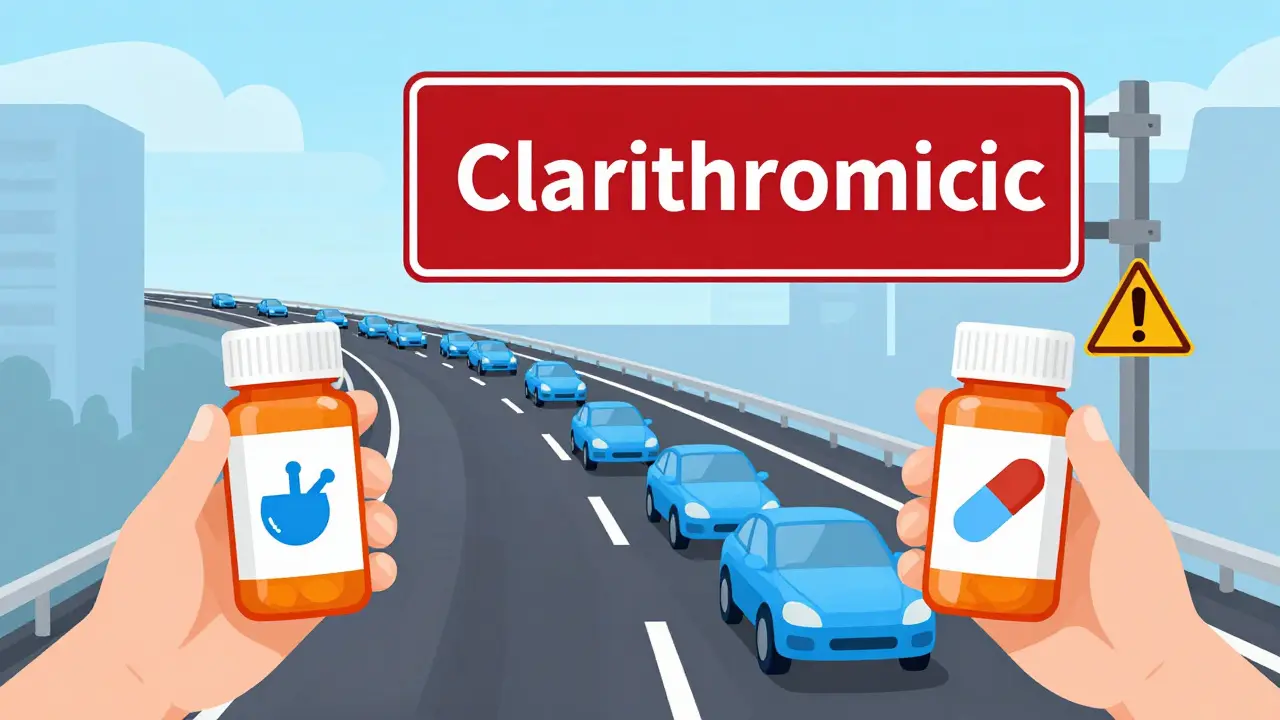
You take your cholesterol pill every morning without thinking twice. Then you get a sinus infection or pneumonia, and the doctor prescribes Clarithromycin a common macrolide antibiotic used to treat respiratory infections, skin infections, and H. pylori-related ulcers. You pop both pills. A few days later, your muscles start screaming in pain. Your urine turns dark. This isn’t just bad luck; it’s a predictable chemical collision inside your body that thousands of patients experience every year.
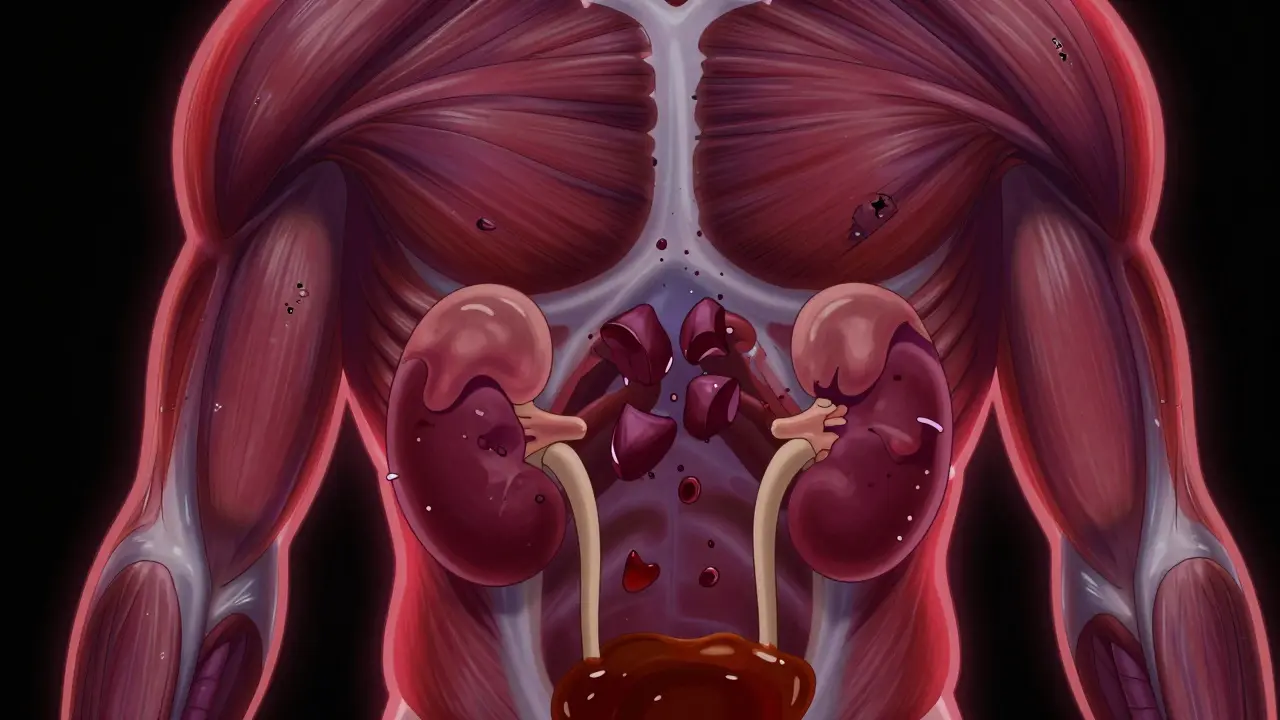
The combination of clarithromycin and certain statins is one of the most dangerous drug interactions in modern medicine. It doesn’t just make you feel tired; it can lead to rhabdomyolysis, a condition where muscle tissue breaks down rapidly and releases proteins into your blood that can shut down your kidneys. The good news? This disaster is almost entirely preventable if you know which statins are risky and how to manage them safely.
Why Clarithromycin and Statins Don't Mix
To understand why this happens, we need to look at how your liver processes drugs. Think of your liver as a busy highway with specific lanes for different types of traffic. One of the most important lanes is an enzyme system called Cytochrome P450 3A4 (CYP3A4), a major liver enzyme responsible for metabolizing approximately 50% of all prescribed medications, including many statins and antibiotics.
Many popular statins, specifically Simvastatin (Zocor), a lipid-lowering medication that is extensively metabolized by the CYP3A4 enzyme pathway, making it highly susceptible to drug interactions, Lovastatin (Mevacor), a statin medication similar to simvastatin that relies heavily on CYP3A4 metabolism for clearance from the body, and Atorvastatin (Lipitor), a widely prescribed statin that is partially metabolized by CYP3A4, though less dependent than simvastatin, rely on this lane to break down and leave your system. When you take clarithromycin, it acts like a roadblock. It inhibits (blocks) the CYP3A4 enzyme.
Because the "exit ramp" is blocked, the statin stays in your bloodstream much longer and builds up to toxic levels. Studies show that taking clarithromycin can increase simvastatin levels in your blood by 10 to 12 times. Atorvastatin levels can jump 4 to 8 times. This surge overwhelms your muscles, causing them to break down. It’s not that the statin suddenly becomes poisonous; it’s that there is simply too much of it circulating because your body can’t clear it fast enough.
Which Statins Are High Risk?
Not all statins are created equal when it comes to this interaction. Some rely heavily on the CYP3A4 pathway, while others use different routes to exit the body. Knowing which category your medication falls into is critical for your safety.
| Statin Name | Metabolism Pathway | Risk Level | Recommendation |
|---|---|---|---|
| Simvastatin | CYP3A4 (High dependence) | Highest | Avoid completely. If unavoidable, max dose 20mg daily. |
| Lovastatin | CYP3A4 (High dependence) | Highest | Avoid completely per EMA guidelines. |
| Atorvastatin | CYP3A4 (Moderate dependence) | Moderate | Reduce dose to max 20mg daily during treatment. |
| Rosuvastatin | Minimal CYP3A4 | Low | Max dose 20mg daily. Generally safer option. |
| Pravastatin | Sulfation (Non-CYP) | Very Low | No dose adjustment needed. |
| Fluvastatin | CYP2C9 (Different enzyme) | Very Low | No dose adjustment needed. |
If you are taking simvastatin or lovastatin, the risk is severe. The FDA and European Medicines Agency strongly advise against combining these with clarithromycin. For atorvastatin users, the risk is lower but still significant enough to require dose reduction. Patients on pravastatin, fluvastatin, or rosuvastatin have a much safer profile, though monitoring is still wise.
Recognizing the Warning Signs
You won’t always know your drug levels are rising until symptoms appear. Rhabdomyolysis doesn’t happen overnight, but it can escalate quickly. Symptoms typically begin within 3 to 7 days after starting the antibiotic. Watch for these red flags:
- Unexplained muscle pain: This isn’t just soreness from exercise. It’s a deep, persistent ache in large muscle groups like thighs, hips, back, or calves.
- Muscle weakness: You might find it hard to stand up from a chair or climb stairs.
- Dark urine: Your urine may look like tea, cola, or brown water. This indicates myoglobin (muscle protein) is leaking into your kidneys.
- Fever or malaise: Feeling generally ill alongside muscle symptoms.
If you notice any of these, stop the medications and seek medical attention immediately. Delaying treatment can lead to acute kidney injury, which requires hospitalization and dialysis in severe cases. In a 2019 case series, patients reported CK (creatine kinase) levels soaring over 100,000 U/L, indicating massive muscle destruction.
Three Strategies to Stay Safe
You don’t have to choose between treating your infection and managing your cholesterol. There are three proven strategies to navigate this interaction safely, recommended by the American College of Cardiology and FDA.
- Switch the Antibiotic: This is the easiest fix. Ask your doctor for Azithromycin (Zithromax), a macrolide antibiotic that does not significantly inhibit CYP3A4 enzymes, making it a safe alternative for patients taking statins. Azithromycin treats the same types of infections (like bronchitis or sinusitis) but does not block the CYP3A4 enzyme. A major study published in the Canadian Medical Association Journal found no clinically relevant interaction between azithromycin and statins. It is the preferred choice for anyone on high-risk statins.
- Pause the Statin: If you must take clarithromycin, you can temporarily stop your statin. Cholesterol levels do not change drastically in a week. Stop the statin before starting the antibiotic, take the full course of clarithromycin, and wait 3 to 5 days after finishing the antibiotic before restarting the statin. This allows the enzyme inhibition to wear off. Note that clarithromycin’s effect can linger for up to 10 days due to its active metabolite, so a short pause is crucial.
- Reduce the Dose: If stopping the statin isn’t an option (e.g., you have very high cardiovascular risk), reduce the dose. For simvastatin, drop to 10-20 mg. For atorvastatin, limit to 20 mg. Monitor your muscle symptoms closely. This is a last resort and should only be done under strict medical supervision.
Who Is at Higher Risk?
Even with careful management, some people are more vulnerable to muscle toxicity. You fall into a higher-risk category if you:
- Are over age 75.
- Have existing kidney impairment or low eGFR.
- Have hypothyroidism (underactive thyroid).
- Take other medications that interact with statins, such as fibrates (gemfibrozil) or niacin.
- Consume grapefruit juice regularly, which also inhibits CYP3A4.
If you fit any of these profiles, the recommendation shifts from "caution" to "avoid." Do not combine clarithromycin and high-risk statins. Insist on azithromycin or a pause in your statin therapy.
What To Do Right Now
Don’t wait for pain to start. Take control of your medication list today. Pull out your prescription bottles. Check if you are on simvastatin, lovastatin, or atorvastatin. If yes, write down that you are sensitive to CYP3A4 inhibitors.
Next time you visit a doctor for an infection, say this clearly: "I am on a statin that interacts with clarithromycin. Can I take azithromycin instead?" Most doctors will appreciate the heads-up and switch the prescription instantly. If they prescribe clarithromycin anyway, ask about pausing your statin. Better safe than sorry. Your muscles-and your kidneys-will thank you.
Can I take azithromycin with any statin?
Yes. Azithromycin does not inhibit the CYP3A4 enzyme significantly, so it is considered safe to take with all statins, including simvastatin, atorvastatin, and rosuvastatin. It is the preferred antibiotic for patients on statin therapy.
How long does clarithromycin stay in your system?
The half-life of clarithromycin is 3-7 hours, but its active metabolite (14-OH clarithromycin) has a longer half-life. The inhibitory effect on CYP3A4 enzymes can persist for 7-10 days after you stop taking the antibiotic. Therefore, you should wait at least 3-5 days after finishing the course before restarting a high-risk statin.
Is rhabdomyolysis reversible?
In most cases, yes. If caught early, stopping the offending drugs and providing supportive care (often IV fluids) allows muscles to heal and kidney function to recover. However, severe or delayed cases can lead to permanent kidney damage or death, which is why prevention is critical.
Does grapefruit juice affect this interaction?
Yes. Grapefruit juice also inhibits CYP3A4. Combining grapefruit juice with simvastatin or atorvastatin increases drug levels. Adding clarithromycin on top of this creates a triple threat, significantly raising the risk of muscle toxicity. Avoid grapefruit juice if you are on these medications.
Should I stop my statin permanently if I get an infection?
No. You only need to pause the statin temporarily during the antibiotic course and for a few days after. Long-term discontinuation of statins increases cardiovascular risk. Resume your normal dose once the antibiotic interaction window has passed, unless your doctor advises otherwise.