

Gout Treatment Decision Tool
Select Your Health Profile
When a gout flare hits, the first question is usually: Colchicine alternatives. You want fast relief, but you also need to weigh side effects, cost, and how the drug fits your health profile. This guide breaks down the most common options - from classic NSAIDs to newer biologics - so you can decide which one matches your needs.
What is gout and why does it flare?
Gout is a form of inflammatory arthritis caused by the buildup of uric acid crystals in joints. When uric acid levels rise, crystals form, triggering intense pain, redness, and swelling, typically in the big toe but also in other joints.
Understanding the disease helps you see why different drugs work the way they do. Some target the inflammation directly, while others lower uric acid over the long term.
Colchicine - the classic choice
Colchicine is an alkaloid derived from the autumn crocus (Colchicum autumnale) that interferes with microtubule formation, dampening the inflammatory response of neutrophils.
- Typical acute dose: 1.2 mg then 0.6 mg after 1 hour (max 1.8 mg in 24 h).
- Onset of relief: 12-24 hours.
- Common side effects: gastrointestinal upset, diarrhea.
- Contraindications: severe renal or hepatic impairment, concurrent strong CYP3A4 inhibitors.
- Cost: low to moderate, widely available as generic.
Colchicine works well for many, but its narrow therapeutic window means dose adjustments are crucial for patients with kidney or liver disease.
NSAIDs - fast-acting but not for everyone
NSAIDs (non‑steroidal anti‑inflammatory drugs) reduce inflammation by inhibiting cyclooxygenase enzymes (COX‑1 and COX‑2), decreasing prostaglandin production.
The most frequently used NSAID for gout is Indomethacin. It offers rapid pain relief but carries risks for patients with cardiovascular, gastrointestinal, or renal issues.
- Usual dose: 50 mg orally three times daily for 2-5 days.
- Onset: 30 minutes to 1 hour.
- Side effects: stomach ulcer, increased blood pressure, kidney impairment.
- Contraindications: active peptic ulcer disease, severe heart failure, CKD stage 4‑5.
- Cost: generally low; over‑the‑counter options (ibuprofen, naproxen) are cheaper but may be less potent for gout.
NSAIDs are a good first‑line option for healthy adults, but they’re off‑limits for many older patients or those on anticoagulants.
Corticosteroids - the backup when NSAIDs and colchicine aren’t tolerated
Corticosteroids suppress a broad range of immune pathways, quickly quelling inflammation.
Oral Prednisone is the most common steroid used for gout attacks.
- Typical regimen: 30 mg daily, tapering over 5-10 days.
- Onset: 1-2 hours.
- Side effects: mood changes, glucose elevation, increased infection risk.
- Contraindications: uncontrolled diabetes, active infection, severe osteoporosis.
- Cost: low; widely available.
Because steroids affect many body systems, clinicians reserve them for patients who can’t take NSAIDs or colchicine, or when those drugs have failed.

IL‑1 Inhibitors - targeting the root of gout inflammation
Interleukin‑1 (IL‑1) drives the intense inflammatory cascade triggered by uric acid crystals. Blocking this cytokine offers precise control, especially for refractory gout.
The two main biologics are Anakinra (a recombinant IL‑1 receptor antagonist) and Canakinumab (a monoclonal antibody against IL‑1β).
- Anakinra: 100 mg subcutaneously daily for 3‑5 days; rapid onset (within hours); side effects include injection‑site reactions and neutropenia; cost is high (often > $1,000 per course).
- Canakinumab: single 150 mg subcutaneous dose; onset in 24-48 hours; side effects similar to anakinra but with longer half‑life; cost can exceed $5,000 per dose.
These agents shine for patients with severe renal impairment, frequent flares despite standard therapy, or contraindications to all oral options.
Side‑by‑side comparison table
| Drug | Mechanism | Typical Dose (acute) | Onset | Common Side Effects | Major Contraindications | Average Cost (US$) |
|---|---|---|---|---|---|---|
| Colchicine | Microtubule inhibition, reduces neutrophil activity | 1.2 mg then 0.6 mg after 1 h (max 1.8 mg/24 h) | 12-24 h | Diarrhea, nausea | Severe renal/hepatic failure, CYP3A4 inhibitors | 20‑40 |
| Indomethacin (NSAID) | COX inhibition → ↓ prostaglandins | 50 mg PO TID 2‑5 days | 30 min‑1 h | GI ulcer, renal impairment | Active ulcer, CHF, CKD ≥ Stage 4 | 5‑15 |
| Prednisone (Corticosteroid) | Broad immune suppression | 30 mg PO daily, taper 5‑10 days | 1‑2 h | Hyperglycemia, mood swings | Uncontrolled diabetes, infection | 10‑20 |
| Anakinra (IL‑1 inhibitor) | IL‑1 receptor antagonism | 100 mg SC daily ×3‑5 days | Within hours | Injection site pain, neutropenia | Severe infection, neutropenia | ≈ 1,200 |
| Canakinumab (IL‑1β monoclonal) | IL‑1β neutralization | 150 mg SC single dose | 24‑48 h | Infection risk, liver enzyme rise | Active infection, immunosuppression | ≈ 5,800 |
How to choose the right option for you
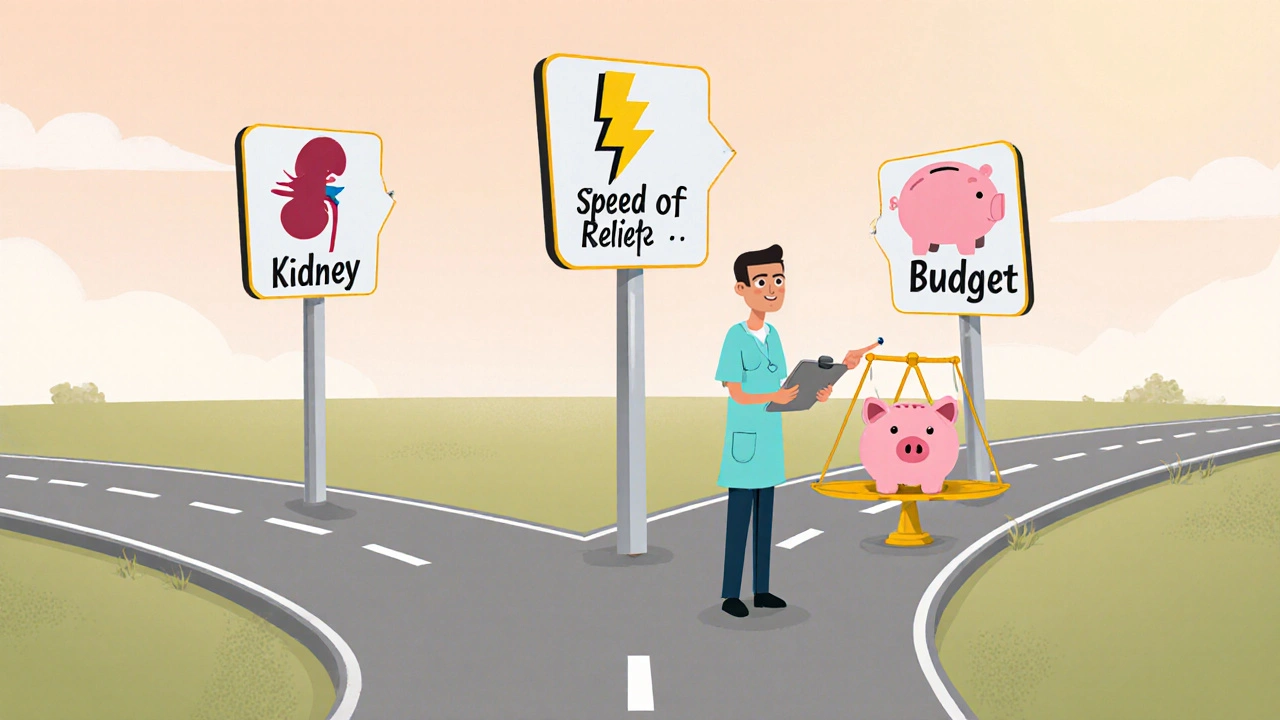
Pick a drug by matching three factors: your kidney/liver health, how fast you need relief, and how much you’re willing to spend.
- Kidney or liver disease? If you have moderate‑to‑severe impairment, avoid colchicine and most NSAIDs. Corticosteroids or IL‑1 blockers become the safer bets.
- Speed of relief? NSAIDs give the quickest pain drop, followed by steroids, then colchicine, and finally IL‑1 inhibitors.
- Budget considerations? Over‑the‑counter NSAIDs win on price, colchicine is cheap‑moderate, while biologics can be prohibitive without insurance coverage.
Always discuss these points with your rheumatologist or primary‑care doctor. They’ll tailor the dose and monitor labs - especially for colchicine (checking creatinine) and steroids (watching blood sugar).
Common pitfalls and how to avoid them
- Over‑dosing colchicine. Stick to the 1.8 mg 24‑hour ceiling; extra doses raise the risk of life‑threatening toxicity.
- Skipping gastro‑protection with NSAIDs. If you need an NSAID, add a proton‑pump inhibitor (omeprazole 20 mg daily) to shield the stomach.
- Long‑term steroid use. Limit steroids to the flare period; taper quickly to avoid bone loss and adrenal suppression.
- Assuming biologics are only for “severe” gout. Even moderate‑frequency flares can justify an IL‑1 inhibitor if oral options fail.
Quick cheat‑sheet for doctors and patients
- First‑line for healthy adults: NSAID (indomethacin) → colchicine if NSAID contraindicated.
- Renal/hepatic impairment: Low‑dose colchicine (if GFR > 30 ml/min) or corticosteroid.
- Refractory flares or multiple comorbidities: Consider anakinra or canakinumab.
- Cost‑sensitive patients: NSAIDs or generic colchicine; explore patient‑assistance programs for biologics.
Frequently Asked Questions
Can I take colchicine and an NSAID together?
Yes, many clinicians prescribe a low‑dose colchicine alongside an NSAID for synergistic pain control, but the combined gastrointestinal risk rises. Use a proton‑pump inhibitor and monitor kidney function.
How long should I stay on corticosteroids for a gout flare?
Typically 5‑10 days with a rapid taper. Prolonged courses increase infection risk and bone loss, so keep the duration as short as possible.
Are IL‑1 inhibitors covered by insurance?
Coverage varies. Many insurers require documentation of failed standard therapy and may need prior authorization. Patient‑assistance programs from manufacturers can help offset out‑of‑pocket costs.
What labs should I get before starting colchicine?
Check serum creatinine, liver enzymes, and a complete blood count. Adjust the dose if creatinine clearance falls below 30 ml/min.
Can gout be prevented without medication?
Dietary changes (reduce purine‑rich foods, limit alcohol), stay hydrated, and maintain a healthy weight lower uric‑acid levels and reduce flare frequency.
Choosing the right gout‑flare treatment is a balance of efficacy, safety, and cost. By comparing colchicine with NSAIDs, corticosteroids, and IL‑1 inhibitors, you can pick a regimen that keeps pain at bay while fitting your health situation.
Sajeev Menon
October 22, 2025 AT 18:57If you're starting a colchicine regimen, the first thing to check is your kidney function.
A creatinine clearance above 30 ml/min lets you use the standard loading dose, but anything lower means you must cut the dose in half.
The drug's narrow therapeutic window makes even small overdoses risky, so stick to the 1.2 mg then 0.6 mg schedule and never exceed 1.8 mg in 24 hours.
Many patients dont realize that common antibiotics like clarithromycin can boost colchicine levels dramatically; adjust or avoid them.
Hydration helps the kidneys clear the medication, so aim for at least two liters of water a day unless your doctor says otherwise.
Watch for gastrointestinal side effects early – diarrhea is the most frequent and often the first sign of excess drug.
If diarrhea becomes severe, contact your healthcare provider promptly; dose reduction or a short break may be needed.
Regular blood tests, especially liver enzymes and CBC, are advisable during the first few weeks of therapy.
For patients with mild hepatic impairment, a modest dose reduction (e.g., 0.6 mg after the loading dose) usually suffices.
When you combine colchicine with a proton‑pump inhibitor to protect your stomach, you still need to monitor for drug‑drug interactions.
Some insurers require prior authorization for colchicine; having your lab results handy can speed up the process.
In my experience, educating patients about the signs of toxicity reduces emergency visits dramatically.
A simple checklist – kidney function, drug interactions, dose ceiling – can be printed and given to anyone starting treatment.
Remember that colchicine is not a cure for gout; it's a flare‑control tool, so long‑term urate‑lowering therapy remains essential.
Lifestyle changes such as limiting purine‑rich foods and staying hydrated complement the medication nicely.
If you ever feel uncertain, a quick call to your pharmacist can clarify dosing nuances and prevent mishaps.
Emma Parker
November 10, 2025 AT 06:24Hey folks, just a quick heads up – if you’re mixing an NSAID with colchicine, you might get more tummy upset than you bargained for.
Throw a cheap PPI like omeprazole in the mix and you’ll feel a lot better.
Also, I love a cold beer after a gout flare, but keep it low‑alcohol or the uric acid will just come right back!
Joe Waldron
November 28, 2025 AT 18:51Colchicine remains a cornerstone of acute gout management; however, dose adjustments are mandatory in renal impairment, and concomitant CYP3A4 inhibitors, such as clarithromycin, amplify plasma concentrations, increasing toxicity risk.
Monitoring renal function, hepatic enzymes, and complete blood count before initiation, during the first week, and periodically thereafter, provides a safety net.
When an NSAID is contraindicated, a short course of low‑dose prednisone (e.g., 30 mg tapering over 5 days) offers comparable relief with a different side‑effect profile.
In patients with multiple comorbidities, consider an IL‑1 inhibitor as a salvage therapy, keeping in mind the substantial cost and insurance hurdles.
Wade Grindle
December 17, 2025 AT 07:17From a cultural perspective, many diets rich in seafood and red meat elevate uric acid levels, so adjusting traditional recipes can lessen gout frequency.
Pairing meals with low‑fat dairy and vitamin‑C‑rich fruits provides a gentle urate‑lowering effect without sacrificing flavor.
Staying mindful of portion sizes and hydration is a simple, universally applicable strategy.
WILLIS jotrin
January 4, 2026 AT 19:44Gout reminds us that the body often signals imbalance long before we notice it in daily life.
Treating a flare is like putting out a fire without addressing the fuel that feeds it; colchicine, NSAIDs, and steroids all extinguish the blaze, but only urate‑lowering therapy removes the tinder.
One could argue that the true therapy lies in lifestyle harmony, where diet, exercise, and stress management coexist.
Nevertheless, an acute flare demands quick relief, and understanding the pharmacologic toolbox empowers patients to choose wisely.
Ultimately, the decision integrates medical efficacy, personal values, and economic reality.
Kiara Gerardino
January 23, 2026 AT 08:11It is utterly irresponsible to prescribe high‑dose colchicine without first confirming renal clearance – such negligence borders on malpractice.
Patients deserve transparent communication about risks, not vague assurances that “it will be fine.”
Ignoring drug interactions while chasing rapid pain relief betrays the ethical duty of beneficence.
Healthcare providers must prioritize safety over convenience, especially when alternatives exist.
Diane Thurman
February 10, 2026 AT 20:37Honestly, many people still think gout is just “an old man’s disease,” which is a myopic view.
Ignoring the metabolic roots and relying solely on painkillers showcases a lack of foresight.
Educate yourself, assess your diet, and request a uric‑acid panel before blaming fate.
Sarah Riley
March 1, 2026 AT 09:04From a pharmacokinetic standpoint, colchicine exhibits a narrow therapeutic index with substrate competition at P‑glycoprotein transporters; dose escalation without renal adjustment precipitates systemic toxicity.
Tammy Sinz
March 19, 2026 AT 21:31When patients confront recurrent gout attacks, the psychosocial burden often rivals the physical pain, prompting a holistic assessment beyond serum urate levels.
I advocate integrating dietary counseling, mental health support, and evidence‑based pharmacotherapy to achieve sustained remission.
Addressing comorbidities such as metabolic syndrome concurrently amplifies therapeutic success.
Christa Wilson
April 7, 2026 AT 10:57Great summary! 😊