
Medication mistakes at home are more common than you think
Every 8 minutes, a child in the U.S. experiences a medication error at home. That’s not a rare accident-it’s a pattern. And it’s not just kids. Nearly 1.5 million Americans are hurt each year by mistakes with pills, liquids, and patches right in their own homes. These aren’t just typos on a label. They’re wrong doses, missed schedules, mixing drugs that shouldn’t be mixed, and taking old prescriptions that were supposed to be thrown away. The scary part? Most of these errors are completely preventable.
Top 5 medication errors happening in homes today
Here’s what’s actually going wrong in kitchens, bedrooms, and bathrooms across the country:
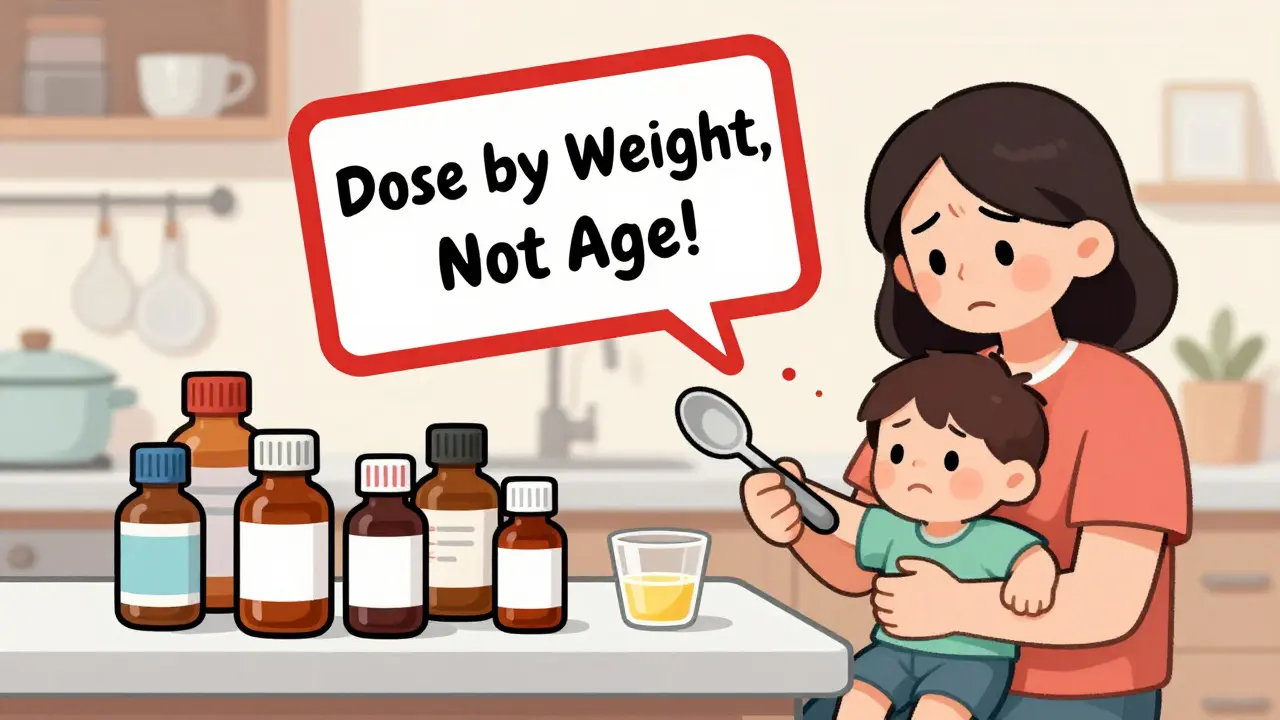
- Wrong dose-Giving too much or too little. This is the most common error. Parents often guess based on age instead of weight, or use kitchen spoons instead of proper measuring tools.
- Wrong medication-Mixing up similar-sounding names like hydroxyzine and hydralazine, or grabbing the wrong bottle from a cluttered medicine cabinet.
- Missed or skipped doses-People stop antibiotics early because they feel better, or skip pain meds because they’re afraid of side effects.
- Timing mistakes-Taking a pill with food when it should be on an empty stomach, or giving a nighttime dose at 3 p.m. because the schedule got confused.
- Double dosing-Taking two medicines that both contain acetaminophen (like Tylenol and a cold syrup), leading to dangerous liver damage.
One study found that 92.7% of parents gave fewer antibiotic doses than prescribed for ear infections. Another found that 40% to 80% of what doctors say during a visit is forgotten or misunderstood by the time patients get home. That’s not poor memory-it’s poor communication.
Why do these mistakes keep happening?
It’s not because people are careless. It’s because the system is stacked against them.
- Confusing labels-Many medications look alike. One bottle says “Children’s Tylenol,” another says “Infant Tylenol.” They’re not the same. The infant version is twice as concentrated. A teaspoon of the wrong one can overdose a baby.
- Multiple prescriptions-People over 75 who take five or more drugs have a 38% higher chance of making a mistake. Each new pill adds complexity.
- Discharge confusion-When someone leaves the hospital, they’re handed a stack of papers. No one sits down and walks them through it. They go home with instructions they don’t understand.
- Cost fears-Some skip doses because they can’t afford refills. Others cut pills in half to stretch them, not realizing the medicine isn’t evenly distributed.
- Language and literacy barriers-If you can’t read the label or the doctor speaks too fast, you’re at risk.
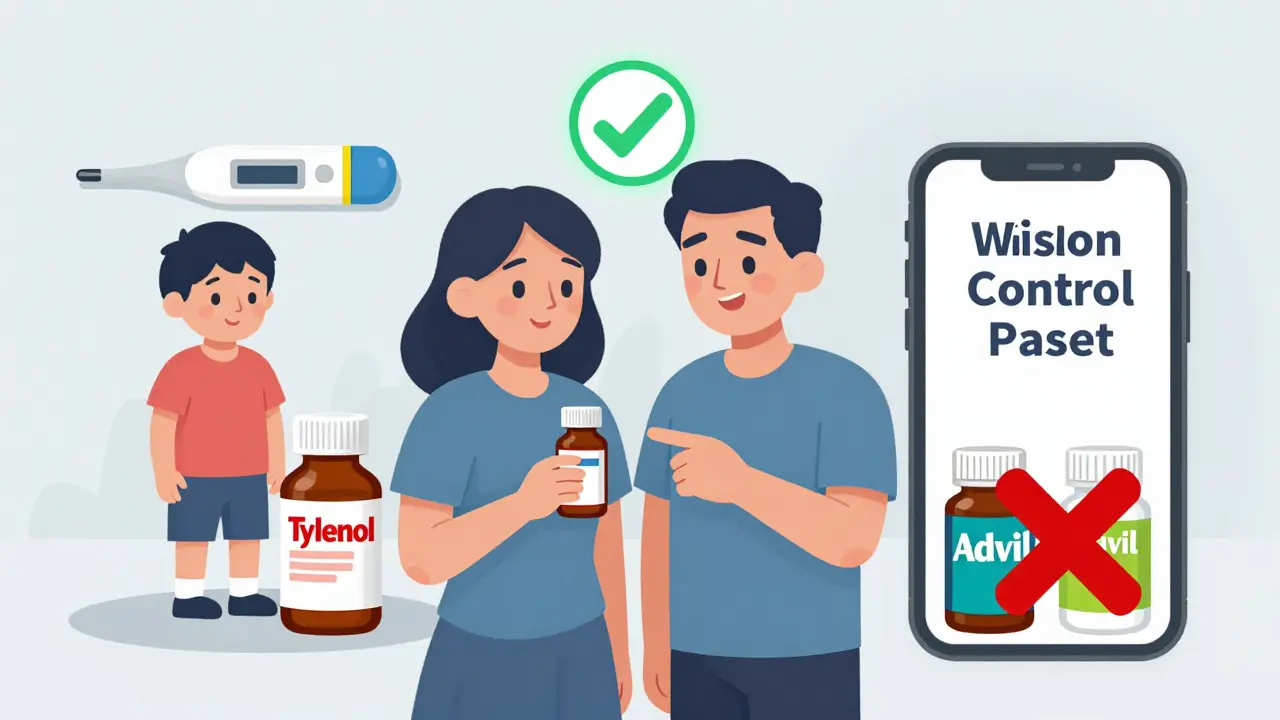
And then there’s the biggest culprit: alternating Tylenol and Advil for fever. Parents think they’re being smart-giving one, then the other, to keep the fever down. But studies show this increases the chance of error by 47%. It’s easy to lose track of what was given and when.
How to stop medication errors before they happen
Here’s what actually works-based on real data from hospitals, clinics, and home care teams.
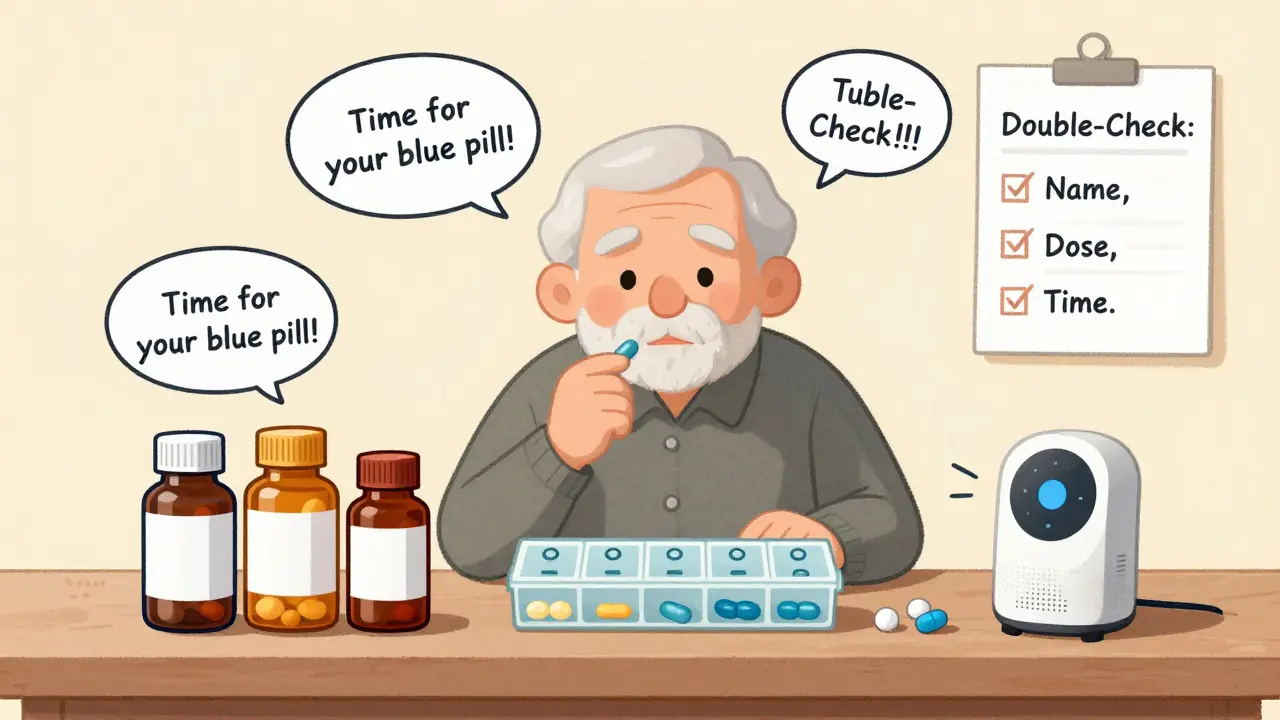
- Keep a live medication list-Write down every pill, liquid, patch, or inhaler you take. Include the dose, how often, and why. Update it every time your doctor changes something. Bring this list to every appointment. Don’t rely on memory.
- Use a pill organizer with labels-Buy one with clear days and times. Write the name of each pill on the compartment with a permanent marker. If it’s a liquid, write the dose next to it.
- Always check the label-Before you give any medicine, read the label three times: when you grab it, when you measure it, and when you give it. Look for the active ingredient. If you see “acetaminophen” on two bottles, don’t take both.
- Use the right measuring tool-Never use a kitchen spoon. Use the syringe, cup, or dropper that came with the medicine. If it’s missing, ask the pharmacy for a new one. They’ll give it to you free.
- Ask the teach-back question-When your doctor or pharmacist gives you instructions, say: “Can you please explain this to me like I’m going home right now?” Then repeat it back in your own words. If you can’t explain it clearly, you don’t understand it yet.
- Don’t mix fever meds-Stick to one. If Tylenol isn’t working after an hour, wait. Call your doctor. Don’t switch to Advil unless they tell you to.
- Check expiration dates-Old medicines lose strength. Some become toxic. Throw away anything past its date. Don’t keep “just in case” pills.
- Store meds safely-Keep them locked up, away from kids and pets. Don’t leave bottles on the bathroom counter. Moisture and heat ruin pills.
Special rules for kids and older adults
For children:
- Always dose by weight, not age. The label will say “for 12-24 lbs” or “2-4 years.” Use the weight if you know it.
- Never give adult medicine to a child-even half a pill. The concentration is wrong.
- Check cold and flu products. Many already contain acetaminophen or ibuprofen. Giving extra can overdose a child.
- Keep a log: write down the time and dose every time you give medicine. Use a phone app or a sticky note on the fridge.
For older adults:
- If you take five or more medications, ask your doctor for a “medication review.” Cut the clutter. Some pills aren’t needed anymore.
- Use a pill dispenser with alarms. Many have voice reminders. They’re affordable and often covered by insurance.
- Ask your pharmacist to color-code your bottles. Red for blood pressure, blue for cholesterol-something visual you can’t miss.
- Don’t take pills that look different unless your doctor says so. Generic versions can look totally different, but they’re safe. Still, if you’re confused, ask.
What to do if you think you made a mistake
If you gave the wrong dose, missed a day, or gave the wrong medicine:
- Don’t panic. Most small errors don’t cause harm.
- Call your pharmacist. They’re trained to handle this. They can tell you if it’s dangerous and what to watch for.
- Call Poison Control at 1-800-222-1222. It’s free, 24/7, and confidential. They’ll guide you step by step.
- Don’t wait for symptoms. If you’re unsure, act fast. Better safe than sorry.
And if you’re ever in doubt-call someone. Your doctor, your pharmacist, a nurse hotline. You don’t have to figure it out alone.
One simple habit that cuts errors in half
There’s one practice that hospitals use to prevent mistakes-and it works at home too: the double-check rule.
Before giving any medicine, have someone else look at the label and the dose. Your spouse. Your teen. A neighbor. Even a friend on a video call. Just one extra set of eyes reduces errors by up to 66%.
You don’t need a nurse. You just need a second person who’s not tired, distracted, or stressed. That’s it.
Medication safety isn’t about being perfect. It’s about building habits that catch mistakes before they hurt you.
What should I do if I accidentally give my child too much Tylenol?
Call Poison Control at 1-800-222-1222 right away. Do not wait for symptoms. Acetaminophen overdose can cause liver damage without immediate signs. Have the medicine bottle ready when you call-they’ll need the strength and amount given. Do not induce vomiting or give anything else unless instructed.
Can I use a kitchen teaspoon to measure liquid medicine?
No. A kitchen teaspoon holds anywhere from 3 to 7 milliliters. Medical doses are measured in exact milliliters. Using a spoon can lead to a 20-50% overdose or underdose. Always use the syringe, dropper, or cup that came with the medicine. If you lost it, ask your pharmacy for a new one-they’ll give it to you free.
Why do I keep mixing up my medications?
It’s likely because your pills look similar, you’re taking too many, or your storage is disorganized. Use a labeled pill organizer with compartments for each time of day. Write the name and dose on each section with a permanent marker. Keep a written list of all your meds and update it after every doctor visit. If you’re still confused, ask your pharmacist to color-code your bottles.
Is it safe to take leftover antibiotics from a previous illness?
No. Antibiotics are prescribed for specific infections, at specific doses, for specific lengths of time. Taking old antibiotics can be ineffective, dangerous, or lead to antibiotic resistance. Always dispose of unused antibiotics properly. Many pharmacies have take-back programs.
How can I help my elderly parent avoid medication errors?
Start with a full medication review with their doctor. Cut unnecessary pills. Use a pill dispenser with alarms. Help them create a simple list of meds, doses, and times. Check expiration dates monthly. If they live alone, set up weekly check-ins with a neighbor or family member to confirm they’re taking the right pills. Consider a voice-activated assistant that can remind them when to take meds.
What’s the biggest mistake people make with children’s medicine?
The biggest mistake is assuming that “children’s” and “infant” versions are the same. Infant Tylenol is twice as concentrated as children’s. Giving the wrong one can cause a dangerous overdose. Always check the concentration on the label (mg/mL) and dose by weight, not age. Never alternate Tylenol and Advil unless a doctor tells you to.
Can I trust generic brands?
Yes. Generic medications have the same active ingredients, strength, and effectiveness as brand names. The FDA requires this. The only difference is the shape, color, or inactive ingredients. If you notice your pill looks different, ask your pharmacist why. Don’t assume it’s wrong-just confirm it’s the right medicine.
What should I do if I forget if I already took my pill?
Don’t guess. Don’t take another one. Check your pill organizer or medication log. If you don’t have one, wait until the next scheduled dose. Taking an extra dose can be dangerous, especially with blood pressure, diabetes, or pain meds. In the future, use a pill box with compartments or a reminder app.
What’s next? Start today
You don’t need to overhaul your whole system. Pick one thing: write down your meds. Buy a pill organizer. Call your pharmacist and ask them to explain your top three prescriptions. Do one thing, and do it right.
Medication safety isn’t about being perfect. It’s about building small habits that catch mistakes before they hurt you. One less error today means one less trip to the ER tomorrow.
Lauren Warner
January 14, 2026 AT 02:11Craig Wright
January 15, 2026 AT 20:31Lelia Battle
January 17, 2026 AT 19:27Alex Fortwengler
January 18, 2026 AT 23:06jordan shiyangeni
January 20, 2026 AT 05:37Abner San Diego
January 21, 2026 AT 02:01Eileen Reilly
January 22, 2026 AT 10:42Monica Puglia
January 23, 2026 AT 00:44steve ker
January 25, 2026 AT 00:09George Bridges
January 26, 2026 AT 14:36Faith Wright
January 28, 2026 AT 05:32Rebekah Cobbson
January 29, 2026 AT 10:35