
Every year, more than 82,000 people in the U.S. lose a foot or leg to diabetes-related amputation. Most of these cases are preventable. The truth is, diabetes foot care isn’t about fancy treatments or expensive gadgets-it’s about showing up every single day and checking your feet like your life depends on it. Because it does.
Why Your Feet Are at Risk
Diabetes doesn’t just raise blood sugar-it quietly damages nerves and blood vessels. Nerve damage, called neuropathy, means you might not feel a blister, a cut, or a pebble in your shoe. Poor circulation slows healing. Even a tiny wound can turn into a deep ulcer in days. And once an ulcer forms, infection can spread fast. The International Working Group on the Diabetic Foot says 4% to 10% of people with diabetes will develop a foot ulcer in their lifetime. For those with a history of ulcers or amputations, that risk jumps to over 70%.The Four Pillars of Ulcer Prevention
Preventing diabetic foot ulcers isn’t guesswork. It’s built on four evidence-backed actions, as outlined in the 2023 IWGDF guidelines:- Know your risk level-your foot isn’t just ‘at risk’; it’s classified as Risk 0, 1, 2, or 3. This determines how often you need professional checkups.
- Inspect your feet daily-no exceptions. Even if you feel fine.
- Wear the right shoes-not just any shoe. The right one.
- Manage modifiable risks-smoking, high blood sugar, and poor hygiene all make ulcers more likely.
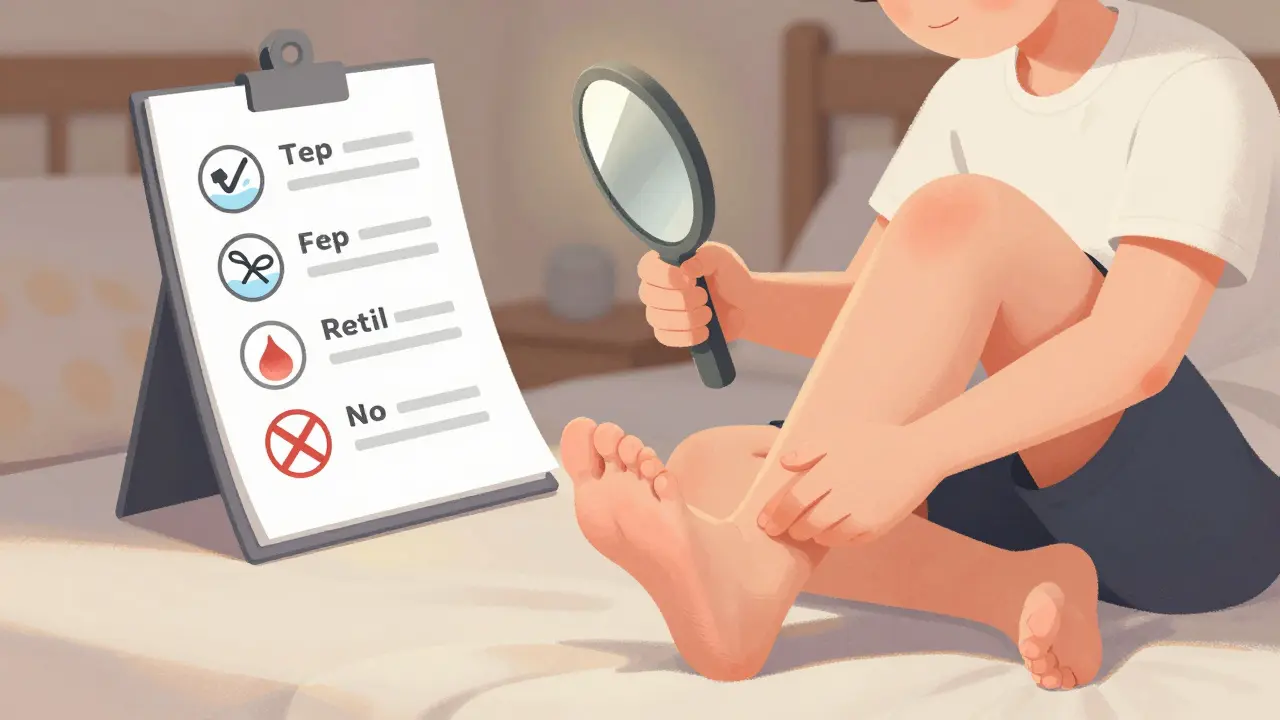
Your Daily Foot Inspection Checklist
This isn’t a suggestion. It’s a non-negotiable routine. Do it every day, same time, same way. Here’s how:- Wash your feet in lukewarm water (90-95°F). Too hot? Test with your elbow or a thermometer. Never use hot water or soak your feet.
- Dry thoroughly, especially between your toes. Moisture invites fungal infections and skin breakdown.
- Inspect every surface-tops, soles, heels, between toes. Use a hand mirror or ask someone to help. If you can’t see the bottom of your foot, you’re not inspecting properly.
- Look for these warning signs: blisters larger than 3mm, cuts deeper than 1mm, redness bigger than a coin, swelling that makes your foot feel tight, or warmth that feels hotter than the other foot. A temperature difference of more than 4°F between feet can signal trouble before you even see a wound.
- Check your toenails. Trim them straight across, leaving 1-2mm of white tip. Don’t cut into the corners. Ingrown nails are a major ulcer trigger.
- Apply moisturizer to dry skin-except between your toes. Dry skin cracks. Cracks turn into openings for infection.
- Never walk barefoot. Not even indoors. A 2022 CDC report found walking barefoot for just 5 minutes a day increases ulcer risk by 11.3 times.
The CDC says 68% of ulcers start from unnoticed injuries because people skip inspections. Consistency matters more than perfection. Even if you only do 6 of these steps today, do them again tomorrow.
Footwear: Not Just Any Shoe Will Do
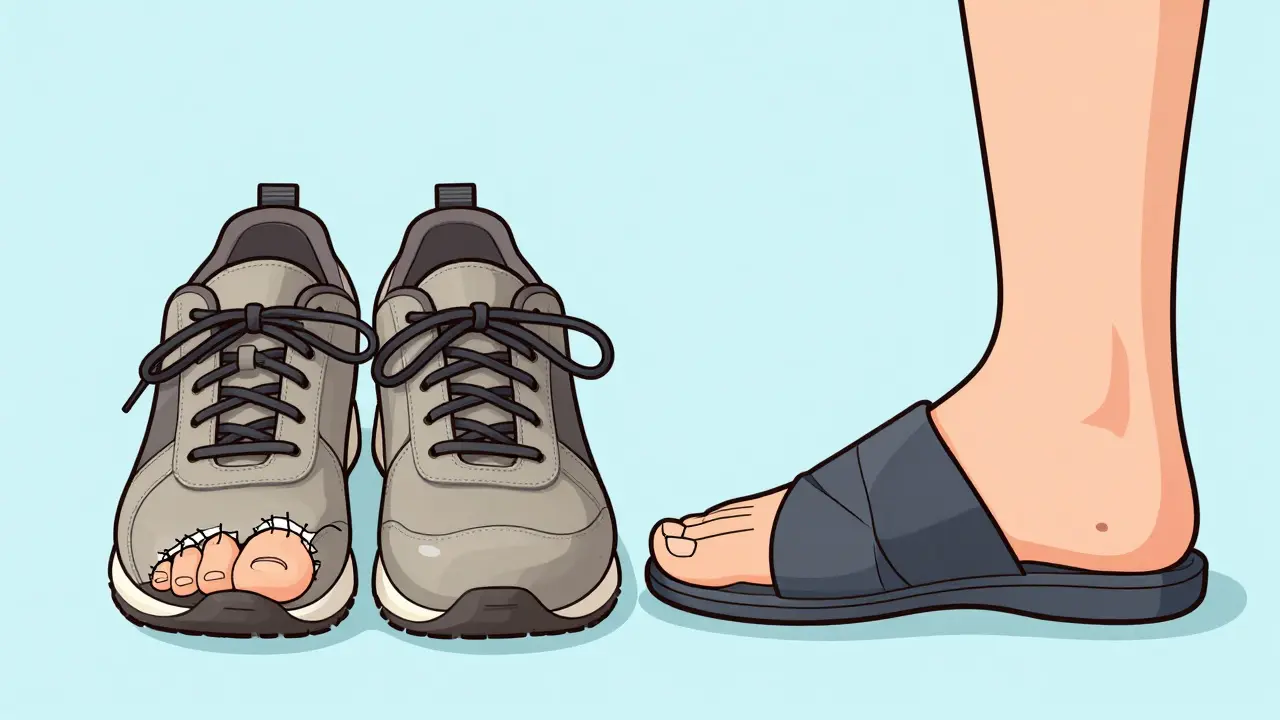
Shoes are your first line of defense. The wrong pair causes 87% of forefoot ulcers in people with neuropathy. Here’s what to look for:- Room to move: At least 0.5 inches (12.7mm) between your longest toe and the front of the shoe. Your toes should spread naturally-no squeezing.
- Stiff heel counter: The back of the shoe should hold your heel without collapsing. A good test: try to squeeze the heel side with your fingers. If it gives easily, it’s not supportive enough.
- No seams or stitching inside: Rough seams rub. Look for seamless linings.
- Proper width: Your foot should fit without pressure on the sides. If you have foot deformities (like bunions or hammertoes), you may need custom orthotics.
Therapeutic footwear isn’t optional for Risk 2 or 3 patients. It’s required. And no, flip-flops and sandals aren’t substitutes-even if it’s 89°F outside. Pressure mapping studies show sandals increase ulcer risk by 4.3 times compared to closed shoes.
When to Call Your Doctor
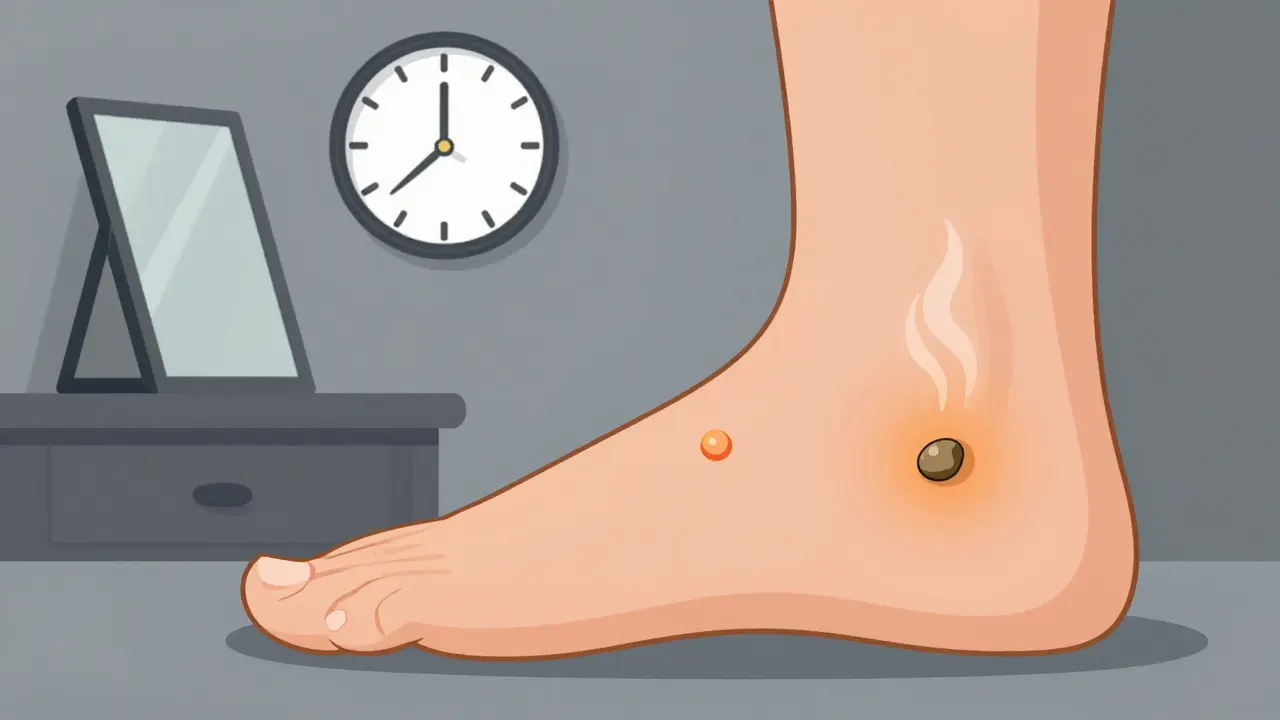
You don’t need to wait for a crisis. If you notice any of these, call your provider within 24 hours:- A red spot that doesn’t fade when you press it
- Swelling that lasts more than 2 days
- Drainage from a wound (yellow, green, or bloody)
- Odor coming from your foot
- Any wound that hasn’t started healing in 3 days
And never, ever try to cut out a corn or callus yourself. That’s how infections start. Let a podiatrist handle it.
What Doesn’t Work (And Why)
There’s a lot of misinformation out there. Here’s what the latest science says:- Antibiotics won’t prevent ulcers. The IDSA says giving antibiotics to uninfected wounds doesn’t help healing-and increases antibiotic resistance by 37%.
- Nerve decompression surgery doesn’t prevent ulcers. Nine randomized trials show no benefit. Avoid it unless you’re in a clinical trial.
- Exercise isn’t always safe. Unsupervised ankle exercises increased ulcer risk by 22% in one study. If you want to move more, walk with proper shoes and check your feet afterward.
- Home remedies like hydrogen peroxide or iodine damage healing tissue. Stick to gentle soap and water.
Barriers to Success-And How to Overcome Them
Most people want to do the right thing. But real life gets in the way.- Can’t see your feet? Use a handheld mirror or ask a family member to help. Set a daily phone reminder.
- Too expensive to buy proper shoes? Many Medicaid programs now cover therapeutic footwear. Ask your clinic about foot care programs. Some nonprofits provide free or low-cost shoes.
- Forget to check? Make it part of your bedtime or morning routine-right after brushing your teeth.
- Don’t have access to a podiatrist? Your primary care provider can still do a basic foot exam and refer you if needed. Annual exams are now required by law in 47 U.S. states for Medicaid patients.
Even in Auckland, where access to specialists can be limited, you can still control your daily habits. You don’t need a fancy device to save your foot. You just need to look.
What’s New in Foot Care Tech
Technology can help-but it’s not a replacement for daily inspection. Wireless insole sensors that detect temperature changes can predict ulcers 4-7 days before they form. Apps like FootCheck AI can analyze photos of your feet and flag potential issues with 89.7% accuracy. But these tools cost money and need internet. If you can’t afford them, don’t worry. The most effective tool is still your eyes-and a mirror.Your Foot Is Your Lifeline
Diabetes foot care isn’t about being perfect. It’s about being consistent. One missed day doesn’t ruin everything. But skipping inspections week after week? That’s how you end up in the hospital. Every person who avoids an amputation started with one simple habit: checking their feet every day.You’ve already taken the first step by reading this. Now make tomorrow’s inspection your new habit. Your feet will thank you.
How often should I have my feet checked by a professional?
It depends on your risk level. If you have no nerve damage or history of foot problems (Risk 0), get checked once a year. If you have nerve damage but no deformities (Risk 1), every 6 months. If you have foot deformities or a past ulcer (Risk 2 or 3), you need to be seen every 1 to 3 months. Always ask your provider to test your sensation with a monofilament and check your circulation with an ankle-brachial index (ABI) at least once a year.
Can I use lotion between my toes?
No. Moisture trapped between your toes creates a warm, damp environment where fungi thrive. This can lead to infections like athlete’s foot, which can crack the skin and open the door to bacteria. Always dry thoroughly between your toes after washing, and apply moisturizer only to the tops and bottoms of your feet-never between them.
Is it safe to soak my feet in Epsom salt or vinegar?
No. Soaking your feet-whether in salt, vinegar, or any solution-dries out your skin and increases cracking risk. It also makes it harder to detect early signs of infection because the skin becomes soft and swollen. Stick to a quick, gentle wash with lukewarm water and mild soap. No soaking, no baths, no foot spas.
What if I have calluses or corns?
Never try to cut or shave them yourself. That’s how ulcers start. Calluses form because of pressure-often from ill-fitting shoes. A podiatrist can safely remove them and recommend padding or custom orthotics to reduce pressure. If you see a thick, yellow callus, especially under the ball of your foot, get it checked. That’s where most diabetic ulcers begin.
Do I need special socks?
Yes. Avoid socks with tight elastic bands, seams, or holes. Choose seamless, moisture-wicking socks made of cotton, bamboo, or specialized diabetic blends. They should fit snugly without squeezing your legs. Never wear compression socks unless your doctor specifically prescribes them. And always check inside your socks before putting them on-look for rough stitches, foreign objects, or tears.
Can I use heating pads or electric blankets on my feet?
No. If you have nerve damage, you can’t feel if the heat is too high. Burns can happen without you realizing it-and those burns can turn into serious ulcers. Use warm (not hot) water for washing, and keep your feet warm with socks, not external heat sources.
Is it okay to walk barefoot at home?
Never. Even for a few minutes. The CDC reports that walking barefoot indoors increases your ulcer risk by 11.3 times. You could step on a sharp object, a hot floor, or a piece of broken glass and not feel it. Always wear shoes or slippers with closed toes and good soles-even when you’re just going to the bathroom.
Nicholas Gabriel
January 18, 2026 AT 00:01Every single day-yes, EVERY SINGLE DAY-your feet need attention. No excuses. No "I’ll do it later." You wouldn’t skip brushing your teeth, so why skip checking your feet? It’s not about fear-it’s about responsibility. And if you’re skipping it because you "feel fine," you’re already in danger. Neuropathy doesn’t announce itself with a siren. It whispers. And by the time you hear it, it’s too late. Mirror? Check. Moisturizer? Check. No barefoot walking? NON-NEGOTIABLE. This isn’t a suggestion. It’s a lifeline.
Cheryl Griffith
January 18, 2026 AT 03:19I lost my dad to a diabetic foot infection. He didn’t know how serious it was until it was too late. He thought "it’s just a blister." It wasn’t. I wish someone had sat him down with a checklist like this. If you’re reading this and you’re diabetic-please, please, please do the daily check. Even if it feels boring. Even if you think you’re fine. Your feet are the first to go, and the last thing you’ll regret is not being consistent.
Ryan Hutchison
January 20, 2026 AT 00:30U.S. has the best foot care guidelines in the world. No other country takes this seriously. Canada? They let people walk around in flip-flops and call it "lifestyle." India? They still soak feet in vinegar like it’s 1920. This checklist? It’s American medicine at its finest. If you’re not following this, you’re not just risking your foot-you’re disrespecting decades of research. Stop being lazy. Get the right shoes. Check your soles. Or don’t. But don’t come crying to me when you’re on the operating table.
Samyak Shertok
January 21, 2026 AT 20:26So we’re told to check our feet daily like they’re sacred relics… but nobody tells us why we’re even here. Why does capitalism demand we self-manage our own body’s collapse? Why is prevention the burden of the sick, not the system that made them sick? I inspect my feet every morning… and then I wonder: who decided my toes were a battlefield, not a symptom of a broken healthcare model? The mirror doesn’t lie-but neither does the fact that I can’t afford the shoes that would save them.
Stephen Tulloch
January 22, 2026 AT 01:17Okay but like… the shoe thing? 🤯 I just bought these "diabetic" shoes from Amazon and they looked legit… until I realized the sole was thinner than my phone. 💀 No wonder people are getting ulcers. If you’re gonna sell "therapeutic footwear," at least make it, like, actually therapeutic. Also, why is everyone still using moisturizer between their toes? That’s how you get fungus city. 🚫🧼 Just say no. Wear socks. Walk with shoes. And for the love of god, stop using heating pads. You’re not a human radiator.
Melodie Lesesne
January 22, 2026 AT 03:27I’ve been doing the daily check for two years now. Some days I forget. Some days I’m tired. But I always get back to it. I keep a little checklist taped to my bathroom mirror. It’s not glamorous, but it works. I used to think I was being obsessive-now I know I’m being smart. If you’re struggling to stay consistent, start small. Just one step. Then another. You’ve got this. And if you need help, ask. No shame in asking. We’re all in this together.
Corey Sawchuk
January 22, 2026 AT 12:09Rob Deneke
January 23, 2026 AT 17:05One of my clients did this checklist religiously for six months. She went from having two ulcers a year to zero. Not because she had magic cream or a fancy device-because she showed up. Consistency beats perfection every time. You don’t need to do all seven steps perfectly. Just do them again tomorrow. That’s the secret. Keep showing up. Your feet are counting on you.
evelyn wellding
January 25, 2026 AT 11:17YES. YES. YES. 😭 I’ve been doing this for 3 years and I almost gave up last winter. Then I remembered my cousin lost her leg because she didn’t check. I started putting the mirror by my coffee maker. Now I check while I sip. It’s my little ritual. You’re not alone. We’re all doing this. Keep going. You’re doing better than you think. 💪👣
Corey Chrisinger
January 26, 2026 AT 19:54It’s funny… we treat our phones like sacred objects-checking them 100 times a day-but we neglect the very thing that carries us through life. Your feet are your foundation. They don’t ask for much. Just a glance. A dry towel. A pair of shoes that don’t crush them. Maybe the real question isn’t why we don’t check our feet… but why we’ve been trained to ignore the quiet, essential parts of ourselves. The body doesn’t scream. It whispers. And we’ve forgotten how to listen.
Bianca Leonhardt
January 28, 2026 AT 17:01If you’re not doing all seven steps perfectly every day, you’re just delaying the inevitable. No one’s impressed by "I tried." This isn’t a hobby. It’s survival. And if you’re skipping it because it’s inconvenient, you’re not diabetic-you’re careless. The fact that you’re even reading this means you know the stakes. So stop making excuses. Your foot isn’t going to heal itself. And your doctor isn’t going to save you if you don’t do your part.