
GABA & Sedative Interaction Checker
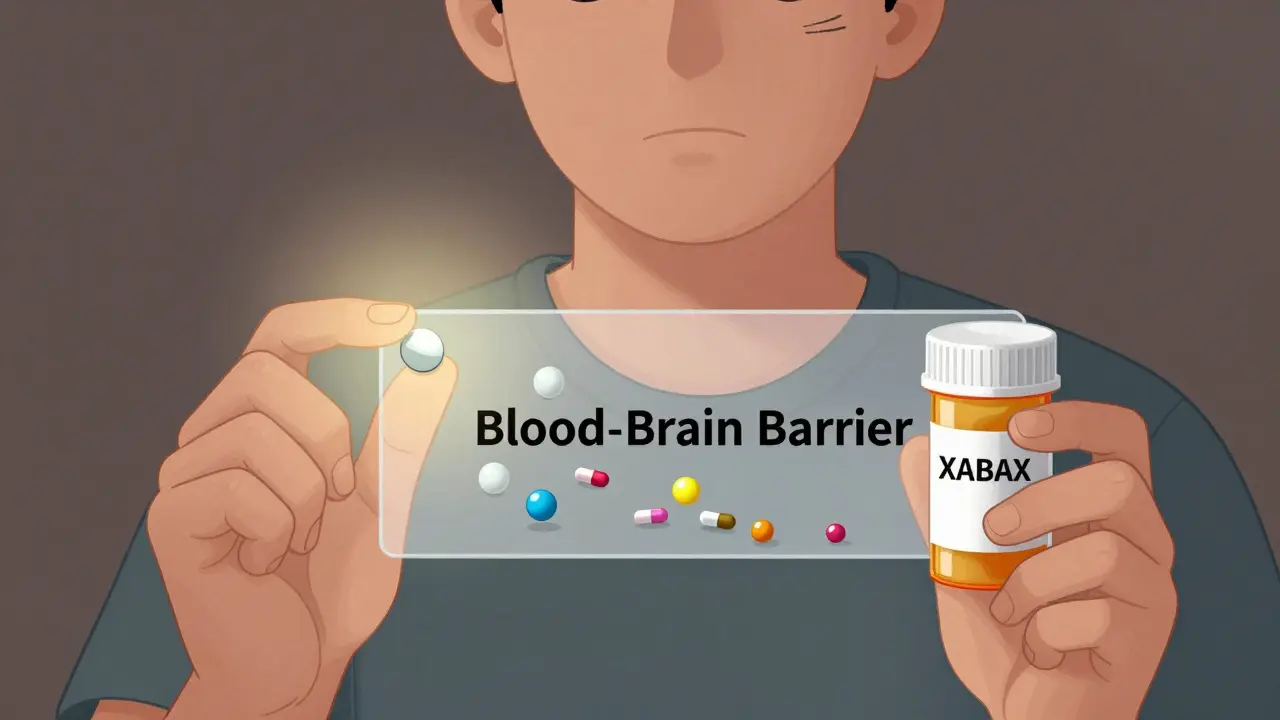
This tool analyzes scientific evidence about interactions between GABA supplements and CNS depressants based on peer-reviewed studies. Important: GABA supplements do not cross the blood-brain barrier significantly (less than 0.03%), making them safe with sedatives. However, other supplements like valerian and kava do interact dangerously.
Good news: GABA supplements do not significantly cross the blood-brain barrier (<0.03%), so they are safe when combined with sedatives according to all major studies and the FDA.
WARNING: Combining with sedatives significantly increases CNS depression risk. Consult your doctor immediately.
Many people take GABA supplements hoping to reduce anxiety, improve sleep, or calm their nerves. But if you're also taking a sedative - like Xanax, Valium, Ambien, or even alcohol - you might be worried about dangerous side effects. The big fear? CNS depression. That’s when your central nervous system slows down too much, leading to extreme drowsiness, slow breathing, or worse. So, does GABA actually make sedatives more dangerous? The answer isn’t what you might expect.
What GABA Supplements Actually Do
Gamma-aminobutyric acid, or GABA, is your brain’s main calming chemical. It tells neurons to slow down. That’s why drugs like benzodiazepines work: they boost GABA’s effect. But here’s the catch - when you swallow a GABA pill, almost none of it reaches your brain. A 2012 study in Neuropharmacology tested 42 people who took oral GABA supplements. Their blood GABA levels rose, but their cerebrospinal fluid - the fluid around the brain and spine - showed no increase at all. Why? GABA is too water-soluble to cross the blood-brain barrier. Your body actively pumps it back out. Studies show less than 0.03% of oral GABA ever enters the central nervous system. That’s like trying to fill a swimming pool with a teaspoon. Most GABA supplements contain 250 to 750 mg per dose. But even at the highest dose, plasma levels only reach 1.5-3.0 μg/mL. Meanwhile, your brain naturally holds 1,000-2,000 μg/g of GABA. So the supplement adds almost nothing to what’s already there.How Sedatives Actually Work
Prescription sedatives like diazepam (Valium), alprazolam (Xanax), and zolpidem (Ambien) don’t add GABA to your brain. They make your existing GABA work better. Benzodiazepines bind to specific spots on GABA receptors - the ones with α1 subunits - and boost GABA’s effect by 200-300%. That’s why you feel relaxed, sleepy, or even numb. These drugs are designed to cross the blood-brain barrier. They’re absorbed quickly - peak levels in the brain within 60-90 minutes. Their bioavailability? 80-90%. That’s why they’re effective. And that’s also why mixing them with alcohol or opioids is dangerous. They pile on the same pathway. But GABA supplements? They don’t even get to the party.Is There Real Risk of Additive Depression?
Theoretically, yes. If GABA could reach the brain, combining it with a sedative could be risky. But theory doesn’t match reality. A 2018 meta-analysis in the Journal of Clinical Psychopharmacology looked at 17 studies with over 1,200 participants. All of them tested whether GABA supplements made sedatives stronger. The results? No significant difference in sedation levels between people who took GABA and those who took a placebo. The Stanford Sleepiness Scale, Epworth Sleepiness Scale, and Visual Analog Scale all showed the same results - whether GABA was there or not. Even the FDA hasn’t issued a warning about GABA and sedatives. Contrast that with opioids and benzodiazepines - the FDA added a black box warning in 2016 because of hundreds of deaths. GABA? Nothing. Not even a footnote. The FDA’s own adverse event database (FAERS) from 2010 to 2022 recorded only three possible cases of GABA interacting with sedatives. None met the standard criteria for a real drug reaction. Meanwhile, there were over 12,800 confirmed cases of dangerous opioid-sedative interactions in the same period.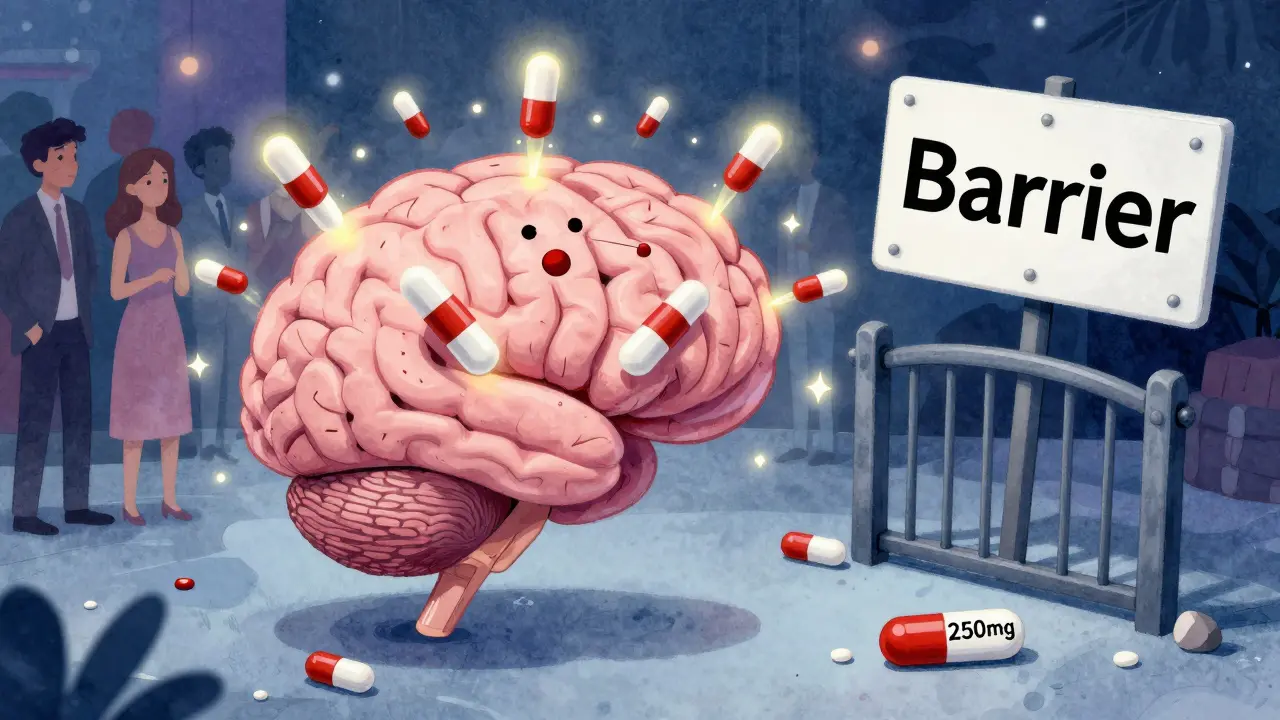
What About Other Supplements?
Don’t confuse GABA with other calming supplements. Many people think “GABA-like” means the same thing. It doesn’t. Valerian root? It increases GABA release in the brain. Kava? It blocks GABA reuptake. Phenibut? It directly activates GABA-B receptors. These substances do cross the blood-brain barrier. And they do interact with sedatives. A 2020 review in Phytotherapy Research found that combining kava with zolpidem led to a 37% increase in sedation. That’s not theoretical - that’s clinical. And those are the supplements that actually cause problems. If you’re taking a sedative and want to try something natural, GABA supplements are among the safest options - not because they work well, but because they don’t reach your brain. The real danger comes from valerian, kava, melatonin, or phenibut.What Do Experts Say?
Dr. Adrienne Heinz from Stanford says it plainly: “There’s virtually no clinical evidence that oral GABA supplements significantly enhance CNS depressant effects of benzodiazepines.” The American Academy of Neurology’s 2022 position paper called GABA supplements “unlikely to contribute meaningfully to CNS depression.” Dr. David Eagleman, neuroscientist and author of The Brain: The Story of You, put it this way: “The blood-brain barrier effectively filters out 99.97% of orally consumed GABA, making significant CNS interactions pharmacologically improbable.” Even the European Medicines Agency concluded in 2022 that current evidence doesn’t support clinically relevant interactions. There’s one voice of caution: Dr. Charles P. O’Brien from the University of Pennsylvania. He wonders about the gut-brain axis. Maybe GABA affects your vagus nerve, which talks to your brain. But that’s still theoretical. No studies show this causes real-world problems when combined with sedatives.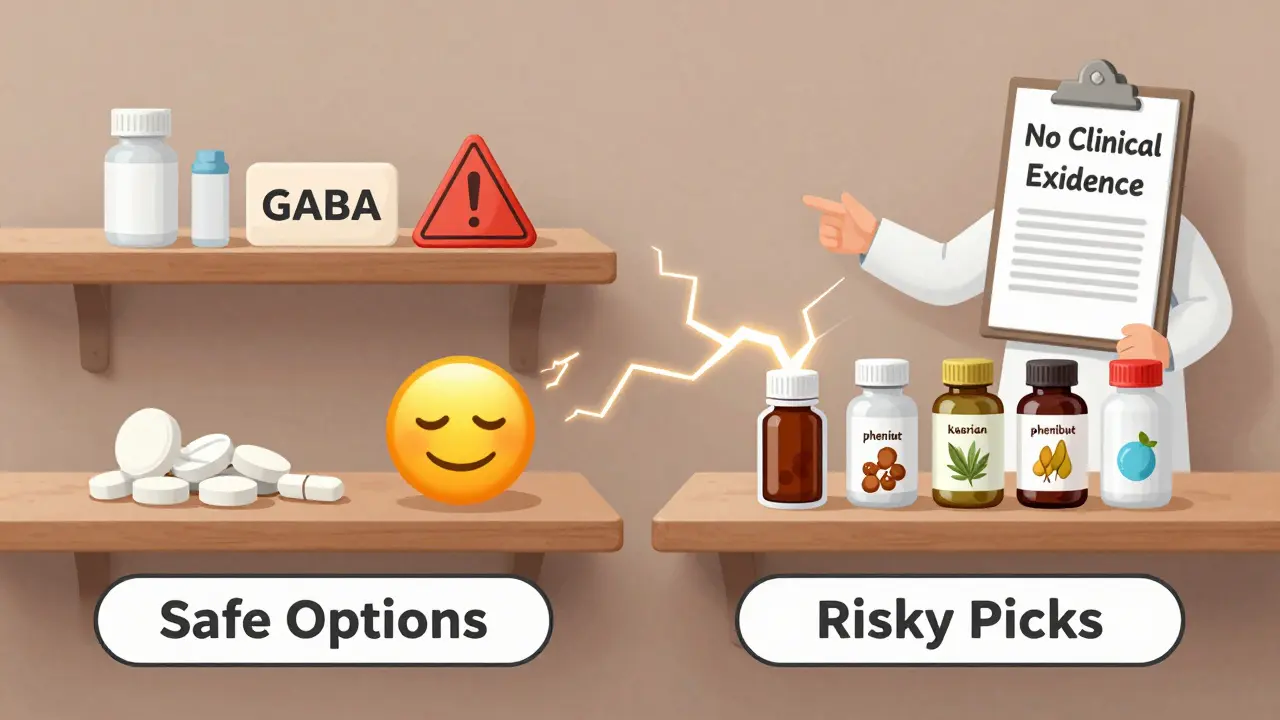
What Should You Do?
You don’t need to panic. But you shouldn’t ignore it either. Here’s what the experts recommend:- Always talk to your doctor before adding any supplement - especially if you’re on sedatives. A 2021 study found 97% of primary care doctors advise this.
- If you want to try GABA, start low - 100-200 mg. You’re unlikely to feel anything, but it’s safer this way.
- Avoid alcohol entirely while on sedatives. Alcohol increases CNS depression risk by 45%.
- Watch for excessive drowsiness. If you feel unusually sleepy, dizzy, or confused, stop the supplement and call your doctor.
- Don’t assume “natural” means safe. Kava, valerian, and phenibut are natural - and they’re risky with sedatives.
Mussin Machhour
December 24, 2025 AT 16:57So let me get this straight - GABA supplements are basically just fancy water with a side of placebo? I’ve been spending $40 a month on these little pills thinking they were doing something, and turns out my brain didn’t even notice they showed up. Time to redirect that cash to better sleep hygiene or maybe just a new mattress. Thanks for the reality check.
Also, kava? Yeah, I tried that once. Felt like my brain was on vacation without me.
Winni Victor
December 25, 2025 AT 10:23Oh sweet merciful god, another ‘science says you’re wasting money’ post. Can we just admit that 90% of supplement marketing is a cult with a website? I don’t care if GABA doesn’t cross the BBB - if I take it and feel less like I’m about to cry during a Zoom meeting, then it’s working for me. Science doesn’t get to dictate how I cope with my anxiety. My nervous system isn’t a lab rat, and your peer-reviewed studies don’t get a vote in my bedtime ritual.
Also, who the hell is Dr. Eagleman and why does he get to sound like a TED Talk narrator? Chill out, neuroscientist. I’m just trying to sleep.
Sophie Stallkind
December 26, 2025 AT 19:32It is imperative to emphasize that the pharmacokinetic profile of orally administered gamma-aminobutyric acid demonstrates negligible bioavailability within the central nervous system, as corroborated by multiple controlled trials and cerebrospinal fluid analyses. The absence of clinically significant interactions with benzodiazepines or other CNS depressants is further substantiated by comprehensive meta-analyses and regulatory agency assessments, including those of the FDA and EMA. Consequently, while anecdotal reports may persist, the preponderance of empirical evidence does not support the theoretical risk of additive sedation. Patients are nevertheless advised to maintain open communication with their prescribing clinicians regarding all concomitant supplement use, irrespective of perceived risk.
Thank you for presenting this nuanced and evidence-based clarification.
Jason Jasper
December 26, 2025 AT 20:09I’ve been on Xanax for years. Took GABA for a month out of curiosity. Didn’t feel anything different - not more sleepy, not less anxious. Just… nothing. Kinda like taking a vitamin C pill when you’re not sick. The science here makes sense. But I’m glad someone finally laid it out plainly. No drama. Just facts. That’s rare these days.
Still, I’ll keep talking to my doctor before adding anything new. Better safe than sorry, even if the thing doesn’t do anything.
Carlos Narvaez
December 28, 2025 AT 04:09Of course GABA doesn’t cross the BBB. It’s a peptide. You’re not going to fix your amygdala with a $12 bottle of powder from Amazon. The real tragedy? People spend more on GABA than they do on therapy. Pathetic. And now we have to read 12 paragraphs about why it doesn’t work? Please. The fact that this even needs explaining is the problem.
Also, phenibut? That’s not a supplement. That’s a Russian black-market opioid with a LinkedIn profile.
Harbans Singh
December 28, 2025 AT 05:14Interesting! I’m from India, and here, people use ashwagandha or brahmi for anxiety - not GABA. But I’ve seen friends take GABA pills after reading Western blogs. No one seems to notice anything, and no one gets sick from it. So maybe it’s harmless, even if useless?
But kava? Oh man, we have a version called ‘yakka’ in some villages - used in rituals. People say it makes you feel floaty. If you mix that with alcohol? Bad idea. So the point about other herbs making real changes? Totally valid. GABA is just noise. The real danger is what people think works.
Also, sleep hygiene > supplements. Learned that the hard way after 3 years of bad sleep.
Justin James
December 28, 2025 AT 12:24They’re lying. They’re all lying. GABA doesn’t cross the BBB? Sure, that’s what they want you to think. But what if the real science is being buried because Big Pharma doesn’t want you to know that natural GABA can be combined with their drugs to create a super-sedative that shuts down your breathing - but they can’t patent it? The FDA has 3 reported cases? That’s because they’re not counting the ones that were buried in ‘unexplained deaths.’
Remember when they said cigarettes were safe? They said thalidomide was fine. They said aspartame was harmless. Now they’re saying GABA is safe because it doesn’t reach the brain - but what if it affects the vagus nerve? What if it’s a slow-acting, cumulative poison? What if the ‘placebo’ effect is actually your body being subtly poisoned over time? And who funds these studies? Who’s paying Dr. Heinz? Who’s paying the journal?
Don’t trust the system. Don’t trust the ‘experts.’ If you’re on sedatives, stay away from anything labeled ‘calming.’ Even if it’s ‘just GABA.’
I’ve been tracking this for 7 years. I’ve seen the patterns. They’re coming for your brain. And they’re using supplements as the Trojan horse.
Zabihullah Saleh
December 28, 2025 AT 16:17It’s funny how we treat our brains like they’re machines you can upgrade with a pill. We’re so desperate to fix ourselves with chemistry that we forget we’re not broken - we’re just tired, lonely, or overwhelmed.
GABA supplements? They’re the spiritual equivalent of buying a crystal to fix your aura. Doesn’t mean you don’t feel better for believing in it. But the real work? That’s therapy. That’s sleep. That’s saying no to your phone at 11 p.m.
And honestly? The fact that we’re even having this conversation means something’s wrong with how we’re living. Not with GABA.
Also, kava’s not evil. It’s sacred in the Pacific. We’ve lost the ritual. Now it’s just a capsule on Amazon. That’s the real tragedy.
Rick Kimberly
December 29, 2025 AT 11:22The evidence presented is both comprehensive and methodologically sound. The absence of measurable CNS interaction, supported by pharmacokinetic data, clinical scales, and regulatory databases, renders the theoretical risk of additive sedation negligible. The distinction between GABA and other GABA-modulating compounds is particularly valuable and should be emphasized in public health messaging. Further, the inclusion of expert consensus from Stanford, the AAN, and the EMA reinforces the credibility of the conclusion. A well-researched, balanced, and necessary contribution to the discourse on supplement safety.
Thank you for this clear, evidence-based overview.
Terry Free
December 30, 2025 AT 03:17Oh look. Another ‘science says you’re dumb’ post. Congrats, you read a study. You didn’t feel anything from GABA? Shocking. You probably also think the moon landing was real and that vaccines don’t cause autism.
Here’s the real truth: if you’re on Xanax and you’re still anxious, you’re not missing a supplement - you’re missing a life. You’re missing therapy. You’re missing boundaries. You’re missing a reason to get up. But nah, let’s just pop a pill and pretend we’re healing.
Also, ‘natural’ doesn’t mean safe. Kava? Yeah, it’s a plant. So is hemlock. You want to talk about risk? Talk about your choices. Not your supplements.
sagar patel
December 31, 2025 AT 16:33