
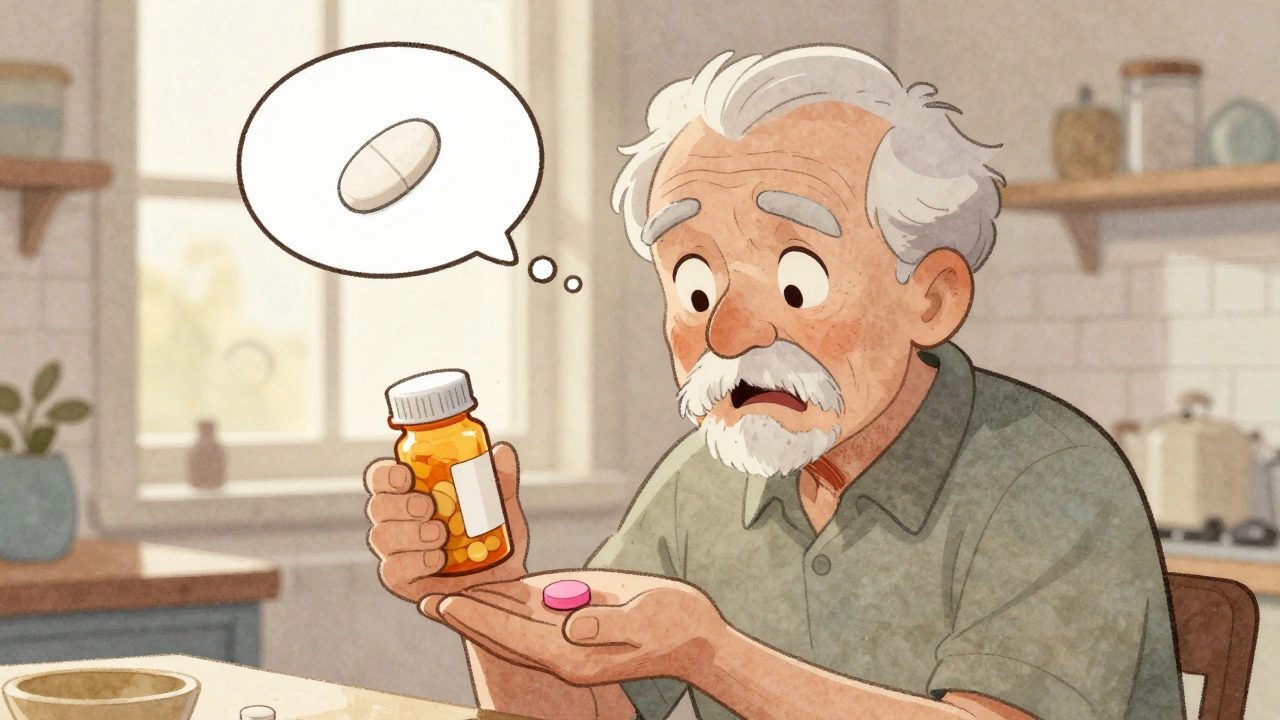
Have you ever opened your pill bottle and thought, "This isn't the same pill I've been taking for years"? You're not alone. Every month, thousands of people in the U.S. and New Zealand wake up to a pill that looks different-color, shape, size, even the marking on it. And while the medicine inside is exactly the same, the shock of that visual change can make people stop taking it altogether. This isn't a mistake. It's the law.
Why Do Generic Pills Look Different?
Generic drugs are required by the FDA to have the same active ingredient, strength, dosage form, and effectiveness as their brand-name counterparts. That means if you're taking lisinopril for high blood pressure, the generic version works just as well as the brand. But here's the catch: they don't have to look the same. The reason? Trademark laws. In the U.S., brand-name drug companies hold trademarks on the appearance of their pills. To avoid infringing on those rights, generic manufacturers must make their versions look different. So one company makes metformin as a white oval, another as a pink round tablet, and a third as a blue capsule. All contain the same 500mg of metformin. All are equally safe. But they don’t look alike. This isn’t just a U.S. thing. It’s a global standard. In New Zealand, Pharmac-the government agency that funds medicines-also allows multiple generic manufacturers, and appearance changes happen regularly. Pharmacies choose the cheapest option available each time, so your pill might look different every refill. One month it’s white. The next, it’s peach. Then it’s oblong instead of round.How Often Do These Changes Happen?
More often than you’d think. A patient in a UCLA Health study reported nine different appearances of the same medication over 15 years. That’s nearly one change every 20 months. And it’s not rare. A 2022 survey by the American Pharmacists Association found that 42% of patients experienced at least one appearance change in their regular meds within a year. Some drugs are notorious for it. Sertraline (Zoloft) can be blue, green, or white. Gabapentin comes in every color imaginable-yellow, white, pink, even purple. Lisinopril? White, peach, or pink. Metformin? Round or oval, white or pink. And it’s not just color. Shape changes too. A tablet might become a capsule. A scored pill might lose its line. A tiny pill might become larger.What Happens When Patients Get Confused?
The real danger isn’t that the pill is unsafe. It’s that people stop taking it. A landmark study in the Annals of Internal Medicine found that 34% of patients stopped taking their medication after just a color change. After a shape change? That number jumped to 66%. Think about that. Two out of three people stopped taking their blood pressure, diabetes, or depression meds-not because the drug didn’t work, but because it looked wrong. One patient told UCLA Health she’d been taking potassium pills for years. They were flat, circular, and bright orange. Then she got a white, capsule-shaped version. She thought it was a different drug. She didn’t take it. A week later, she ended up in the hospital with dangerously low potassium. Another Reddit user wrote: "I almost stopped my blood pressure meds because they went from white to pink. I thought it was a different drug. I called my pharmacy three times." People associate colors with effectiveness. Blue = calming. White = pure. Pink = strong. When the color changes, their brain says, "This isn’t right." And if they don’t have a pharmacist or doctor to reassure them, they quit.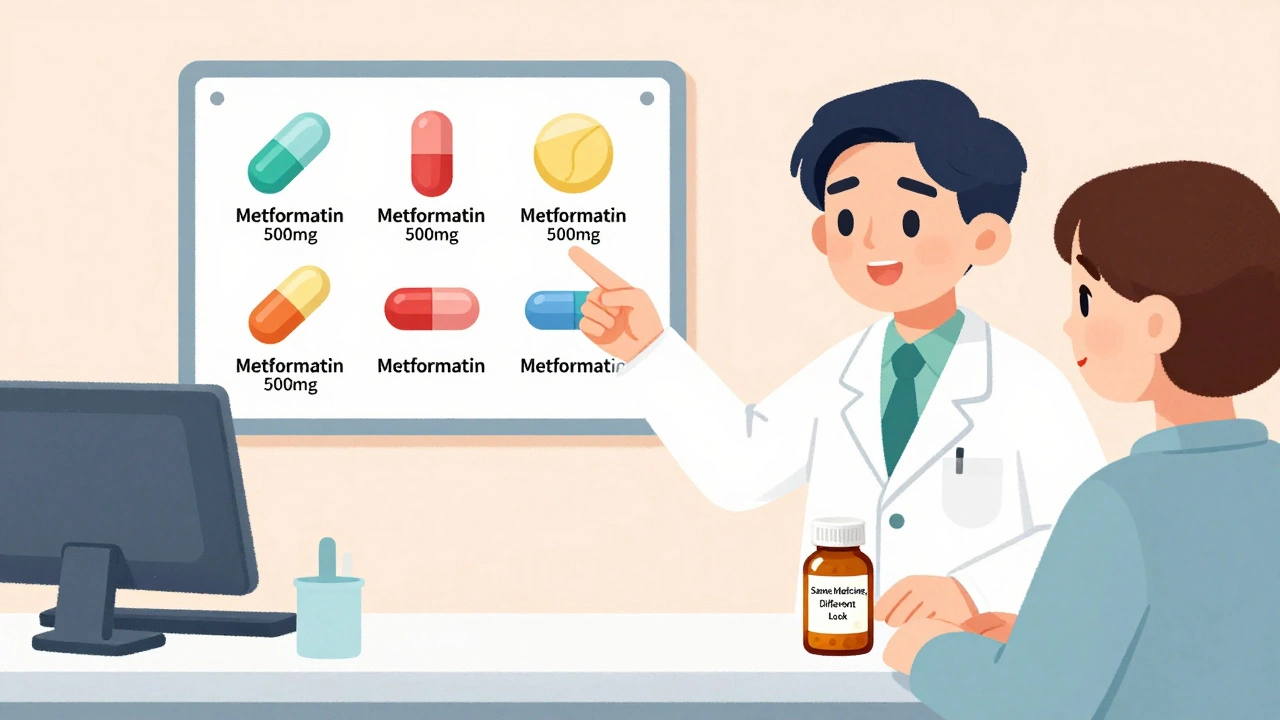
Is It Legal? Is It Safe?
Yes, it’s legal. And yes, it’s safe-when done right. The FDA requires every generic drug to prove it’s bioequivalent to the brand-name version. That means the body absorbs it at the same rate and to the same extent. The active ingredient is identical. The strength is exact. The manufacturing follows the same strict rules as brand-name drugs. The only things that can legally differ are the inactive ingredients: dyes, fillers, coatings, and binders. These don’t affect how the drug works. They only change how it looks or tastes. And even those are regulated. The FDA checks for purity, stability, and consistency batch after batch. So the pill is safe. The problem isn’t the drug. It’s the lack of communication.How to Protect Yourself
You don’t have to be confused. Here’s what to do:- Keep a written list of every medication you take. Include the name, dose, and what it looks like. Take this list to every appointment.
- Check the pill with your pharmacist every time you get a refill. Don’t assume it’s the same. Ask: "Is this the same medicine I’ve been taking?"
- Use a pill identifier tool. Websites like Medscape’s Pill Identifier let you search by color, shape, and imprint. It’s free, fast, and reliable.
- Ask for consistency. If you’ve had three different versions of the same pill in a year, tell your doctor or pharmacist. You can often request a specific manufacturer. Not all pharmacies offer this, but many will if you ask.
- Don’t stop taking it. If it looks different, don’t guess. Call your pharmacy. They’re trained to handle this.

What Pharmacies Are Doing About It
The system is slowly changing. In 2018, only 45% of pharmacies notified patients about appearance changes. By 2023, that number had jumped to 78%. Many now include a small note on the label: "This is a different manufacturer. Active ingredient unchanged." Independent pharmacies in the U.S. have also started pill identification programs. In 2020, only 32% had them. Now, 63% do. Some even keep a small photo of each pill in their system so they can show patients what to expect. In New Zealand, Pharmac doesn’t require appearance notifications, but many community pharmacies have adopted the practice anyway. Pharmacists know how often people panic-and they’re trying to help.What’s Next?
Experts have been pushing for change for years. In a 2014 letter in ACP Journals, doctors Uhl and Peters wrote: "Bioequivalent generic drugs that look like their brand-name counterparts enhance patient acceptance." They’re right. If generics looked like the brand, adherence would improve dramatically. But trademark laws stand in the way. Until those change, appearance differences will keep happening. The FDA has started exploring ways to update labeling to better warn patients. The MODERN Labeling Act of 2020 gives them more power to require changes when new safety data emerges. The goal isn’t to make generics look like brands. It’s to make sure patients know: "Different look, same medicine."Final Thought: Your Pill Isn’t Broken
Your medication isn’t failing you. The system is. But you’re not powerless. You have the right to know what’s in your bottle. You have the right to ask questions. And you have the right to demand clarity. If your pill changes color, shape, or size-don’t assume the worst. Don’t stop taking it. Don’t ignore it. Call your pharmacist. Check the label. Use a pill identifier. Talk to your doctor. Because your health isn’t about what the pill looks like. It’s about what’s inside-and whether you take it.Are generic pills with different appearances less effective?
No. Generic pills with different appearances contain the exact same active ingredient, strength, and dosage form as the brand-name version. The FDA requires them to prove they work the same way in the body. Differences in color, shape, or size are only due to inactive ingredients like dyes or fillers, which don’t affect how the drug works.
Why do pharmacies switch generic manufacturers?
Pharmacies choose the lowest-cost option approved by regulators like the FDA or Pharmac. Generic manufacturers compete on price, so the cheapest one gets selected each time. That means your pill can change every refill-even if you haven’t changed doctors or prescriptions.
Can I ask for the same generic brand every time?
Yes. You can ask your pharmacist to fill your prescription with a specific generic manufacturer. While they may not always have it in stock, many pharmacies will accommodate this request, especially if you’ve had problems with appearance changes before.
What should I do if I think my medication changed but the label didn’t say so?
Don’t take it until you confirm. Call your pharmacy and ask them to check the manufacturer and batch. Use an online pill identifier like Medscape’s to match the pill’s color, shape, and imprint. If it’s different and you weren’t warned, report it. You have the right to be informed.
Is it dangerous to stop taking a medication because the pill looks different?
Yes. Stopping medication without medical advice can lead to serious health risks. For example, stopping blood pressure or antidepressant meds suddenly can cause rebound effects, hospitalization, or even death. Always contact your pharmacist or doctor before stopping any drug-even if it looks different.
How can I keep track of my medications if they keep changing?
Keep a written or digital list with the drug name, dose, and physical description (color, shape, imprint). Take photos of each new version. Use apps or websites like Medscape’s Pill Identifier to verify changes. Bring this list to every doctor and pharmacy visit. It’s the best way to avoid confusion and stay safe.
Audrey Crothers
December 12, 2025 AT 13:45OMG YES. I thought I was going crazy when my metformin went from white oval to pink round. Called my pharmacy three times. They were like, 'It's the same thing, just a different maker.' I cried. Not because I'm dramatic, but because I was scared I was taking something dangerous. Thank you for validating this.
Now I take a pic of every new pill. Saved my life.
❤️
Laura Weemering
December 13, 2025 AT 12:15It's not just about the pill-it's about the erosion of trust in the medical-industrial complex. We're conditioned to equate appearance with authenticity, and the system exploits that cognitive dissonance to cut costs while pretending it's 'safe.' The FDA's bioequivalence standards are a legal fiction when patients are being driven off their meds by aesthetic shifts.
Who benefits? Not you. Not me. The shareholders. And yet we're told to 'just ask your pharmacist.' As if that's a solution to systemic malpractice.
Trademark law should be abolished for pharmaceuticals. This isn't Coca-Cola. It's your life.
Levi Cooper
December 14, 2025 AT 06:28People in the U.S. are too soft. Back in my day, you took what you got. No whining. If you can't tell the difference between a white pill and a pink one, maybe you shouldn't be managing your own meds.
And don't get me started on New Zealand-why are we even talking about their system? They're a tiny country with no real pharmaceutical industry. This is an American problem caused by American overregulation and overthinking.
Reshma Sinha
December 14, 2025 AT 21:19As a pharmacist in India, I see this every day. Patients panic when the pill changes color. We spend 10 minutes explaining each time. But here’s the thing-we don’t have brand-name drugs dominating the market, so generics are the norm. We train staff to show patients the old vs. new pill side by side. Simple. No drama.
Maybe the U.S. needs more pharmacist-led education, not just labels.
Lawrence Armstrong
December 16, 2025 AT 09:23Just want to say-this is one of the most important posts I've read all year. I’ve been on sertraline for 8 years. It’s changed colors 5 times. I used to panic every time. Now I use the Medscape app before I even swallow. It’s a habit. It saved me from a relapse.
Also, if you’re on meds, keep a photo log. I use Google Photos labeled ‘Pill Archive.’
🫶
sandeep sanigarapu
December 16, 2025 AT 17:39This is a serious issue. Many patients do not understand that generic medicines are bioequivalent. The change in appearance creates psychological barriers. The responsibility lies with both regulators and pharmacists to ensure clear communication. A simple note on the label is not enough. We need standardized visual aids and patient education materials. Health literacy must be prioritized.
Adam Everitt
December 17, 2025 AT 01:24so like… the pill changes color but the chem stuff is the same? weird. i always thought the color meant something. like blue=calm, pink=strong. turns out its just dye. kinda wild. also, why do they even care what it looks like? trademark law is wild. like… who’s stealing a pill shape? lol
Rob Purvis
December 17, 2025 AT 23:06Can we just pause for a second and acknowledge how absurd this is? We have a system where a person’s health is at risk because a pharmaceutical company owns the visual design of a pill-despite the active ingredient being identical.
It’s like if you bought the same engine for your car, but the manufacturer changed the color of the spark plugs and told you, ‘It’s the same engine, just don’t panic.’
We need a federal mandate: if the active ingredient is identical, the pill must be visually consistent unless medically necessary. This isn’t branding-it’s patient safety.
Stacy Foster
December 18, 2025 AT 07:59They’re doing this on purpose. Think about it. The same companies that make the brand-name drugs also own the generic patents. They switch manufacturers to confuse you. You think you’re getting a cheaper version? Nah. You’re getting a different version made by the same corporation that wants you to doubt yourself. They want you to go back to the expensive brand. It’s psychological warfare. And the FDA? They’re in bed with them.
I’ve seen the internal memos. I know what’s happening. You think this is about cost? It’s about control.
Donna Anderson
December 19, 2025 AT 09:58my grandma took her bp med for 15 years and one day it turned from white to purple. she stopped taking it for 3 weeks because she thought it was poison. ended up in the er. now she has a pill box with pics taped to it. we all need to do this. its not weird. its smart.
ps: i love my pharmacist. she gives me a sticker every time i ask about a change. 😊
Nathan Fatal
December 21, 2025 AT 07:46The core issue here is epistemic vulnerability. We place our trust in institutional symbols-color, shape, imprint-as proxies for reliability. When those symbols are arbitrarily altered, the psychological contract between patient and system fractures. The solution isn’t merely better labeling-it’s a redefinition of what constitutes therapeutic trust. We must decouple efficacy from aesthetics. But can a capitalist system that commodifies identity ever truly do that?
Perhaps the real question is not whether the pill is safe-but whether we are safe in a world that treats medicine like a fashion item.
Robert Webb
December 22, 2025 AT 08:07When I first started taking lisinopril, I was terrified every time the pill changed. I didn’t know what to do. I thought I was imagining things. Then I found a local pharmacy that kept a printed photo sheet of every generic version they stocked. I asked if I could take a copy. They gave me one. I laminated it. Now I carry it in my wallet.
It’s not just about the pill. It’s about dignity. You shouldn’t have to second-guess your own body because of corporate trademark rules. We need to normalize asking for consistency. We need to demand better. And we need to support pharmacies that go the extra mile.
If you’re reading this and you’re on meds-don’t be shy. Ask. Document. Advocate. You’re not being difficult. You’re being smart.
nikki yamashita
December 22, 2025 AT 15:21just started taking this med last month and already got 2 different pills. first was blue oval, now its pink round. i took a pic and sent it to my dr. she said ‘good job!’ and asked if i wanted to stick with one maker. we got it sorted. you’re not overreacting. you’re being responsible. 🌟