
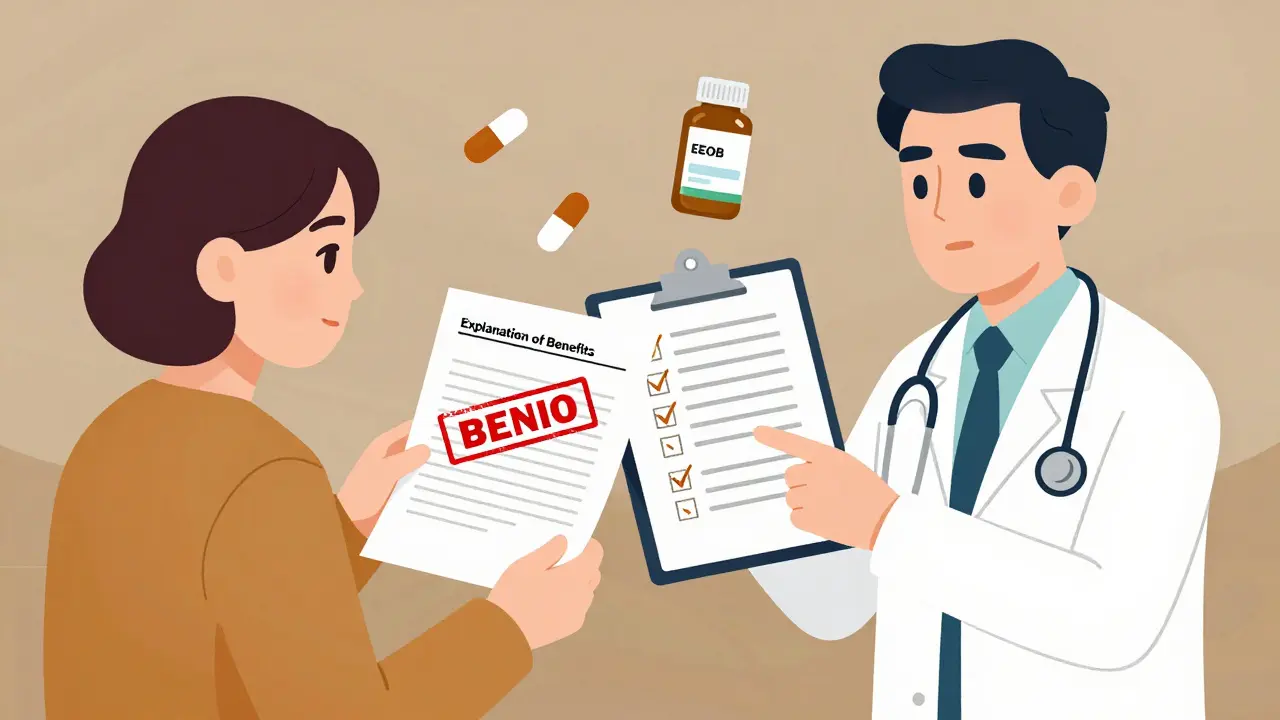
When your doctor prescribes a brand-name medication but your insurance says you must switch to a generic version-or denies coverage entirely-it’s not just a paperwork headache. It’s a potential health risk. Many people don’t realize they have the right to fight back. And with the right steps, you can win. In 2023, over 72% of denied appeals for generic substitution were overturned when patients and doctors followed the correct process. This isn’t about arguing. It’s about using the system the way it was designed.
Why Your Insurance Might Deny Your Medication
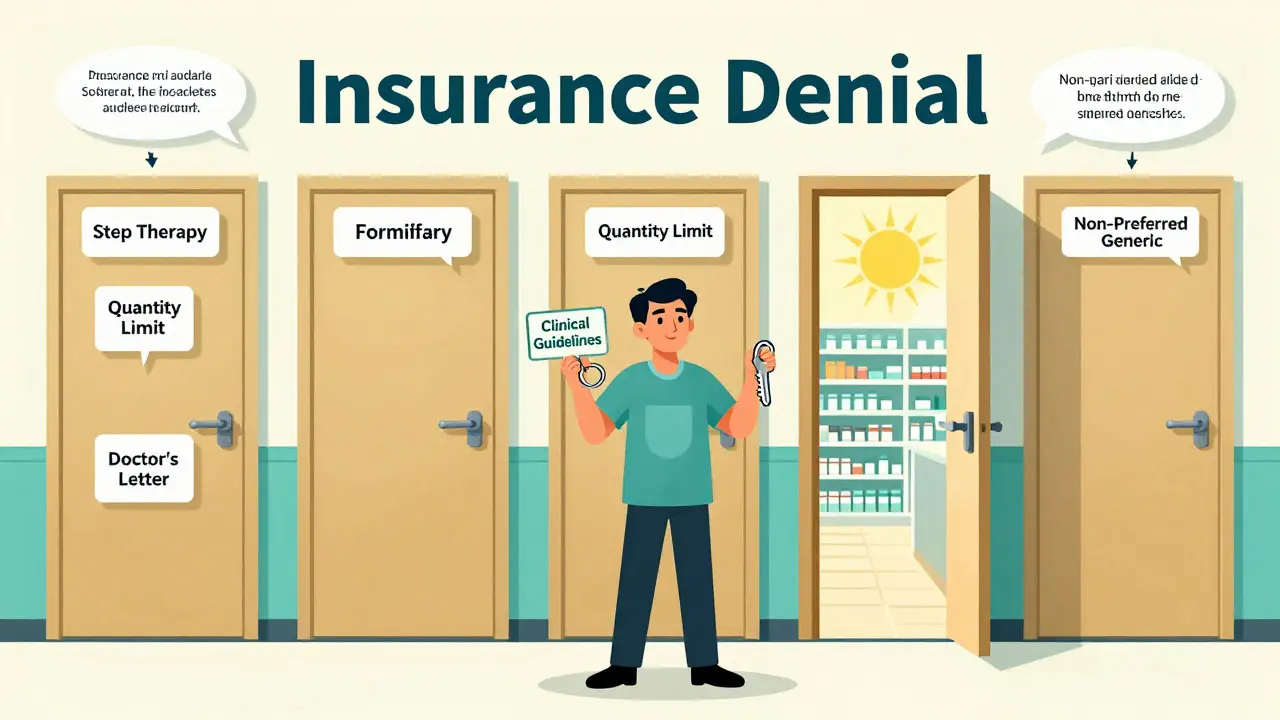
| Reason | What It Means |
|---|---|
| Step Therapy | You must try cheaper alternatives first, even if they’ve failed before |
| Formulary Restriction | The drug isn’t on your plan’s approved list |
| Prior Authorization | Your doctor must prove medical necessity before approval |
| Quantity Limit | Only a certain amount is covered per month |
| Non-Preferred Generic | Your plan prefers a different generic version |
Insurance companies use these rules to cut costs. But they don’t always consider your medical history. For example, if you’ve had severe side effects from a generic version of your medication, or if you have a condition like Crohn’s disease, epilepsy, or Type 1 diabetes where small changes in dosage can be dangerous, switching isn’t just inconvenient-it’s risky.
Step 1: Read Your Explanation of Benefits (EOB)
Every denial comes with an EOB-a document your insurer sends after processing a claim. Don’t ignore it. Look for the section labeled “Denial Reason” or “Coverage Decision.” It should tell you exactly why your drug was denied and what steps to take next. Federal law (45 CFR § 147.136) requires insurers to include this information. If it’s missing, call your insurer immediately.
Write down:
- The exact name of the medication denied
- The date of the denial
- The reason given
- Your policy number and member ID
You have 180 days from the denial date to file an internal appeal for commercial insurance. For Medicare Part D, you only have 120 days. Mark your calendar. Missing this window means you lose your right to appeal.
Step 2: Talk to Your Doctor
Your doctor is your most powerful ally. Most appeals fail because the paperwork is too vague. A letter that says “I think this drug is better” won’t cut it. The American Medical Association says successful appeals include three things:
- Specific clinical reasons why alternatives won’t work for you
- Proof you tried and failed other medications
- Citations from medical guidelines (like those from the American College of Physicians or specialty societies)
For example: “Patient experienced severe nausea and vomiting with two prior generic versions of levothyroxine, resulting in hospitalization. Current brand-name version has maintained stable TSH levels for 18 months. Per ATA 2022 Guidelines, brand-name levothyroxine is recommended in cases of prior adverse reaction.”
Ask your doctor to complete a formal letter of medical necessity. Many clinics have templates. If not, use the one from the Crohn’s & Colitis Foundation or the American Diabetes Association-they’re free and widely accepted.
Step 3: Submit the Formal Appeal
Most insurers have a standard form. Look for names like “Prior Authorization Exception Request” or “Step Therapy Override.” You can usually find it on your insurer’s website under “Member Services” or “Appeals.” If you can’t find it, call customer service and ask for the form by name.
Attach:
- Your doctor’s letter
- Pharmacy records showing failed attempts with other generics
- Lab results or hospital records proving instability with alternatives
Submit everything in writing. Email, fax, or mail-it doesn’t matter, as long as you keep proof. Never just call and ask. Paper trails win appeals.
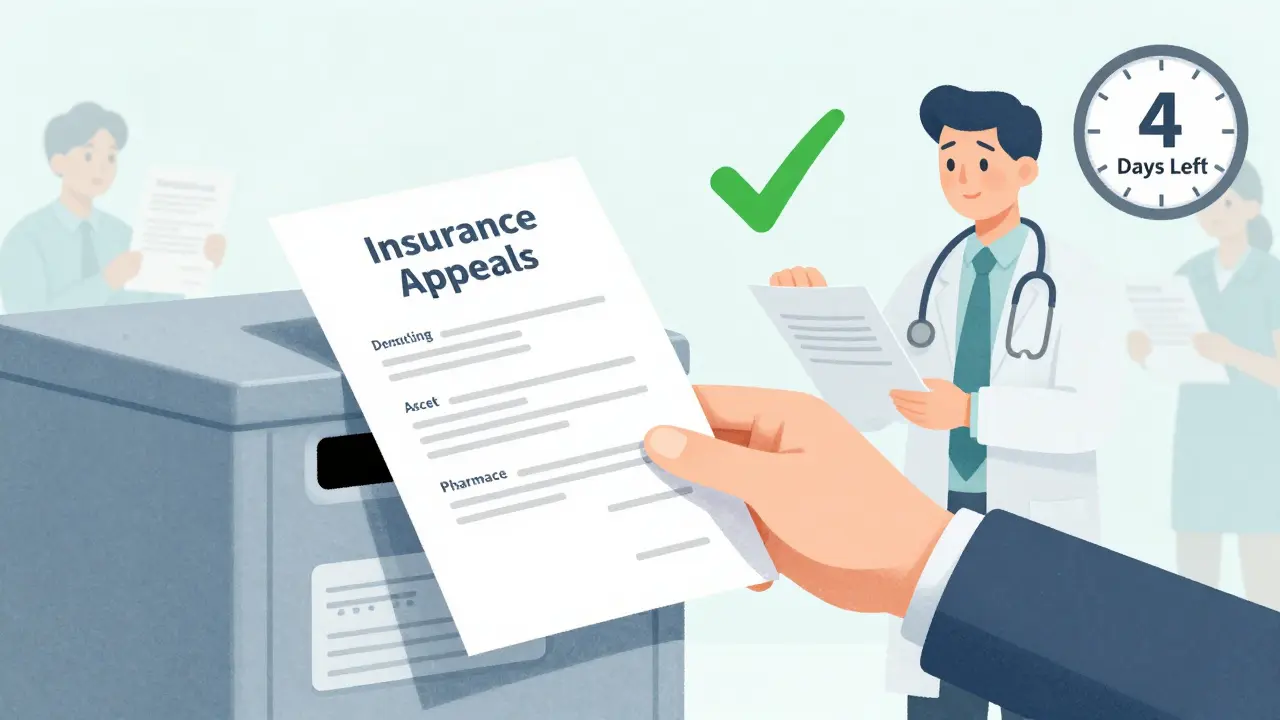
Step 4: Request an Expedited Review If Needed
If your condition is urgent-like if you’re at risk of hospitalization, seizure, or severe deterioration-you can request an expedited appeal. Insurers must respond within 4 business days for these cases.
Write this clearly at the top of your appeal: “URGENT: Expedited Appeal Requested Due to Risk of Clinical Deterioration.” Include supporting evidence: recent ER visits, lab values outside normal range, or a note from your doctor stating “immediate discontinuation may result in life-threatening complications.”
Medicare Part D and Medicaid have similar rules. If you’re on Medicare, use Form CMS-10001 (Coverage Determination Request). You can download it from medicare.gov.
Step 5: If You’re Still Denied, Go External
If your insurer says no again, you can ask for an external review. This means an independent third party-usually a state agency or a nationally accredited organization-reviews your case. This step is free.
For commercial insurance, you have 60 days after the internal denial to request external review. For Medicare, it’s the third level of appeal. The success rate here is high: 63% of Medicare appeals are overturned at this stage, according to CMS data.
Use your state’s insurance commissioner’s office. In New Zealand, you’d contact the Health and Disability Commissioner, but in the U.S., each state has one. California’s Department of Insurance resolved 92% of formal complaints in 2022. Most offer free help and will even write a letter on your behalf.
What Makes an Appeal Succeed?
Research from the Journal of Managed Care & Specialty Pharmacy shows that appeals with three or more documented treatment failures are 83% more likely to be approved. Why? Because insurers can’t argue with proof.
Also, peer-to-peer reviews-where your doctor talks directly to the insurer’s medical director-have a success rate over 75%. Ask your doctor if they’re willing to do this. Many will, especially if you’ve been a long-term patient.
On the flip side, 67% of denied appeals had no clinical guidelines cited. If your letter doesn’t mention a recognized standard like those from the American Heart Association or the Endocrine Society, you’re already at a disadvantage.
Common Mistakes to Avoid
- Waiting too long - Don’t wait until your prescription runs out. Start the appeal the day you get denied.
- Using vague language - “I feel better on this drug” isn’t enough. Say “I had three episodes of hypoglycemia requiring emergency treatment on generic metformin.”
- Not following up - Call after 10 days if you haven’t heard back. Insurers often miss deadlines.
- Letting the pharmacy handle it - Pharmacists can’t override insurance decisions. Only your doctor and you can.
Real Stories: What Works
A 54-year-old woman with rheumatoid arthritis was denied her brand-name biologic after two generics failed. She submitted a letter citing her doctor’s notes, lab results showing increased inflammation markers, and a reference to the American College of Rheumatology guidelines. Approved within 11 days.
A teenager with epilepsy lost coverage for his specific brand of levetiracetam after his plan switched generics. His neurologist provided EEG results showing increased seizure frequency on the generic. Appeal approved with expedited review.
These aren’t rare. A GoodRx analysis of 15,000 appeals found that 78% of those approved included a physician’s letter referencing clinical guidelines. That’s your blueprint.
What to Do If You’re Still Stuck
If you’ve done everything and still got denied, contact your state’s insurance commissioner. They can intervene. In states like California and New York, they have real power to force insurers to reverse decisions.
Also, check if your medication is covered under any patient assistance programs. Many drug manufacturers offer free or discounted versions if you’re denied coverage. Companies like Pfizer, Novo Nordisk, and Sanofi have programs for their brand-name drugs.
And remember: you’re not alone. In 2023, over 1.2 million appeals were filed by commercial insurance members. Most of them won.
Can I appeal if I’m on Medicare Part D?
Yes. Medicare Part D has a five-level appeal process. Start with a Coverage Determination Request (Form CMS-10001). Your doctor must complete it. If denied, you can appeal to an Independent Review Entity, then to a Medicare Administrative Contractor, then to an Administrative Law Judge, and finally to the Medicare Appeals Council. Success rates climb at each level, with the second stage overturning 63% of denials.
How long does an appeal take?
Standard appeals take 30 days for new prescriptions or 60 days for ongoing ones. Expedited appeals-used when your health is at risk-must be decided in 4 business days. Medicare Part D requires a decision within 7 days for standard requests and 72 hours for urgent cases. If they miss the deadline, your appeal is automatically approved.
Do I need a lawyer to appeal?
No. Most appeals are handled successfully without legal help. What matters is clear documentation from your doctor and following the insurer’s process exactly. Legal aid is only needed if you reach the final level of appeal and still get denied. Free help is available through state insurance commissioners and patient advocacy groups like the Patient Advocate Foundation.
What if my doctor won’t help me with the appeal?
Ask again. Many doctors don’t realize how simple the process is. If they still refuse, contact your state’s medical association-they often have templates and even will draft letters for patients. You can also use sample letters from the Crohn’s & Colitis Foundation or the American Diabetes Association. These are designed to be easy for doctors to sign.
Can I appeal for any generic medication?
Yes. The process applies to any drug denied due to formulary restrictions, step therapy, or prior authorization. It’s most common for medications used in chronic conditions like diabetes, epilepsy, thyroid disorders, autoimmune diseases, and mental health. But even for something like an antibiotic or blood pressure pill, if switching caused harm, you have the right to appeal.
Next Steps: What to Do Right Now
- Find your last EOB and check the denial reason.
- Call your doctor’s office and ask for the letter of medical necessity form.
- Download your insurer’s appeal form online.
- Set a calendar reminder: 30 days from today, call to check status.
You’ve already taken the hardest step: deciding to fight. Now, with these steps, you’re not just asking-you’re demanding your right to the right medication. And you have the tools to win.
Prathamesh Ghodke
March 17, 2026 AT 05:16Stephen Habegger
March 18, 2026 AT 05:01Emily Hager
March 18, 2026 AT 05:37Melissa Starks
March 19, 2026 AT 09:54Kal Lambert
March 21, 2026 AT 07:46Melissa Stansbury
March 21, 2026 AT 21:44cara s
March 22, 2026 AT 07:27Amadi Kenneth
March 23, 2026 AT 02:45Shameer Ahammad
March 23, 2026 AT 04:22Alexander Pitt
March 24, 2026 AT 18:08Manish Singh
March 24, 2026 AT 18:47Nilesh Khedekar
March 26, 2026 AT 11:24