

Taking a pill might seem like a simple choice, but when you're pregnant or breastfeeding, that choice suddenly feels heavy. You might wonder: "Will this affect my baby?" or "Is the risk of stopping this medicine worse than the risk of taking it?" The truth is, about 90% of pregnant people take at least one medication during their pregnancy. It's a common part of modern healthcare, but it requires a specific kind of conversation with your doctor to keep everyone safe.
The goal isn't just to avoid "bad" drugs, but to balance the health of the parent with the development of the child. Many people mistakenly stop critical medications-like antidepressants or blood pressure meds-out of fear, which can actually cause more harm than the medication itself. The secret to navigating this is structured communication. Instead of a quick mention at the end of a visit, you need a dedicated plan for medication safety that evolves from the moment you think about conceiving through the end of your breastfeeding journey.
| Resource | Best For... | Key Feature |
|---|---|---|
| MotherToBaby | Quick, evidence-based answers | 24/7 helpline and detailed fact sheets |
| LactMed | Breastfeeding compatibility | Database of drug levels in breast milk |
| TERIS Database | Professional risk assessment | Detailed teratogen risk data for 1,800+ drugs |
Timing Your Conversations
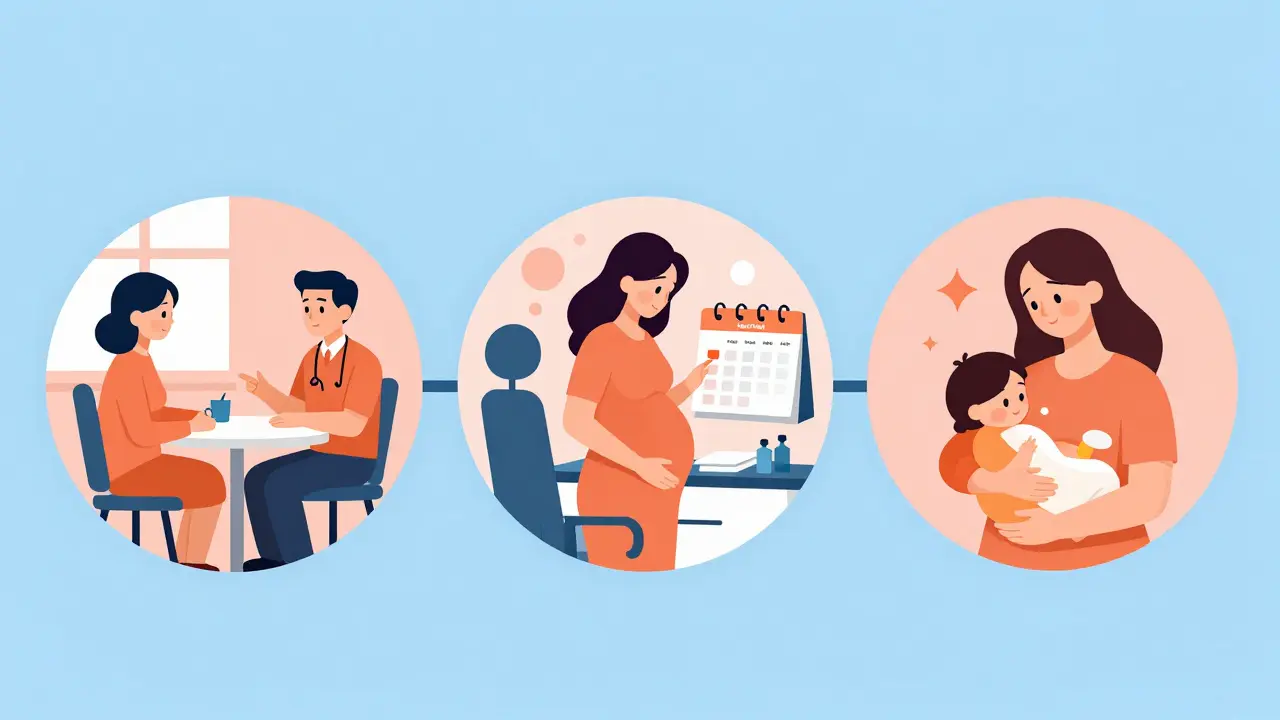
Medication safety isn't a one-time chat; it's a three-phase process. If you wait until you're already eight weeks pregnant, you've missed the most critical window for preconception planning. To get the best outcomes, aim for these three distinct checkpoints:
- Preconception Counseling: This is where you review your current meds and decide if any need to be swapped before you get pregnant. This is the time to discuss the FDA Pregnancy and Lactation Labeling Rule (PLLR), which provides a more detailed risk-benefit analysis than the old letter-grade (A, B, C, D, X) system.
- Prenatal Visits: Your needs change as the baby grows. A medication that is safe in the first trimester might be risky in the third. You should have a medication review every four weeks to ensure your prescriptions still align with your current stage of pregnancy.
- Postpartum and Breastfeeding Planning: Once the baby arrives, the focus shifts to what passes into breast milk. This requires a separate assessment, as the risks for a nursing infant differ from those of a developing fetus.
What to Ask Your Provider
Many patients report that their doctors dismiss concerns or give vague answers like "it's probably fine." To avoid this, move the conversation from generalities to specifics. Instead of asking "Is this safe?", ask for a contextualized risk-benefit analysis.
Ask your provider to quantify the risk. There is a huge difference between a "rare risk" and a "1 in 1,000 chance." When you have a hard number, you can make an informed choice. You should also ask about non-pharmacological alternatives. For example, if you're managing mild anxiety, could a combination of therapy and lifestyle changes reduce the dose of medication needed?
Don't be afraid to bring your own data. Mentioning that you've looked at MotherToBaby fact sheets tells your provider that you want evidence-based answers, not just guesses. If you feel your OB/GYN and your pharmacist are giving you conflicting advice, ask for a joint consultation or a formal medication review. This closes the communication gap that often leads to medication errors.
Red Flags and Safety Pitfalls
One of the biggest dangers in medication safety is the "silent stop." This happens when a patient stops taking a necessary medication without telling their doctor because they're worried about the baby. This can lead to severe complications, such as uncontrolled hypertension or relapse of severe depression, both of which pose significant risks to the pregnancy.
Another common pitfall occurs in emergency settings. Research shows a worrying number of pregnant patients are prescribed contraindicated medications-like ibuprofen after 20 weeks of gestation-simply because they didn't tell the ER staff they were pregnant. Always lead with your pregnancy status in any medical setting, even if you're there for something unrelated, like a broken wrist.
Be wary of social media "advice." A large portion of pregnancy-related medication posts on platforms like TikTok or Instagram contain inaccurate information. While community support is great for emotional needs, it's dangerous for drug safety. Always cross-reference social media claims with clinical databases like LactMed or a licensed pharmacist.
Building a Safety Checklist
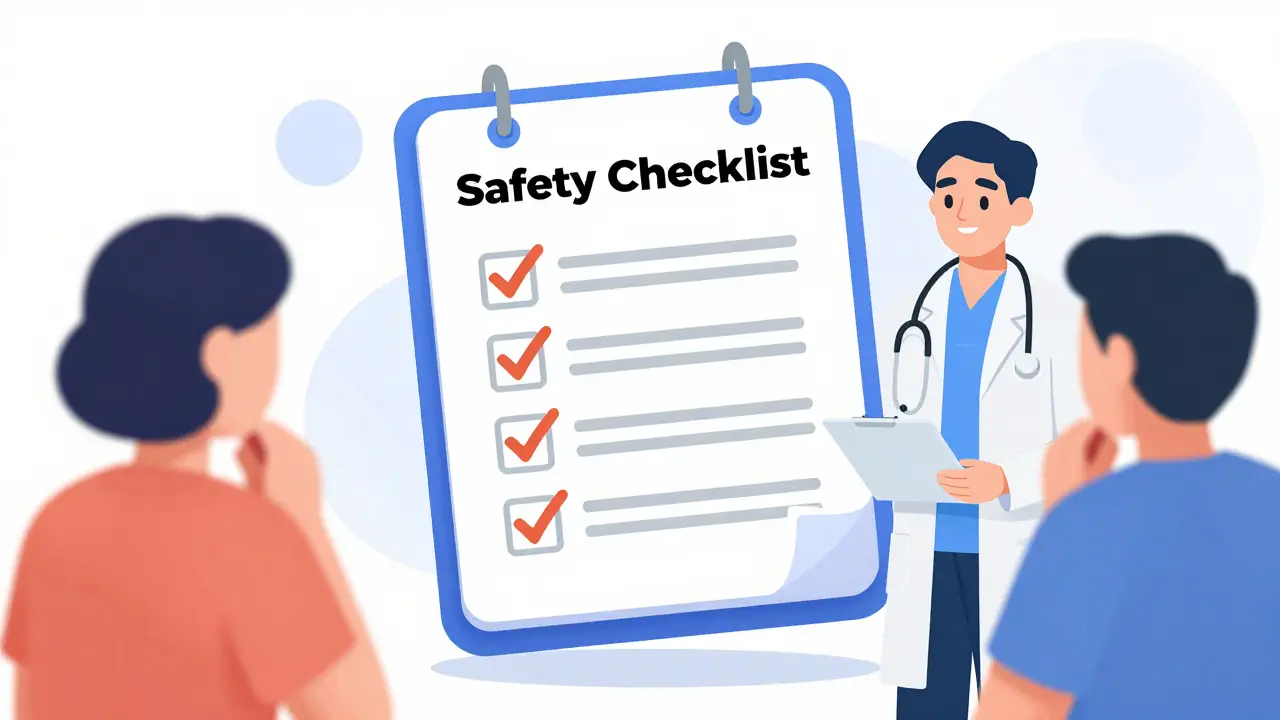
To ensure nothing slips through the cracks, use a structured approach. Many top clinics use the "5 Rights of Medication Safety," and you can apply the same logic to your own care. Before leaving any appointment, confirm these five points:
- Right Drug: Is this the most current and safest option for my specific trimester?
- Right Dose: Does the dose need to be adjusted based on my pregnancy-related physiological changes?
- Right Timing: When should I take this to maximize benefit and minimize fetal exposure?
- Right Indication: Is the benefit of treating this condition greater than the potential risk to the baby?
- Right Patient: Does the provider have my full medical history, including other supplements and over-the-counter meds?
Preparing for the Breastfeeding Transition
Breastfeeding introduces a new set of variables. Some drugs are excreted in breast milk in high amounts, while others barely show up at all. The most important thing to remember is that the "safe for pregnancy" list is not the same as the "safe for breastfeeding" list.
Work with your provider to identify which medications can be continued and which need to be tapered off before delivery. If you're using the National Library of Medicine's LactMed app, you can see real-world data on how specific drugs affect nursing infants. This allows you to have a proactive conversation about your postpartum plan rather than reacting to a problem after the baby is born.
Should I stop my medication immediately if I find out I'm pregnant?
No. Stopping a necessary medication abruptly can be more dangerous for both you and the baby than continuing it. Contact your healthcare provider immediately to discuss a safe transition plan or a safer alternative.
Are all "safe" medications actually safe in every trimester?
Not necessarily. Some medications are safer during the first trimester (organogenesis) but may cause issues later in pregnancy, such as affecting fetal heart or kidney function. This is why medication reviews should happen throughout the entire pregnancy.
What is the best way to find out if a drug is safe for breastfeeding?
The gold standard is using evidence-based databases like LactMed or consulting a teratology specialist. Avoid general internet searches, as many results are not based on clinical evidence.
Does the FDA still use the A, B, C, D, X categories?
The FDA replaced those letters with the Pregnancy and Lactation Labeling Rule (PLLR) in 2015. The new system provides descriptive summaries of risks and benefits, which gives doctors and patients much more detailed information than a single letter could.
How often should I have a medication review during pregnancy?
Ideally, you should have a brief medication check-in at every prenatal visit, or at least every four weeks, to ensure your prescriptions are still the safest choice for your current stage of development.
Next Steps for Your Safety Plan
If you are currently planning a pregnancy, start by listing every supplement, vitamin, and prescription you take. Schedule a preconception visit specifically to review this list. If you are already pregnant, request a "medication safety review" at your next appointment so it's on the agenda and not squeezed into the last two minutes of the visit.
For those in the postpartum phase, download the LactMed app and share any concerns about medication side effects in your baby with your pediatrician. Remember, the goal is a healthy parent and a healthy baby-and the best way to achieve that is through honest, detailed, and frequent communication with your medical team.
Shaylia Helland
April 14, 2026 AT 15:07i went through this with my second pregnancy and it really is a whirlwind just trying to figure out what is okay and what isnt and honestly just having someone listen to your fears without judging you is half the battle because the medical system can feel so cold sometimes and just feeling that empathy from a partner or a nurse makes such a huge difference in the long run
Clint Humphreys
April 16, 2026 AT 14:33It's all very friendly advice on the surface but you have to wonder why the FDA felt the need to completely scrap the letter system in 2015 if the old way wasn't actually better for the patients because it smells like a move to hide specific data points under a blanket of descriptive summaries that only the pharma reps understand and while I'm sure the doctors mean well they are basically reading scripts provided by the same people who profit from these medications and the real risk is that we are just guinea pigs in a giant corporate experiment designed to keep us dependent on pills from birth to death
David Snyder
April 16, 2026 AT 19:08This is a great way to approach the conversation. It's all about teamwork between the patient and the provider!
Haley Moore
April 18, 2026 AT 16:54Ugh, the struggle of actually getting an OB to listen is real 🙄 like why is it so hard for them to just be thorough instead of acting like we're bothering them with our basic safety needs? Seriously so dramatic that I have to bring my own spreadsheets just to get a straight answer 💅
john chiong
April 19, 2026 AT 11:37absolute poppycock that people just blindly follow these lists without questioning the moral bankruptcy of the industry producing them it's a travesty of the highest order
Princess Busaco
April 21, 2026 AT 08:24Everyone is acting like this is a revolutionary guide but let's be honest the real problem is that most of you don't have the mental fortitude to actually challenge a doctor and just nod along while your health is being compromised because you're too scared to be the 'difficult' patient which is honestly just a lack of self-respect and a failure to advocate for the very child you claim to be protecting with these lukewarm conversations
melissa mac
April 22, 2026 AT 09:58I think we can all agree that the most important thing is finding a balance that works for the individual and their family. Let's support each other in asking these questions without feeling like we're being a burden to our medical teams.
Ikram Khan
April 23, 2026 AT 20:00Wow! This is such an eye-opening breakdown of the process! 🌟 I had no idea about the difference between pregnancy safety and breastfeeding safety, that is a critical detail! 😲 Thank you for sharing this!
Tabatha Pugh
April 24, 2026 AT 06:20Actually, if you look at the pharmacokinetic data, the placental barrier doesn't even work the way most people think it does and if you're taking antidepressants, you should be checking the specific half-life of the drug because that's what actually determines fetal exposure levels, and honestly, most people just ignore the molecular weight of the compounds which is the only way to actually know if something is crossing over or not