
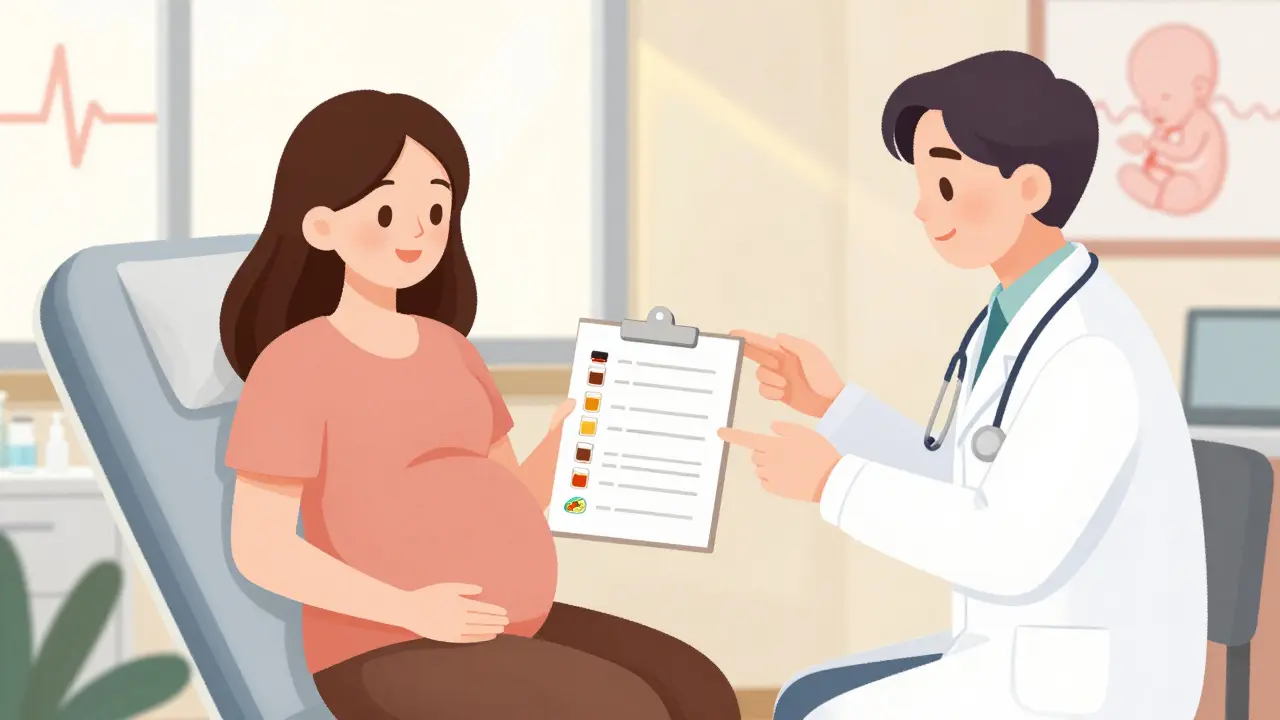
When you’re pregnant or planning to be, every pill, supplement, or over-the-counter remedy matters more than ever. What seemed harmless before-like that daily ibuprofen for headaches or the herbal tea you drink to relax-could affect your baby’s development. Your OB/GYN isn’t just checking your blood pressure or listening to the heartbeat. They’re managing a complex web of medications, some you know about and others you might not even think count as medicine. The key to staying safe? Preparation.
Why This Conversation Can’t Wait
About 90% of pregnant women take at least one medication during pregnancy, according to the CDC. That includes prescriptions, vitamins, pain relievers, and even supplements like fish oil or St. John’s Wort. Many of these are safe. Some aren’t. And a lot of them haven’t been studied enough in pregnancy-yet doctors still have to make decisions anyway. The American College of Obstetricians and Gynecologists (ACOG) says you need to talk about every single thing you’re taking during prepregnancy counseling and every prenatal visit after that. Why? Because certain drugs can interfere with fetal development. For example, some blood pressure medications like ACE inhibitors are dangerous in pregnancy. Others, like levothyroxine for hypothyroidism, need dose adjustments as your body changes. And then there are the ones people forget: evening primrose oil, which can trigger contractions, or CBD gummies, which are now widely used but have no proven safety data in pregnancy. Your OB/GYN isn’t judging you. They’ve seen it all. But they can’t help if you don’t tell them everything.What to Bring to Your Appointment
Don’t rely on memory. Write it down. Start at least 72 hours before your visit. Here’s what your list needs:- Prescription meds: Exact name, dosage, frequency, and purpose. Don’t say “my blood pressure pill.” Say “Labetalol 200 mg, taken twice daily for hypertension.”
- Over-the-counter drugs: Ibuprofen? Acetaminophen? Allergy pills? Cold medicine? List them all-even if you only take them once a month.
- Supplements and herbs: Prenatal vitamin? Iron? Magnesium? Turmeric? Omega-3s? St. John’s Wort? Ashwagandha? Even if you think they’re “natural,” they can interact with other meds or affect pregnancy.
- Topical products: Retinoid creams, acne treatments with salicylic acid, or prescription steroid creams applied to skin. These can be absorbed and may carry risks.
- Recreational substances: Alcohol, nicotine, cannabis, or any other drug you use-even if you think it’s “just occasional.” Your provider needs to know to assess risk properly.
What Your OB/GYN Will Ask (And What You Should Ask Back)
Your provider will likely ask:- “Are you taking anything besides your prenatal vitamin?”
- “Have you started or stopped anything since your last visit?”
- “Do you use cannabis or CBD?”
- “Are you using any herbal remedies or teas?”
- “Is this medication safe during pregnancy?” Not just “Is it okay?”-ask if it’s been studied, what the risks are, and whether there’s a safer alternative.
- “What happens if I stop this now?” Some meds, like antidepressants or thyroid meds, need to be tapered slowly. Stopping suddenly can be more dangerous than continuing.
- “Is there a pregnancy-safe version?” For example, ibuprofen isn’t recommended after 20 weeks. Acetaminophen is the go-to pain reliever instead.
- “Will this affect my ability to breastfeed?” Some drugs pass into breast milk. Others don’t. You need to know ahead of time.
- “Do I need to change how I take this?” Some meds need to be taken with food. Others can’t be taken with calcium. Timing matters.
What’s Safe? What’s Not?
There’s no universal list-every body is different. But here are common examples:- Safe to continue: Levothyroxine (for thyroid), insulin (for diabetes), most SSRIs like sertraline (for depression), prenatal vitamins with folic acid.
- Stop before or during pregnancy: Accutane (isotretinoin), warfarin, certain migraine meds like topiramate, NSAIDs like ibuprofen after 20 weeks.
- Unclear safety: CBD, melatonin, many herbal supplements. These aren’t regulated, and research is limited.
Common Mistakes (And How to Avoid Them)
People mess up in predictable ways:- “I didn’t think it counted.” Herbal teas, essential oils, and “natural” supplements are still drugs. They can interact.
- “I stopped it because I was scared.” Stopping your thyroid medication or antidepressant without guidance can cause serious harm.
- “I forgot to mention it.” One patient in Colorado forgot she was taking evening primrose oil. She went into labor early. It wasn’t an emergency-but it could have been.
- “My doctor didn’t ask.” If they don’t bring it up, bring it up yourself. Don’t wait.
What If You’re Breastfeeding?
The conversation doesn’t end after delivery. Many medications pass into breast milk. But most are safe. Acetaminophen, ibuprofen, many antibiotics, and even some antidepressants are considered low-risk. But others-like certain chemotherapy drugs, lithium, or radioactive iodine-are not. Ask: “If I take this while breastfeeding, will it affect my baby’s sleep, feeding, or development?” Don’t assume something is safe just because it’s “natural.” Chamomile tea? Fine. Kava root? Avoid it.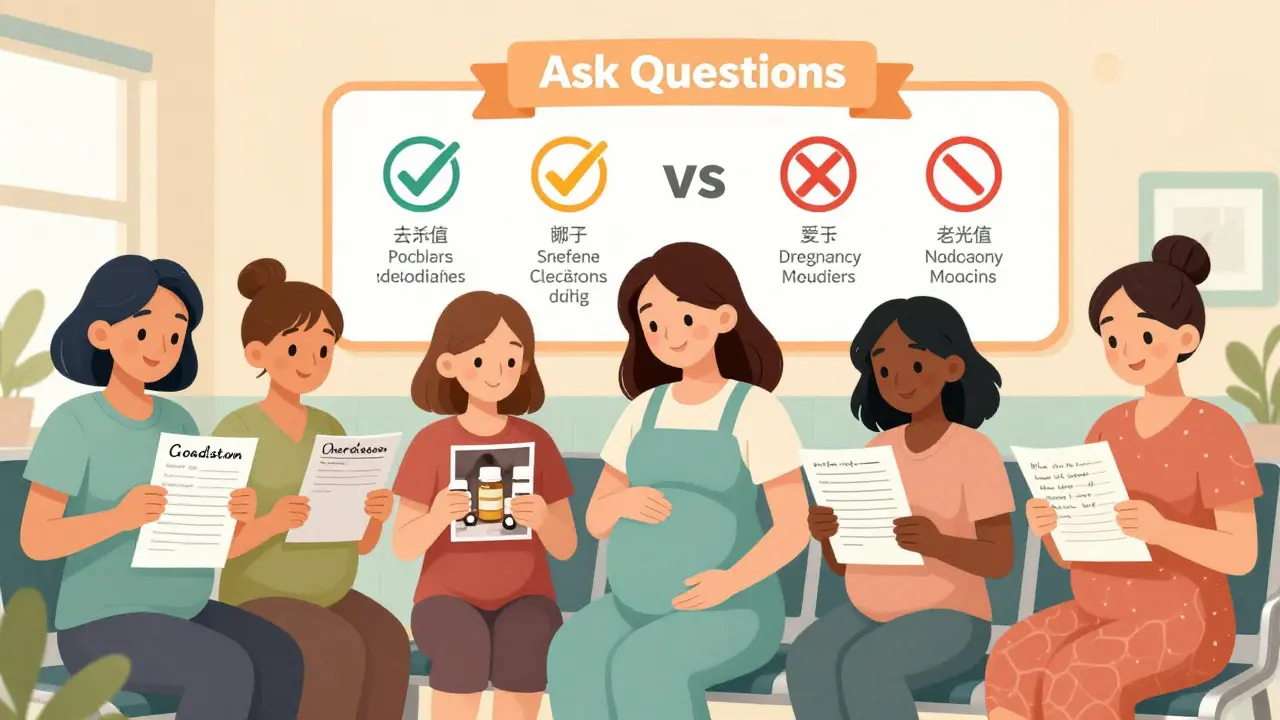
When to See a Pharmacist
If you’re on four or more medications, have a chronic condition like diabetes or epilepsy, or are confused about interactions, ask for a referral to a pharmacist who specializes in women’s health. OB/GYNs are experts in reproductive care-but not always in complex polypharmacy. A pharmacist can review your full list, spot hidden interactions, and help you understand what’s truly necessary.What’s Changing in 2026
New tools are coming. By mid-2024, ACOG plans to roll out a free patient app that walks you through building a medication checklist. Some clinics are already using digital platforms that sync with your pharmacy records to flag unsafe combinations automatically. Also, the FDA is working on standardized pregnancy risk scores for medications-something that will make it easier to understand whether a drug is “low,” “moderate,” or “high” risk. But none of that replaces your voice. You are the most important part of this process. No algorithm knows your symptoms, your history, or your concerns the way you do.Final Tip: Speak Up, Even If You’re Nervous
You might feel embarrassed about what you’re taking. Maybe you’ve been using cannabis to sleep. Maybe you’ve been self-medicating with melatonin because you can’t afford therapy. Maybe you’re on a new antidepressant and you’re scared to tell anyone. Your OB/GYN is not there to shame you. They’re there to keep you and your baby safe. The more honest you are, the better they can help. The goal isn’t perfection. It’s awareness. You don’t have to remember every dose. You don’t have to know all the science. Just show up with your list, your questions, and your truth. That’s enough.Can I keep taking my antidepressants during pregnancy?
Many antidepressants, especially SSRIs like sertraline and citalopram, are considered low-risk during pregnancy. Stopping them suddenly can increase the risk of relapse, which can be more harmful to both you and your baby. Always work with your OB/GYN and a psychiatrist to adjust dosages if needed. Never stop on your own.
Is it safe to take ibuprofen while pregnant?
Ibuprofen and other NSAIDs are generally safe in early pregnancy but should be avoided after 20 weeks. They can reduce amniotic fluid and affect fetal heart development. Acetaminophen (Tylenol) is the preferred pain reliever during pregnancy. Always check with your provider before taking any OTC painkiller.
What if I took a medication before I knew I was pregnant?
Don’t panic. Most medications taken in the first two weeks after conception either have no effect or cause an “all or nothing” outcome-meaning the pregnancy either continues normally or ends in miscarriage. Tell your OB/GYN what you took, when, and how much. They’ll assess the risk and may recommend extra monitoring.
Do I need to stop my birth control before trying to conceive?
Yes. Most forms of hormonal birth control (pills, patches, rings, IUDs) should be stopped when you start trying. Your cycle may take a few months to regulate, but fertility usually returns quickly. If you’re on a progestin-only IUD, it can be removed during a routine visit. Talk to your provider about timing and preconception vitamins.
Are herbal supplements safe during pregnancy?
Most herbal supplements haven’t been studied enough to confirm safety in pregnancy. Some, like ginger for nausea, are considered low-risk in small amounts. Others, like black cohosh, dong quai, or high-dose echinacea, can stimulate contractions or affect hormones. Always disclose every supplement-even if you bought it at a health food store.
Why does my OB/GYN care about my caffeine intake?
High caffeine intake (over 200 mg per day, about one 12-ounce cup of coffee) has been linked to increased risk of miscarriage and low birth weight. It’s not about cutting it out entirely-but moderating it. Your provider may suggest switching to decaf or herbal tea, especially in the first trimester.
Can I still take my allergy meds while pregnant?
Many are safe. Loratadine (Claritin) and cetirizine (Zyrtec) are preferred over diphenhydramine (Benadryl) because they’re less likely to cause drowsiness and have better safety data. Nasal sprays like saline or fluticasone are also safe. Avoid pseudoephedrine in the first trimester-it can raise blood pressure.
What if my OB/GYN doesn’t ask about my medications?
Take the lead. Say: “I want to make sure everything I’m taking is safe for pregnancy. Can we review my list?” Most providers appreciate the initiative. If they brush you off or seem dismissive, consider finding a provider who prioritizes patient-centered care. Your health matters.
josh plum
January 4, 2026 AT 23:03So let me get this straight-you’re telling me CBD gummies are a no-go, but you’re fine with alcohol? Lol. I’ve seen moms drink wine like it’s water and still have perfectly healthy babies. The real danger here is fear-mongering by people who’ve never held a newborn. Wake up, folks. Your body knows what to do.
jigisha Patel
January 6, 2026 AT 22:41Actually, the CDC’s 90% statistic is misleading-it includes prenatal vitamins and OTC acetaminophen, which are low-risk. The real concern is polypharmacy: women taking 5+ unmonitored supplements. A 2023 JAMA study showed 37% of pregnant women using herbal products had clinically significant interactions with SSRIs or thyroid meds. You’re not being paranoid-you’re being statistically literate.
Stephen Craig
January 8, 2026 AT 11:22Preparation is the quiet act of self-respect. Not perfection. Just presence.
Bring the bottles. Write it down. Say it out loud.
That’s all you need.
mark etang
January 9, 2026 AT 13:15As a board-certified obstetrician with over two decades of clinical experience, I cannot overstate the importance of this protocol. The data is unequivocal: unmitigated pharmacological exposure during gestation correlates with a 2.3-fold increase in neonatal neurodevelopmental anomalies. I implore all expectant parents to adopt a rigorous, documentation-driven approach. Failure to disclose-even with benign-seeming supplements-constitutes a breach of the standard of care. Your diligence is not optional; it is foundational to fetal safety.
Brendan F. Cochran
January 11, 2026 AT 02:41Yall act like we’re all gonna die if we take one ibuprofen. I had 3 kids, took Advil like candy, drank coffee till 8 months, and my babies are all varsity athletes. Stop scaring people with ‘studies.’ You think the FDA’s got your back? Nah. They’re just trying to sell you more tests. Trust your gut, not some app.
Rory Corrigan
January 11, 2026 AT 14:28We treat medicine like it’s magic, but it’s just chemistry. And biology? It’s messy. We want clean answers: safe or not safe. But life doesn’t work that way.
Maybe the real question isn’t ‘is this pill safe?’
It’s ‘am I listening to myself?’
🙂
Connor Hale
January 12, 2026 AT 23:21I used to think ‘natural’ meant safe. Then I learned that hemlock is natural too.
It’s not about fear. It’s about awareness.
Bring the list. Ask the questions. Let your provider be your guide-not your judge.
That’s how you show up for your baby.
Mandy Kowitz
January 13, 2026 AT 11:53Oh great. Another 10-page guide telling me I’m a bad mom because I took melatonin once. Congrats. You’ve turned pregnancy into a compliance test. Next they’ll ban hugs because ‘unverified physical contact’ might affect cortisol levels.
John Ross
January 13, 2026 AT 18:18From a pharmacogenomic standpoint, the critical variable isn’t just the drug class-it’s CYP2D6 and CYP3A4 metabolic phenotypes, which vary significantly across ethnic populations. For instance, Indian subcontinental populations exhibit higher prevalence of CYP2D6 ultra-rapid metabolizers, altering SSRI clearance kinetics. This necessitates personalized dosing, not blanket recommendations. The ACOG guidelines are a starting point, not a universal algorithm. Consult a clinical pharmacologist before altering regimens.
Roshan Aryal
January 14, 2026 AT 03:42Y’all in the US act like every pill is a grenade. In India, we’ve been taking ashwagandha during pregnancy for centuries. No app, no spreadsheet, no OB yelling at us. My aunt had four kids on turmeric tea and neem leaves. Guess what? All healthy. Maybe the problem isn’t the herbs-it’s the fear industry selling you anxiety as ‘care.’
Jack Wernet
January 14, 2026 AT 07:52Thank you for writing this with such care. I’ve seen too many patients shut down because they felt judged. You’ve created space for honesty-and that’s the most powerful medicine of all.
Bring the bottles. Write the list. Speak your truth.
We’re here to hold space for you, not to grade you.