
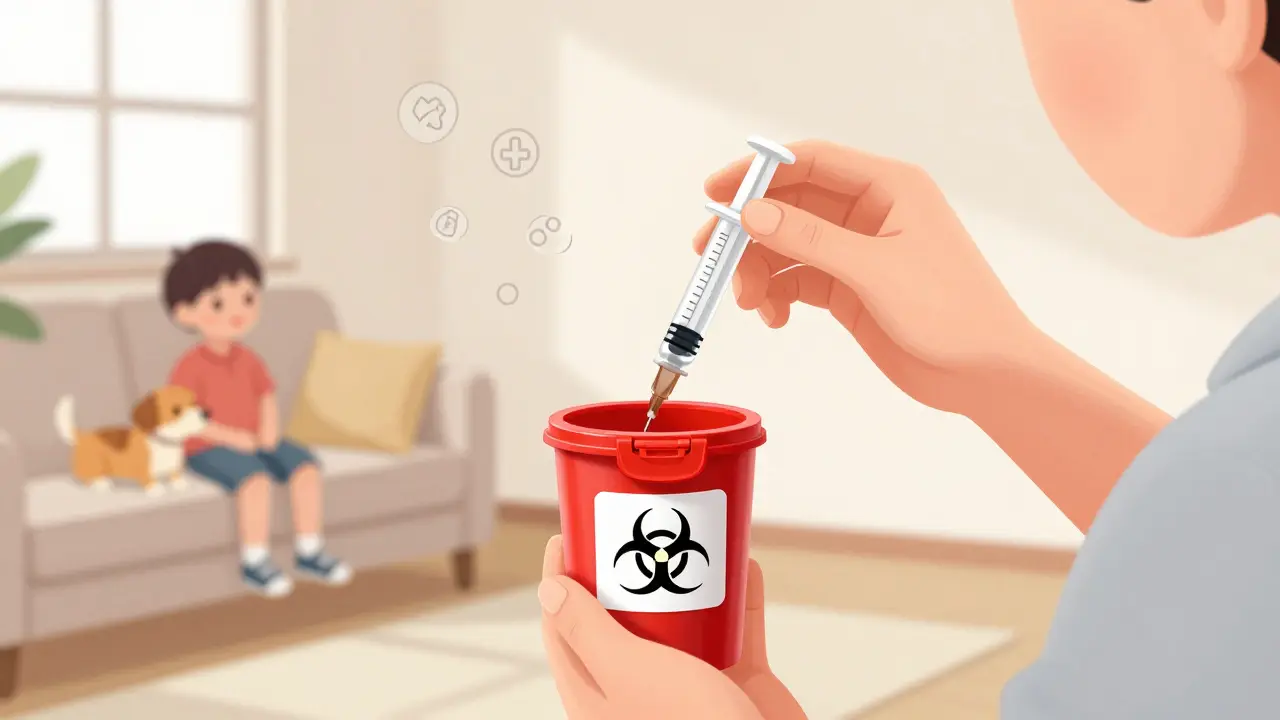
Every year, millions of people in New Zealand and around the world use injectable medications - insulin, blood thinners, biologics, vaccines - and every time they do, they’re left with a sharp, dangerous object: the needle. If you’ve ever wondered what to do with that used syringe after you’ve given yourself a shot, you’re not alone. But here’s the truth: throwing it in the trash, tossing it in the recycling, or even putting it in an old soda bottle isn’t just irresponsible - it’s dangerous. And it’s illegal in many places.
Why Proper Sharps Disposal Matters
Used needles and syringes aren’t just trash. They’re classified as sharps - medical waste that can pierce skin and spread deadly infections. The risk isn’t theoretical. In healthcare settings, nearly 400,000 needlestick injuries happen every year in the U.S. alone. But most of those aren’t in hospitals. They’re in homes, on sidewalks, in public restrooms, and even in recycling trucks. People - children, sanitation workers, pets - get stuck by needles that were carelessly thrown away. The pathogens you’re risking exposure to are real: HIV, hepatitis B, and hepatitis C. The chance of catching hepatitis B from a single needlestick? Up to 30%. For hepatitis C? Nearly 2%. Even a tiny drop of blood on a needle can carry those viruses. And if you’re the one who got stuck? The cost of testing, follow-up care, and possible treatment can run over $3,000. Proper disposal isn’t just about safety - it’s about saving money and lives.What Counts as a Sharp?
It’s not just needles. Anything that can cut or puncture after being used in medical care counts. That includes:- Insulin syringes
- Lancets (used for finger pricks)
- Auto-injectors (like EpiPens or Ozempic pens after use)
- Needles attached to prefilled pens
- IV catheters with sharp ends
- Dental needles and scalpels
What You Need: FDA-Cleared Sharps Containers
You can’t just use any container. The law and safety standards require a specific type: an FDA-cleared sharps container. These aren’t ordinary plastic buckets. They’re engineered to keep you safe. Here’s what makes them different:- Thick, puncture-resistant plastic - at least 1mm thick
- Locking lid that won’t open if you drop it
- Clear fill line - never go past 3/4 full
- Biohazard symbol in red or orange, with clear warning labels
- Sturdy base so it doesn’t tip over
How to Use a Sharps Container Correctly
Using the container right is just as important as having one. Here’s how to do it:- Immediately after use, place the sharp into the container. Don’t wait. Don’t set it down.
- Never recap, bend, or break the needle. That’s one of the top causes of injuries.
- Drop the sharp in - don’t reach in to push it down. Let gravity do the work.
- Stop when the sharps reach the fill line. Even if it looks like there’s space, stop. Overfilling is the second most common cause of injuries.
- Close and lock the lid securely.
- Label it clearly: “Used Sharps - Do Not Recycle.”
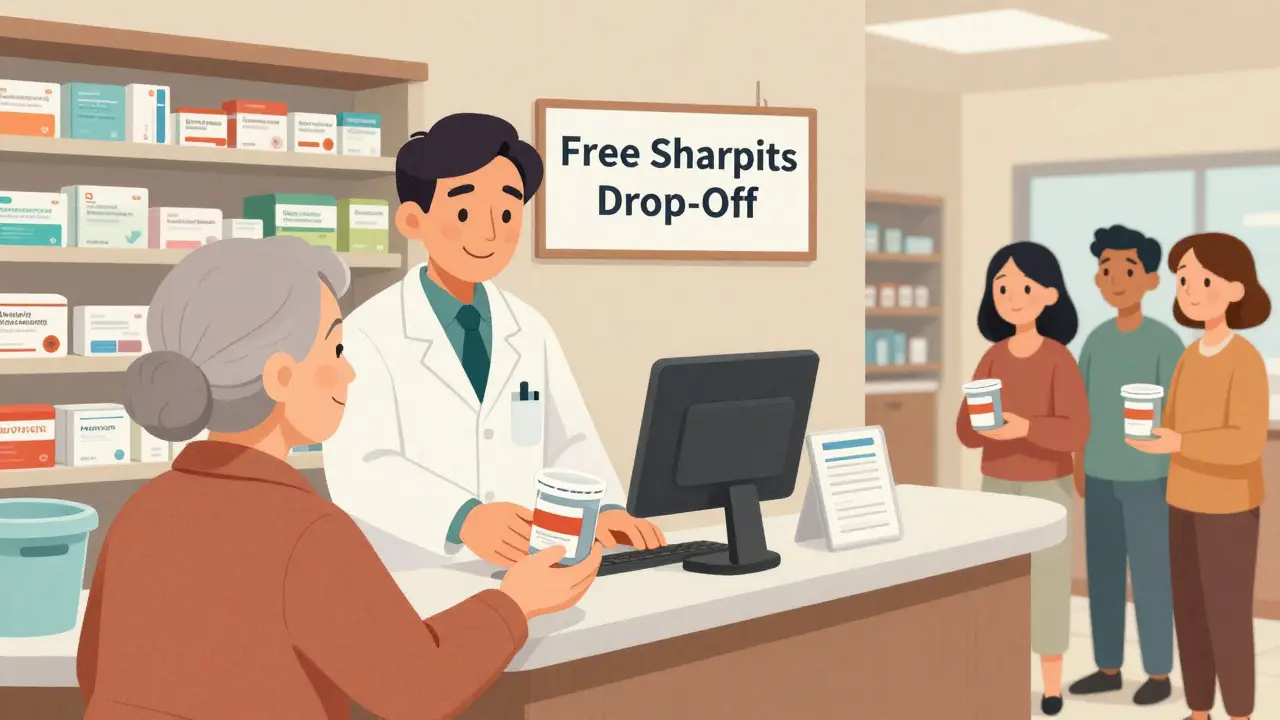
Where to Drop Off Used Sharps Containers in New Zealand
In New Zealand, you can’t just put sharps containers in your regular trash. The law requires special handling. Here’s how to dispose of them safely:- Pharmacies: Many pharmacies - including Countdown, Priceline, and independent pharmacies - offer free sharps disposal drop-off bins. Just ask at the counter. You don’t need a prescription.
- Hospitals and clinics: Most public hospitals have sharps disposal drop-off points in their outpatient areas. Call ahead to confirm hours.
- Community health centers: District Health Boards (DHBs) often run free disposal programs. Check your local DHB’s website for locations.
- Waste collection centers: Some council-run waste facilities accept sharps containers. Auckland Council, for example, allows them at designated transfer stations. Call first - not all do.
- Mail-back programs: Companies like Safe Needle Disposal NZ offer prepaid mailers. You seal your container, drop it in the post, and they handle the rest. Great for rural areas.
What NOT to Do
Here are the most common mistakes - and why they’re dangerous:- Don’t reuse containers: Old juice bottles, coffee cans, or laundry detergent jugs aren’t strong enough. Needles can punch through. One study found that 68% of home sharps injuries happen because people used non-approved containers.
- Don’t recap needles: It’s tempting to try to cover the needle to “be safe,” but you’re far more likely to stab yourself than avoid injury.
- Don’t leave sharps lying around: Even a used needle on the kitchen counter is a hazard. Kids and pets can reach it.
- Don’t wait until the container is full: If you can see the sharps through the container, it’s too full. Replace it.
- Don’t assume your GP will tell you: A 2023 study found only 41% of home users got clear disposal instructions from their doctor. Ask. Don’t wait.
Costs and Accessibility - What You Should Know
Yes, sharps containers cost money. But there are ways to reduce the burden.- Some pharmacies give out free containers if you buy your insulin or medication there.
- Medication assistance programs - like those for diabetes - often include free disposal kits.
- If you’re on a low income, contact your local DHB or community health nurse. Many have programs to supply containers at no cost.
- Mail-back programs typically cost $20-$30 per shipment, but you can often combine multiple containers into one box to save.
What Happens After You Drop It Off?
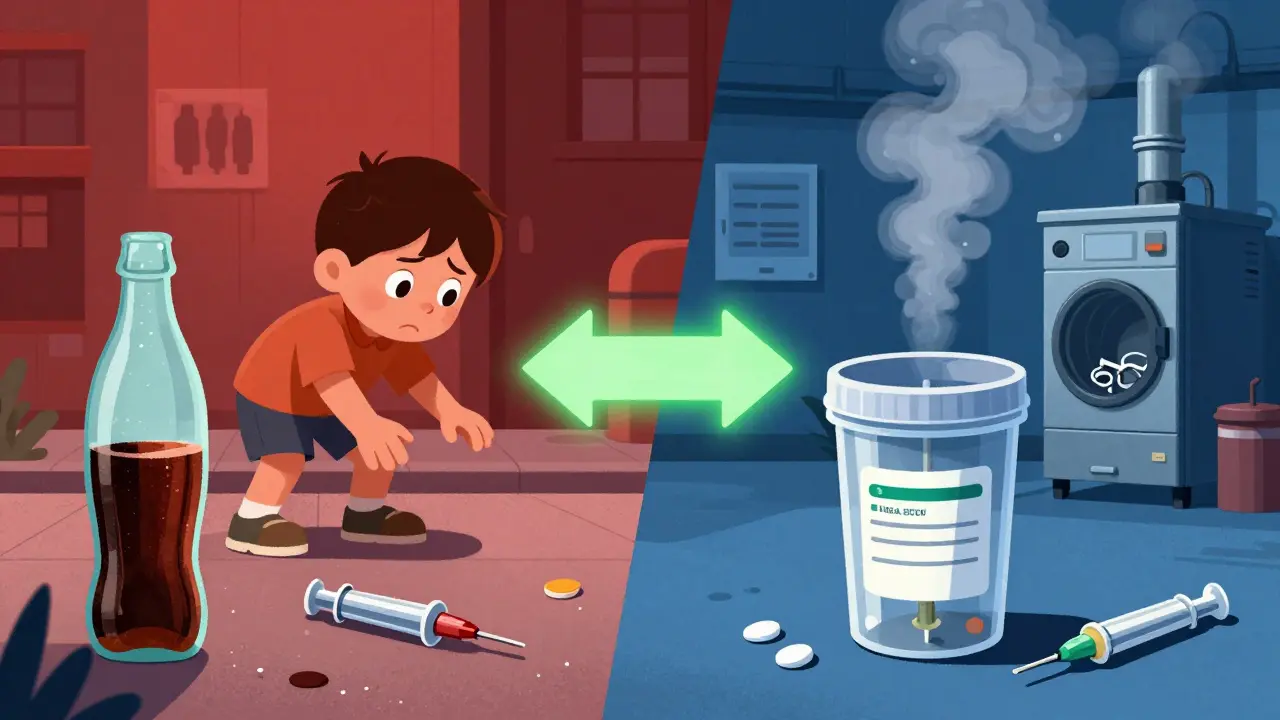
Once you hand over your sealed sharps container, it doesn’t just disappear. It goes to a licensed medical waste facility. There, the sharps are either:- Autoclaved - sterilized under high heat and pressure
- Incinerated - burned at temperatures over 1,000°C
What’s Changing Soon?
New Zealand is moving toward better sharps disposal systems. By 2026, national labeling standards will be required - meaning every container must have the same warning symbol, no matter where you buy it. Pharmacies are also being encouraged to expand drop-off hours. Some are now open on weekends specifically for sharps disposal. There’s also growing support for home collection services - especially for elderly or disabled users. If you’re unable to leave home, talk to your nurse or community health provider. They may be able to arrange pickup.Final Thought: It’s Simple. Just Do It.
You didn’t ask for this responsibility. But you’re doing something important - managing your health, or caring for someone who does. The least you can do is make sure the tools you use don’t become someone else’s danger. Next time you use a needle, pause for five seconds. Find your sharps container. Drop it in. Lock it. Take it to the drop-off. That’s it. No complicated steps. No expensive gadgets. Just safety. It’s not about being perfect. It’s about being consistent. One sharp, one container, one drop-off at a time. That’s how we protect our families, our neighbors, and our community.Can I put used needles in my regular household trash?
No. In New Zealand, it’s illegal and unsafe to put sharps in household trash. Used needles can injure waste workers, children, and pets. Always use an FDA-approved sharps container and drop it off at a pharmacy, hospital, or council waste center.
Do I need a prescription to buy a sharps container?
No. You can buy sharps containers over the counter at any pharmacy or medical supply store without a prescription. Many pharmacies also give them out for free if you’re a regular customer.
Can I reuse a sharps container?
Only if it’s specifically designed and labeled as reusable by the manufacturer. Most home users should use single-use containers. Reusable containers require professional sterilization and are not recommended for personal use.
What if I don’t have access to a drop-off location?
If you live in a rural or remote area, use a mail-back disposal service. Companies like Safe Needle Disposal NZ provide prepaid, secure mailers. You seal your container, mail it, and they handle disposal. Your local DHB can help you find one.
Is it safe to dispose of sharps in recycling bins?
Absolutely not. Recycling facilities are not equipped to handle sharps. Needles can injure workers and contaminate recyclable materials. Always use a proper sharps container and drop it off at an approved site.
How do I know when my sharps container is full?
Look for the fill line printed on the container. Stop filling when the sharps reach that line - usually about 3/4 full. If you can see the needles through the container or if the lid won’t close easily, it’s full.
What should I do if someone gets stuck by a used needle?
Wash the area with soap and water immediately. Seek medical attention right away - even if you think the needle is clean. A healthcare provider can assess your risk and may recommend testing or preventive treatment. Report the incident to your local public health unit.
Meina Taiwo
December 21, 2025 AT 13:23Always use an FDA-approved container. No exceptions. Even if it’s a pain to get to a drop-off, it’s safer than risking a needlestick. I’ve seen too many people cut corners.
Christina Weber
December 22, 2025 AT 17:30You’re absolutely right that improper disposal is dangerous-but let’s be precise: the term is ‘sharps waste,’ not ‘medical waste’ in casual contexts. Also, ‘FDA-cleared’ is correct, but in New Zealand, the regulatory body is Medsafe. Please update your references to avoid misleading readers. Accuracy matters.
Jon Paramore
December 23, 2025 AT 12:23For those in rural areas: mail-back kits are a game-changer. I’ve used Safe Needle Disposal NZ twice-sealed, prepaid, no hassle. Cost is $24 per box, holds up to 10 standard containers. Works for seniors, disabled folks, anyone without transport. DHBs will even help you apply for subsidies if you’re on a benefit.
Michael Ochieng
December 25, 2025 AT 07:00I’m from Kenya, and I’ve seen this problem firsthand. In rural villages, people use soda bottles or old medicine containers. I helped start a community sharps collection program with our local clinic. Now, every month, we collect 30+ containers. It’s not glamorous, but it saves lives. If you’re reading this and you’re in a place with no drop-off? Start small. Talk to your pharmacist. Bring a container to your next appointment. One person can make a difference.
Swapneel Mehta
December 25, 2025 AT 15:22It’s funny how something so simple-like not tossing a needle in the trash-can feel like a huge responsibility. But honestly? It’s just five seconds. I’ve been on insulin for 12 years. I drop mine in the container right after the shot. No drama. No guilt. Just done. Maybe that’s the real lesson here: consistency beats perfection.
Jay lawch
December 26, 2025 AT 09:44Let’s be real-this whole ‘sharps container’ system is just another corporate scam. Who really benefits? The pharmaceutical companies selling you the $12 plastic boxes. The waste management firms that charge municipalities thousands to incinerate them. Meanwhile, the government tells you it’s illegal to throw them away-but never gives you free access to disposal. It’s a controlled crisis. They want you dependent on their system. And don’t get me started on the ‘mail-back’ programs-those are just private contractors mining your fear for profit. The real solution? Needle-free injection tech. But they won’t tell you that because it cuts into profits.
Adrian Thompson
December 26, 2025 AT 19:33They say ‘don’t recycle sharps’-but what if the whole recycling system is just a front? I read a whistleblower report last year-80% of ‘medical waste’ gets shipped overseas to countries with zero safety standards. That’s why they push containers so hard. It’s not about safety-it’s about keeping the waste export pipeline clean. You think your container goes to an autoclave? Nah. It goes to a port. Then a ship. Then a landfill in Nigeria or Indonesia. Wake up.
Southern NH Pagan Pride
December 28, 2025 AT 13:10soo i just found out that the red sharps containers are actually colored that way so they can be tracked by satellites?? like, the pigment has microchips embedded in it?? i mean, why else would they make it so bright?? and dont even get me started on the biohazard symbol-its a government mind control sigil. they want us to fear needles so we keep buying their overpriced boxes. also, i think the DHBs are working with the feds to monitor how often we dispose. my neighbor got flagged for only using one container a month. suspicious.
Jerry Peterson
December 30, 2025 AT 07:03My grandma’s on insulin. She used to keep her needles in a peanut butter jar. I showed her the container I bought at the pharmacy-$11, lasts 3 months. She cried. Said she didn’t want to be a burden. I told her, ‘You’re not a burden-you’re keeping everyone safe.’ We dropped it off together last week. She said, ‘I didn’t know I could do that.’ You don’t need to be perfect. You just need to start.
Jackie Be
December 31, 2025 AT 16:03OMG I JUST REALIZED I LEFT A LANCET ON MY KITCHEN COUNTER YESTERDAY AND MY DOG WAS WANDERING AROUND I THINK SHE GOT TOO CLOSE I’M GOING TO BE SICK I’M CALLING MY DOCTOR RIGHT NOW AND TELLING MY MOM TO NEVER USE A JAR AGAIN I’M SO SCARED
Dan Adkins
January 2, 2026 AT 07:49It is imperative to underscore that the utilization of non-FDA-compliant receptacles constitutes a grave breach of public health protocol. In the context of Nigeria, where waste management infrastructure remains underdeveloped, the consequences of improper disposal are not merely theoretical-they are systemic. I have personally witnessed the emergence of needle-strewn alleyways in Lagos, and the resultant increase in pediatric infections is a direct indictment of societal negligence. It is not sufficient to merely possess a container; one must institutionalize its use through community education and regulatory enforcement. The state must intervene.
Orlando Marquez Jr
January 3, 2026 AT 19:13Thank you for this comprehensive and well-researched guide. I work in public health outreach in rural Oregon, and we distribute sharps containers to patients who cannot access drop-off sites. We’ve found that pairing the container with a brief, personalized handout-written in plain language-doubles compliance. I’ve attached a template we use, if anyone would like it. Safety isn’t complicated. It’s just consistent.