
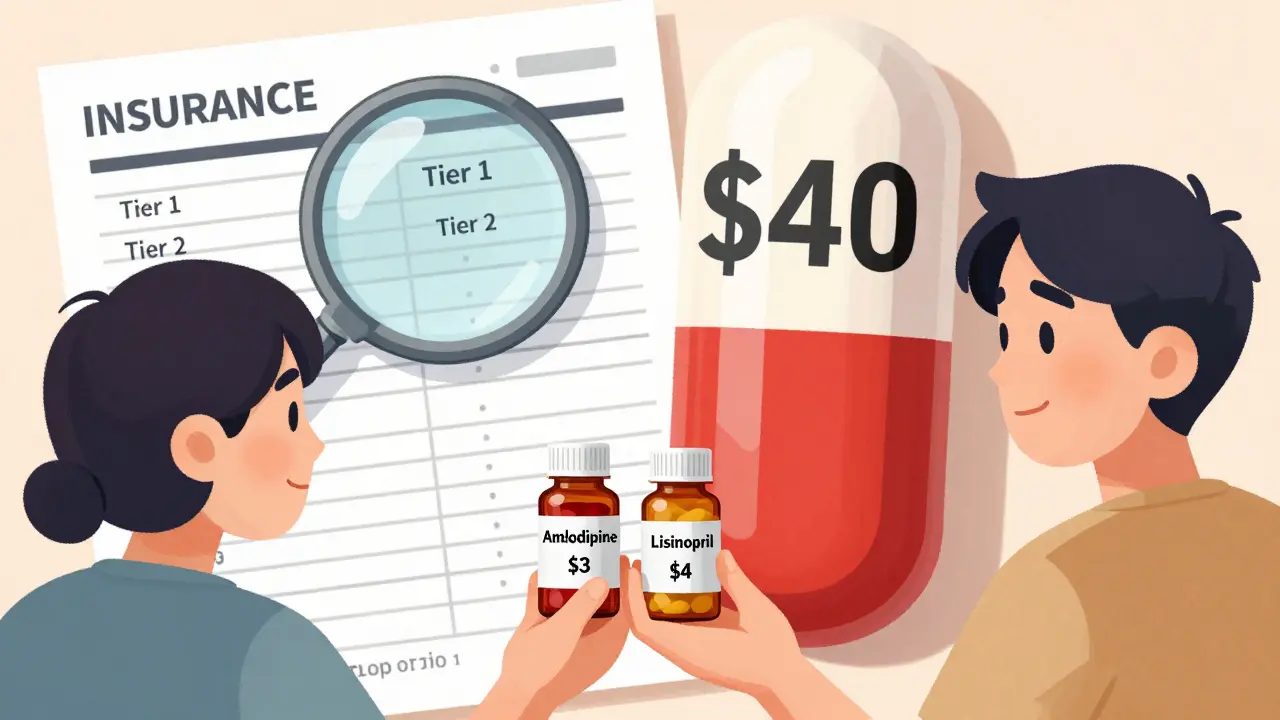
When you’re on multiple medications, especially for conditions like high blood pressure, diabetes, or high cholesterol, your doctor might prescribe a generic combination drug-a single pill with two or more active ingredients. It’s convenient. But here’s the catch: your insurance might cover the individual generics cheaper than the combo pill-even though they’re the same drugs. And that’s not a mistake. It’s by design.
Why Insurance Plans Prefer Individual Generics
Most insurance plans, including Medicare Part D and private insurers, use tiered formularies to control costs. Tier 1 is for the cheapest generics-often $0 to $5 per prescription. If your combo drug is on Tier 2 or higher, you could pay more than if you filled two separate Tier 1 generics. That’s not rare. In fact, a 2022 analysis of over 4 million Medicare Part D prescriptions found that 84% of plans covered only generics, and many of those plans structured coverage to favor individual pills over combo versions. Take blood pressure meds. Say your doctor prescribes a generic combo of amlodipine and lisinopril. The combo pill might cost you $40 a month. But if you get amlodipine generic ($3) and lisinopril generic ($4) separately, your total is $7. Your plan might even waive the second copay if you use mail-order or have a preferred pharmacy. That’s a $33 difference. And yes, patients have reported exactly this: asking doctors to write two prescriptions just to save money.When the Combo Pill Is Cheaper
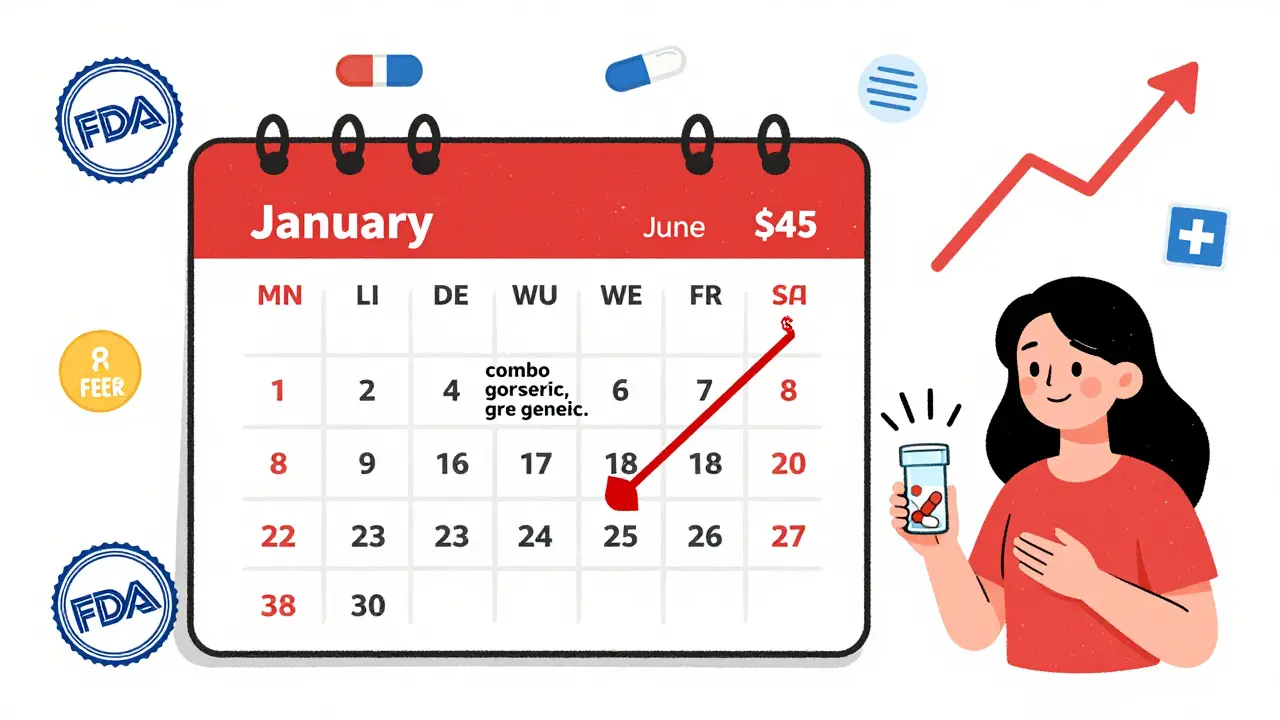
It’s not always the case. Sometimes, the combo drug is cheaper. That usually happens when the combo is newly generic and the individual components are still under patent protection or have only one manufacturer (called a “single-source generic”). Single-source generics don’t face competition, so their prices don’t drop as much. In these cases, the combo might be the only affordable option. A 2023 survey of Medicare beneficiaries showed that when a combo drug went generic, 68% saw their monthly cost drop by more than 50%. One user reported their blood pressure combo falling from $45 to $7 per month. That’s not an outlier-it’s what happens when the market finally catches up and multiple manufacturers start making the combo pill. The FDA says generics are chemically identical to brand-name drugs, and when multiple companies make the same combo, prices plummet.How Formularies Decide What to Cover
Insurance companies don’t make these decisions randomly. Pharmacy Benefit Managers (PBMs)-like CVS Caremark, Express Scripts, and OptumRx-control 80% of the market. They negotiate with drug makers and build formularies based on cost, clinical guidelines, and how likely patients are to stick with the regimen. Combination drugs are often favored for adherence. Taking one pill instead of two improves compliance. But if the combo costs more, insurers may still push individual generics. Why? Because they’re cheaper for the plan. And since most patients pay a fixed copay (not a percentage of the drug’s price), the plan saves money even if the patient pays less out of pocket. Formulary tiers matter. Tier 1 = lowest cost. Tier 4 = specialty drugs. If your combo drug is on Tier 2, but the two individual drugs are on Tier 1, you’ll pay more for the combo. Some plans even require prior authorization for combo drugs, forcing you to try the individual generics first.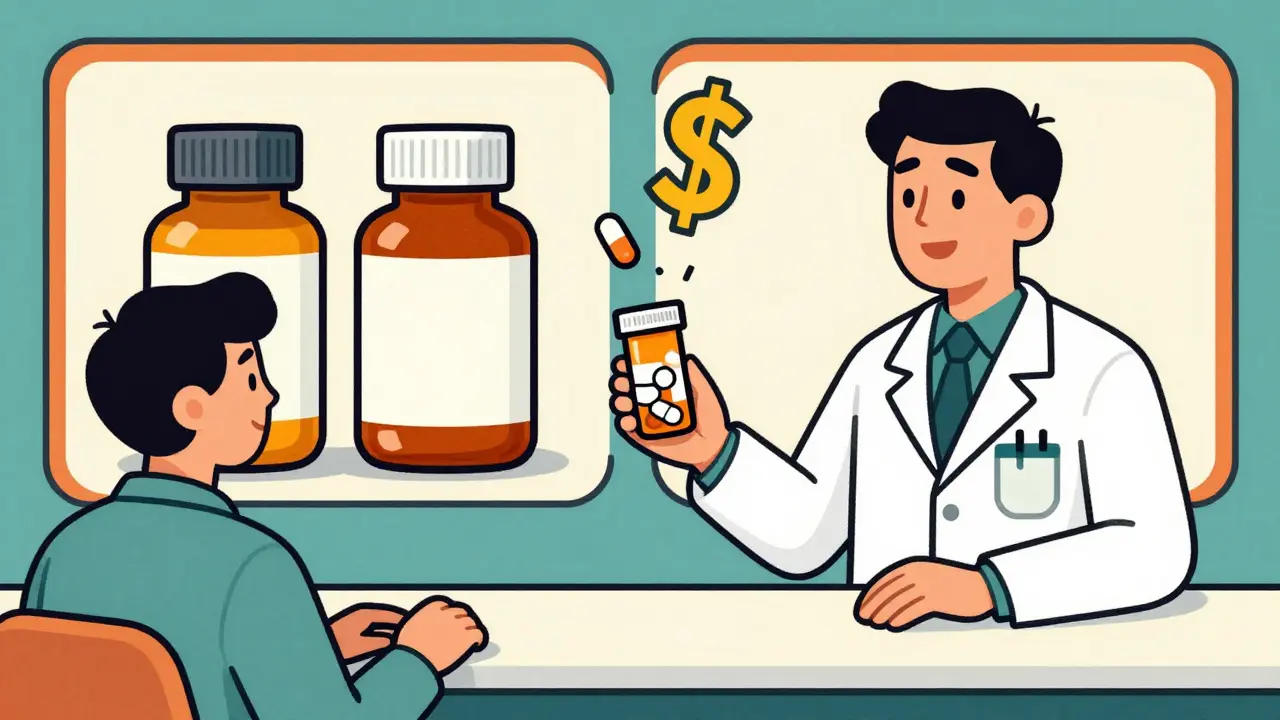
The Real Cost: More Than Just the Copay
It’s not just about what you pay at the pharmacy. There’s also the time, hassle, and risk of error. Two pills mean two chances to forget one. Two refills to track. Two chances to get the wrong dose. Studies show patients on combo pills are 20% more likely to stick with their treatment long-term. That’s huge for chronic conditions like heart disease or diabetes. But if your insurance won’t cover the combo, and you can’t afford to pay the difference, you might skip doses. That’s when hospital visits and complications start. The Patient Advocate Foundation found that 1 in 4 Americans skip meds due to cost-and it’s often because the cheapest option isn’t the most practical.What You Can Do
If you’re paying more for a combo pill than two separate generics, here’s what to do:- Check your plan’s formulary online. Look up both the combo and the individual drugs. Compare tiers and copays.
- Ask your pharmacist: “Can I get the individual generics separately for less?” They often know the hidden pricing.
- If the combo is cheaper, ask your doctor to write the prescription for the combo. If it’s not covered, ask for a coverage determination-a formal request for an exception. Plans must respond within 72 hours.
- Use tools like Medicare’s Plan Finder or GoodRx to compare prices across pharmacies. Sometimes, cash prices are lower than your copay.
- If you’re on Medicare, remember: as of January 2024, your out-of-pocket max for drugs is capped at $2,000 a year. That changes the math. Even if the combo costs more, you might hit the cap faster.
What’s Changing in 2025
The Inflation Reduction Act didn’t just cap out-of-pocket costs-it also pushed the FDA to speed up generic approvals. Under GDUFA III, more combo drugs are expected to hit the market as generics by 2027. That means more options, more competition, and lower prices. Also, a 2023 court ruling banned “copay accumulator” programs. These were sneaky tactics where drugmakers’ discounts didn’t count toward your deductible. Now, those savings count. That makes combo drugs more attractive again-especially if they come with manufacturer coupons.Bottom Line
There’s no universal rule. Sometimes the combo is cheaper. Sometimes two separate generics are. It depends on your plan, your drugs, and your pharmacy. The key is to check. Don’t assume your doctor’s prescription is the cheapest option. Ask questions. Compare prices. Use your pharmacist as a resource. And if you’re paying more for convenience, you’re not alone-but you don’t have to keep paying it.Why is my generic combination drug more expensive than two separate generics?
Your insurance plan may have placed the combination drug on a higher tier than the individual generics. Even though the ingredients are the same, insurers often structure formularies to favor separate pills if they’re cheaper for the plan to cover. This is common with blood pressure, diabetes, and cholesterol meds. Always check your plan’s formulary or ask your pharmacist to compare costs.
Can I ask my doctor to prescribe individual generics instead of a combo?
Yes, you can. Many doctors are open to splitting a combo prescription into two separate generics if it saves you money. Just explain your out-of-pocket costs and ask if it’s medically appropriate. For most conditions like hypertension or type 2 diabetes, this is safe and common.
Does Medicare cover generic combination drugs better than private insurance?
Medicare Part D plans cover generics at very high rates-84% of prescriptions are generic-only. But coverage varies by plan. Private insurers often have more flexibility in tier placement, so they might be more likely to favor individual generics. Medicare’s formularies are standardized, but private plans can be more aggressive in pushing lower-cost options. Always compare your specific plan’s formulary.
What’s a single-source generic, and why does it matter?
A single-source generic is a generic drug made by only one manufacturer. Without competition, prices don’t drop as much. If your combo drug is single-source, it might cost almost as much as the brand-name version. That’s why it’s important to check if multiple companies make the same generic-more manufacturers usually mean lower prices.
How do I request an exception if my plan won’t cover my combo drug?
Ask your doctor to submit a “coverage determination” request. This is a formal appeal to your insurance plan. For standard requests, they have 72 hours to respond. If your condition is urgent, you can request an expedited review (24 hours). Include medical reasons why the combo is necessary-for example, if taking two pills daily leads to missed doses or side effects.
Are generic combination drugs as safe as brand-name ones?
Yes. The FDA requires generic drugs to be bioequivalent to brand-name versions-meaning they work the same way in your body. This applies to combination drugs too. Unless you’re taking a drug with a very narrow therapeutic index (like warfarin or lithium), the generic combo is just as safe and effective. Most patients see no difference in results.
Will the new $2,000 out-of-pocket cap in Medicare help me afford combo drugs?
Yes. Since January 2024, Medicare Part D beneficiaries pay no more than $2,000 a year for all covered drugs. If you’re taking multiple medications, hitting that cap faster means your combo drug-no matter the cost-will be free after you reach the limit. This makes the convenience of a combo pill more valuable, even if the upfront cost is higher.
Alex Flores Gomez
January 30, 2026 AT 10:05Bro, i just found out my $45 combo pill for BP was literally $8 if i split it. Like wtf is wrong with the system? They want us to take one pill but charge us like we’re buying a damn luxury watch. And don’t even get me started on PBMs - these guys are the real drug dealers, not the pharma execs. My pharmacist laughed when i asked why i was getting screwed. Said ‘it’s not a bug, it’s a feature.’
Frank Declemij
January 31, 2026 AT 14:10Insurance formularies prioritize cost to the plan, not cost to the patient. The clinical outcome is identical whether you take two generics or one combo pill. The fact that adherence improves with combination therapy is ignored because it doesn’t reduce the insurer’s immediate outlay. This is a structural failure, not a pricing anomaly.
Pawan Kumar
February 2, 2026 AT 04:17Let me tell you something they don’t want you to know. PBMs don’t just favor individual generics - they collude with manufacturers to keep combo drugs priced high so they can extract rebates. It’s not about savings - it’s about kickbacks. The FDA? A puppet. Medicare? Complicit. You think this is about healthcare? No. It’s about corporate profit disguised as policy. Wake up.
DHARMAN CHELLANI
February 3, 2026 AT 05:52Combo pills? More like combo scams. If you’re dumb enough to take what the doc prescribes without checking GoodRx, you deserve to pay $40 for $7 worth of pills. My uncle died because he skipped meds ‘cause he couldn’t afford the combo. Now he’s dead. You’re next.
Jasneet Minhas
February 3, 2026 AT 20:36OMG I JUST DID THIS 😱 My combo was $52, two generics were $6. I cried at the pharmacy. My pharmacist high-fived me. I now have $46 extra in my pocket and a new hobby: checking formularies like it’s fantasy football. 🏈💊 #MedSavingsHero
Megan Brooks
February 5, 2026 AT 05:45There’s a quiet ethical tension here: convenience versus cost. We praise adherence, yet punish those who need it most by making the easiest option financially inaccessible. The system incentivizes short-term savings over long-term health. It’s not just about pills - it’s about dignity. When your health becomes a spreadsheet, we’ve lost something fundamental.
Ryan Pagan
February 6, 2026 AT 00:28Let me break this down like I’m explaining it to my grandma: If your combo is on Tier 2 but the two pills are on Tier 1, you’re literally paying for the convenience of not having to open two bottles. That’s not healthcare - that’s corporate extortion with a side of bureaucracy. My cousin got her combo approved after a 3-week battle with her insurer. She had to fax a letter from her cardiologist, a notarized affidavit, and a photo of her pill organizer. This isn’t a system. It’s a maze designed by people who’ve never taken a pill in their life.
Paul Adler
February 6, 2026 AT 19:21I’ve been on a combo for years and never questioned it until I saw this post. I checked my formulary - turns out the individual generics are cheaper. I switched. No side effects. No issues. Just saved $30 a month. I’m not mad, just… surprised. It’s wild how much we assume the system works in our favor. Turns out, we’re the ones doing the work - and the paying.
rajaneesh s rajan
February 8, 2026 AT 06:42Imagine if the government regulated how much profit PBMs could make on generics. Or if doctors got paid for saving patients money instead of just writing scripts. We’re treating medicine like a vending machine - insert copay, get pill. But bodies aren’t machines. And humans aren’t line items. Maybe the real combo pill we need is compassion + transparency. Just sayin’.