
Medication Guide Safety Checklist
Don't toss your guide! Use this checklist to ensure you've identified the most critical safety information before starting your medication.
Safety Review Finished
Great job! You've systematically reviewed the high-risk areas of your Medication Guide.
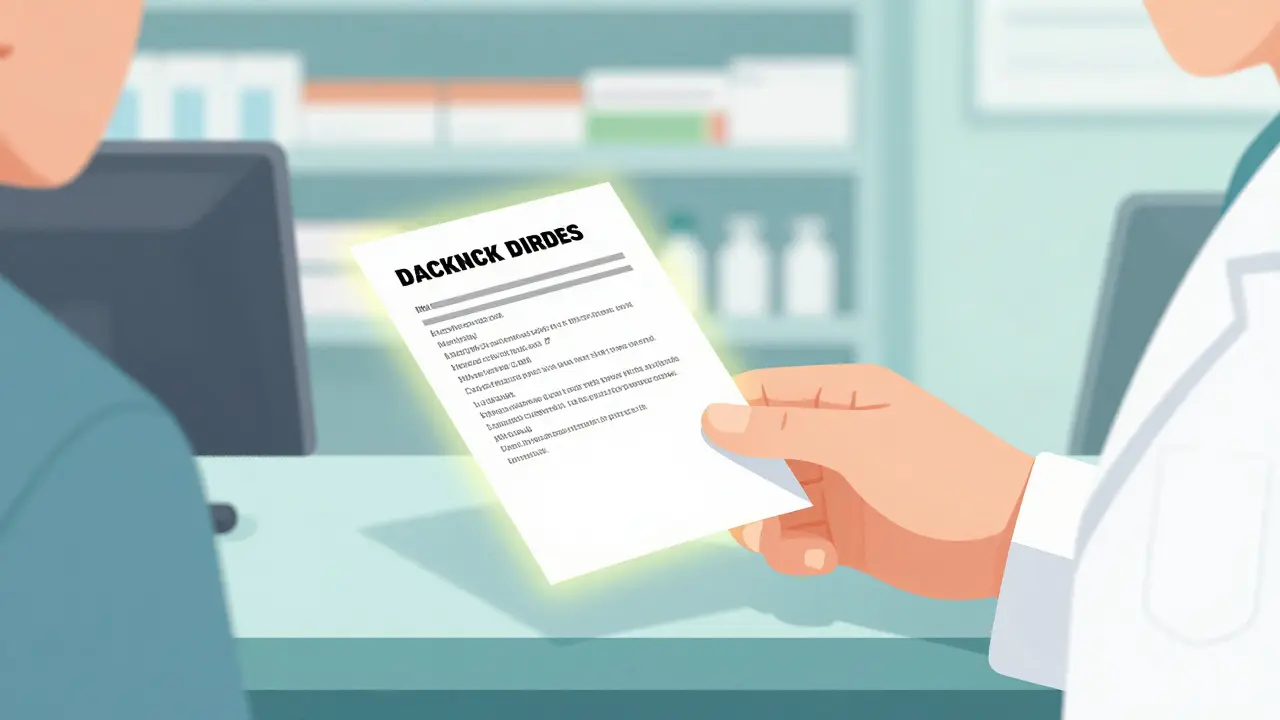
Have you ever walked away from the pharmacy counter with a folded piece of paper tucked into your prescription bag, only to toss it in the trash without a second glance? That piece of paper isn't just a generic flyer-it's a Medication Guide is a FDA-mandated document designed to give patients essential safety information about prescription drugs that carry significant health risks. While it might look like boring legal fine print, these guides are specifically designed to prevent serious medical emergencies and help you decide if a drug is actually right for you.
What exactly is a Medication Guide?
Unlike the standard label on your pill bottle that tells you how many tablets to take, a Medication Guide is a detailed safety manual. The U.S. Food and Drug Administration (or FDA) requires these for drugs where the risks are high enough that a patient needs to be aware of them to use the medicine safely. For example, if a drug has a rare but deadly side effect or requires a very specific way of taking it to work, the FDA steps in and mandates a guide.
These documents are governed by 21 CFR Part 208, a set of federal regulations that ensure manufacturers provide clear, non-technical warnings. Because they are written for the average person, the FDA requires them to be at or below a sixth-grade reading level. This means you don't need a medical degree to understand the warnings; they use plain language to tell you exactly what to watch for.
Why you shouldn't ignore the paperwork
You might think, "My doctor told me everything I need to know," but memories fade and pharmacy visits are often rushed. Medication Guides serve as a permanent record of the "red flags" associated with your treatment. They provide a level of detail that a 30-second conversation at the pharmacy counter simply can't cover.
For many, these guides are literal lifesavers. One patient on the PatientsLikeMe platform credited the guide for Tysabri with helping them spot early signs of a rare brain infection (PML), allowing them to get treatment before it became a permanent disability. When you're dealing with biologics, complex proteins used to treat autoimmune diseases, or high-risk opioids, knowing the warning signs of a bad reaction can be the difference between a quick clinic visit and an ICU stay.
What is inside a standard guide?
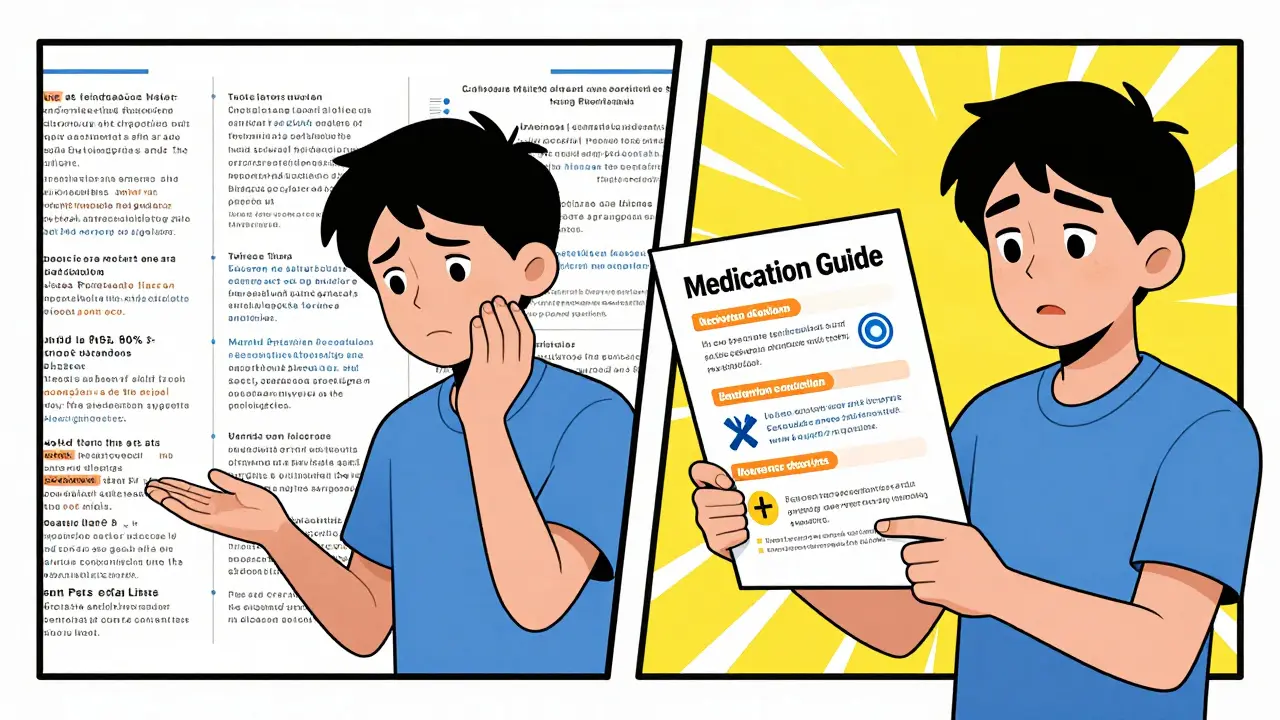
Every approved guide follows a strict format so you know exactly where to look for information. You won't find marketing fluff here-only the hard facts. A typical guide includes:
- Brand and Generic Names: Clear identification of the drug.
- Approved Uses: What the drug is actually meant to treat.
- Serious Risks: Bolded statements about the most dangerous potential side effects.
- Safe Use Instructions: How to take the drug and what to avoid (like certain foods or alcohol).
- Storage and Disposal: How to keep the drug stable and how to throw it away without harming others.
- Warning Signs: Specific symptoms that mean you should stop the drug and call 911 immediately.
| Feature | Medication Guide | Package Insert | Pharmacy Counseling Sheet |
|---|---|---|---|
| Target Audience | Patient/Consumer | Healthcare Provider | Patient/Consumer |
| FDA Mandated? | Yes (for high-risk drugs) | Yes | No |
| Language Level | 6th Grade (Simple) | Technical/Medical | Varies by Pharmacy |
| Consistency | Standardized by FDA | Standardized by FDA | Varies significantly |
The gap between the rules and reality
Despite the safety benefits, there's a problem: a lot of people don't actually read them. Research published in JAMA Internal Medicine showed that only about 38% of patients who received a guide actually read it thoroughly. Why? Because many find the text too dense or assume the pharmacist already covered the important parts.
Pharmacists are also under immense pressure. A study from the University of Michigan found that pharmacists spend an average of less than a minute explaining these guides per prescription. When a pharmacist is rushing to fill 200 orders a day, the "here is your guide" gesture often replaces a meaningful conversation. This is why the Medication Guides are so important-they fill in the gaps when the healthcare system is too busy to give you a full education on your meds.
New trends: Digital and Interactive Guides
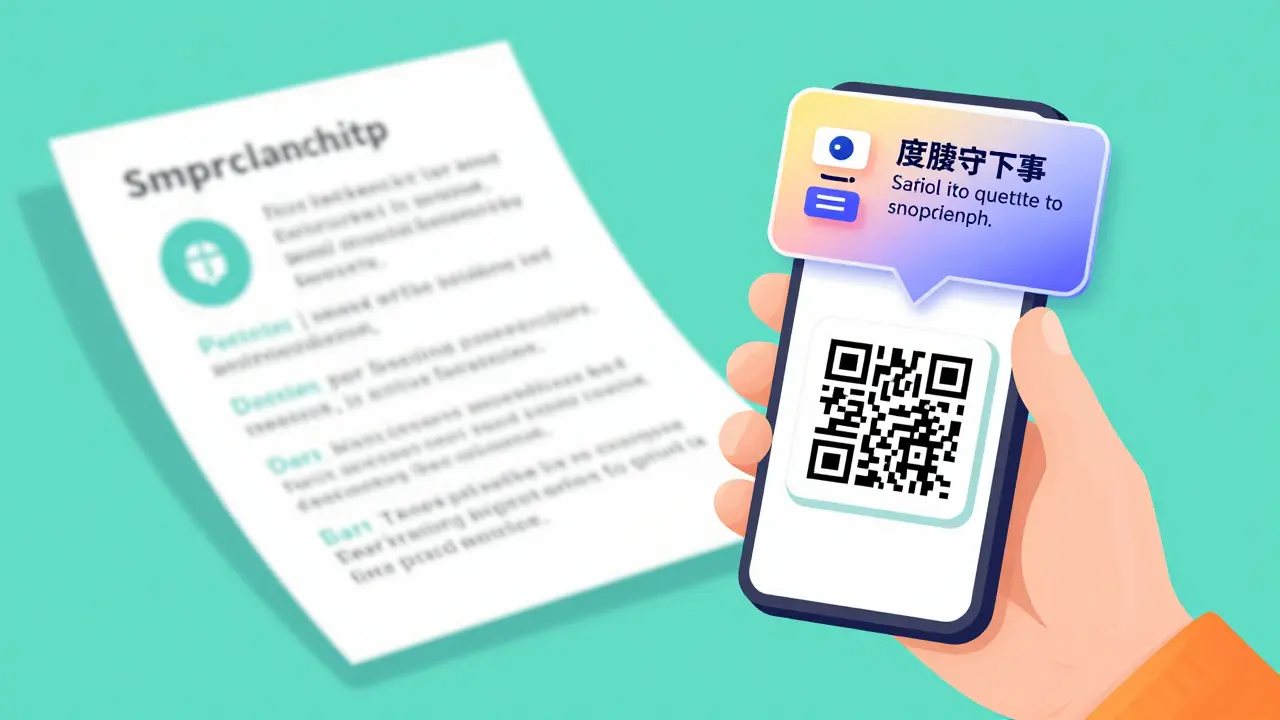
The paper-and-ink era is slowly evolving. The FDA knows that a piece of paper isn't always the best way to communicate risk. We're now seeing the rise of "Interactive Medication Guides." For instance, the drug Jardiance now has a version that uses QR codes. Instead of just reading a paragraph about a side effect, you can scan a code and watch a video explaining what to look for.
Additionally, the FDA has started allowing electronic delivery of these guides if the patient requests it. This is a huge win for accessibility, as digital versions can be translated more easily into different languages or read aloud by screen readers for those with visual impairments. The goal is to move toward "human-centered design," using visual icons instead of just walls of text to warn patients about dangers.
How to make the most of your guide
If you've just been handed a guide, don't let it sit in the bag. Here is a simple strategy to ensure you're safe:
- Scan for Bold Text: Look at the sections with bold headings first. These usually contain the most critical warnings.
- Use the "Teach-Back" Method: If the pharmacist explains the guide to you, try explaining it back to them in your own words. If you can't, you don't understand it yet.
- Highlight the Top 3: Identify the three most important safety points (e.g., "don't drink grapefruit juice," "watch for swelling," "don't stop suddenly") and write them on a sticky note on your fridge.
- Keep it Handy: Instead of filing it away, keep the guide with your medication. If you have a reaction and need to call a doctor, you have the exact technical terms and warning signs right in front of you.
Do all prescription drugs come with a Medication Guide?
No. Medication Guides are only required for a small percentage of drugs (roughly 5% of the U.S. market) that the FDA determines have serious risks or require strict adherence to be effective. Most common medications use standard patient package inserts or simple pharmacy labels.
What should I do if my pharmacist didn't give me a guide?
If you know your medication requires a guide (especially for high-risk drugs like certain antidepressants, antipsychotics, or biologics), ask your pharmacist for one. Under 21 CFR 208, manufacturers are required to make these available, and pharmacists are required to distribute them at the time of dispensing.
Is a Medication Guide the same as a side-effect list?
Not exactly. While it includes side effects, a Medication Guide is a broader safety tool. It includes instructions on how to use the drug safely, storage requirements, disposal methods, and critical warnings that can influence whether you should even start the medication.
Can I get a Medication Guide in a language other than English?
The FDA is currently working on a strategic plan to provide multilingual versions for the top 25 non-English languages. In the meantime, you can ask your pharmacist if a translated version is available or use a digital translation tool on a PDF version of the guide.
Are these guides updated as new risks are found?
Yes. When the FDA identifies new safety concerns or updates the prescribing information for a drug, manufacturers must update the Medication Guide and ensure the new version is distributed to patients.
prince king
April 27, 2026 AT 11:44This is such a wonderful reminder that the small things in life can actually be the biggest lifesavers! ✨ It's all about taking a moment to be mindful of our health and the tools provided to us. Truly appreciate this perspective 🌿🙏
Jarrett Jensen
April 28, 2026 AT 15:12It is profoundly disappointing that the general populace requires a sixth-grade reading level to comprehend basic safety protocols. The systemic degradation of literacy is quite evident here. One would imagine that a modicum of intellectual curiosity would lead a patient to research their pharmacological interventions without the need for a simplified pamphlet. The sheer inefficiency of the modern healthcare delivery system is simply appalling, and this reliance on 'plain language' is a testament to the intellectual atrophy of the masses.
Dale Kensok
April 29, 2026 AT 15:21The systemic failure here isn't the literacy rate, but the cognitive dissonance between the FDA's regulatory frameworks and the actual clinical application of these pharmacovigilance tools. We are essentially dealing with an asymmetric information gap where the heuristic processing of the patient is bypassed by the sheer velocity of the retail pharmacy workflow. It's a classic case of institutional inertia meeting a fragmented patient-provider interface, resulting in a negligible adherence rate that renders the entire 21 CFR Part 208 mandate practically performative in a high-throughput environment.
lalit adesara
April 29, 2026 AT 19:39Western systems fail. Too much paper. No wisdom.
Sharon Mathew
April 30, 2026 AT 07:33Oh please! As if a QR code is going to save us from the absolute nightmare of pharmaceutical side effects! It's just another way for companies to pretend they care while we're all basically guinea pigs in a giant experiment! Absolutely ridiculous that we have to scan a code to know if we're going to have a heart attack!
Nigel Gosling
May 1, 2026 AT 10:34What an utter tragedy that we've reached a point where a piece of paper is the only thing standing between a patient and a catastrophe! It is a moral bankruptcy of the highest order that pharmacists are given less than sixty seconds to save a life! I am absolutely devastated by the cold, corporate indifference that defines the modern medical experience! We are treating humans like conveyor belt products in a factory of sickness! It's a disgrace to the very notion of care!
Aubrey Johnson
May 1, 2026 AT 12:14The data is clear. People are simply negligent. It takes very little effort to read a short document.
Steve Grayson
May 1, 2026 AT 13:17I agree with the point about the pharmacist being rushed. It happens a lot. Digital guides seem like a good compromise for everyone.
Trish Perry
May 2, 2026 AT 12:19It's interesting how we trust our doctors implicitly but then ignore the actual documented risks. I think it's a mental shortcut-we want to believe everything is fine so we don't have to deal with the anxiety of the 'what ifs'. The guide is there, but the psychological barrier to reading it is often higher than the physical effort of reading the text.
Kali Murray
May 2, 2026 AT 21:03just scan the bold parts and you're good 🌸