
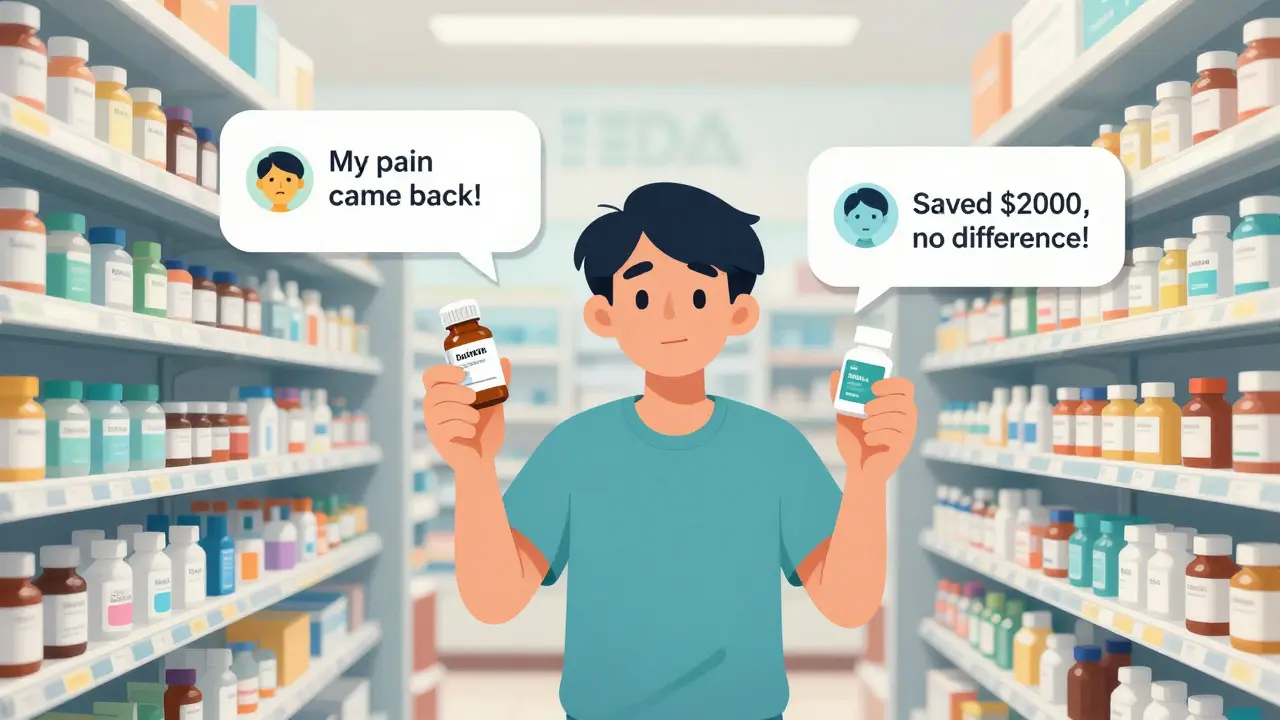
When you pick up a prescription for a generic drug, you’re not just getting a cheaper version of the brand-name medicine-you’re stepping into a world shaped by online reviews, personal stories, and deep-seated doubts. Even though science says generics are just as safe and effective, many patients still feel uneasy. Why? Because the real story isn’t written in FDA reports or bioequivalence studies. It’s written in Reddit threads, PatientsLikeMe forums, and the quiet conversations between patients and pharmacists.
What Generic Medications Really Are
Generic drugs contain the exact same active ingredient as their brand-name counterparts. A 50mg tablet of generic sertraline has the same molecule as Zoloft. The same goes for metformin, lisinopril, or atorvastatin. The FDA requires generics to match the brand in strength, dosage form, and route of administration. They must also prove they’re absorbed into the bloodstream at the same rate and extent-within 80% to 125% of the brand’s performance. That’s not a guess. It’s a legal standard backed by clinical testing. But here’s the catch: generics can look different. They might be a different color, shape, or size. They might have different fillers or coatings. And while those inactive ingredients don’t affect how the drug works, they can change how it feels to take. A patient who’s been on a white, oval brand-name pill for years might suddenly get a blue, round generic. That visual shift triggers doubt. And doubt spreads fast.The Power of Online Reviews
On platforms like Reddit’s r/Generics and r/ChronicPain, patients share real experiences. One user wrote: “I switched to generic Lyrica and my nerve pain came back worse than before.” Another said: “I’ve been on generic sertraline for three years. Saved over $2,000. Zero difference.” These aren’t outliers. Analysis of over 6,000 posts from 2020 to 2023 found that nearly half (47.3%) mentioned “different side effects,” and over a third (32.9%) claimed the generic “wasn’t working as well.” Meanwhile, only 23.7% of posts highlighted cost savings without issues. That imbalance matters. Negative experiences stick. They’re shared. They’re remembered. It’s not just about the drug. It’s about expectation. When someone believes a generic is “cheap,” their brain starts looking for proof. That’s the nocebo effect-when negative expectations cause real physical symptoms. A 2018 study showed patients given identical tramadol, but labeled as generic, reported higher pain levels and were more likely to stop taking it-even though the medicine was exactly the same.Who Believes the Myths-and Why
Surveys show a clear gap between what patients think and what experts know. In one study, 35.6% of patients believed generics were less effective. Only 23.6% of pharmacists and 28.7% of doctors agreed. That’s a massive disconnect. Age plays a role too. Patients over 65 are far more skeptical than younger adults. Only 41.7% of older patients trust generics, compared to 68.2% of those under 35. Education matters. People with higher education levels understand bioequivalence better. And cost? It’s a double-edged sword. The lower price makes generics attractive-but also makes people suspicious. “If it’s so cheap, how can it be any good?” is a common thought. Even more telling: 33.3% of patients said their doctors gave them little to no information about the switch. When no one explains what’s happening, the brain fills in the blanks-with fear.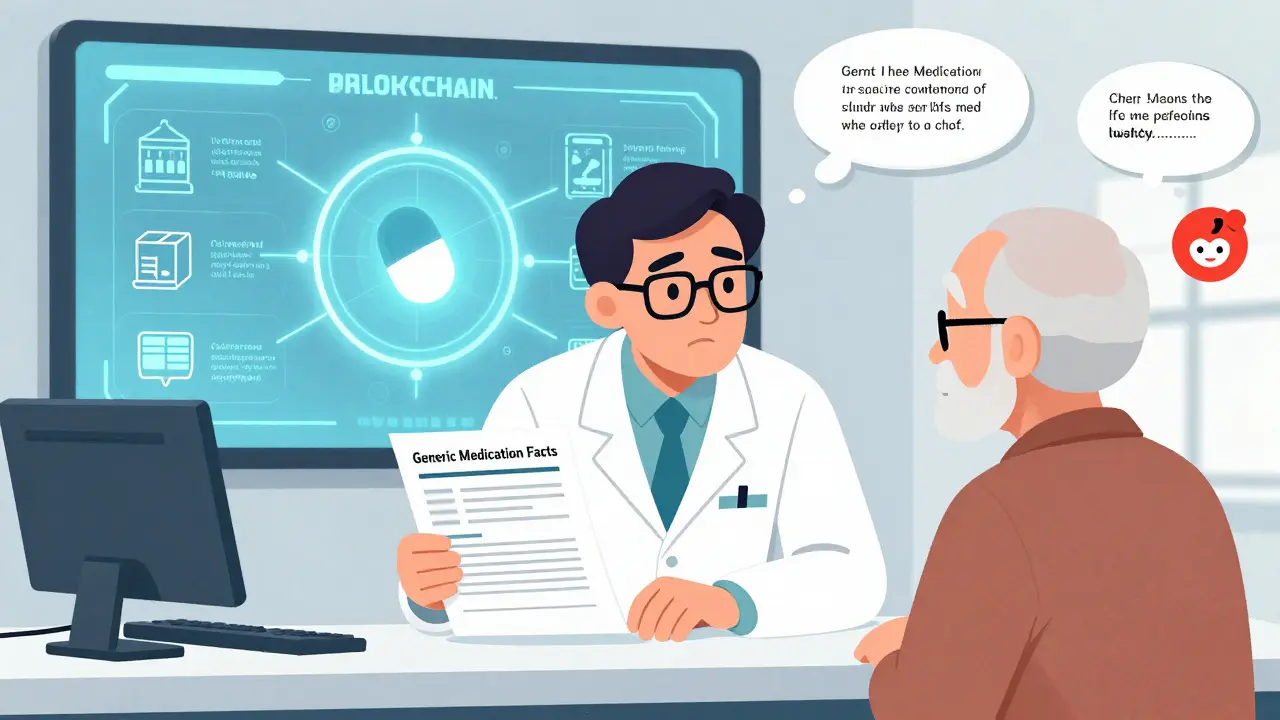
How Healthcare Providers Can Turn the Tide
The most powerful tool to change perceptions? A trusted voice. A 2022 study found that when pharmacists took just 90 to 120 seconds to explain how generics work-mentioning FDA approval, bioequivalence, and safety-patient acceptance jumped by nearly 40%. That’s not magic. It’s clarity. Doctors matter too. Patients are 69.8% more likely to accept a generic if their doctor recommends it. But most primary care visits last only 15 minutes. Medication discussions average just 1.7 minutes. That’s not enough. Some systems are fixing this. Kaiser Permanente handed out simple one-page “Generic Medication Facts” sheets to every patient getting a generic. Within six months, questions dropped by over half, and adherence rose by nearly 20%. No fancy tech. Just clear, consistent messaging.What’s Being Done to Fix the Problem
The FDA launched a public campaign in 2023 called “Generics: Same Medicine, Lower Cost.” Early results? A 22.4% increase in consumer confidence after six months. That’s progress. Pharmacies are also starting to offer “authorized generics”-brand-name drugs sold without the brand name. These are made by the same company, in the same factory, just without the logo. They cost less than the brand but feel more trustworthy. Sales of authorized generics grew 37.6% in 2023. New tech is helping too. Machine learning models can now predict which patients are most likely to reject generics-based on age, education, past behavior, and even the wording of their online reviews. That lets clinics target outreach before the switch happens. And in the future, blockchain systems like MediLedger are being tested to let patients scan a code on their pill bottle and see the full supply chain: where it was made, tested, and shipped. If you can verify the drug’s origin, trust grows.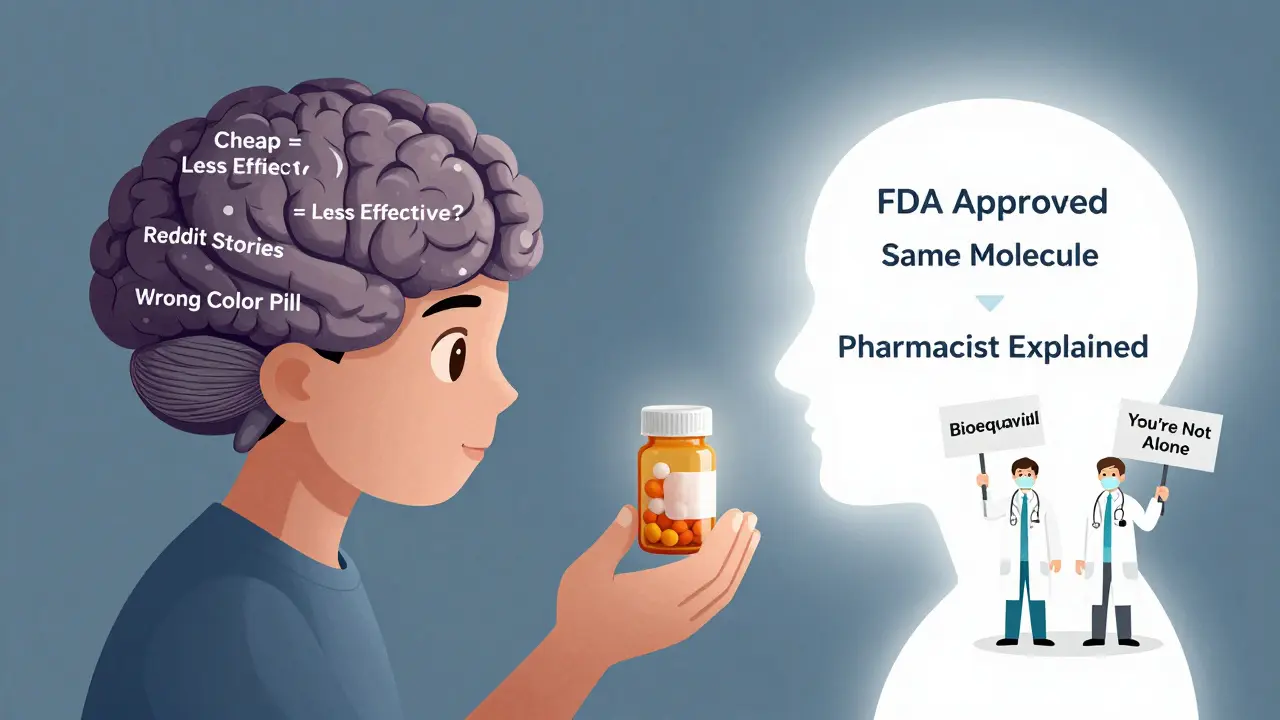
Why This Matters Beyond Cost
The financial impact is huge. Generics save the U.S. healthcare system an estimated $14.3 billion a year by replacing expensive brand-name drugs. But when patients stop taking their meds because they don’t trust the generic, costs go up again. Hospital visits. Emergency care. Complications from uncontrolled blood pressure or depression. It’s not just about money. It’s about health. A patient who stops taking their generic statin because they think it’s “not strong enough” might end up with a heart attack. Someone who skips their generic antidepressant might spiral into a deeper depression. The science is clear: generics work. But trust isn’t built with data. It’s built with conversation, consistency, and care.What Patients Can Do
If you’ve been switched to a generic and feel something’s off:- Don’t assume it’s the drug. Talk to your pharmacist. Ask: “Is this bioequivalent? Can you show me the FDA data?”
- Track your symptoms. Write down how you feel before and after the switch. That helps your doctor decide if it’s real or psychological.
- Look for patterns. Are others in your support group having the same experience? Or are you the only one?
- Ask about authorized generics. They’re the same as the brand, just unbranded.
What Providers Can Do
If you’re prescribing or dispensing generics:- Don’t assume patients know what “generic” means. Explain it like you would a new treatment.
- Use simple language: “This pill has the same active ingredient as the brand, just without the fancy packaging.”
- Give them a handout. Even a printed page with bullet points helps.
- Ask open questions: “What are your thoughts about switching?”
- Never dismiss concerns. Even if you think it’s a nocebo effect, the fear is real to them.
Online reviews aren’t going away. They’re becoming the new word-of-mouth. And if we want patients to trust generics, we need to join the conversation-not just wait for them to find the right answer.
Are generic medications really as effective as brand-name drugs?
Yes. The FDA requires generics to meet the same strict standards as brand-name drugs. They must contain the same active ingredient, in the same strength, and be absorbed into the body at the same rate and extent. Bioequivalence testing ensures that the generic performs within 80% to 125% of the brand’s pharmacokinetic profile. Over 90% of prescriptions in the U.S. are filled with generics, and millions of patients use them safely every day.
Why do some people feel generics don’t work as well?
This is often due to the nocebo effect-when negative expectations lead to real physical symptoms. Patients may notice differences in pill color, size, or filler ingredients and assume the drug is weaker. Online reviews amplify these concerns, especially when they mention side effects or reduced effectiveness. Studies show that patients who believe generics are inferior report higher pain levels and lower adherence-even when the medication is identical to the brand.
Can generic medications have different side effects?
The active ingredient causes the side effects, and that’s identical in generics and brands. However, inactive ingredients (like dyes or binders) can differ. In rare cases, a patient might be sensitive to one of these, leading to a reaction not experienced with the brand. This isn’t because the generic is inferior-it’s a personal sensitivity. If you notice new side effects after switching, talk to your pharmacist or doctor. They can check if it’s an ingredient issue or a psychological response.
What are authorized generics, and should I ask for them?
Authorized generics are made by the same company that produces the brand-name drug, in the same factory, with the same ingredients and packaging-just without the brand name or logo. They’re chemically identical to the brand but sold at a lower price. Many patients trust them more because they know the source. If you’re unsure about a generic, ask your pharmacist if an authorized version is available. They’re becoming more common and can ease transition concerns.
How can I tell if my generic is safe and approved?
All FDA-approved generics must be listed in the agency’s Orange Book, which you can search online. Your pharmacist can confirm if your generic is approved and bioequivalent. Look for the drug’s National Drug Code (NDC) on the bottle-this can be checked in the FDA database. If your pharmacy is reputable and licensed, you can trust the product. The real issue isn’t safety-it’s perception. Most concerns come from misinformation, not actual risk.
pragya mishra
January 20, 2026 AT 19:20Look, I don't care what the FDA says. I switched to generic metformin and my blood sugar went through the roof. My pharmacist said it's 'bioequivalent'-whatever that means. I know my body, and it's screaming at me. They're cutting corners, and we're the lab rats.
Manoj Kumar Billigunta
January 21, 2026 AT 23:30It's not about the science-it's about trust. I've been a pharmacist for 22 years. I've seen patients panic over a different-shaped pill. The key isn't more studies. It's taking 90 seconds to say: 'This is the same medicine, just without the logo.' Simple. Human. That's what works.
Andy Thompson
January 23, 2026 AT 10:05GENERIC DRUGS ARE A GREATER GOOD FOR BIG PHARMA AND THE GOVERNMENT TO CONTROL US. THEY SWITCHED MY ANTIDEPRESSANT TO A GENERIC, AND NOW I'M 'DEPRESSED'-COINCIDENCE? I THINK NOT. THE FDA IS IN BED WITH THE PHARMA GIANTS. THEY WANT YOU DEPENDENT ON CHEAP, WEAK DRUGS SO YOU KEEP TAKING THEM. READ THE ORANGE BOOK? HA! IT'S A LIE. I'VE SEEN THE FACTORIES-THEY'RE IN CHINA. NO WONDER I CAN'T SLEEP.
sagar sanadi
January 25, 2026 AT 05:27Oh wow, another article telling us the placebo effect is real. Groundbreaking. Next they'll tell us water is wet. I switched to generic Zoloft and suddenly my anxiety turned into a full-blown panic attack. Coincidence? Nah. The brand version had a little extra 'magic dust' they don't put in the cheap ones. I'm not crazy-I'm just not stupid.
kumar kc
January 25, 2026 AT 11:56If you can't afford the brand, you shouldn't be taking the medicine at all.
Thomas Varner
January 25, 2026 AT 21:21So... the nocebo effect is real, huh? That's wild. I remember when I switched to generic lisinopril-I thought I'd feel weird, and sure enough, I got a headache. Then I read the article, realized I was priming myself, and boom-headache vanished. It's not the pill. It's the story we tell ourselves. Also: authorized generics are the real MVPs.
Carolyn Rose Meszaros
January 26, 2026 AT 09:31As someone who's been on generics for 8 years-sertraline, metformin, atorvastatin-I can say with 100% certainty: no difference. I save $1,200 a year. My mental health is stable. My cholesterol is down. I wish more people would try it before assuming the worst. 💊✨
Greg Robertson
January 26, 2026 AT 18:51I totally get why people are nervous. I used to be one of them. But after my pharmacist sat down with me and showed me the FDA bioequivalence data on her tablet, it clicked. It's not magic. It's math. And honestly? That little chat made me feel seen. Maybe we need more of that, not more ads.
Crystal August
January 27, 2026 AT 02:47Why are we even having this conversation? People just need to stop being dramatic. If the FDA says it's the same, it's the same. Stop reading Reddit and take your damn pills. Your health isn't a TikTok trend.
Nadia Watson
January 27, 2026 AT 11:01While I appreciate the thoroughness of this exposition, I must respectfully underscore that the phenomenon under discussion-namely, the dissonance between clinical efficacy and perceived therapeutic outcome-is not merely psychological, but deeply sociocultural in nature. In many communities, particularly those with limited health literacy, the visual morphology of pharmaceuticals is imbued with symbolic meaning, and the absence of a familiar brand logo is interpreted as diminished quality. Moreover, the linguistic framing of 'generic' itself carries pejorative connotations in vernacular discourse, which may unintentionally reinforce mistrust. A more nuanced public health communication strategy, perhaps involving community health liaisons and culturally adapted educational materials, may yield more sustainable outcomes than broad-spectrum campaigns. That said, the authorized generic model is, in my view, an elegant and underutilized solution.