
OTC Active Ingredient Conflict Checker
Select two different OTC products you are planning to take together to check for hidden risks.
Select two medications above to analyze their Drug Facts labels for overlapping active ingredients.
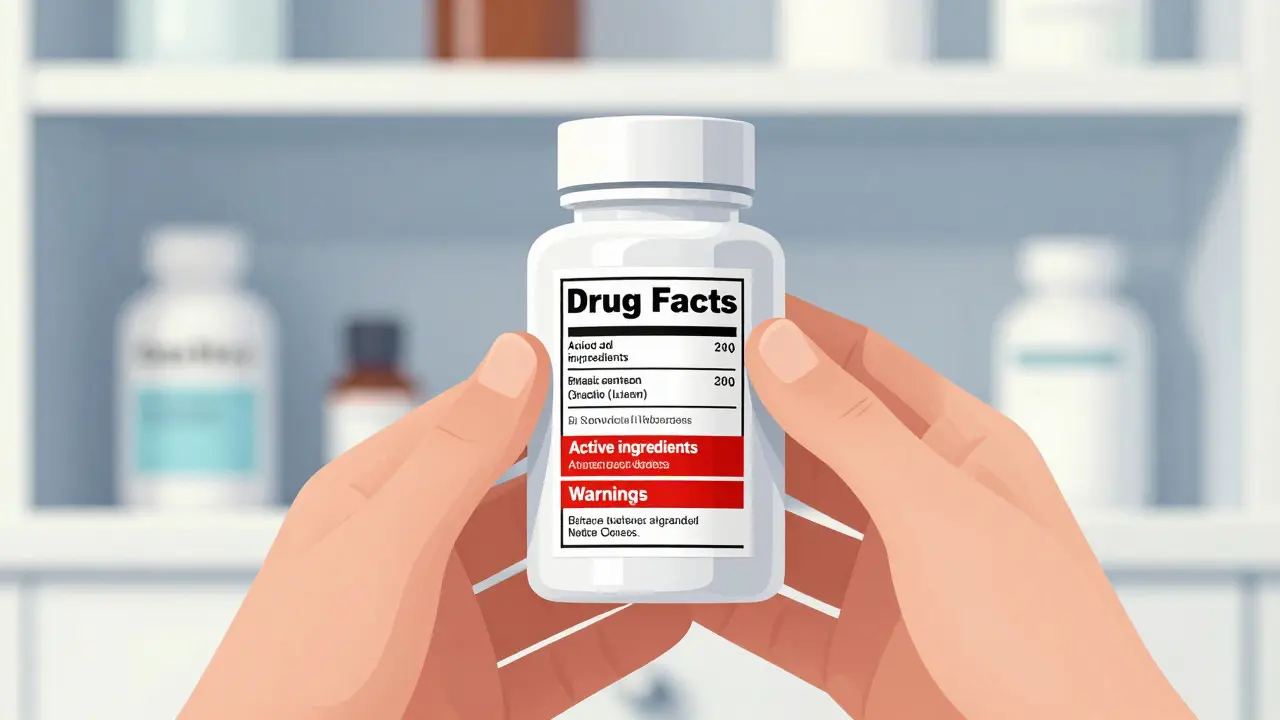
Grab any bottle of pain reliever or cough syrup from your cabinet. Look at the back. Do you see a section titled Drug Facts is a standardized labeling system mandated by the U.S. Food and Drug Administration (FDA) for all over-the-counter (OTC) human drug products. This format was established in 1999 under 21 CFR § 201.66 to replace confusing, inconsistent manufacturer labels with a uniform layout that helps consumers make safer medication choices.? That box isn't just marketing fluff. It is a legal requirement designed to save lives. Yet, millions of people skip it, leading to preventable medication errors every year.
You might think you know how to use Tylenol or Advil because you’ve taken them before. But mixing medications without checking the Drug Facts label can lead to dangerous overdoses. The FDA’s Center for Drug Evaluation and Research (CDER) created this system so you could find critical information quickly, regardless of the brand. Whether you are buying hand sanitizer, sunscreen, or anti-cavity toothpaste, if it makes a medical claim, it needs this label. Understanding it is your first line of defense against accidental poisoning.
The Mandatory Structure of the Label
The law requires specific sections to appear in a strict order. You cannot rearrange them. This consistency is intentional. When you pick up a new product, your brain already knows where to look for warnings or dosage instructions because every compliant package follows the same blueprint. According to federal regulations, the eight required headings must appear in this exact sequence:
- Drug Facts (or Drug Facts continued)
- Active ingredient(s)
- Purpose(s)
- Use(s)
- Warning(s)
- Directions
- Other information
- Inactive ingredients
If a package runs out of space, it continues on the next panel, clearly marked as "Drug Facts (continued)." Manufacturers must use distinct horizontal lines to separate these sections. This visual structure reduces cognitive load, allowing you to scan for risks rather than hunting through paragraphs of fine print. Studies by the FDA showed that when labels followed this standardized format, consumer ability to identify active ingredients jumped from 42% to 87%. That is a massive improvement in safety clarity.
Decoding Active Ingredients and Purposes
The most critical part of the label is the Active Ingredient section. This tells you what actually works in the medicine. If a product has multiple active ingredients, they must be listed alphabetically along with the amount per dose. Why does this matter? Because many OTC drugs contain the same active ingredients under different brand names.
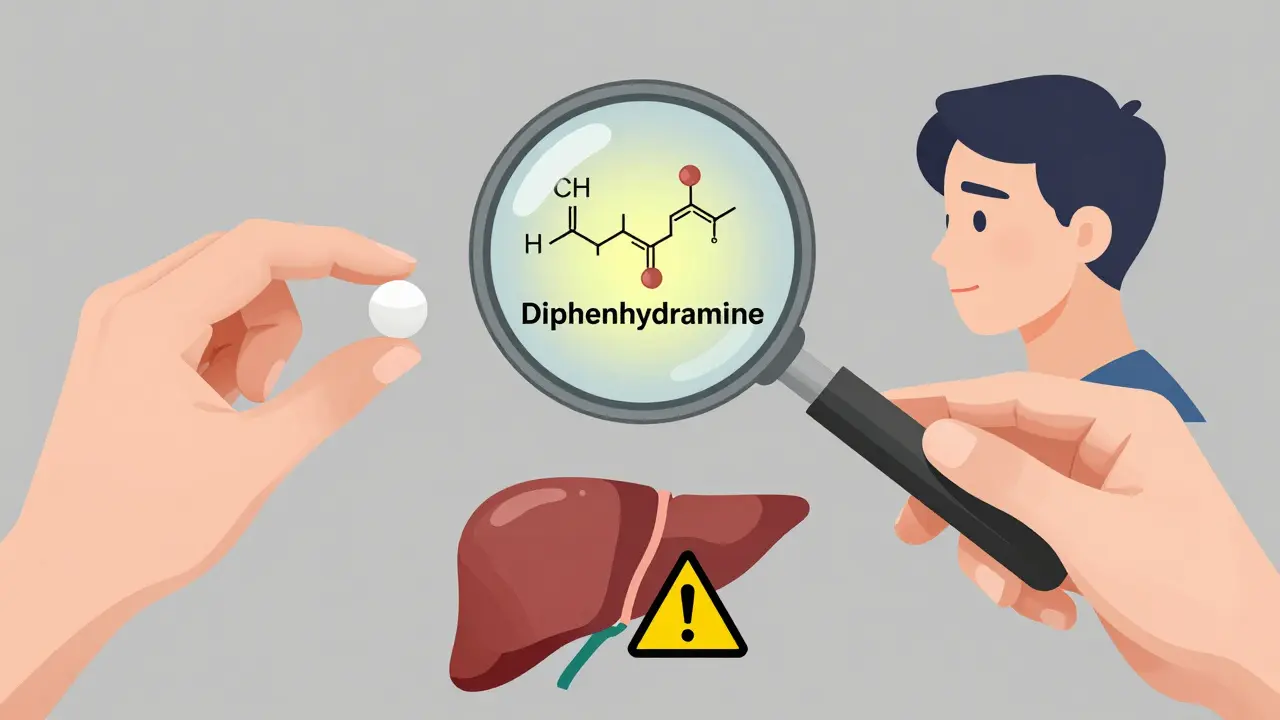
Imagine taking a nighttime cold medicine that contains diphenhydramine for sleep, then realizing too late that your daytime allergy pill also contains diphenhydramine. You have just doubled your dose unintentionally. The Purpose section explains the drug category, such as analgesic (pain reliever), antihistamine (allergy relief), or expectorant (chest congestion). Always check the active ingredient name, not the brand name, to avoid duplication. For example, acetaminophen appears in hundreds of products, from headache pills to multi-symptom flu remedies. Exceeding the daily limit of acetaminophen can cause severe liver damage, which is why the FDA mandates specific liver warnings in red text for products containing this ingredient.
Navigating Warnings and Directions
The Warnings section is non-negotiable. It details serious risks, drug interactions, and contraindications. You will often see sub-headings like "When using this product," "Stop and ask a doctor if," and "Stop using if." These are not suggestions; they are clinical guidelines based on safety data. For instance, if you have high blood pressure, the warning might tell you to ask a doctor before using pseudoephedrine, a common decongestant that can raise blood pressure further.
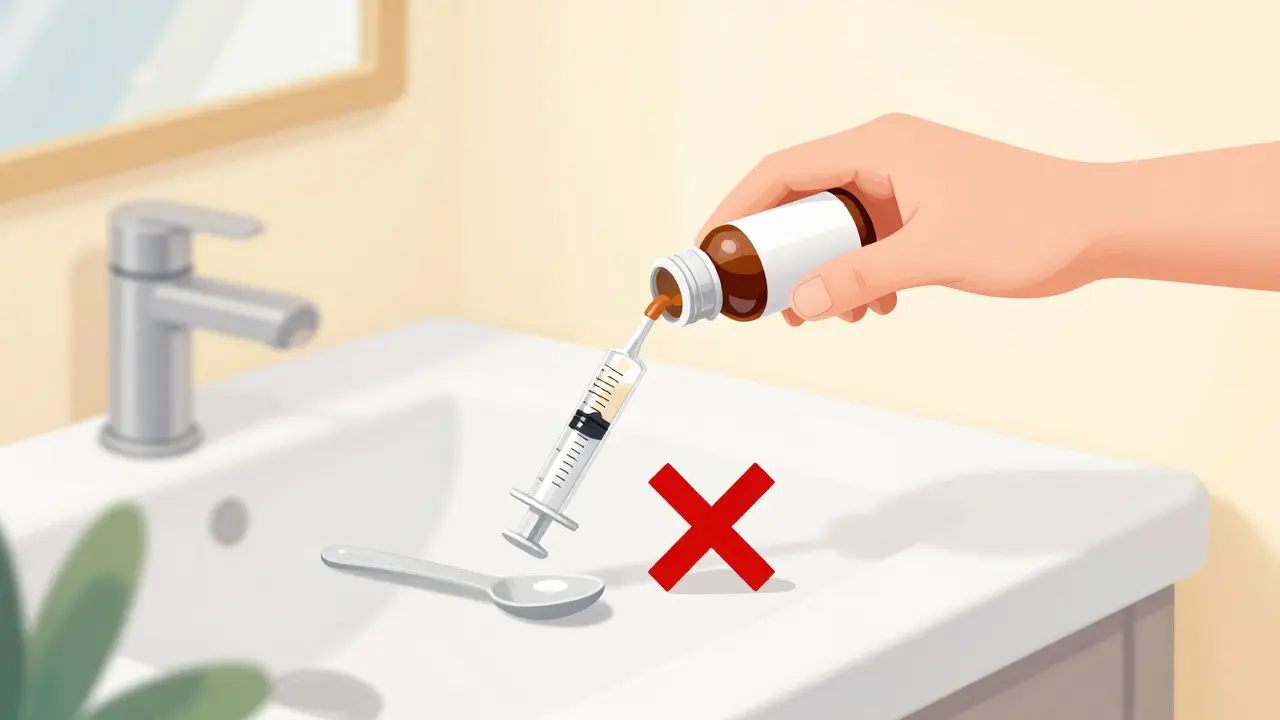
Certain warnings must stand out. Liver warnings, asthma alerts, and directions to keep the product out of reach of children must appear in boxes, often with red lettering. This visual cue demands attention. The Directions section provides precise instructions on when, how, and how often to take the medication. Pay close attention to age-specific dosing. A dose safe for an adult can be toxic for a child. Furthermore, liquid medications require careful measurement. Using a kitchen spoon instead of the provided dosing cup or syringe is a common error that leads to incorrect dosages. The FDA notes that 27% of medication errors involve using incorrect measuring devices.
| Error Type | Frequency in Error Reports | How the Drug Facts Label Helps |
|---|---|---|
| Ignoring Drug Interactions | 41% | Check the "Warnings" section for interaction alerts with other medications or conditions. |
| Exceeding Recommended Dosage | 32% | Follow "Directions" strictly and track total intake across multiple products. |
| Incorrect Measuring Devices | 27% | Use only the device specified in the directions; never use kitchen spoons. |
| Duplicate Active Ingredients | High Risk | Compare "Active Ingredients" lists before combining two different OTC brands. |
Other Information and Inactive Ingredients
Don’t skip the bottom of the label. The Other Information section usually contains storage instructions, such as "Store below 25°C" or "Keep container tightly closed." Proper storage ensures the drug remains effective. For orally ingested products, this section must also disclose sodium content per dosage unit, which is vital for individuals on low-sodium diets.
The final section lists Inactive Ingredients. These are the fillers, colors, flavors, and preservatives that give the pill its shape or taste. While they don’t treat your symptoms, they can trigger allergies. If you are sensitive to dyes, gluten, or certain sugars like lactose, this list is essential. For example, some chewable vitamins or pain relievers contain corn starch or soy lecithin. Knowing what is inside prevents allergic reactions that could complicate your health situation.
Why Standardization Saves Lives
The shift to the current Drug Facts label was driven by chaos. Before 1999, manufacturers designed their own labels, leading to confusion about where to find dosage info or warnings. The American Association of Poison Control Centers reports that since the full implementation of these requirements, medication errors involving OTC products have dropped by 27%. However, with approximately 1.2 million cases of improper OTC use still reported annually, there is room for improvement.
The FDA’s "Check the Label" campaign emphasizes that systematic review of these labels reduces adverse events by 63%. It is not enough to glance at the front of the box. You must engage with the back. The regulation covers everything from traditional pills to topical rubs and even sunscreens. By treating every OTC product with the same scrutiny as a prescription, you protect yourself from hidden risks.
Frequently Asked Questions
What is the difference between active and inactive ingredients?
Active ingredients are the substances that provide the therapeutic effect, such as ibuprofen for pain relief. Inactive ingredients are non-therapeutic components like binders, colors, and flavors that help form the pill or improve taste but do not treat the condition.
Do I need to read the Drug Facts label every time I take a medication?
Yes. Formulations can change, and you may be taking other medications that interact with the active ingredient. Reading the label ensures you follow the correct dosage and are aware of any new warnings or contraindications.
Why are some warnings printed in red?
Red text is used for critical safety information, such as liver warnings for acetaminophen or asthma alerts. This visual distinction draws immediate attention to serious risks that require careful consideration before use.
Can I use a kitchen spoon to measure liquid medicine?
No. Kitchen spoons vary significantly in size and are not accurate for medical dosing. Always use the dosing cup, dropper, or syringe provided with the product or purchased from a pharmacy to ensure precise measurement.
What does "Drug Facts (continued)" mean?
It indicates that the required labeling information extends onto another panel of the packaging due to space constraints. You should continue reading on that panel to find complete dosage, warning, and ingredient information.
Are supplements required to have a Drug Facts label?
No. Dietary supplements use a "Supplement Facts" label, which has different regulatory requirements. Only products marketed to treat, cure, or prevent diseases must use the Drug Facts label regulated by the FDA.
Where can I find the National Drug Code (NDC)?
The NDC is typically found on the front panel or near the barcode of the packaging. It is a unique identifier for the drug product, consisting of three segments separated by hyphens, used for tracking and inventory purposes.