
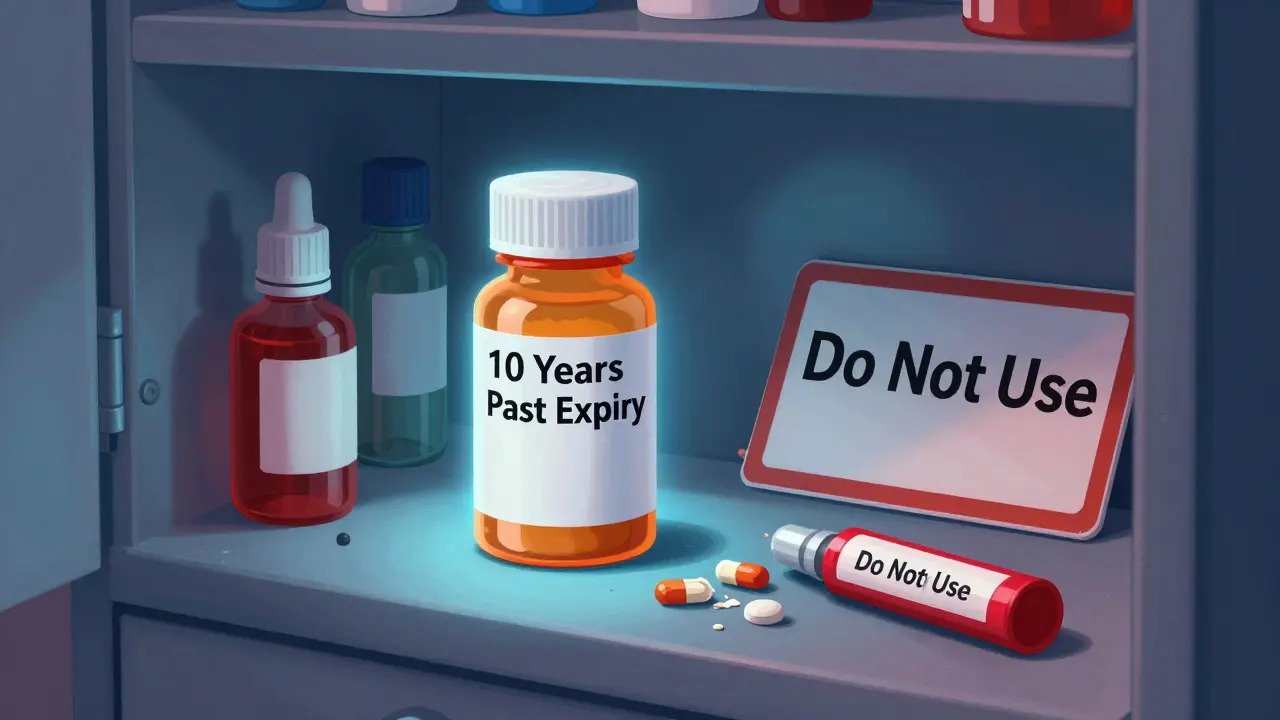
Most people check the expiration date on their OTC meds like it’s a bomb timer. Toss it the moment the date passes. But what if that’s not always necessary? What if your 3-year-old ibuprofen is still perfectly fine - and throwing it away is just wasting money?
The truth is messy. The FDA says don’t use expired meds. But their own data shows 90% of them still work years later. So who’s right? And more importantly - what should you actually do when you find that bottle in the back of your cabinet?
What Expiration Dates Actually Mean
Expiration dates aren’t "use-by" labels like on milk. They’re the last day the manufacturer guarantees the drug will work at full strength and stay safe - based on strict stability tests required by the FDA since 1979. That’s it. It doesn’t mean the medicine suddenly turns toxic or useless the next day.
These dates are set conservatively. Most OTC pills - like pain relievers, antihistamines, and cold meds - are tested for 1 to 5 years. But manufacturers often pick 2 or 3 years for practical reasons: inventory turnover, legal caution, and marketing. The actual chemical stability? Often much longer.
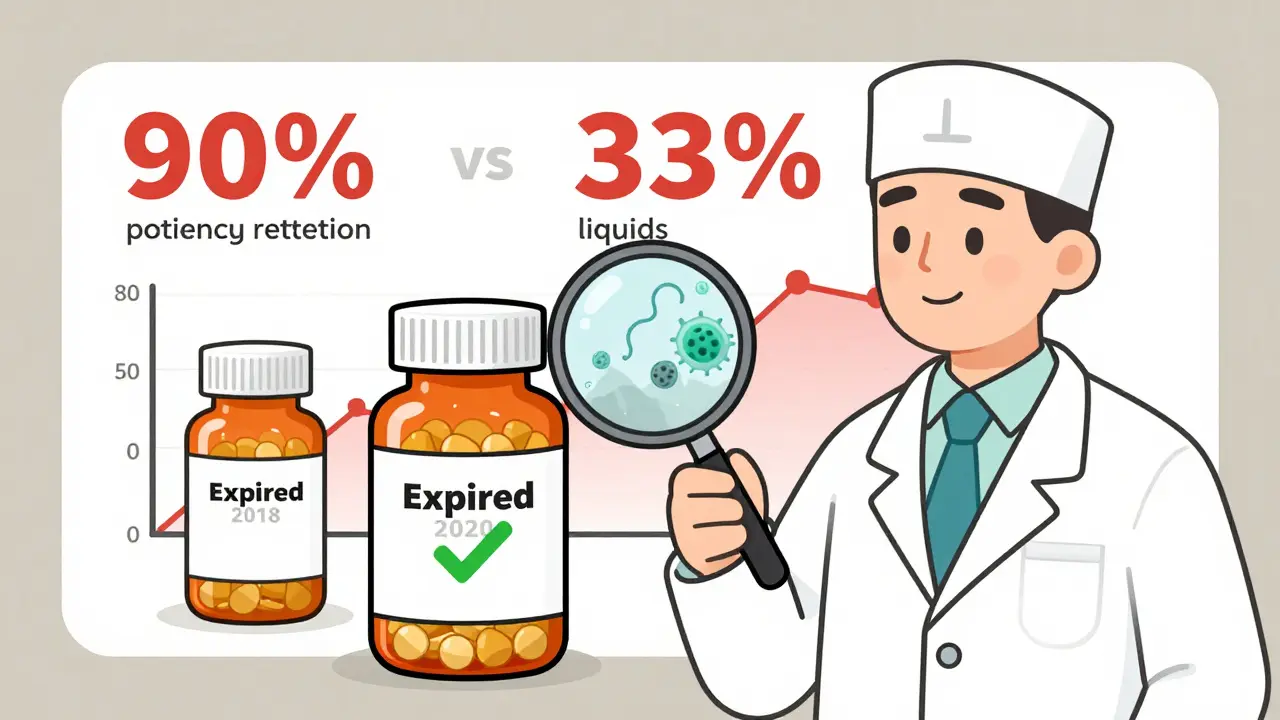
Here’s the kicker: the FDA’s Shelf Life Extension Program tested over 100 drugs - including common OTCs - and found 90% were still effective 5 to 15 years past their printed date. Some stayed potent for decades. That’s not speculation. It’s government science.
What Keeps Medications Stable
Not all meds age the same. The big three factors that determine how long your pills last are:
- Form - Solid (tablets, capsules) vs. liquid (syrups, eye drops)
- Storage - Heat, moisture, and light are the enemies
- Chemistry - Some ingredients break down faster than others
Tablets and capsules? They’re tough. Acetaminophen, ibuprofen, and diphenhydramine (Benadryl) can hold onto 85-90% of their potency for 5 to 10 years past expiration - if kept dry and cool. A 2023 study in the Journal of Pharmaceutical Sciences found that adding a desiccant (those little packets you throw away) to the bottle can extend stability by nearly half.
Liquids? Not so much. Eye drops, cough syrups, and liquid antibiotics can grow bacteria or break down chemically within weeks or months after expiration. One 2019 study showed 67% of expired eye drops were contaminated. That’s not a risk you want to take.
And storage matters more than you think. The bathroom? Bad idea. Steam from showers, heat from pipes, and humidity from sinks wreck meds. A drawer in a bedroom or kitchen cabinet - away from sunlight and heat - is far better. Keep the bottle tightly sealed. Don’t leave the cap off. Don’t transfer pills to pill organizers unless you’ll use them within a month.
The Dangerous Ones - Don’t Mess With These
Not all expired meds are harmless. Some can be dangerous. Here’s the short list you should never use past the date:
- Nitroglycerin - Used for chest pain. Loses up to 50% potency within 6 months after expiration. In a heart attack, that could mean the difference between life and death.
- Insulin - After expiration, it degrades by 10-15% per month. That can cause dangerous blood sugar spikes and lead to diabetic ketoacidosis - a medical emergency.
- Epinephrine auto-injectors (EpiPens) - Even 1-2 years past expiration, they may deliver only half the dose needed to stop anaphylaxis. There are documented cases of people dying because their expired EpiPen failed.
- Birth control pills - A 5-10% drop in hormone potency can lead to ovulation. Studies show pregnancy risk jumps from 0.3% to 12.7% when pills are used 6 months past expiration.
- Liquid antibiotics - Once expired, they can grow harmful bacteria. Using them might not just fail to treat the infection - it could make you sicker.
If you rely on any of these for your health or safety, replace them on time. No exceptions.
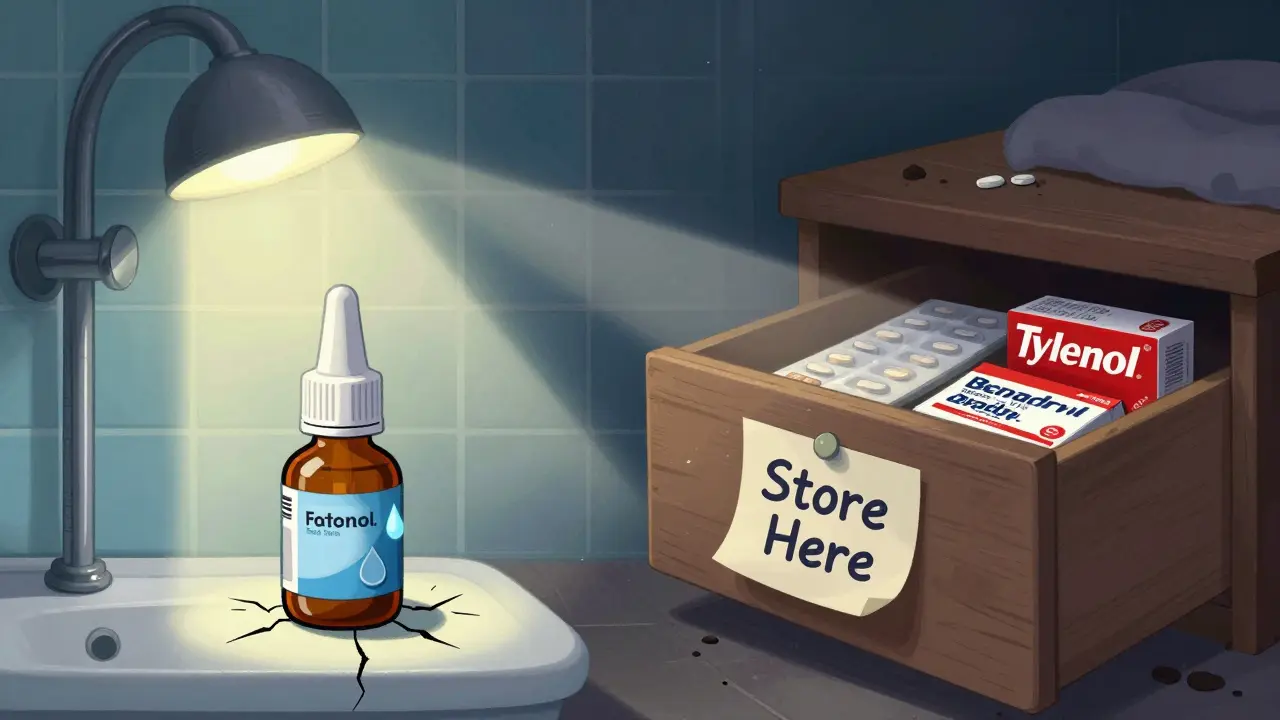
The Safe Ones - You Can Probably Keep Them
Now for the good news. Many common OTC meds are extremely stable:
- Acetaminophen (Tylenol) - FDA data shows it retains therapeutic levels for 7-12 years when stored properly.
- Ibuprofen (Advil, Motrin) - Still effective 10+ years out, even in old bottles.
- Diphenhydramine (Benadryl) - Used for allergies or sleep. Retains over 85% potency for 8-10 years.
- Antacids (Tums, Pepcid) - Chemically stable. No risk of degradation.
- Topical creams (hydrocortisone, antifungal) - As long as they haven’t changed color, smell, or texture, they’re likely fine for 1-2 years past expiration.
These aren’t edge cases. They’re the most common meds in American households. If you’ve got a 5-year-old bottle of Tylenol in a cool, dark drawer? It’s probably still working.
How to Tell If Your Meds Are Still Good
Expiration date isn’t the only clue. Look, smell, and feel your meds before using them.
Discard if you see:
- Discoloration - White pills turning yellow or brown
- Crumbling or cracking - Tablets that fall apart when you touch them
- Strange odor - A vinegar-like, chemical, or musty smell
- Cloudiness or particles - In liquids or eye drops
- Swelling or leakage - From blister packs or bottles
A 2023 Medscape survey found that 94% of pharmacists say visual changes are the best real-world indicator of degradation. If it looks off, throw it out. No second guesses.
And if you’re unsure? Don’t guess. Talk to your pharmacist. They’ve seen thousands of bottles. They can tell you if it’s worth keeping.
What to Do With Expired or Unwanted Meds
Don’t flush them. Don’t toss them in the trash. Don’t burn them.
The safest way to dispose of meds is through a drug take-back program. Walgreens, CVS, and many police stations have kiosks where you can drop off expired or unused pills for free. In 2023, over 9,000 Walgreens locations in the U.S. offered this service.
If no take-back is nearby, mix pills with coffee grounds or cat litter in a sealed bag, then throw them in the trash. This makes them unappealing to kids or pets and prevents them from leaching into water supplies.
And if you’re keeping meds past expiration? Write the date you opened them on the bottle. That’s more useful than the printed expiration date for things like eye drops or liquid meds.
Why the Confusion Exists
Why does the FDA warn against expired meds if most are safe? Because they have to protect everyone - including the people who store pills in hot cars, leave them in humid bathrooms, or use them after 15 years without checking for damage.
They can’t say, "Some are fine, but not these ones." Too risky. Too confusing. So they give one simple rule: don’t use expired meds.
But as a smart consumer, you can do better. You can learn the difference. You can store your meds properly. You can recognize when something’s gone bad.
The FDA’s own scientists admit it. Dr. Lee Cantrell, who studied aspirin stability for 30 years, said: "The evidence clearly shows most medications remain safe and effective for years beyond labeled dates." But he also added: "That doesn’t mean you should use insulin from 2012."
It’s not about blindly trusting dates. It’s about understanding your meds - and making smart choices.
What’s Changing
There’s movement toward smarter expiration labeling. The FDA is testing a new system that would group meds by stability type - not one date for everything. In 2023, they released draft guidance proposing risk-based expiration dates.
The American Pharmacists Association launched "Smart Expiry" - QR codes on packaging that link to specific storage and expiration advice based on the drug’s chemistry.
And in Europe, some countries already allow solid OTC meds to be used up to 12 months past expiration if stored correctly.
This isn’t about cutting corners. It’s about reducing waste. The U.S. throws away $765 million in usable OTC meds every year. That’s enough to pay for millions of prescriptions.
Change is coming. But until then - know your meds. Know your storage. Know the risks.
Is it safe to take expired Tylenol?
Yes, if it’s been stored properly - in a cool, dry place away from light - and shows no signs of damage like discoloration, crumbling, or odd smell. Acetaminophen tablets can retain 85-90% of their potency for 7-12 years past the printed expiration date, according to FDA stability data. But if the bottle was left in a hot car or bathroom, it’s better to replace it.
Can expired ibuprofen still work?
Absolutely. Ibuprofen is one of the most stable OTC medications. Studies show it maintains therapeutic levels for over 10 years after expiration when kept in a dry, dark place. Many people use 5- to 8-year-old bottles without issue. Just check for physical changes - if the pills are cracked, chalky, or smell off, don’t use them.
What happens if I take expired allergy medicine?
If it’s a solid antihistamine like diphenhydramine (Benadryl), you’re likely fine. It retains over 85% potency for 8-10 years. The worst that might happen is it doesn’t work as well - you might still feel itchy or sneezy. But if it’s a liquid allergy spray or eye drop, avoid it. Those can grow bacteria or lose effectiveness quickly, increasing risk of infection or poor symptom control.
Why do pharmacies throw away expired meds?
Pharmacies follow manufacturer guidelines and regulatory rules that require disposal after the expiration date. It’s a legal and liability issue, not always a science-based one. They’re not trained to judge individual pill stability. Plus, most customers expect them to replace expired meds - so replacing them is part of customer service. But that doesn’t mean those meds are unsafe - just that the pharmacy can’t legally sell or dispense them.
Should I keep expired EpiPens as backup?
No. EpiPens lose potency rapidly after expiration - sometimes by 25-50% within just a few months. In a life-threatening allergic reaction, that drop in dose could mean the difference between survival and death. Never rely on an expired EpiPen. Always carry a current one. If you’re worried about cost, ask your doctor about generic epinephrine auto-injectors or patient assistance programs.
Do vitamins expire? Are they dangerous after the date?
Vitamins don’t become toxic after expiration, but they do lose potency over time. A 2-year-old multivitamin might only give you 70% of the listed vitamin C or B12. That’s not dangerous - just ineffective. Store them in a cool, dry place. If they’re discolored, crumbly, or smell odd, toss them. But if they look fine, they’re probably still helping - just not as much as the label claims.
If you’re managing a medicine cabinet, treat it like a toolkit - not a time capsule. Know what’s safe, know what’s risky, and know how to store it right. Your wallet - and your health - will thank you.
Takeysha Turnquest
December 17, 2025 AT 13:34Stop the waste.
Jedidiah Massey
December 18, 2025 AT 06:39Alex Curran
December 18, 2025 AT 14:50Sarah McQuillan
December 19, 2025 AT 00:47Dominic Suyo
December 19, 2025 AT 05:24Janelle Moore
December 19, 2025 AT 15:01Henry Marcus
December 20, 2025 AT 14:08Chris porto
December 21, 2025 AT 11:51Meenakshi Jaiswal
December 22, 2025 AT 12:42holly Sinclair
December 22, 2025 AT 15:39Monte Pareek
December 23, 2025 AT 08:42