
Palliative Medication Side Effect Calculator
This calculator helps you understand potential side effects of common palliative care medications based on dose and duration. Always consult your healthcare team before making medication changes.
Medication Selection
Key Monitoring Guidelines
Critical Monitoring Indicators
| Parameter | Normal Range | Warning Sign |
|---|---|---|
| Alertness | RASS -2 to +2 | RASS < -2 for >2 hours |
| Respiratory Rate | 12-20/min | Rate < 8/min |
| Heart Rate | 60-100/min | Rate > 120/min or < 50/min |
- Difficulty waking for meals
- Confusion lasting >4 hours
- Increased breathlessness at rest
- Severe dizziness or falls
Results & Recommendations
Potential Side Effects
Monitoring Plan
When someone is living with a serious illness, the goal isn’t just to extend life-it’s to make the life they have as comfortable as possible. That’s where palliative care comes in. It’s not about giving up. It’s about fighting for quality. Whether you’re managing pain from cancer, breathlessness from COPD, or nausea from advanced heart failure, the right care can turn suffering into peace. But every medicine that helps can also hurt. Too much painkiller can make you drowsy. Too much anxiety med can leave you confused. Finding the balance isn’t guesswork-it’s a science, and it’s personal.
What’s the Difference Between Palliative and Hospice Care?
Palliative care is for anyone with a serious illness, at any stage. You can get it while still getting chemo, surgery, or dialysis. It’s added on, not a replacement. Hospice care is a type of palliative care, but only for people with a prognosis of six months or less who’ve chosen to stop curative treatments. It’s not about giving up hope-it’s about shifting the focus to comfort, dignity, and being surrounded by loved ones.
Both use the same tools: medications, therapies, and conversations. But hospice is more structured. It’s often delivered at home or in a dedicated facility, with a team that includes nurses, social workers, chaplains, and volunteers. Palliative care teams are usually in hospitals or clinics, working alongside your primary doctor.
How Symptoms Are Assessed-Not Just Asked About
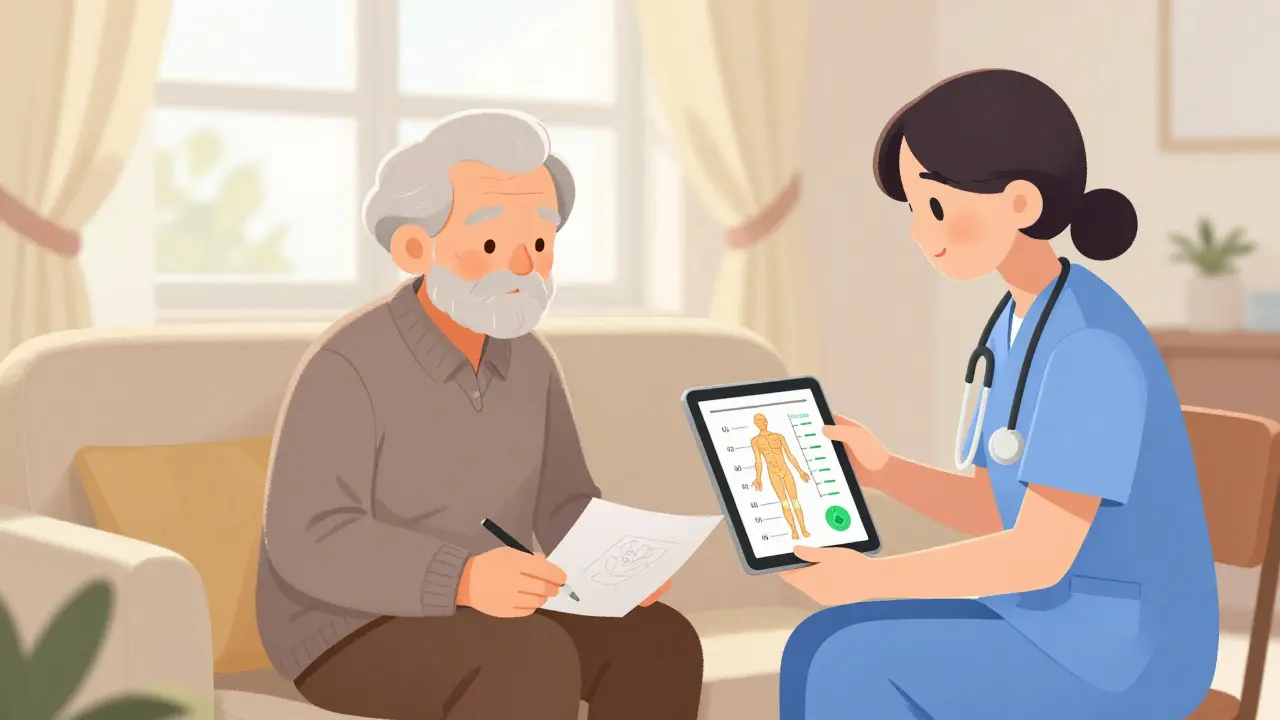
Doctors don’t just ask, “Are you in pain?” That’s not enough. A good palliative team uses tools that map exactly what’s happening. For pain, they use a 0-10 scale, but they also ask: Where is it? Does it spread? Is it sharp, dull, burning? When does it get worse? What makes it better? They even use body diagrams-patients point to where it hurts, and the team charts it. One study showed this method improved communication by 31%.
For breathlessness, they don’t just give oxygen. They check if it’s anxiety, fluid buildup, or airway tightness. For nausea, they look at whether it’s from meds, bowel blockage, or metabolic changes. Delirium? They use the CAM-ICU tool every 12 hours and RASS scores every 4 hours to track alertness. These aren’t paperwork exercises. They’re lifelines. Without them, you risk under-treating pain or over-dosing on sedatives.
The Medications That Work-And the Ones That Don’t
Opioids like morphine and oxycodone are first-line for pain and severe breathlessness. They’re effective. But they’re not one-size-fits-all. In people with kidney problems, morphine can build up and cause confusion. Fentanyl patches are safer here. Dosing isn’t based on weight alone-it’s based on how the body is changing.
For nausea, ondansetron works for chemo-induced vomiting. But if it’s from a bowel blockage, corticosteroids like dexamethasone are better. Octreotide? Studies show it has limited benefit and costs way more. For anxiety, lorazepam is common-0.5 mg every 30 minutes as needed. But it’s given carefully. Too much, and you’re groggy all day.
For delirium, haloperidol is the go-to, but only if the heart is stable. EKGs are checked before starting, and once comfort is reached, the drug is tapered. Antipsychotics aren’t for long-term use-they’re for calming acute distress.
And then there’s the new stuff. Cannabinoids are being used in some places, like British Columbia. One study found they cut opioid needs by 37%, but 29% of patients got dizzy. That’s a trade-off some families are willing to make.
Side Effects Are Not Failures-They’re Signals
When a patient gets too sleepy, it’s not because the doctor gave too much. It’s because the pain was worse than they let on. When someone gets confused, it’s not always dementia-it’s opioid toxicity, or low sodium, or a urinary infection. The key is to look at the whole picture.
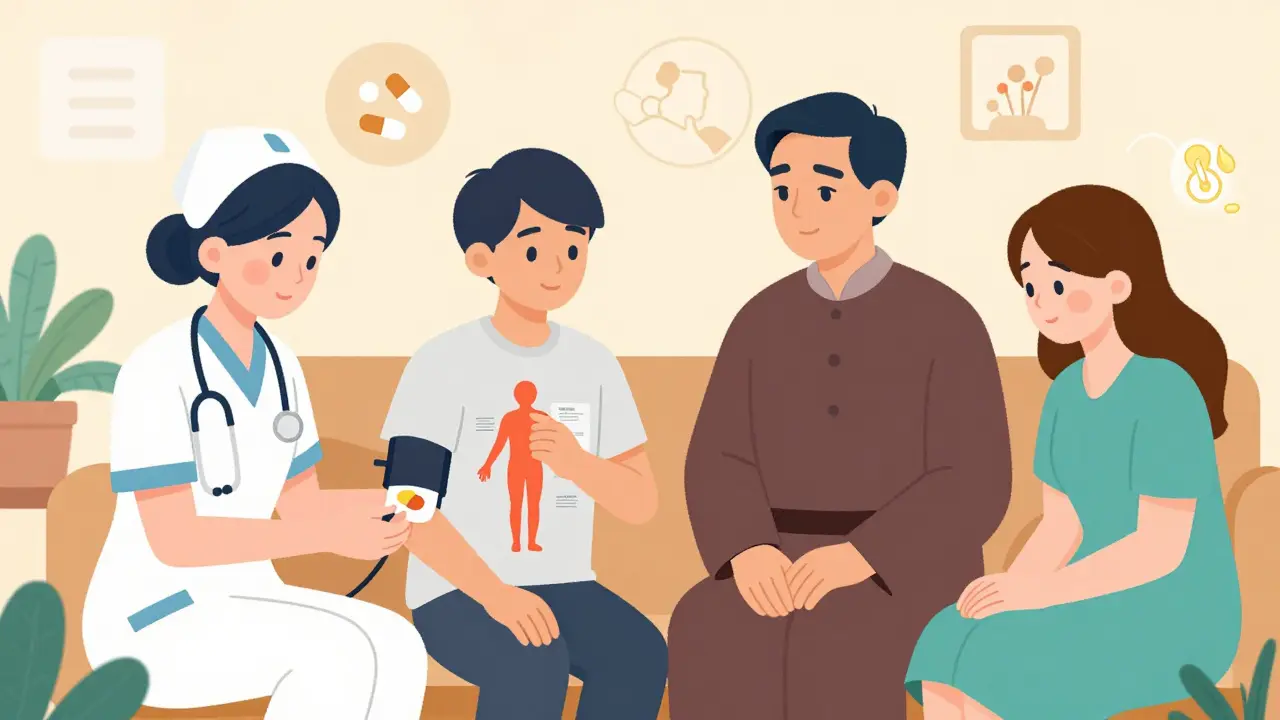
Over-sedation is one of the biggest fears families have. But it’s preventable. At Penn, nurses document every dose and every assessment. If a patient’s RASS score drops below -2 for more than two hours, the team adjusts. That’s how they cut breakthrough symptoms by 52%. It’s not about being perfect-it’s about being responsive.
One nurse in Fraser Health told me: “I used to think giving more morphine meant I was failing. Now I know-it means I listened.”
The Hidden Suffering: Anxiety, Fear, and Existential Pain
Physical pain is only part of it. Many patients say their worst suffering isn’t the ache-it’s the fear. Fear of being a burden. Fear of dying alone. Fear that no one understands. Dr. Harvey Chochinov’s research shows that when this kind of distress isn’t addressed, physical symptoms get worse. Pain feels sharper. Breathlessness feels more terrifying.
That’s why palliative teams include social workers and chaplains. They don’t pray with you unless you ask. They sit. They listen. They ask: “What’s the hardest part of all this?” Sometimes the answer is, “I don’t want to be forgotten.” That’s not a medical problem. But it’s a care problem.
One woman in her 70s with pancreatic cancer told her chaplain, “I just want to know my grandkids will be okay.” That wasn’t a question for a doctor. It was a need for a conversation. Two weeks later, the family gathered for a video call. She held up a drawing her granddaughter made. She smiled. The morphine dose stayed the same. But she slept better that night.
What Families Need to Know
Families often resist strong pain meds because they think it means “giving up.” But pain isn’t a moral test. Dying in discomfort isn’t noble-it’s preventable. The NCHPC guidelines say everyone has the right to live-and die-free of pain, with dignity.
Ask your team: “What’s the plan if the pain comes back?” “What side effects should I watch for?” “When should we call for help?” Don’t wait until it’s an emergency. Set up a clear signal: “If she’s sleeping more than 18 hours a day, or can’t stay awake for meals, call the nurse.”
And don’t be afraid to ask for a second opinion. Not all palliative care teams are the same. Some use detailed protocols. Others rely on experience. You have the right to know what they’re using and why.
Getting Started: What You Can Do Today
- Write down all symptoms-not just pain. Include fatigue, appetite, mood, sleep.
- Ask for a palliative care consult, even if you’re still getting treatment.
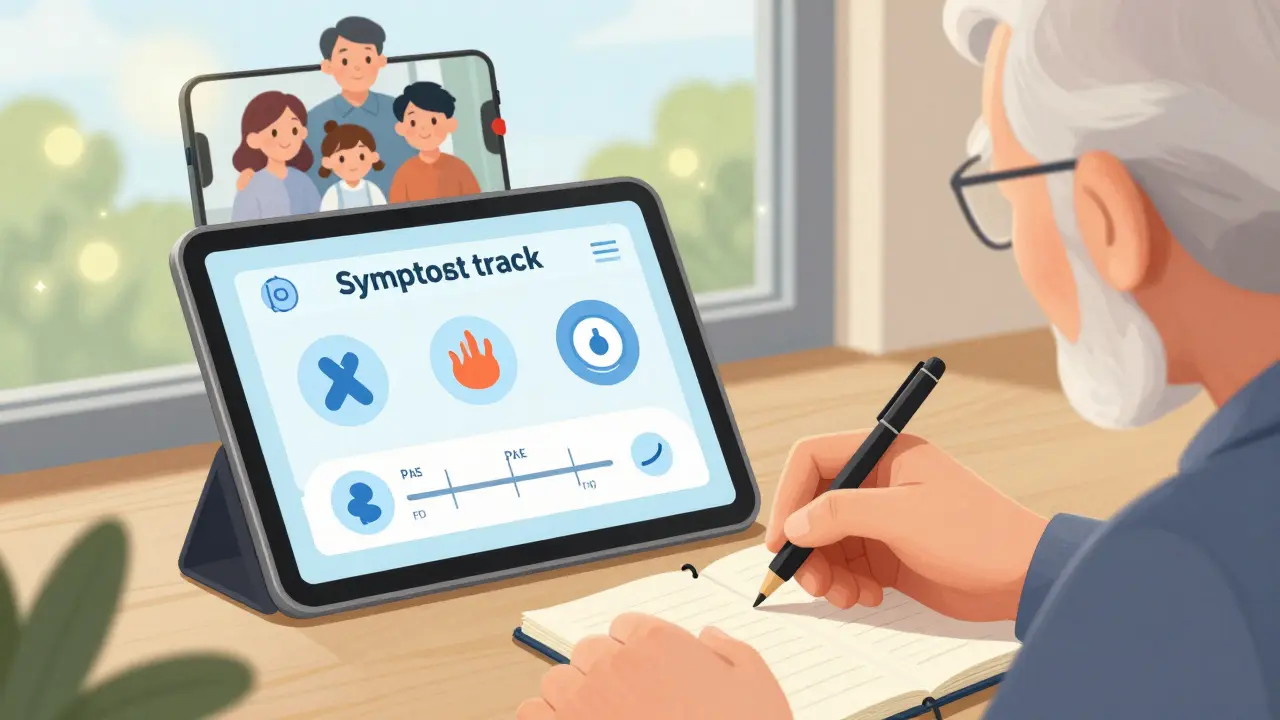
- Use the 0-10 pain scale daily. Track it in a notebook or phone app.
- Know the names of the meds you’re on-and why.
- Designate one person to be the main point of contact with the care team.
- Ask: “What’s the goal of this medication? To reduce pain? To calm anxiety? To help me sleep?”
You don’t need to be an expert. You just need to ask the right questions. And if your team doesn’t use structured assessments? That’s a red flag.
What’s Changing in 2026
Palliative care is evolving. Digital symptom trackers are now being tested in hospitals-patients log their pain or breathlessness on a tablet each morning. Early results show 18% better control. Tele-palliative care is expanding, especially in rural areas where 55% of counties still have no specialist. By 2027, it’s expected to reach 40% of those patients.
The National Coalition for Hospice and Palliative Care is updating its guidelines in 2025. The new version will include more on non-drug approaches-music therapy, massage, guided breathing-and how to measure their impact.
But the core hasn’t changed. It’s still about listening. About adjusting. About knowing that sometimes, the most powerful medicine is simply being there.
Is palliative care only for people who are dying?
No. Palliative care is for anyone with a serious illness-whether they’re still getting treatment or not. You can have it while undergoing chemotherapy, dialysis, or surgery. It’s about improving quality of life, not ending treatment. Hospice care is a subset of palliative care and is for people with a prognosis of six months or less who have chosen to stop curative treatments.
Do pain medications in palliative care make people addicted?
Addiction is extremely rare in palliative care. People aren’t using opioids for pleasure-they’re using them to relieve real, severe pain. The goal is comfort, not euphoria. Doctors titrate doses carefully, monitor for side effects, and adjust as needed. In fact, studies show that when pain is properly managed, the risk of misuse drops significantly.
Can I still get palliative care if I’m not in a hospital?
Yes. Palliative care is available at home, in nursing homes, outpatient clinics, and hospice facilities. Many programs send nurses and social workers to visit patients in their homes. Telehealth visits are also growing, especially in rural areas where specialists are hard to find. You don’t need to be in a hospital to get expert symptom management.
What if my family doesn’t want me to take strong pain meds?
It’s common for families to worry about sedation or addiction. But pain that’s left untreated can cause more harm-sleeplessness, confusion, anxiety, even faster decline. The care team can help explain the goals: comfort, not intoxication. They can start low and go slow, and involve the family in setting clear signs for when to call for help. Sometimes, showing them a symptom log or letting them sit in on a consultation helps ease fears.
How do I know if my palliative care team is doing a good job?
Look for three things: Do they ask detailed questions about your symptoms-not just “Are you in pain?” but where, how, when? Do they document changes and adjust meds based on your feedback? Do they involve you and your family in decisions? If they’re using tools like the 0-10 pain scale, RASS for agitation, or body diagrams, that’s a good sign. If they never ask about anxiety, spiritual concerns, or family stress, that’s a red flag.
What to Do If Things Aren’t Working
If your symptoms aren’t improving, or side effects are worse than the illness, speak up. Ask: “Is there another option?” “Can we try a different medication?” “Can we get a second opinion?”
Some people need a switch from morphine to hydromorphone. Others need a different route-patches instead of pills, or a pump that delivers small doses continuously. If your team doesn’t offer alternatives, it’s time to ask for a referral to a specialist center.
And if you’re feeling unheard? That’s not normal. Palliative care should feel like a partnership. You’re not a patient. You’re the reason the team is there.
Jason Shriner
January 11, 2026 AT 04:42Jennifer Littler
January 12, 2026 AT 02:16Matthew Miller
January 13, 2026 AT 08:59Madhav Malhotra
January 13, 2026 AT 14:16Sean Feng
January 15, 2026 AT 05:00Priscilla Kraft
January 16, 2026 AT 13:32Vincent Clarizio
January 16, 2026 AT 18:49Sam Davies
January 17, 2026 AT 12:21Christian Basel
January 19, 2026 AT 11:12Alex Smith
January 20, 2026 AT 02:26Roshan Joy
January 20, 2026 AT 21:11Adewumi Gbotemi
January 21, 2026 AT 01:51Michael Patterson
January 21, 2026 AT 12:18Priya Patel
January 23, 2026 AT 09:39