
What Is Pediatric Sleep Apnea?
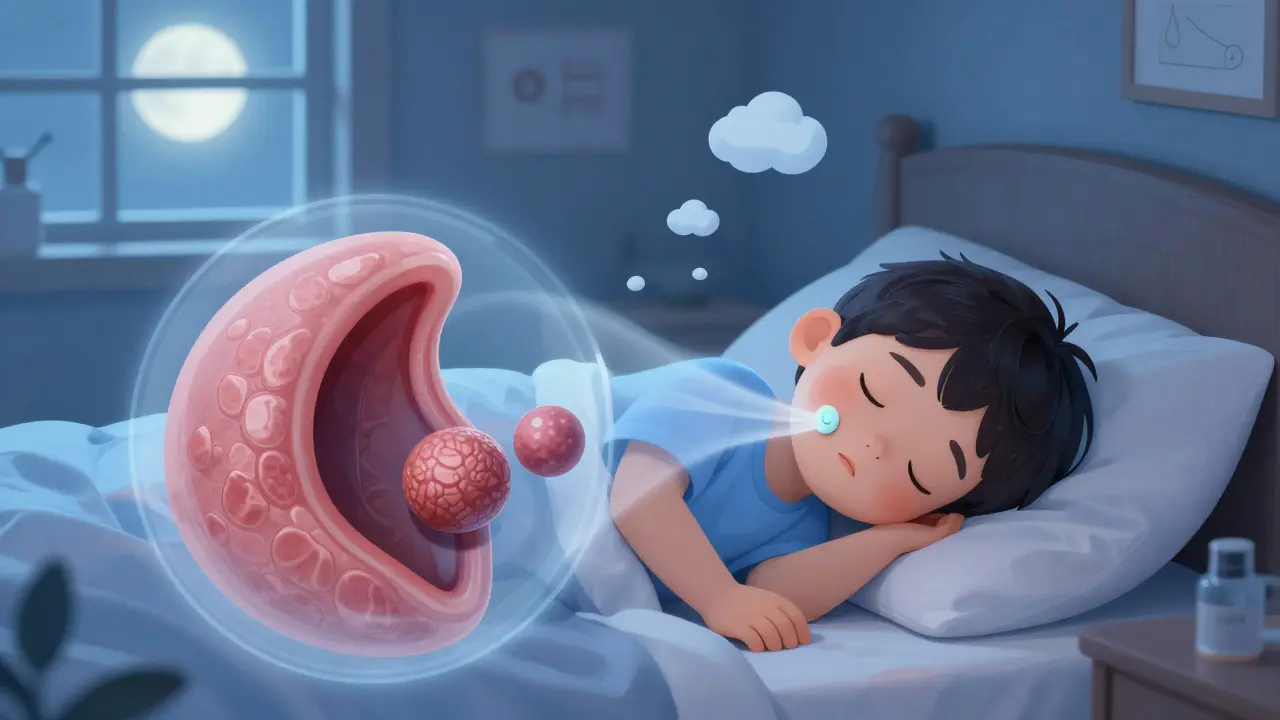
When a child stops breathing briefly during sleep-sometimes dozens of times an hour-it’s not just snoring. It’s pediatric obstructive sleep apnea (OSA), a serious but treatable condition. Unlike adult sleep apnea, which often links to weight gain, in kids it’s usually caused by physical blockages: enlarged tonsils and adenoids. These tissues, meant to protect against infection, can grow too big for a child’s small airway, especially between ages 2 and 6. That’s when breathing pauses happen, oxygen drops, and sleep shatters-often without the child waking up fully.
Parents might notice their child snoring loudly, breathing through the mouth, or gasping for air at night. Daytime signs include hyperactivity, trouble focusing in school, bedwetting, or even slow growth. Left untreated, this isn’t just about tiredness. Chronic low oxygen and fragmented sleep can affect brain development, heart health, and even how tall a child grows. The American Thoracic Society says 1 to 5% of all children have this condition. That’s one in every classroom.
Why Tonsils and Adenoids Are the Main Culprits
Tonsils sit at the back of the throat. Adenoids sit higher, behind the nose. Both are part of the immune system, helping fight germs. But in young children, they’re proportionally huge compared to the airway. When they swell from repeated infections or just natural growth, they crowd the space where air should flow.
It’s not just one or the other. Research from the University of Chicago shows that removing only the tonsils or only the adenoids often isn’t enough. Both need to go because the obstruction happens in multiple places. Dr. David Gozal, a leading expert, found that kids who had just one removed were far more likely to have symptoms come back. The airway is like a tunnel-block it at the throat or the nose, and airflow stops.
Doctors grade tonsil size from 1 to 4. Grade 3 or 4 means the tonsils are touching or nearly touching each other in the back of the throat. That’s a red flag for sleep apnea. In these cases, surgery isn’t just an option-it’s the first step. The American Academy of Pediatrics updated its guidelines in 2023 to make this clear: if your child has moderate to severe sleep apnea and large tonsils/adenoids, adenotonsillectomy is the best place to start.
Adenotonsillectomy: The Most Common Fix
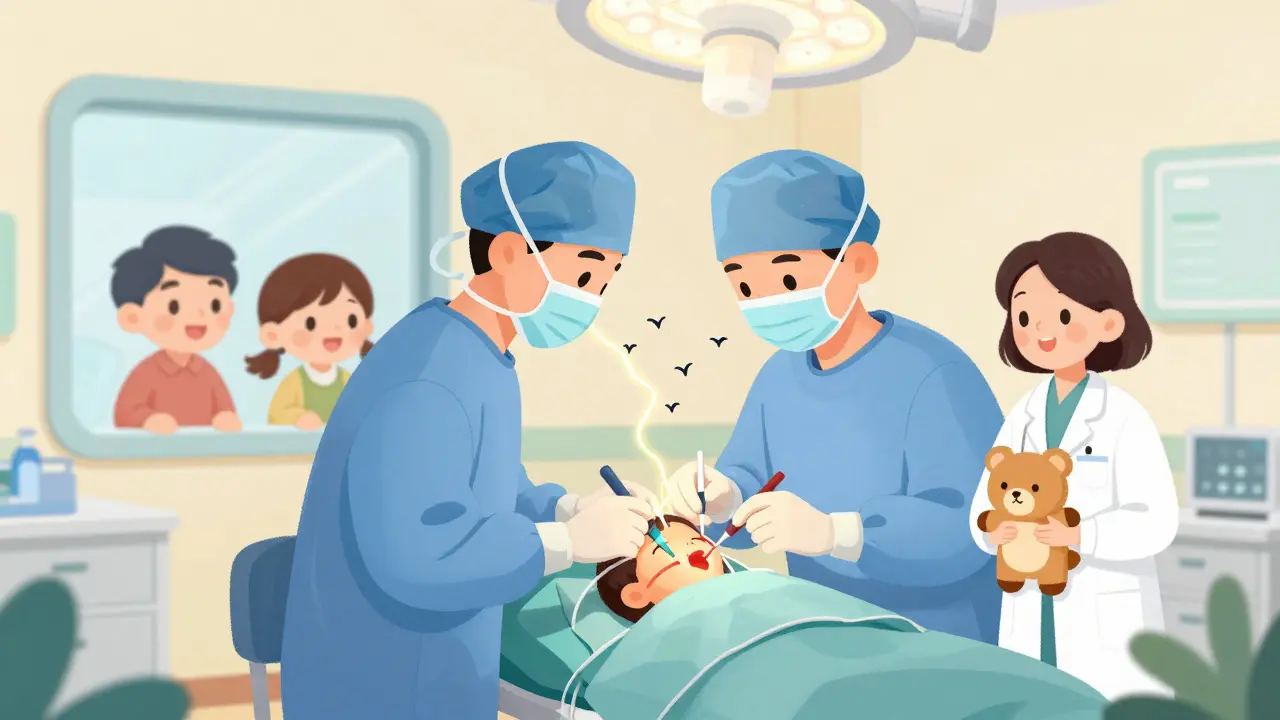
Adenotonsillectomy means removing both the tonsils and adenoids in one surgery under general anesthesia. It’s one of the most common childhood operations in the U.S. and New Zealand. Success rates? Between 70% and 80% in otherwise healthy kids with no other medical issues. That’s a cure for most.
Recovery takes about a week to two. Kids need soft foods-ice cream, yogurt, applesauce-and lots of rest. Pain is normal, but it’s usually manageable with acetaminophen. Some parents worry about bleeding after surgery. It happens in 1 to 3% of cases. Most are minor and stop on their own. Serious bleeding needing a return to the hospital is rare-under 0.5%.
There’s a newer technique gaining traction at places like Yale Medicine: partial tonsillectomy. Instead of removing the whole tonsil, surgeons shave off the bulk of the tissue, leaving a thin layer to reduce bleeding and pain. Recovery is 30% faster. But it’s not available everywhere. Most hospitals still do the full removal. The key point? If your child’s sleep apnea is caused by enlarged tonsils and adenoids, this surgery fixes it in most cases.
When CPAP Becomes the Next Step
Not every child gets better after surgery. About 20 to 30% still have sleep apnea afterward. Why? Maybe they’re overweight. Maybe they have a jaw structure that’s naturally narrow. Or maybe they have a neuromuscular condition like Down syndrome. In these cases, CPAP-continuous positive airway pressure-is the next move.
CPAP works by blowing gentle air through a mask worn during sleep. The air pressure keeps the throat open so the child can breathe without pauses. For kids, pressure settings are lower than for adults-usually between 5 and 12 cm H2O. The exact number is found during a follow-up sleep study called a titration study, where doctors adjust the pressure until all breathing pauses disappear.
Success rates? When used correctly, CPAP works 85 to 95% of the time. That’s better than surgery for kids with obesity or craniofacial conditions. But here’s the catch: kids hate wearing masks. Studies from Children’s National Hospital show 30 to 50% of children refuse to use CPAP regularly. Some feel claustrophobic. Others get skin sores. A few just won’t let their parents put the mask on.
That’s why fitting matters. Pediatric CPAP masks are smaller, softer, and come in fun designs-animals, superheroes. Some kids do better with nasal pillows instead of full-face masks. And it takes patience. It can take weeks for a child to adjust. Parents need to make it part of the bedtime routine, like brushing teeth. Refitting is needed every 6 to 12 months as the child grows. The Mayo Clinic says: “Proper fitting makes all the difference.”
Other Treatments: Steroids, Expansions, and Drugs
Surgery and CPAP aren’t the only options. For mild cases, doctors sometimes start with nasal steroids. Fluticasone, delivered through a spray, reduces swelling in the adenoids. It takes 3 to 6 months to work, but it’s non-invasive. Studies show 30 to 50% improvement in breathing for kids with mild OSA.
Another option is rapid maxillary expansion. This is an orthodontic device worn at night that slowly widens the upper jaw. It’s not for everyone-only kids with a narrow palate. But for those who qualify, it can improve airflow by 60 to 70%. The process takes 6 to 12 months. It’s not a quick fix, but it avoids surgery and can help with both breathing and future dental alignment.
There’s also montelukast, a daily pill used for asthma. It blocks inflammatory chemicals linked to tonsil growth. Some studies show it reduces snoring and apnea events in mild cases. But it’s not FDA-approved for this use in kids. It’s used off-label, and results take months. It’s usually tried when parents want to delay surgery.
And now, a new frontier: hypoglossal nerve stimulation. It’s a small device implanted in the chest that gently stimulates the tongue muscle during sleep to keep the airway open. It got FDA approval for kids in 2022, but it’s only used in rare, severe cases where everything else failed. It’s expensive and requires a team of specialists. Not something you’ll find at your local clinic.
What Happens After Treatment?
Even after surgery or starting CPAP, follow-up is critical. The American Thoracic Society recommends a repeat sleep study 2 to 3 months after adenotonsillectomy. Why? Because sometimes the apnea doesn’t fully resolve. Maybe the adenoids grew back. Maybe the child has another issue, like obesity, that wasn’t addressed.
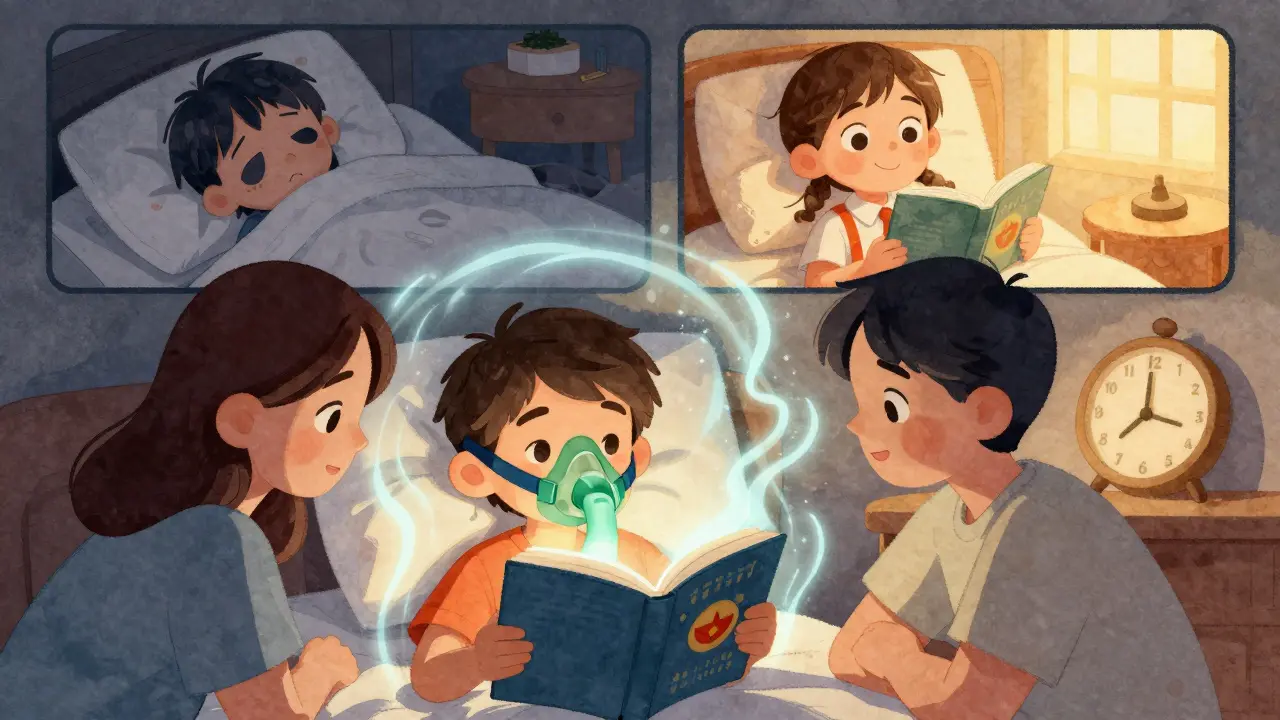
For kids on CPAP, doctors check in every few months. They look at mask fit, usage data from the machine, and how the child is doing during the day. Are they more alert? Less irritable? Sleeping through the night? Those are the real signs of success.
And yes-symptoms can come back. If a child gains weight, gets a bad cold, or develops new nasal congestion, the airway can get blocked again. That’s why ongoing monitoring matters. Sleep apnea isn’t always a one-time fix. It’s a condition that needs watching, especially as kids grow.
Choosing the Right Path for Your Child
So what do you do if you suspect your child has sleep apnea? First, talk to your pediatrician. They’ll ask about snoring, breathing pauses, daytime behavior, and growth. If it sounds like OSA, they’ll refer you to a pediatric sleep specialist.
The specialist will likely order a sleep study-polysomnography. This overnight test tracks brain waves, heart rate, oxygen levels, and breathing patterns. It’s the only way to confirm the diagnosis and measure how bad it is.
From there, the path is usually clear:
- If tonsils and adenoids are large and your child is otherwise healthy → adenotonsillectomy is the first choice.
- If your child is overweight, has Down syndrome, or has facial differences → CPAP is often better.
- If symptoms are mild and you want to avoid surgery → try nasal steroids for 3 to 6 months.
- If the upper jaw is narrow → ask about rapid maxillary expansion.
There’s no one-size-fits-all. But the data is clear: for most kids with enlarged tonsils and adenoids, removing them works. For others, CPAP saves lives. The goal isn’t just to stop snoring. It’s to give your child the deep, restful sleep they need to grow, learn, and thrive.
What Parents Need to Know
You’re not alone. Thousands of families face this. The key is to act early. Don’t wait for your child to “grow out of it.” Sleep apnea doesn’t resolve on its own. It gets worse.
Keep a sleep diary: note snoring, mouth breathing, night sweats, bedwetting, and daytime tiredness. Bring it to the doctor. Ask about a sleep study. Don’t accept “it’s just a phase.”
And if your child gets CPAP? Be patient. Try different masks. Make it part of the routine. Celebrate small wins-like wearing the mask for 30 minutes. Progress isn’t overnight. But the payoff? A child who wakes up rested, focused, and full of energy.
And if surgery is recommended? Ask about partial tonsillectomy. Ask about recovery time. Ask about follow-up sleep studies. You have the right to understand every step.
Your child’s sleep isn’t just about rest. It’s about their future.
Is pediatric sleep apnea common?
Yes. About 1 to 5% of children have obstructive sleep apnea, with the highest rates between ages 2 and 6. It’s more common than many parents realize, especially in kids with enlarged tonsils or adenoids.
Can kids outgrow sleep apnea without treatment?
Sometimes, but not always. In mild cases, symptoms may improve as a child grows and the airway expands. But if the cause is enlarged tonsils or adenoids, the problem usually gets worse without intervention. Untreated sleep apnea can lead to learning problems, behavioral issues, and even heart strain.
Is adenotonsillectomy safe for young children?
Yes. It’s one of the most common pediatric surgeries and is considered very safe when done by experienced surgeons. Risks include bleeding (1-3%) and breathing problems during recovery (under 1%), but serious complications are rare. Most children recover fully within two weeks.
How long does CPAP take to work in children?
CPAP starts working the first night if the pressure is set correctly. But getting a child to wear it consistently takes time-often 2 to 8 weeks. Success depends on mask comfort, parental support, and making it part of the nightly routine. Many children improve dramatically in energy and focus within a few weeks of regular use.
Do I need a sleep study to diagnose my child’s sleep apnea?
Yes. While symptoms like snoring and mouth breathing suggest sleep apnea, only a sleep study (polysomnography) can confirm it and measure how severe it is. This test tracks breathing, oxygen levels, brain activity, and heart rate overnight. It’s the gold standard for diagnosis and helps guide treatment decisions.
What if my child still has sleep apnea after tonsil surgery?
It’s not uncommon. About 20-30% of children still have symptoms after surgery, especially if they’re overweight, have a small jaw, or have other medical conditions. The next step is usually a repeat sleep study and starting CPAP. In some cases, other treatments like orthodontic expansion or medications may be added.
Malik Ronquillo
January 21, 2026 AT 09:05Lana Kabulova
January 22, 2026 AT 16:27Liberty C
January 22, 2026 AT 19:37shivani acharya
January 23, 2026 AT 23:33Alec Amiri
January 24, 2026 AT 15:44Ryan Riesterer
January 24, 2026 AT 23:04Philip House
January 25, 2026 AT 06:07Margaret Khaemba
January 25, 2026 AT 17:53Akriti Jain
January 27, 2026 AT 09:28