
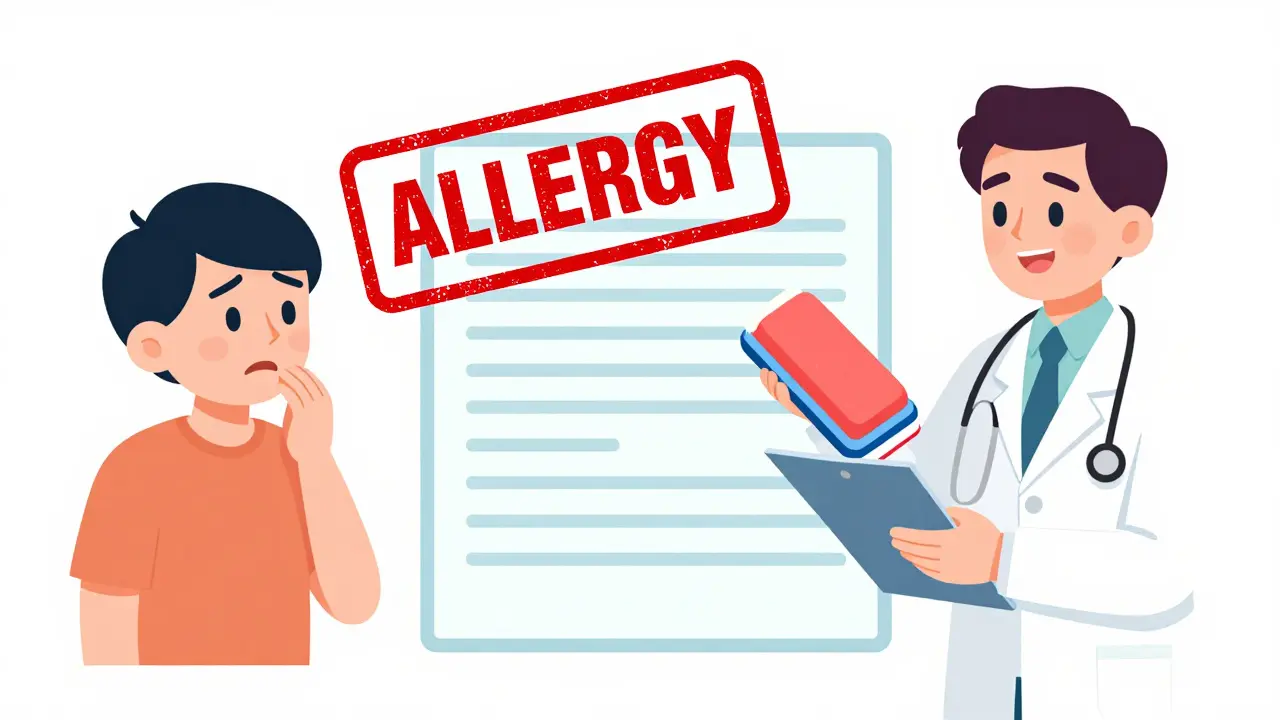
Understanding whether you truly have a penicillin allergy is an adverse immune response to penicillin-based antibiotics is about more than just updating a medical chart. It is about ensuring you get the most effective treatment without the side effects associated with "backup" antibiotics.
The Difference Between a True Allergy and a Side Effect
Many people confuse a side effect with an allergic reaction. If you took a penicillin-type drug and felt nauseous, got a headache, or had a stomach ache, you weren't having an allergic reaction. Those are known as intolerances. A true allergy involves your immune system attacking the drug, which can range from a mild itch to a life-threatening emergency.
Medical experts generally split reactions into two main windows: immediate and delayed. Immediate reactions happen within an hour of taking the drug. These are often IgE-mediated, meaning your body produces antibodies that trigger a massive histamine release. This is where anaphylaxis-a severe, whole-body reaction-can occur. You might feel your throat swelling, struggle to breathe, or feel faint. This is a medical emergency that requires epinephrine immediately.
Delayed reactions are a different beast. They show up more than an hour after the dose, sometimes days later. You might see a maculopapular rash (small red bumps) appearing 72 to 96 hours after the drug. In rare and severe cases, this can escalate to Stevens-Johnson Syndrome (SJS) or Toxic Epidermal Necrolysis (TEN), where the skin blisters and peels. Because these don't happen instantly, they are often missed or misdiagnosed as something else.
How Doctors Gauge Your Risk Level
Not everyone who reports an allergy needs the same level of caution. Modern medicine uses risk stratification to decide if you can take a beta-lactam antibiotic (the family penicillin belongs to) or if you need a full specialist workup first.
| Risk Level | Common Symptoms | Safety Action |
|---|---|---|
| Low Risk | Nausea, mild rash (5+ years ago), or unknown childhood reaction | Often safe for first-gen cephalosporins (e.g., cefazolin) |
| Moderate Risk | Hives, facial swelling, or respiratory issues within 5 years | Requires allergy testing before use |
| High Risk | Recent anaphylaxis or severe skin peeling (SJS/TEN) | Referral to an allergist; avoid beta-lactams in clinics |
If you fall into the low-risk category, you might be surprised to learn that many doctors now believe you can safely receive certain related antibiotics without any extra testing. However, if you've had a reaction that made your throat close or caused a severe fever and rash, you are in the high-risk zone and should never try these drugs without a doctor's supervision.

The Path to "De-Labeling": Getting Rid of the Allergy Tag
Getting a penicillin allergy removed from your record-called "de-labeling"-can open up better treatment options. The process usually follows a strict safety protocol to ensure you don't have a reaction during the test itself.
- The Skin Test: An allergist uses specific markers (major and minor determinants) to see if your skin reacts to the drug. This is a quick way to check for those IgE antibodies.
- The Oral Challenge: If the skin test is negative, the next step is a supervised dose of a drug like amoxicillin (usually 250 mg). You'll be watched for about an hour.
- The Verdict: If both the skin test and the oral dose result in no reaction, your risk of a future severe reaction is effectively zero-the same as someone who never reported an allergy.
It's worth noting that our bodies change. About 80% of people with an IgE-mediated allergy actually lose that sensitivity after 10 years without exposure. So, a reaction you had as a toddler might be completely irrelevant by the time you're an adult.
Why This Matters for Your Long-Term Health
You might think, "Who cares? I'll just take a different antibiotic." But the problem is that when doctors avoid penicillin, they often switch to "broad-spectrum" antibiotics. These are the "heavy hitters" that kill a wider range of bacteria, including the good ones in your gut.
This creates two major problems. First, using these powerful drugs more often contributes to antimicrobial resistance-essentially training bacteria to survive our best medicines. Second, it increases your risk of getting Clostridioides difficile (C. diff), a nasty gut infection that causes severe diarrhea and inflammation. Research shows that people labeled with a penicillin allergy have significantly higher rates of MRSA and C. diff infections compared to those without the label.
From a systemic view, this mislabeling is incredibly expensive. The CDC estimates that properly evaluating these allergies could save the U.S. healthcare system about $1.2 billion every year by reducing the need for expensive alternative drugs and treating the complications they cause.

Practical Safety Steps for Patients
Whether you have a confirmed allergy or just a suspicion, you need to be your own best advocate in a hospital or clinic. Errors happen, and the most dangerous reaction, anaphylaxis, happens fast.
- Update Your Records: Make sure every doctor you see has your current status. If you've been de-labeled, ensure the "Allergy" section of your electronic health record is updated to "No Known Drug Allergies" (NKDA).
- Wear an Alert: If you have a confirmed high-risk allergy, a medical alert bracelet is a lifesaver. In an emergency, you might not be able to tell the paramedics what you're allergic to.
- Ask the Right Questions: If a doctor prescribes a non-penicillin drug, ask: "Is this the best first-line treatment, or are we using this because of my reported penicillin allergy?" This can prompt a conversation about whether testing is a good idea.
- Know the Emergency Signs: If you are taking a new medication and feel widespread swelling, a sudden drop in blood pressure, or difficulty breathing, call 911 or get to an ER immediately.
What to Expect During Testing
If you decide to undergo a challenge, don't go to a random clinic. This should be done in a setting equipped for emergencies. A professional setup includes a baseline check of your vital signs and an "allergy kit" ready to go. This kit contains epinephrine, diphenhydramine, and hydrocortisone.
During an oral challenge, the medical staff will monitor you closely. They aren't just looking for a rash; they are watching your breathing and blood pressure. If the test is successful, make sure the results are documented in your permanent medical record and that you get a copy of those results for your own files. This prevents you from having to repeat the process every time you switch doctors.
Can I take Cephalexin if I am allergic to Penicillin?
It depends on your risk level. Many people with "low-risk" reactions (like a mild rash years ago) can safely take first-generation cephalosporins. However, if you've had anaphylaxis, you should avoid them until an allergist clears you. Some third- and fourth-generation cephalosporins are generally considered safe even for those with certain penicillin histories, but this must be decided by a professional.
How do I know if my reaction was an allergy or just a side effect?
Side effects typically include nausea, diarrhea, or a mild stomach ache. Allergic reactions involve the immune system and usually present as hives, itching, swelling of the face or throat, or a widespread rash. If the reaction affected your breathing or consciousness, it was a severe allergic reaction.
Is penicillin skin testing dangerous?
When performed by a trained allergist in a clinical setting, it is very safe. The provider uses a tiny amount of the drug and has emergency medications (like epinephrine) on hand. The risk of a severe reaction during a controlled test is extremely low.
Will I eventually outgrow my penicillin allergy?
Yes, it is very common. About 80% of people with an IgE-mediated (immediate) penicillin allergy lose their sensitivity after about 10 years of not being exposed to the drug. Delayed reactions typically fade even faster, often within 1 to 2 years.
What happens if I can't get tested but need an antibiotic right now?
If you are in a moderate-risk category and need immediate treatment, doctors may use alternatives like clindamycin or vancomycin. The choice depends on the type of infection and your specific medical history. Always tell your provider exactly what happened during your previous reaction to help them choose the safest alternative.
Rauf Ronald
April 6, 2026 AT 21:49This is such a critical point about the overuse of broad-spectrum antibiotics. As someone who deals with clinical settings, I see this all the time. Patients get slapped with a 'penicillin allergy' label because they had an upset stomach once as a kid, and then they end up on heavy-duty meds that absolutely wreck their gut microbiome. It's a cycle that really pushes the needle toward antimicrobial resistance. Getting that de-labeling process started is a total game-changer for long-term health and ensures you're getting the right tool for the job rather than just the 'safest' alternative in the eyes of a rushed doctor. Definitely worth the trip to an allergist if you're unsure.
Danielle Kelley
April 8, 2026 AT 04:44Typical propaganda to get us to take more drugs! They just want to convince you that your body isn't reacting so they can pump you full of more toxins. Don't trust these 'de-labeling' schemes, it's just a way for Big Pharma to clear more inventory by tricking people into thinking they aren't allergic.
Christopher Cooper
April 8, 2026 AT 13:11It's truly fascinating how the immune system evolves over a decade. The fact that 80% of people lose that sensitivity is a testament to the body's plasticity. I wonder how many other common allergies follow a similar timeline of degradation.
charles mcbride
April 9, 2026 AT 11:29This is great news for so many of us!
Rupert McKelvie
April 11, 2026 AT 00:31Glad to see this being highlighted. It provides a very positive outlook for people who have been avoiding effective treatments for years based on a misunderstanding of their own symptoms.
Vivek Hattangadi
April 11, 2026 AT 14:03Totally agree with the point about being your own advocate. I've seen so many people just nod along when a doctor says 'you're allergic to this' without actually discussing what the reaction was. If we all start asking those specific questions about first-line treatments, we can really push the healthcare system to be more precise. It's all about collaborating with your provider to get the best outcome. Let's encourage everyone to check their records!
Dhriti Chhabra
April 13, 2026 AT 06:49It is most commendable that the medical community is now prioritizing the distinction between intolerance and true hypersensitivity. Such an approach ensures that patient safety is maintained while optimizing the efficacy of the therapeutic intervention. The reduction in the use of broad-spectrum agents will undoubtedly benefit global health outcomes by mitigating the rise of resistant strains. It is a very balanced and necessary progression in clinical practice.
Sarabjeet Singh
April 14, 2026 AT 21:08Keep it simple and just follow the professional advice. No need to overcomplicate things if the doctor says stay away from it.