
Why Your Insurance Might Block a Generic Drug
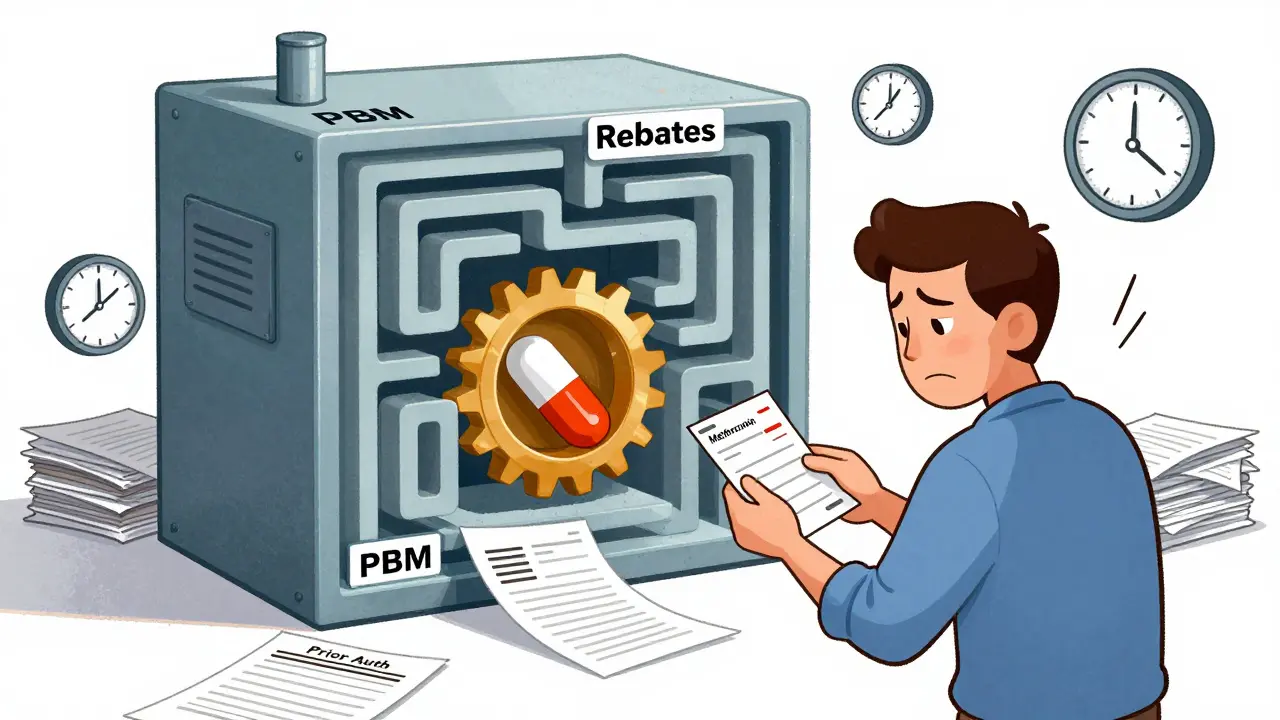
You’ve been taking metformin for years. It’s cheap. It’s effective. It’s the go-to for type 2 diabetes. But now, your pharmacy says your insurance won’t fill it unless your doctor jumps through hoops first. That’s not a mistake. It’s happening more often - even for generics.
Generics make up 90% of all prescriptions filled in the U.S. They’re the reason drug prices don’t crush patients. But starting around 2020, something changed. Insurance companies began requiring prior authorization for some of these same low-cost generics. Not because they’re dangerous. Not because they’re new. But because of how PBMs and insurers manage their formularies.
What Is Prior Authorization - and Why Does It Exist?
Prior authorization is a gatekeeping step. Before your insurance pays for a drug, your doctor must prove to the insurer that you need it. This started in the 1990s with HMOs trying to cut costs on expensive brand-name drugs. It worked - for a while.
Today, it’s gone too far. A 2023 American Medical Association survey found that 93% of doctors say prior authorization causes delays. And 24% have seen patients get hospitalized because they couldn’t get their meds on time. The worst part? Most of these delays are for generics - drugs designed to save money.
Why Are Generics Getting Blocked Now?
It sounds backwards. Why would an insurer block the cheapest option? The answer lies in rebates and formulary control.
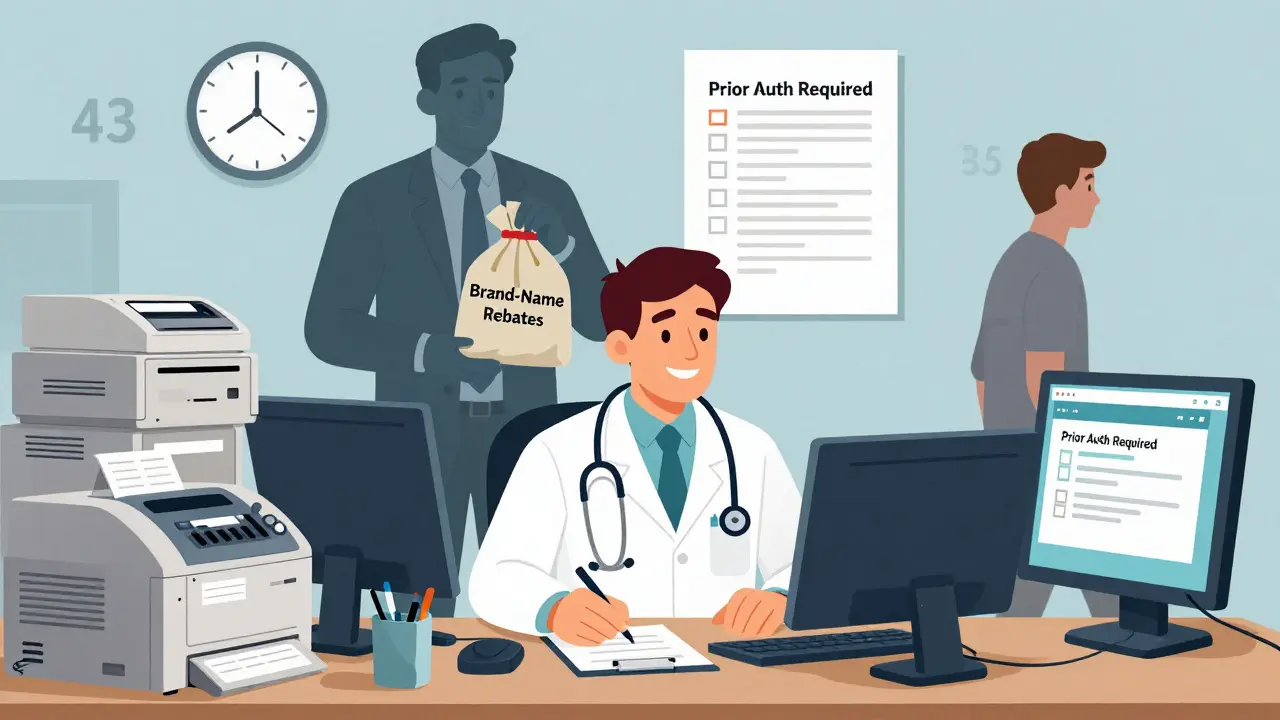
Pharmacy Benefit Managers (PBMs) - the middlemen between insurers and drug makers - make billions in rebates. They get paid more when patients use certain brand-name drugs, even if a cheaper generic exists. So they design rules that nudge prescriptions toward those higher-rebate drugs.
One trick? Require prior authorization for generics. Not to stop them, but to make them harder to get. If your doctor has to fill out paperwork, call, wait days, and resubmit, they might just prescribe the brand-name drug instead - the one the PBM wants you to take.
By 2024, 15-20% of generic prescriptions required prior authorization. That’s up from just 5% in 2018. For some classes, it’s worse. Oncology generics? 35% need approval. Blood pressure meds? Only 12%. It’s not random. It’s strategic.
How It Actually Works - Step by Step
Here’s what happens when your doctor prescribes a generic that needs approval:
- Your doctor writes the prescription for, say, lisinopril - a common blood pressure generic.
- The pharmacy tries to fill it. The system flags it: “Prior auth required.”
- Your doctor’s office gets a notice. They must submit clinical notes, lab results, or proof you tried another drug first.
- They fax, email, or submit it electronically through a platform like CoverMyMeds.
- Wait. Days pass. Sometimes weeks.
- Approval comes - or it doesn’t. If it doesn’t, you pay full price or go without.
On average, doctors handle 43 prior authorizations a week. Nearly 40% of those are for generics. That’s over 17 hours of staff time per clinic every week - time that could be spent seeing patients.
Who’s Doing It - And Who’s Stopping
Not all insurers are the same. Aetna requires prior authorization for 25% of its generic formulary. UnitedHealthcare: 22%. Humana: 18%. Some Medicaid programs have automated approvals - if you’re on a standard generic, you get it without paperwork.
But change is coming. In January 2025, California banned prior authorization for 47 essential generic drugs. The federal government passed the Improving Seniors’ Timely Access to Care Act in late 2023 - by 2026, Medicare Advantage plans must approve urgent requests in 72 hours and use electronic systems.
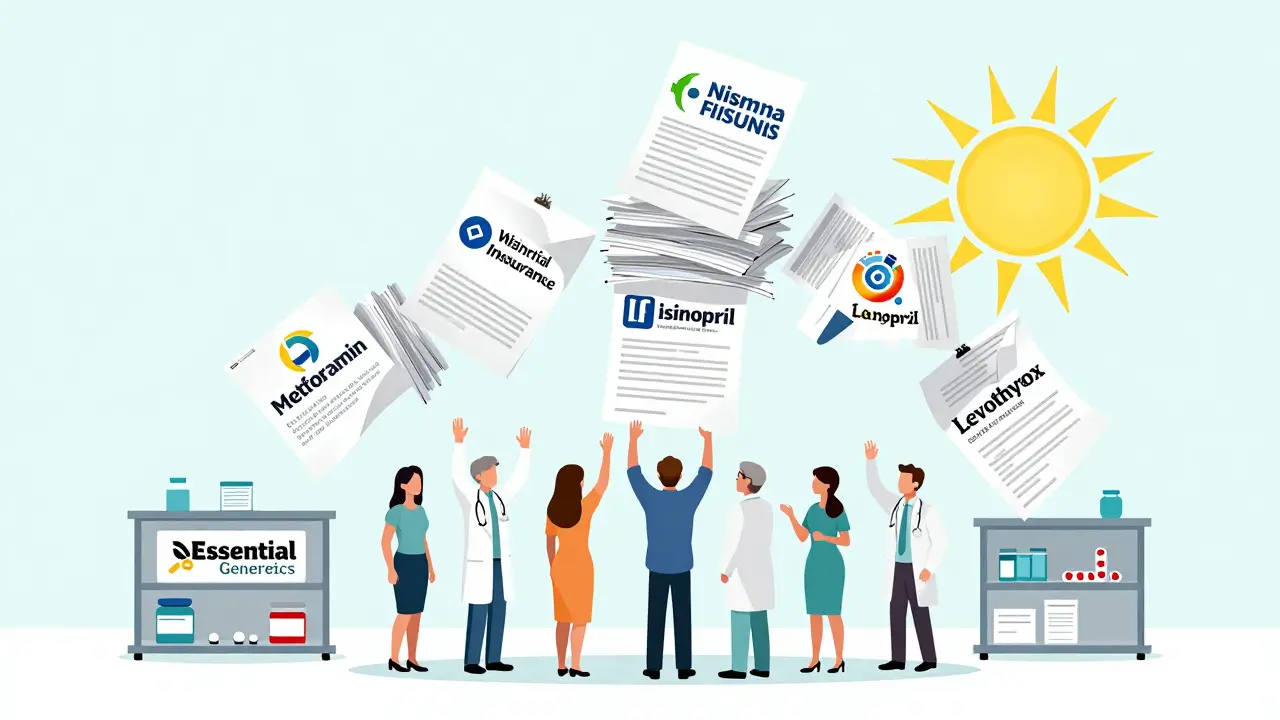
In June 2025, six major insurers - Aetna, UnitedHealthcare, Cigna, Humana, Elevance, and Blue Cross - announced a joint reform. Starting January 2026, they’ll eliminate prior authorization for 12 common generic classes: statins, ACE inhibitors, metformin, levothyroxine, and others. That’s a big win.
What Patients and Doctors Are Saying
On Reddit, patients are furious. One user wrote: “My generic metformin needs prior auth. I’ve been on it for 8 years. Why now?” Another: “My thyroid med - levothyroxine - got denied. I went without for 10 days. My heart started racing.”
Doctors are just as fed up. One provider on a medical forum shared: “My clinic spends 17.3 hours a week just on prior auths for generics. That’s half a full-time job. We’re not treating patients. We’re filing paperwork.”
A Kaiser Family Foundation case study showed a diabetic patient’s HbA1c jumped from 6.8% to 8.2% during a 14-day prior auth delay. That’s not just a number. That’s increased risk of kidney damage, nerve problems, vision loss.
How to Fight Back - Practical Tips
If your generic is flagged:
- Ask your doctor to submit electronically. Electronic requests get approved 32% faster than fax or phone.
- Request “urgent” status if your condition is unstable. Cigna and others process these in 72 hours.
- Keep copies of every denial letter. 67% of denials can be overturned with more clinical data.
- Check your state’s Essential Drug List. California, New York, and 34 others now block prior auth for certain generics.
- If you’re on Medicare, know your rights. By 2026, they must respond to urgent requests in 3 days.
The Bigger Picture
This isn’t just about a pill. It’s about a system that rewards complexity over simplicity. Generics exist to lower costs. But when insurers make them harder to get, they end up costing more - in delayed care, ER visits, hospitalizations.
The Congressional Budget Office predicts prior auth for generics will drop 40% by 2028 if reforms keep moving. That’s hopeful. But until then, patients and providers are stuck in the middle.
The goal should be simple: if a drug is safe, effective, and cheap - let people get it without a bureaucracy.
What’s Next?
More states are likely to follow California’s lead. Federal pressure is growing. Insurers are starting to back down - not because they care about patients, but because the backlash is too loud.
For now, stay informed. Ask questions. Document everything. And if your doctor says, “This shouldn’t require approval,” they’re probably right. You’re not being difficult. The system is broken.
Ishmael brown
January 31, 2026 AT 14:14Nancy Nino
February 1, 2026 AT 18:49Nidhi Rajpara
February 3, 2026 AT 07:27Chris & Kara Cutler
February 3, 2026 AT 19:38Jamie Allan Brown
February 5, 2026 AT 18:26Lisa Rodriguez
February 7, 2026 AT 13:19Nicki Aries
February 9, 2026 AT 12:27Naresh L
February 11, 2026 AT 03:05Sami Sahil
February 11, 2026 AT 08:46franklin hillary
February 13, 2026 AT 07:54Donna Macaranas
February 14, 2026 AT 01:56Rachel Liew
February 15, 2026 AT 01:42