
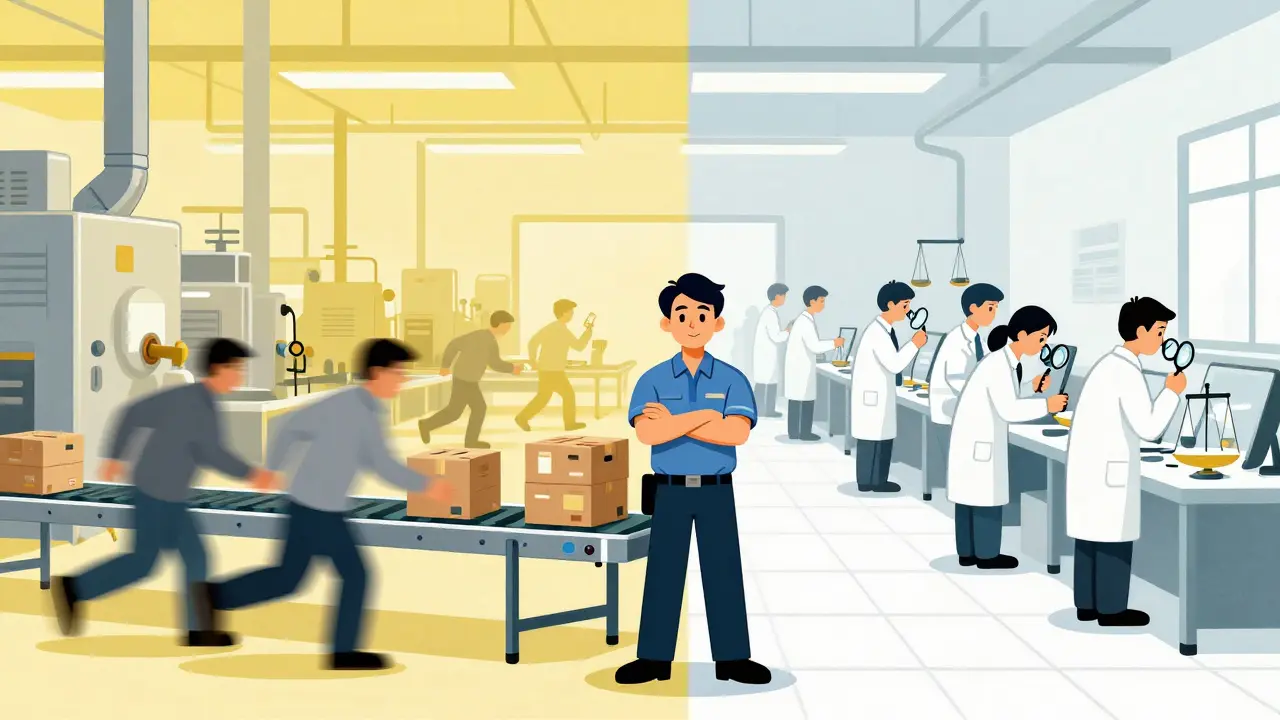
In 2024, nearly 70% of FDA warning letters cited a single issue: compromised quality independence. This isn't just a paperwork error; it is a systemic breakdown where production pressure overrode safety checks. When manufacturing speed collides with quality control, someone has to hold the line. That role belongs to the Quality Assurance Unit (QU). A QU is a formally designated group mandated to maintain independent oversight over production processes. Its primary job is simple but difficult: make sure products meet standards without bowing to production schedules.
Most manufacturers understand the concept of quality control. However, true independence is often misunderstood. It requires more than just a different office door. It demands organizational structure, distinct reporting lines, and the actual power to stop production. Without these elements, a quality unit becomes a "rubber stamp," approving batches before they truly pass inspection. In highly regulated sectors like pharmaceuticals and nuclear energy, this failure can trigger regulatory shutdowns.
The Regulatory Backbone of Independent Oversight
You cannot fully grasp the necessity of a standalone quality unit without understanding the regulations that created them. In the United States, the Food and Drug Administration FDA regulatory body overseeing drug safety and efficacy codified this requirement clearly in their 2006 guidance. The rule states that product development, manufacturing units, and the quality unit must remain independent. This principle was not created overnight. It stems from earlier frameworks like the ICH Q10 Pharmaceutical Quality System international guideline for managing pharmaceutical quality (2008) and nuclear safety protocols from the International Atomic Energy Agency (IAEA).
Why does the FDA insist on this wall between teams? The answer lies in conflict management. When a quality manager reports directly to a production director, their decisions inevitably face pressure. If a batch is late, the production manager might hint that "it looks good enough" to ship on time. An independent QU removes that leverage. Their performance metrics should track compliance rates, not production throughput. Recent data from 2023 through 2025 reinforces that this separation is non-negotiable. Unless you fall under very limited exceptions, having one person do both jobs invites scrutiny.
The technical specifications for a compliant unit are defined under 21 CFR 211.22. This regulation gives the quality unit the responsibility and authority to approve or reject all components, containers, closures, in-process materials, packaging, labeling, and finished drug products. Essentially, the QU acts as the final gatekeeper. They assess suitability, evaluate process performance, and determine the acceptability of each batch for release. While Quality Control (QC) handles testing, Quality Assurance (QA) focuses on system integrity-reviewing procedures, auditing records, and analyzing trends.
Structural Requirements for True Independence
Setting up a functional QU requires intentional architectural design. You cannot simply put quality staff next to engineers and call it done. Independence starts with the reporting chain. According to guidelines from the IAEA, the independent oversight function should report directly to the Board of Directors or the organization's most senior officers. This bypasses middle management who are typically obsessed with daily output targets.
Consider the practical reality of the shop floor. In 2024, FDA inspection data showed organizations with truly independent QUs resolved critical quality deviations 28% faster than those where QA was integrated into production. This sounds counterintuitive. How does separation speed things up? The reason is trust. When production knows the quality team is impartial, they are less likely to try to hide defects during initial inspections. Integrated structures often lead to data integrity violations because operators fear punishment.
A critical component of structural independence is the "stop production" authority. In FDA-regulated facilities, QUs have explicit power to halt manufacturing operations if a deviation occurs. Some ISO 9001-certified manufacturers limit QU authority to advisory recommendations. This difference highlights a major gap in compliance maturity. If your quality team can suggest a halt but not enforce it, you may not meet strict regulatory standards for high-risk industries.
| Model | Reporting Line | Authority Level | Typical Risks |
|---|---|---|---|
| FDA Pharmaceutical | Executive/Board | Full Halt Authority | High enforcement cost |
| EU GMP Model | Senior Leadership | Conditional Halt | Mechanism dependency |
| Nuclear (IAEA) | Independent Pool | Multilayer Oversight | Resource coordination |
| General ISO 9001 | Operations Mgmt | Advisory Only | Conflict of Interest |

Challenges in Small Organizations
The theory works beautifully, but small companies often struggle with execution. FDA data reveals that 42% of warning letters issued to facilities with fewer than 50 employees cite QU independence failures compared to 18% for larger facilities. Why is this happening? Resource constraints make independence expensive. Hiring full-time quality staff while keeping them separate from production increases overhead costs significantly.
Small manufacturers often attempt to save money by having the production manager double as the QA manager. This is a direct violation of current guidance unless another qualified individual performs periodic reviews of QU activities. Even then, the appearance of bias remains. To combat this, many smaller firms now utilize third-party quality oversight services. This market segment is growing rapidly, allowing small businesses to access certified expertise without maintaining a full internal department.
Cultural resistance is another hidden barrier. When a company shifts to an independent model, production leaders often feel threatened. They lose the ability to influence release decisions. Merck documented in a 2023 case study that implementing these changes required six to nine months of cultural change management. Initial resistance peaked when leadership tried to block QU access to the CEO without approval. Success factors included documenting clear conflict resolution protocols and ensuring QU members had direct access to top management.
Performance Metrics and Staffing Needs
Running a successful quality unit involves more than just following rules; it requires adequate staffing. Industry benchmarks from the ISPE suggest that QU personnel should comprise 8-12% of total manufacturing staff. If your numbers fall below this range, you risk burnout and fatigue errors. Facilities with QU-to-production staff ratios below 1:15 experience 3.2 times more repeat deviations.
The skill set required is also evolving. It is no longer enough to simply check boxes. Today’s QU staff require training in regulatory knowledge (100% need GMP training), statistical process control (78%), and conflict resolution (65%). The average QU member possesses around eight years of industry experience. You cannot build this capability overnight. Relying on junior staff to manage independent oversight usually leads to compliance gaps detected during annual audits.
Metrics matter beyond staffing. Organizations implementing robust independent oversight demonstrate 37% fewer critical compliance failures during regulatory inspections. Furthermore, the cost of failure far outweighs the cost of prevention. With 68% of warning letters including citations related to independence failures, the financial impact of non-compliance includes lost revenue, legal fees, and reputational damage. Investing in a robust QU protects the business license itself.

Digital Transformation and Future Risks
As we move through 2026, the landscape of manufacturing is shifting. The FDA released draft guidance in January 2025 regarding "Quality Unit Independence in Digital Manufacturing Environments." This update addresses a new problem: artificial intelligence-driven production systems. In automated plants, real-time quality decisions happen inside code, not between people. The traditional physical separation of offices blurs when software controls both making and checking.
This creates a novel challenge for compliance. Algorithms must be audited to ensure they are not biased toward efficiency over quality. Future models point toward algorithmic decision separation rather than just organizational charts. However, human oversight remains mandatory. Even with AI, you need humans capable of overriding digital defaults when safety thresholds are breached. The European Commission's 2024 revision of EudraLex Volume 4 maintains stricter separation requirements, mandating that quality units shall not be organizationally subordinate to production departments under any circumstances.
Implementing Effective Quality Culture
Beyond regulations, the goal is safety and trust. Positive experiences emerge from organizations implementing programs like "quality ambassadors." In a 2024 case study, Eli Lilly showed a 40% improvement in quality culture when manufacturing staff received QU training while maintaining separation of duties. This hybrid approach bridges the communication gap. Production understands the criteria QA uses, which reduces friction during inspections.
However, you must avoid common pitfalls like resource starvation. Common failure patterns include "rubber stamping" of batch records because staff lack time to review details thoroughly. Another red flag arises when warehouse managers contact the quality unit directly when issues arise without proper escalation protocols. All inquiries must go through official channels to preserve audit trails. Documentation must include clear organizational charts showing QU reporting lines, as 95% of warning letters cite inadequate documentation of QU authority.
Can the same person work in production and quality?
Generally, no. Regulations require complete separation. Exceptions exist only in very limited circumstances where another qualified individual conducts periodic reviews of the combined activities to ensure no conflict of interest arises.
What happens if the QU rejects a production batch?
The QU holds final authority to reject the batch. Production cannot override this decision. The product must be reworked, destroyed, or investigated further before potential re-evaluation.
How should the Quality Unit report?
To maintain independence, the QU leader should report directly to executive leadership or the Board of Directors, bypassing production management chains entirely.
Is QU independence necessary for small businesses?
Yes. Although resource constraints are high, FDA data shows warning letters for independence failures are significantly higher in small facilities due to role overlap and lack of dedicated staff.
What skills are needed for QU staff?
Staff need regulatory knowledge (GMP training), statistical process control abilities, and conflict resolution skills. Average tenure in the field is often over eight years.
Jordan Marx
March 27, 2026 AT 22:27The regulatory landscape is shifting rapidly. We see increased scrutiny on digital manufacturing environments. Automation introduces new variables into process validation. Historical frameworks fail to address algorithmic bias adequately. Regulatory bodies demand human oversight even with AI tools. Independence remains the core structural requirement for compliance. Production teams often resist these changes due to friction. Culture change management becomes critical during transitions. Documentation of authority lines prevents many audit failures. Small businesses face unique hurdles regarding resource allocation. Outsourcing quality functions provides a temporary bridge solution. Internal conflict resolution protocols must be established clearly. Executive sponsorship ensures the QU retains necessary power. Without board level access the unit risks becoming advisory. True safety culture requires this separation permanently. Future enforcement trends indicate stricter penalties for overlap.
kendra 0712
March 28, 2026 AT 07:28This is such an important topic for our industry!! It shows why we need structure everywhere!
Monique Louise Hill
March 30, 2026 AT 07:49Safety must always come before profit! We cannot ignore the ethical implications here. 🚨 Lives depend on these checks being real.
Sarah Klingenberg
March 31, 2026 AT 08:44I totally get the struggle with small firms. It is hard to justify the cost sometimes :) But you never know when an inspection happens.
Shawn Sauve
April 1, 2026 AT 00:08Respectfully keeping boundaries clear is the only way to maintain trust with regulators. We have seen good results with separated reporting lines here. :)
walker texaxsranger
April 1, 2026 AT 08:13the system is rigged against actual innovation though they just want to sell us compliance courses
Eva Maes
April 2, 2026 AT 10:15This whole situation feels incredibly fraught with danger. The lack of autonomy creates a toxic environment for anyone trying to enforce standards properly.
Rachael Hammond
April 2, 2026 AT 10:39I realy think its imortant to note that training helps a lot. We saw better comunication after workshops.
Devon Riley
April 2, 2026 AT 11:50It is tough balancing resources and needs. People working hard in quality deserve recognition for their dedication without extra pressure.
Tommy Nguyen
April 3, 2026 AT 12:55It really helps to keep things organized and safe.
Kameron Hacker
April 4, 2026 AT 10:12The data is irrefutable regarding failure rates. Companies ignoring these mandates will face severe consequences soon enough.
Paul Vanderheiden
April 5, 2026 AT 18:37i think we need more support for smaller folks to manage these requirements effectively without burning cash
Richard Kubíček
April 6, 2026 AT 23:22Exactly what i was thinking. Collaboration between departments helps reduce the friction significantly.
Philip Wynkoop
April 7, 2026 AT 21:34A solid approach indeed :D