
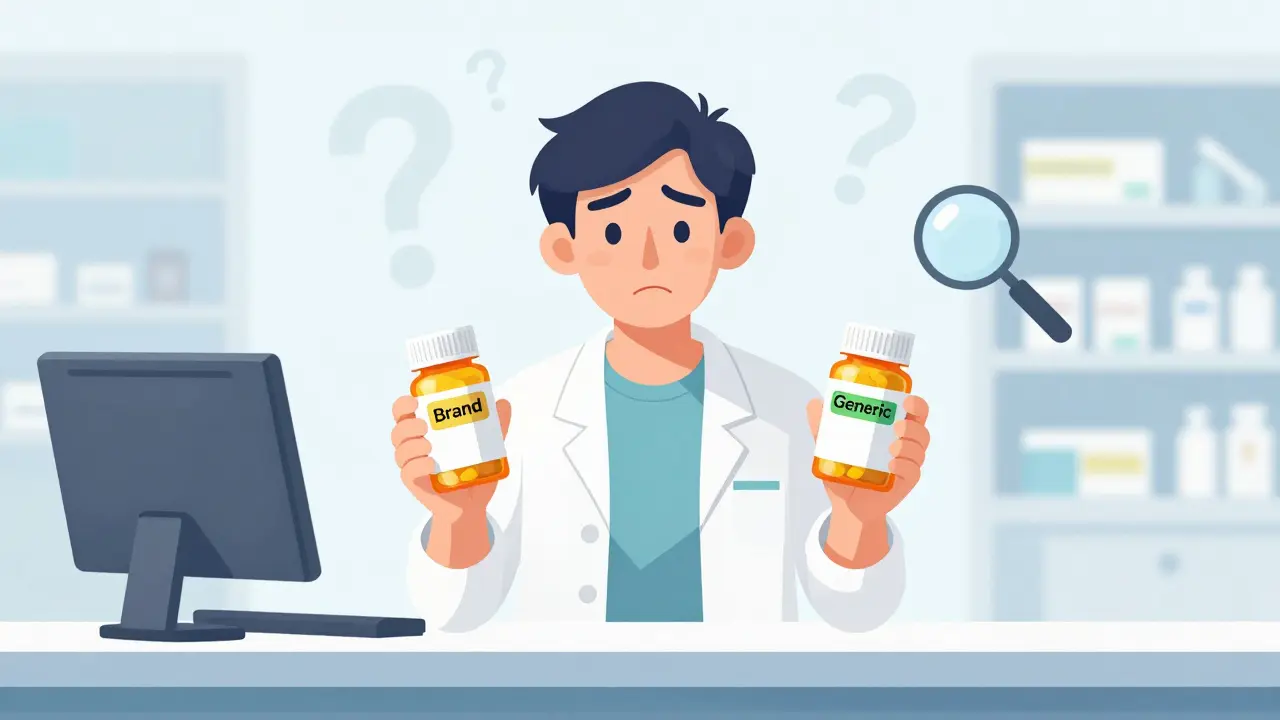
Imagine you switch from a brand-name medication to its generic counterpart to save money. A few weeks later, you develop a rash or feel unusually dizzy. Is it the new pill? Or is it just stress? This uncertainty is common, but it carries weight. Many people assume that because generic drugs are cheaper, they might be less safe or monitored differently. The truth is far more nuanced. Regulatory bodies like the U.S. Food and Drug Administration (FDA) treat generic and brand-name drugs with identical scrutiny regarding safety monitoring. However, knowing exactly when to report side effects can make the difference between a minor annoyance and a critical public health alert.
Understanding the Safety Parity Between Generics and Brands
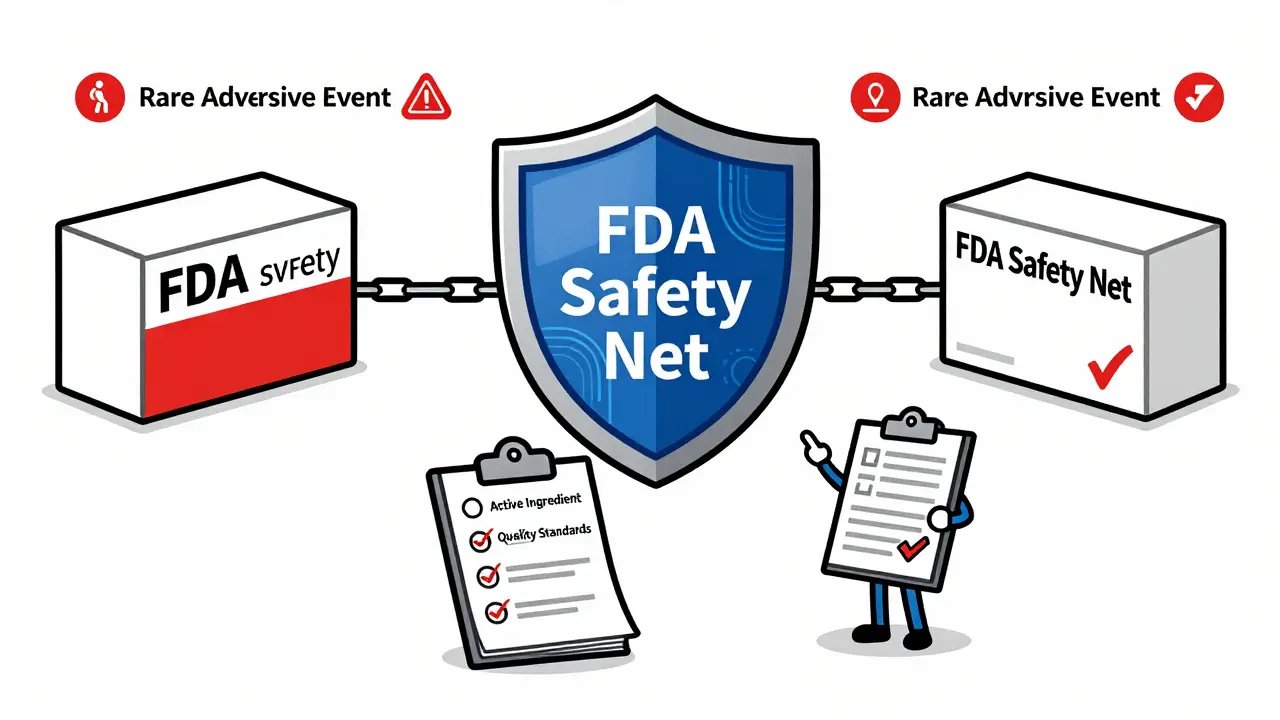
First, let’s clear up a major misconception. Generic medications must contain the same active ingredient as the brand-name version. They must work the same way in the body and meet the same strict quality standards. Under the Hatch-Waxman Amendments of 1984, generic manufacturers bear equal responsibility for post-marketing surveillance as the original innovator companies. This means that if a rare side effect emerges, the reporting protocols are identical regardless of whether the bottle says 'Brand X' or 'Generic Y.'
The FDA’s Office of Generic Drugs confirmed in a 2022 statistical review that 98.7% of adverse event reports do not distinguish between generic and brand products in the Adverse Event Reporting System (FAERS) database. Why? Because the active ingredients are chemically identical. A study published in the Journal of the American Medical Informatics Association in 2021 analyzed 1.2 million adverse drug event (ADE) reports and found no statistically significant difference in reporting rates between generic and brand-name cardiovascular drugs. The safety net is the same; the only variable is often patient perception or individual biological response.
| Criterion | Brand-Name Drugs | Generic Drugs |
|---|---|---|
| Active Ingredient Requirement | Identical chemical composition | Identical chemical composition |
| Serious Unexpected ADR Reporting Timeframe | Within 15 calendar days | Within 15 calendar days |
| Regulatory Oversight Body | FDA / EMA | FDA / EMA |
| Post-Market Surveillance Data Source | FAERS / EudraVigilance | FAERS / EudraVigilance |
| Inactive Ingredients (Excipients) | Proprietary formulation | May vary by manufacturer |
Defining "Rare" and "Serious" Adverse Events
Not every stomach ache warrants a report to federal regulators. To understand when to act, you need to know how regulators define these terms. The FDA defines rare adverse events as reactions occurring in fewer than 1 in 1,000 patients based on clinical trial data. However, post-marketing surveillance often identifies even rarer events, such as those affecting 1 in 10,000 or fewer people. These tiny numbers matter because large clinical trials rarely catch them.
A "serious" adverse event (SAE) is different from a "rare" one, though they can overlap. An SAE is defined as an event that is fatal, life-threatening, permanently disabling, requires hospitalization, causes congenital anomalies, or necessitates intervention to prevent permanent impairment. If you experience a reaction that fits this description, it must be reported immediately. For example, Stevens-Johnson Syndrome-a severe skin reaction-is considered both rare and serious. With generic lamotrigine, the incidence is approximately 1 in 1,000 in trials, but post-marketing data shows 1.8 cases per 10,000 person-years. This discrepancy highlights why ongoing reporting is vital.
When Should You Report a Side Effect?
You don’t need to be a doctor to recognize a signal. Here are three critical triggers that indicate you should file a report:
- No Reasonable Alternative Explanation: If you develop a symptom like acute liver injury within 1-6 weeks of starting a new generic statin, and other causes have been ruled out, this is a red flag.
- Pharmacologically Plausible Timeframes: Some side effects appear quickly. Angioedema (swelling of the deeper layers of skin) can occur shortly after taking ACE inhibitor generics. If the timing aligns with known drug mechanisms, report it.
- Unexpected Reactions: If the side effect is not listed in the patient information leaflet, it is considered "unexpected." Unexpected adverse drug reactions require expedited reporting by manufacturers and should be noted by patients and providers.
It is also crucial to report if you suspect an issue with inactive ingredients, or excipients. While the active drug is the same, fillers, dyes, and binders can differ between manufacturers. Only 15.3% of reports specify inactive ingredients, yet issues like lactose intolerance or dye sensitivities are real concerns for some patients. If you react to one brand of generic but not another, this distinction matters.
How to Report: A Step-by-Step Guide
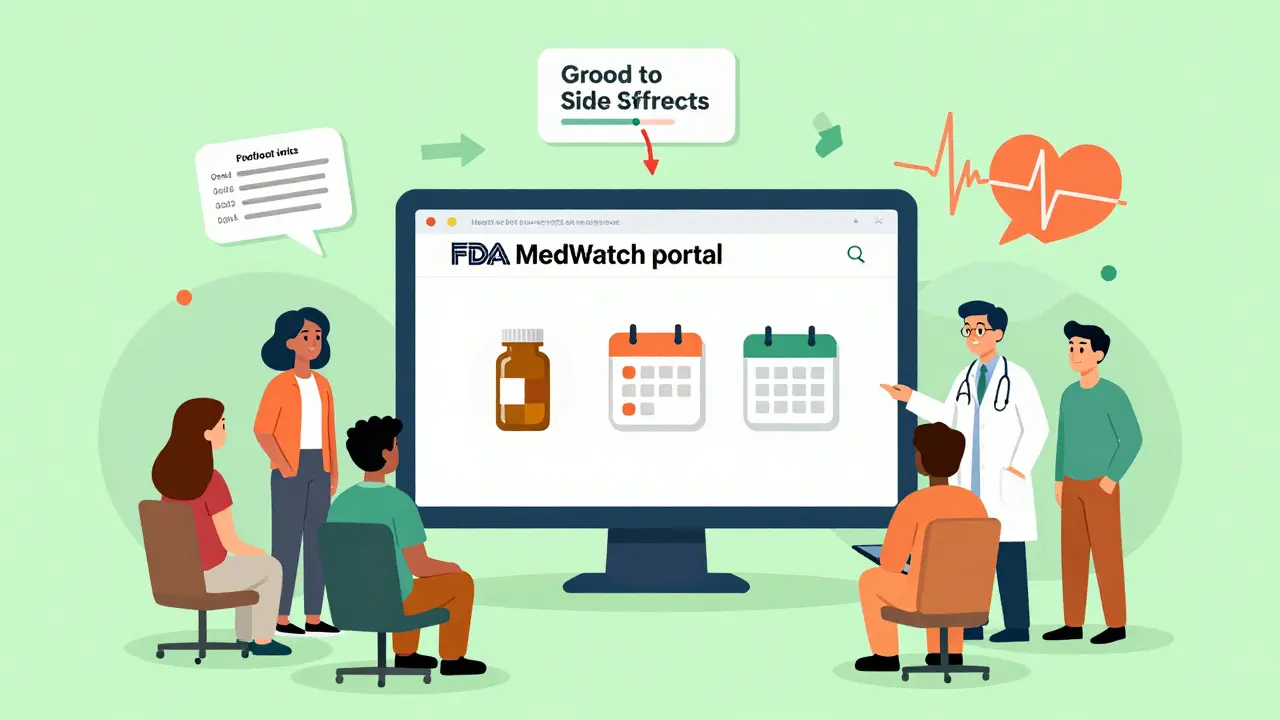
Reporting is easier than most people think. The FDA’s MedWatch program has been accepting reports since 1993. You can submit reports online, via mail, or by phone at 800-FDA-1088. Here is how to ensure your report is useful:
- Gather Documentation: Collect the medication bottle. Note the lot number, expiration date, and manufacturer name. Unfortunately, only 12.4% of consumer reports include lot numbers, which makes tracking manufacturing defects difficult.
- Detail Your Health Context: Include your age, weight, and any pre-existing conditions. List all other medications you are taking, including doses and durations. Drug interactions are a common cause of adverse events.
- Describe the Event Clearly: When did it start? What were the symptoms? Did you stop the medication? Did the symptoms improve (dechallenge) or return upon restarting (rechallenge)?
- Submit via MedWatch: Healthcare professionals use Form 3500, while consumers and caregivers use Form 3500B. The electronic gateway is the fastest method.
- Don’t Wait for Certainty: The FDA emphasizes that you should report even if causality is uncertain. In fact, 68.4% of significant safety findings originated from initial reports where the link to the drug was not definitively proven at first.
The Role of Technology in Detecting Rare Signals
You are not the only one watching. The FDA uses advanced systems to spot trends before they become widespread crises. The Sentinel Initiative analyzes electronic health records from 300 million patients. In 2022 alone, it identified seven new safety concerns for generic medications, including an increased risk of hypoglycemia with certain metformin formulations.
Artificial intelligence is also changing the game. AI-assisted signal detection in the FAERS database has increased rare event identification by 37.2% since 2020. Machine learning algorithms can now flag potential issues 4.8 months earlier than traditional manual methods. This speed allows regulators to update labels faster. For instance, in June 2021, 17 reports of QT prolongation (a heart rhythm issue) with generic citalopram led to immediate label updates specifying a maximum dose of 20mg/day for patients over 60.
Common Pitfalls in Consumer Reporting
Despite these tools, human error remains a bottleneck. A 2023 FDA analysis revealed that only 28.7% of consumer-submitted reports for generic drugs included sufficient detail for meaningful analysis, compared to 63.2% of healthcare professional reports. Common mistakes include omitting concomitant medications, failing to provide contact information for follow-up, or not specifying the exact dosage.
Another challenge is distinguishing product-specific issues from class effects. If you take a generic antibiotic and get a rash, is it that specific batch, or is it a known reaction to that entire class of drugs? Providing detailed lab values and timelines helps experts make this distinction. Remember, your report contributes to a global database. The European Medicines Agency’s EudraVigilance system processed 1.4 million ADR reports in 2022, with 38.2% involving generics. Your voice adds to this international safety net.
Next Steps for Patients and Providers
If you are a patient, keep a medication diary. Note when you start a new generic and any changes in how you feel. If you are a healthcare provider, encourage your patients to report directly. Use validated tools like the Naranjo Scale to assess causality in your practice, where scores ≥9 indicate a definite adverse drug reaction. By staying vigilant and reporting thoroughly, we ensure that generic drugs remain a safe, affordable cornerstone of modern medicine.
Do I need to report mild side effects for generic drugs?
While serious adverse events (fatal, life-threatening, requiring hospitalization) must always be reported, mild side effects are valuable if they are unexpected or unusual. The FDA encourages reporting any suspected adverse event, even if causality is uncertain, as these reports help identify rare patterns that clinical trials missed.
Is there a difference in safety monitoring between brand-name and generic drugs?
No. Under FDA regulations, generic manufacturers have the same pharmacovigilance responsibilities as brand-name manufacturers. Both must report serious unexpected adverse reactions within 15 calendar days. The active ingredients are identical, so the safety monitoring standards are strictly aligned.
What information should I include when reporting a side effect?
Include the medication name, lot number, expiration date, manufacturer, dosage, and start date. Also provide your age, weight, medical history, other medications taken, and a detailed description of the side effect, including onset time and severity. Lab results and dechallenge/rechallenge outcomes are highly valuable.
How long does it take for the FDA to act on a report?
The FDA reviews reports continuously. Serious unexpected adverse reactions are submitted by manufacturers within 15 days. The FDA uses automated systems like the Sentinel Initiative and AI tools to detect signals rapidly. Significant findings can lead to label updates or safety communications within months, as seen with recent citalopram and metformin alerts.
Can inactive ingredients in generics cause side effects?
Yes. While the active drug is the same, inactive ingredients (excipients) like fillers, dyes, and binders can vary between manufacturers. Allergies or intolerances to these components can cause reactions. It is important to specify the manufacturer and lot number in your report to help investigators isolate excipient-related issues.