
FHF Clinical Marker Checklist & Risk Estimator
Use this tool to evaluate the presence of the FHF Triad and critical biochemical thresholds. Disclaimer: This is for educational purposes and not a substitute for professional medical diagnosis.
Clinical Triad (Physical Signs)
Biochemical Markers
Analysis Result
Calculating...Key Takeaways
- FHF is the rapid loss of liver function (within 26 weeks) in people without prior liver disease.
- Acetaminophen is the most common cause, often hidden in combination painkillers.
- The "triad" of red flags: jaundice, hepatic encephalopathy (confusion), and coagulopathy (bleeding/clotting issues).
- Immediate action is critical; for acetaminophen, the 8-hour window for the antidote is the gold standard.
The Warning Signs: More Than Just a Stomach Ache
The danger of medication-induced FHF is that it often starts quietly. Many patients report persistent nausea but maintain a normal appetite, which can lead doctors to misdiagnose the issue as a simple stomach bug or gastroenteritis. By the time the liver actually fails, the symptoms become catastrophic. We look for a specific triad of clinical signs.
First, there is jaundice-the yellowing of the skin and eyes. Then comes hepatic encephalopathy. This isn't just "feeling tired"; it starts as subtle personality changes that family members often notice first, eventually progressing to profound confusion or a coma. Finally, there is coagulopathy. Because the liver produces the proteins that help your blood clot, a failing liver means the blood loses its ability to stop leaks, leading to spontaneous bruising or internal bleeding.
Acetaminophen Toxicity: The Hidden Danger
Acetaminophen is a common household pain reliever, but it is the leading cause of acute liver failure in the US, accounting for nearly 46% of cases. The real danger often lies in "therapeutic misadventures." You might be taking a prescribed narcotic like hydrocodone that also contains acetaminophen. If you add a standard over-the-counter painkiller on top of that, you can easily exceed the 4-gram daily limit without even realizing it.
In an emergency setting, the biochemical markers are tell-tale. We look for an ALT (alanine aminotransferase) level exceeding 1,000 IU/L. In acetaminophen cases, the ALT to AST ratio is typically greater than 2:1. To predict the risk, clinicians use the Rumack-Matthew nomogram. If serum levels are above 150 μg/mL at four hours post-ingestion, there is a 60% chance the liver will be severely damaged. The goal is to administer N-acetylcysteine, the primary antidote, within 8 hours to maximize the chance of a full recovery.

Non-Acetaminophen Drugs and Herbal Traps
Not all drug-induced failures look the same. Some medications cause an "idiosyncratic" reaction, meaning the liver reacts unpredictably regardless of the dose. For instance, Amoxicillin-clavulanate, a common antibiotic, often presents with high alkaline phosphatase levels and prolonged jaundice that lasts weeks before the patient becomes confused.
Then there are the "natural" dangers. There has been a massive spike in failures linked to herbal supplements. Green tea extract is a surprising culprit; high doses of epigallocatechin-3-gallate can cause liver failure, often with a delayed onset of about 90 days. This makes it incredibly hard to diagnose because the patient isn't thinking about a tea supplement they took three months ago. Similarly, Kava has been linked to severe cases where patients present with dangerously high INR levels (a measure of how long it takes blood to clot).
| Agent | Onset Speed | Key Biomarker | Survival (No Transplant) |
|---|---|---|---|
| Acetaminophen | Rapid (72 hours) | ALT > 1,000 IU/L | ~67% |
| Antibiotics (e.g., Amoxicillin) | Slower (Weeks) | High Alk Phos | ~81% (Lower mortality) |
| Antiepileptics (e.g., Valproic Acid) | Variable | Ammonia > 150 μmol/L | ~62% |
| Herbal (e.g., Green Tea Extract) | Delayed (Median 90 days) | Bilirubin > 2x ULN | Variable |
The Emergency Triage Workflow
When a patient presents with jaundice and nausea, the clock is ticking. Modern emergency protocols, such as those from the Acute Liver Failure Study Group, suggest a strict 30-minute triage window. The first step is an immediate blood draw for ALT, INR, and acetaminophen levels. This combination has a sensitivity of nearly 99% for catching FHF early.
Monitoring mental status is the next priority. Using the West Haven Criteria, clinicians grade the severity of encephalopathy from Grade I (mild confusion) to Grade IV (coma). If the INR-which measures blood clotting-is above 1.5, it needs to be re-checked every six hours. A critical threshold is an INR of 6.5; if a patient hits this mark along with severe confusion, they likely need an emergency liver transplant to survive.
Common Pitfalls and Diagnostic Gaps
Despite the clear markers, mistakes happen. A common error is trusting a patient's history too much. About 23% of people in liver failure deny taking an overdose of acetaminophen, either because they forgot or are unable to communicate. This is why the American Association for the Study of Liver Diseases recommends testing every single patient with an ALT over 500 IU/L, regardless of what the patient says.
Another gap is the "masquerade" effect. Idiosyncratic reactions from antitubercular drugs often look exactly like acute Hepatitis B. Without a thorough medication history-including every vitamin and supplement-doctors may treat for a virus while the drug continues to destroy the liver. The gold standard for documentation is 100% specificity: exact doses, durations, and brand names of every substance ingested.
The Future of Recognition: AI and Biomarkers
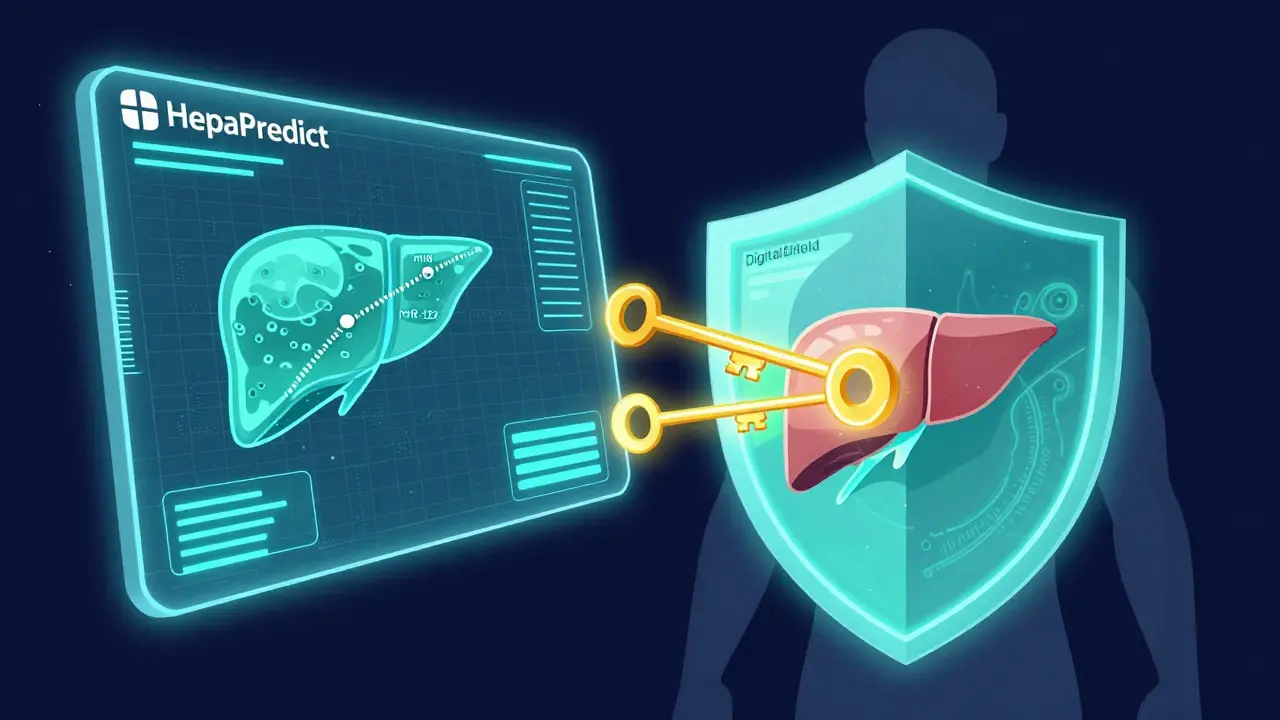
We are moving toward a world where we don't have to wait for the liver to fail to know it's failing. Systems like HepaPredict AI are now being used to analyze 17 different clinical parameters to predict ALF progression with nearly 90% accuracy within the first 24 hours. Even more promising is the discovery of microRNA biomarkers. Specifically, miR-122 can detect acetaminophen toxicity as early as six hours after ingestion, long before the ALT levels spike.
What is the most critical window for treating acetaminophen-induced liver failure?
The most critical window is the first 8 hours after ingestion. This is the timeframe where the antidote, N-acetylcysteine, is most effective at preventing permanent liver damage. Once this window passes, the risk of progressing to full liver failure increases significantly.
Can herbal supplements actually cause fulminant liver failure?
Yes. Many supplements, including green tea extract and kava, can cause severe liver injury. These are particularly dangerous because the onset is often delayed by weeks or months, making it difficult for doctors to link the failure to the supplement.
What does a high INR level indicate in the context of liver failure?
The International Normalized Ratio (INR) measures how long it takes for blood to clot. Since the liver produces clotting factors, a high INR (typically >1.5) indicates the liver is failing. An INR above 6.5 is often a critical marker suggesting the need for a liver transplant.
Why is it common for patients to deny taking too much acetaminophen?
Patients may be unaware that multiple products (like cold medicine and prescription painkillers) both contain acetaminophen. In other cases, the onset of hepatic encephalopathy causes confusion or memory loss, making it impossible for the patient to provide an accurate history.
What is the "triad" of symptoms for acute liver failure?
The classic triad consists of jaundice (yellowing of skin/eyes), hepatic encephalopathy (altered mental state or confusion), and coagulopathy (impaired blood clotting leading to easy bruising or bleeding).
Next Steps for Caregivers and Clinicians
If you are a caregiver and notice a loved one exhibiting sudden personality changes, confusion, or a yellow tint to their skin, do not wait for "the morning." Seek emergency care immediately. Ensure you have a complete list of every medication, vitamin, and herbal supplement they have taken in the last 90 days.
For clinicians, the priority is a low threshold for testing. Treat any patient with unexplained nausea and jaundice as a potential FHF case until proven otherwise. Use serial INR measurements every 6 hours if the initial result is elevated, and maintain a high index of suspicion for hidden acetaminophen in combination drugs.
Bob Collins
April 21, 2026 AT 11:34Fairly straightforward breakdown of a scary situation. Most people just don't check the labels on their cold meds, and that's usually where the trouble starts.
Tokunbo Elegbe
April 22, 2026 AT 14:17It is absolutely vital that we advocate for better labeling... across all pharmaceutical products!!! Saving lives starts with basic awareness!!!
Shalika Jain
April 24, 2026 AT 03:30Please, imagine thinking a "natural" green tea extract is safer than a lab-made drug. Some people are just blindly following wellness trends and it's honestly embarrassing to watch them ignore basic toxicology.
julya tassi
April 24, 2026 AT 06:44That 8-hour window is so stressful to think about! 😟 I wonder how many people just ignore the nausea until it's too late.
Mike Beattie
April 26, 2026 AT 00:59The pathophysiology here is textbook. We are seeing a complete collapse of the hepatic metabolic pathway. If you aren't tracking the AST/ALT ratio with a nuanced understanding of cellular necrosis, you're just guessing.
Aaron McGrath
April 27, 2026 AT 12:57GET THE NAC IN NOW! No excuses! If the ALT is spiking over 1000, you're in a race against time! Stop worrying about the history and just treat the toxicity!
Don Drapper
April 28, 2026 AT 12:02The sheer incompetence of patients denying their medication intake is a tragedy of epic proportions. It is an absolute travesty that clinical outcomes are jeopardized by such profound cognitive dissonance!
Grace Grace
April 28, 2026 AT 17:07The waye you described the triad is so helpful for non-medics. It's terrifing how fast a person can go from feeling fine to a coma. Please be carefull with combination pills!!
Wendy Ajurín
April 30, 2026 AT 08:53The mention of the Rumack-Matthew nomogram is correct and essential for determining the necessity of N-acetylcysteine administration.
Lesley Wimbush
May 2, 2026 AT 04:01It's just so typical that people think they can self-medicate with herbs and then act surprised when their liver quits. I mean, really, do we need to spell out that "natural" doesn't mean "safe"? Honestly, it's just basic biology that some people choose to ignore for the sake of a trendy lifestyle.
Lucy Kuo
May 2, 2026 AT 17:29It is truly heart-wrenching to consider the fragility of the human liver. We must extend our compassion to those who have suffered these preventable tragedies while striving for a more informed global society.
dallia alaba
May 3, 2026 AT 09:31The part about the delayed onset of green tea extract is a great reminder for clinicians to expand their history-taking window. Many of us forget things we took weeks ago, so prompting specifically for supplements is a game changer for early diagnosis.
Aman Tomar
May 4, 2026 AT 22:12The detail about the INR being above 6.5 is realy scary... I can't imagine the stress the family feels when the doctors talk about an emergensy transplant. It's such a harrrowing experience for everyone involvd.
Truman Media
May 6, 2026 AT 19:35Every life is a gift and science is the tool we use to protect it. It is wonderful that AI can help us see the danger sooner. 😊
William Young
May 7, 2026 AT 17:19I appreciate the emphasis on the 30-minute triage window. Speed is everything here.