
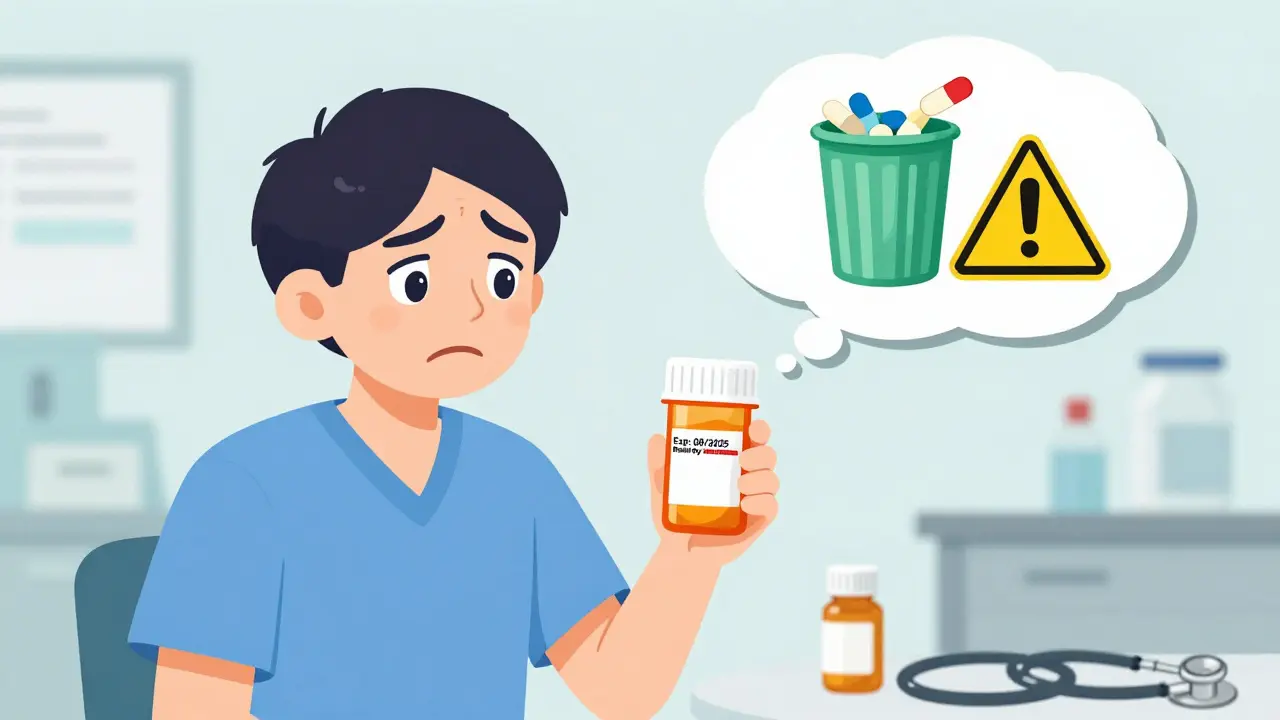
Ever thrown out a bottle of pills because the label said "Refill By" and you thought it meant "Stop Using"? You’re not alone. Thousands of people do it every year - and end up paying more, going without their meds, or even ending up in the ER. The truth is, refill-by dates and expiration dates on your prescription bottle aren’t the same thing. Confusing them can cost you money, health, and peace of mind.
What’s an Expiration Date Really For?
The expiration date on your prescription bottle is a safety line drawn by science. It’s the last day the manufacturer can guarantee the drug will work as intended and remain safe to take. This isn’t arbitrary. Before a drug hits the shelf, it goes through years of testing under different temperatures, light levels, and humidity. The FDA requires this under ICH Q1A(R2) guidelines. The date you see on your label? It’s either the manufacturer’s original expiration date - or, if it’s been repackaged by the pharmacy, it’s set to one year from when you picked it up, whichever comes first. Here’s the kicker: studies show that most medications stay effective well past their expiration date if stored properly. The FDA’s own testing found that 88% of drugs retain their potency years after the labeled date. But here’s the catch - pharmacists can’t legally give you a pill past that date. It’s not about whether it still works. It’s about liability, regulation, and protecting you from unknown risks. If your bottle says "Expires 08/2025," that means don’t take it after August 31, 2025. Period. Even if you’ve got refills left. Even if it looks fine. Even if your doctor says it’s okay. The pharmacy is bound by law to follow that date.What Does a Refill-By Date Actually Mean?
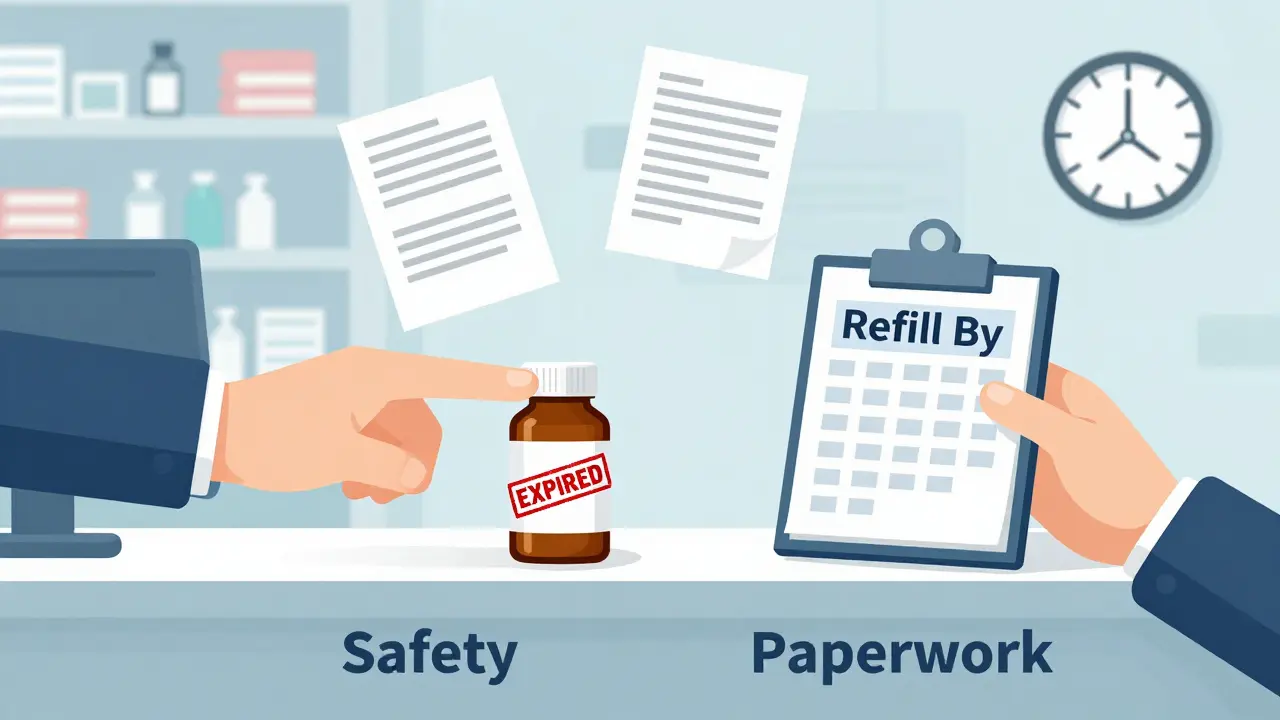
Now, the refill-by date? That’s not about the medicine at all. It’s about paperwork. This date tells you when your prescription authorization runs out. Think of it like a gift card with a limited number of uses. Your doctor wrote you a script for 3 refills. The pharmacy filled it, and now they’ve set a clock - usually one year from the original fill date - after which those refills vanish. That’s your refill-by date. For most medications, it’s 12 months. For controlled substances like opioids or ADHD meds? That clock ticks faster. DEA rules limit those to 6 months. And some states have their own rules: California allows 12 months for most prescriptions, but New York cuts it to 6 months for certain drugs. So if your refill-by date is June 15, 2025, you can get refills up until that day. After that? You can’t walk into the pharmacy and ask for another bottle - even if you still have pills left. You need a new prescription from your doctor. That’s not because your medicine expired. It’s because the legal permission to refill it expired.Why This Mix-Up Happens - And Why It’s Dangerous
The labels don’t help. Both dates are printed in small text, often next to each other. One says "Exp: 08/2025," the other says "Refill By: 06/15/2025." To someone who isn’t trained in pharmacy, they look like two versions of the same warning. A Consumer Reports survey found that over half of people - 54.3% - couldn’t tell the difference between these two dates. And the consequences are real:- People throw out perfectly good medication because they think the refill-by date means "don’t use after this." One Reddit user discarded $300 worth of insulin after misreading the label.
- Others keep taking expired pills because they still have refills left - risking reduced effectiveness or side effects.
- Chronic condition patients - like those on blood pressure or diabetes meds - end up with gaps in treatment, which can lead to hospital visits.
How to Read Your Prescription Label Like a Pro
Here’s how to break it down - no pharmacy degree needed. Look for these three things on your label:- Expiration Date - Usually labeled "Exp" or "Use By." This is your safety cutoff. Never take medication past this date.
- Refill-By Date - Often labeled "Refill By," "Refills Expire," or "Last Fill Date." This tells you when you can no longer get refills without a new script.
- Number of Refills Left - This is separate. If it says "Refills: 2," you have two more fills before the refill-by date hits.
What Happens When You Ignore These Dates?
Ignoring the expiration date? You’re gambling with your health. Even if the pill looks fine, potency drops over time. Antibiotics might not kill the infection. Blood pressure meds might not control your numbers. Insulin can lose effectiveness. That’s not theoretical - it’s documented in clinical studies. Ignoring the refill-by date? You’re gambling with access. You’ll show up at the pharmacy, only to be told, "Sorry, we can’t refill that until your doctor approves it." That can mean waiting days - sometimes weeks - for a new prescription. For someone managing asthma, diabetes, or heart disease, that gap can be dangerous. And here’s the worst part: insurance companies often won’t cover a new prescription if you’re still within the refill window. So you might pay full price just to get the same medicine you could’ve gotten for free.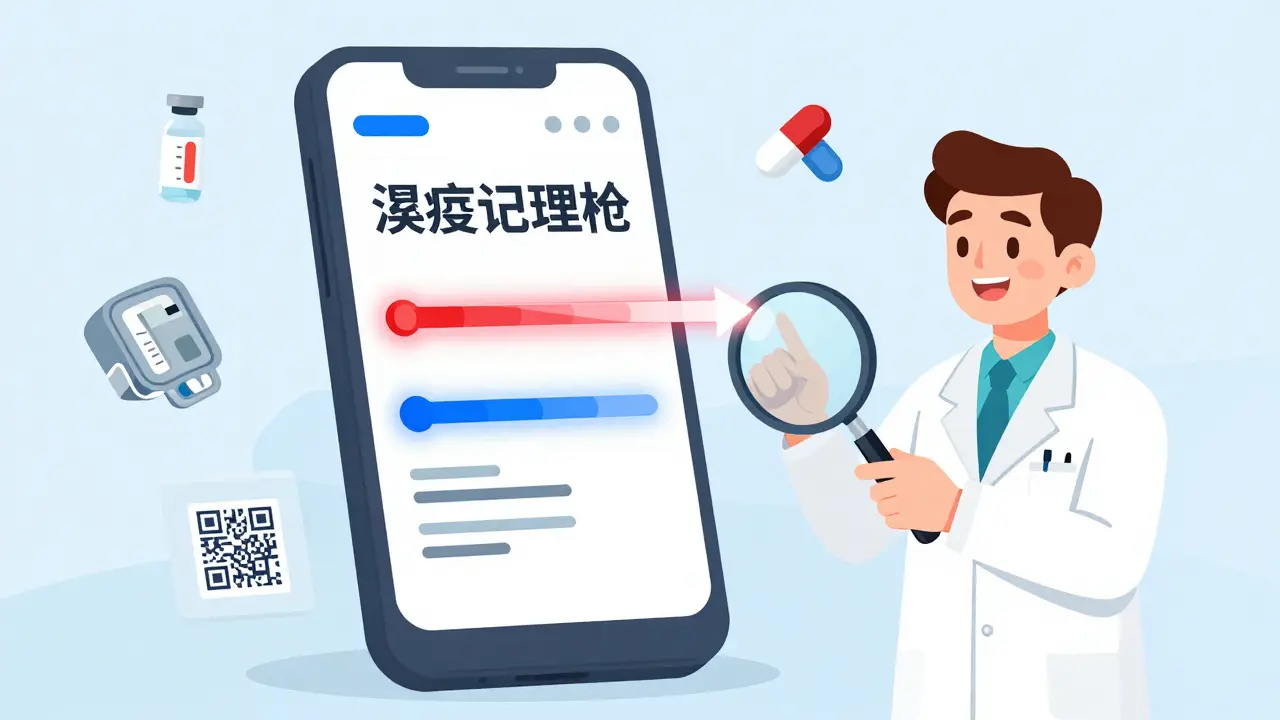
Real-World Tips to Stay on Track
You don’t need to memorize pharmacy laws. Just follow these simple habits:- Set a phone reminder for 7 days before your refill-by date. That gives your doctor time to approve a new script if needed.
- Keep a medication log - even just a note on your phone. Write down the name of the drug, the expiration date, the refill-by date, and how many refills are left.
- Ask for help at the pharmacy. Most chains now offer color-coded labels: red for expiration (safety), blue for refill-by (administrative). Ask if yours has it.
- Don’t stockpile. If you’re not using your meds regularly, talk to your doctor. Maybe you don’t need a 90-day supply. Smaller amounts mean less waste and less confusion.
- Check your insurance plan. Some Medicare Part D plans have their own refill cycles that don’t match your pharmacy’s refill-by date. Know the rules.
What’s Changing in 2025?
The system is finally catching up. In 2023, the FDA proposed new labeling rules to make these dates clearer. By 2025, most prescriptions will likely have:- Standardized wording: "Expiration Date" and "Last Refill Date" - no more vague "Refill By" or "Use By"
- Color coding: red for safety, blue for administrative
- QR codes on labels that link to short videos explaining the difference
Bottom Line: Know the Difference, Stay in Control
Expiration date = safety. Refill-by date = paperwork. One tells you when your medicine stops working. The other tells you when your permission to refill it runs out. You don’t need to be a pharmacist to understand this. Just remember: expiration is about the drug. refill-by is about the prescription. If you’re ever confused, call your pharmacy. Ask. Don’t guess. And never throw out medicine just because the refill window closed - unless the expiration date has passed. Your health depends on it.What’s the difference between a refill-by date and an expiration date?
The expiration date tells you when the medication is no longer guaranteed to be safe or effective. The refill-by date tells you when you can no longer get refills without a new prescription from your doctor. One is about the drug’s safety; the other is about legal authorization.
Can I still use my medicine after the refill-by date if it hasn’t expired?
Yes - if the expiration date hasn’t passed and you still have pills left, you can keep taking them. But you won’t be able to get a refill without a new prescription. The refill-by date doesn’t affect the safety of the medicine - only your ability to refill it.
Why do some prescriptions have a 6-month refill-by date?
Controlled substances - like opioids, stimulants, or certain sedatives - are restricted by DEA rules. These drugs have a higher risk of misuse, so federal law limits refill authorizations to 6 months. Some states also impose shorter limits on other drug classes for safety reasons.
What should I do if my refill-by date has passed but I still need the medicine?
Call your doctor’s office. They’ll need to write a new prescription. Don’t wait until you’re out of pills - give them at least 3-5 business days’ notice. Some clinics offer electronic refill requests, which can speed things up.
Is it safe to take expired medication?
No. Even if the pill looks fine, its potency may have dropped, or chemical changes could make it unsafe. For life-saving drugs like insulin, epinephrine, or antibiotics, taking expired medication can be dangerous. Always dispose of expired medicine properly - don’t flush it. Ask your pharmacy for a take-back program.
Do all pharmacies follow the same refill-by rules?
Most follow the standard one-year refill window for non-controlled drugs, but state laws vary. California allows 12 months for most prescriptions; New York limits some to 6 months. Insurance plans may also impose their own rules. Always check your label and ask your pharmacist if you’re unsure.
Jake Kelly
January 11, 2026 AT 07:52I used to throw out my blood pressure meds every time the refill-by date hit, thinking they were expired. Turns out I was wasting $200 a month. Learned the hard way after almost ending up in the ER. Now I double-check with the pharmacist before tossing anything. Best habit I ever picked up.
Don’t guess. Just call. They don’t mind.
Ashlee Montgomery
January 11, 2026 AT 22:12The real tragedy isn't the confusion-it's that the system doesn't make this obvious. Two dates, same font, same space, same urgency. It's like giving someone a stopwatch and telling them to guess whether it's counting down to a bomb or a cake.
Pharmacies aren't villains. They're trapped in a regulatory maze. But the labeling? That's the part that needs fixing. And thank god it's changing.
neeraj maor
January 13, 2026 AT 15:48Let me tell you what they don't want you to know. The FDA's 88% potency stat? That's from *government stockpiles* stored in climate-controlled vaults. Your medicine? Sitting in a hot bathroom, a car in July, or a drawer with humidity from your shower. That's not science-that's a marketing lie.
And don't get me started on QR codes. They're just another way for Big Pharma to track you. You think they care about your health? They care about your data. And your insurance premiums. Always the money.
lisa Bajram
January 14, 2026 AT 01:05OMG YES. I’m a diabetic and I used to panic every time my refill-by date hit-I’d call my doctor at 2 a.m. thinking I was going to die without my insulin. Turns out? I had 3 weeks left on the bottle. I cried. Then I laughed. Then I made a sticky note on my fridge: ‘EXPIRATION = SAFETY. REFILL-BY = PAPERWORK.’
Now I set phone alerts. I color-code my pill bottles with Sharpies. I even made a little chart for my mom. She’s 72 and now she’s the one correcting the pharmacy. WE GOT THIS.
And yes, CVS’s blue/red labels? LIFE CHANGING. If your pharmacy doesn’t have them, ask. Demand it. Your life isn’t a guessing game.
Kunal Majumder
January 14, 2026 AT 15:01Simple rule: if the expiration date hasn’t passed, the medicine is still good. Refill-by is just the pharmacy’s way of saying ‘you need to check in with your doc again.’
My dad’s on statins-he’s 78. He used to skip doses because he thought his pills were bad. Now he knows the difference. He’s healthier than I am. And he didn’t even need a new script.
Aurora Memo
January 14, 2026 AT 21:07It’s wild how something so basic can cause so much harm. People don’t know because no one ever taught them. Not in school. Not in doctor’s offices. Not even in the pharmacy.
Maybe we need a one-page handout at every pickup. Or a short video that plays when you scan the barcode. Something that says: ‘This is your medicine. This is your permission. Don’t mix them up.’
Small fix. Huge impact.
Ritwik Bose
January 16, 2026 AT 12:34Respectfully, the distinction between expiration and refill-by dates is not merely a matter of semantics; it is a matter of pharmacological integrity and regulatory compliance.
The manufacturer’s expiration date is established under ICH Q1A(R2) guidelines and represents the endpoint of validated stability data. The refill-by date, conversely, is a statutory construct governed by DEA and state pharmacy boards, and is not indicative of pharmaceutical efficacy.
Therefore, the conflation of these two concepts represents a systemic failure in patient education, not a flaw in labeling per se.
Thank you for illuminating this critical distinction.
🙏
Paul Bear
January 16, 2026 AT 22:53Let’s be real-this isn’t about education. It’s about liability. Pharmacies don’t care if your insulin is still good. They care that if you die after taking expired meds, they get sued.
And the FDA’s 88% potency stat? That’s from *unopened, sealed, lab-stored* samples. Your bottle? Probably sat in a glovebox in Phoenix. So yeah, technically it might work-but legally? You’re on your own.
And if you think QR codes are going to fix this? Lol. They’ll just make it slower. Now you have to scan, wait for a 2-minute video, and then still call the pharmacy anyway.
Just. Call. The. Pharmacy.
Jaqueline santos bau
January 17, 2026 AT 10:56Okay but imagine this: you’re a single mom. You’re working two jobs. Your kid has asthma. You’re tired. You look at the bottle. ‘Refill By: 06/15/25’ and ‘Exp: 08/2025’-they’re right next to each other. You panic. You toss it. You cry. You can’t afford another copay. You skip doses. You end up in the ER.
And then the doctor says, ‘Why didn’t you refill?’
And you say, ‘I thought it was expired.’
And the system says, ‘Well, you should’ve known.’
That’s not a mistake. That’s a crime.
Ted Conerly
January 19, 2026 AT 07:46My grandma used to save every pill she ever got. She had a shoebox full of expired antibiotics, old thyroid meds, and leftover painkillers from 2012.
I made her a little chart: Red = DANGER. Blue = OKAY to take. Green = CALL DOCTOR.
She still uses it. She’s 86. Still walking. Still taking her blood pressure pills. And she never throws anything out without checking.
Small effort. Big win.
Also-ask for color-coded labels. If they don’t have them, ask again. And again. And then ask your senator.
Ian Cheung
January 20, 2026 AT 00:10Refill-by date is like your Netflix subscription. Expired? You can’t watch new episodes. But you can still rewatch the ones you already downloaded.
Expiration date? That’s when the show gets pulled from the server forever.
Don’t throw out your downloaded episodes just because your subscription lapsed. Just don’t try to stream new ones.
And yeah-call the pharmacy. They’re paid to answer. They’re not busy. They’re just waiting for you to ask.
anthony martinez
January 20, 2026 AT 06:23So let me get this straight-we’re supposed to trust a 10-year-old pill because the FDA did a lab test on one in a climate-controlled room, but we can’t trust a pharmacy’s refill-by date because… paperwork?
Meanwhile, my insurance won’t cover a new script unless I’ve used up all the refills.
So I’m supposed to wait until I’m out… just to get the same medicine I already paid for?
Y’all really built this system on chaos and spite, didn’t you.