
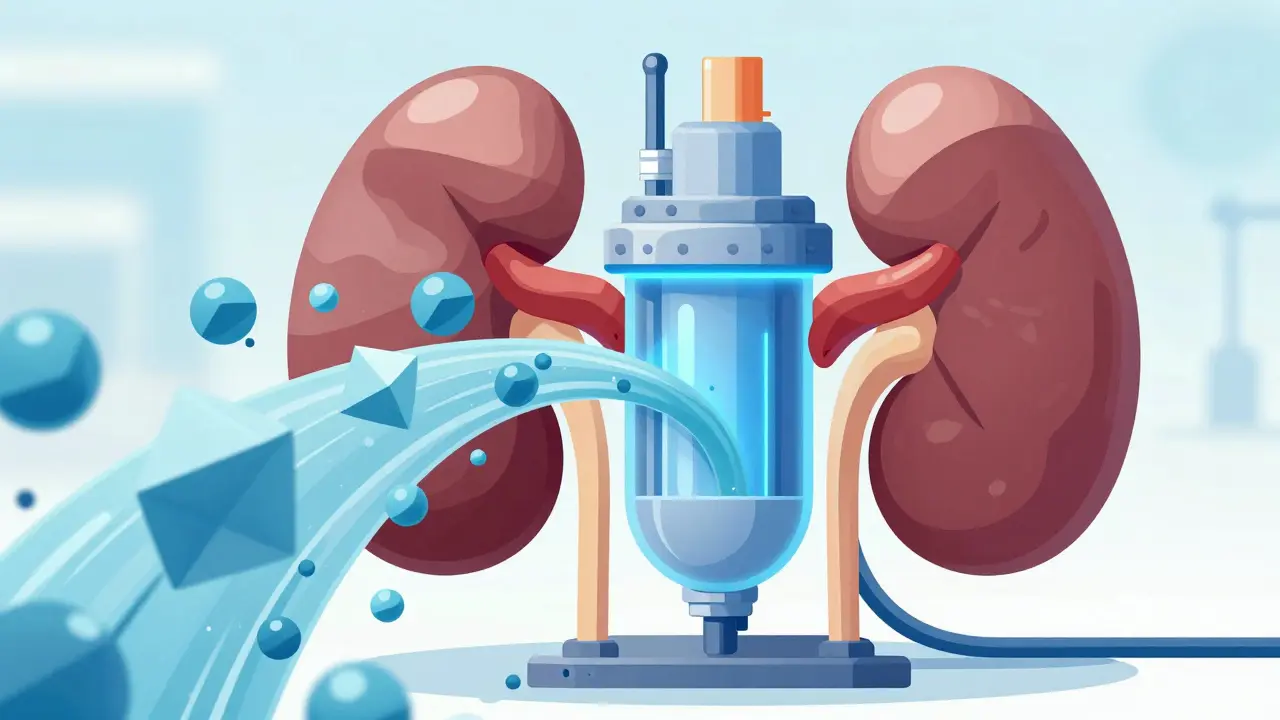
Imagine your kidneys as a high-tech filtration system. When they're working perfectly, they clear out the waste from the protein you eat without a hitch. But when you have Chronic Kidney Disease, that filter starts to clog. Eating too much protein is like throwing a heavy load into a broken machine-it creates a buildup of nitrogenous waste that makes you feel sick and pushes your kidneys toward total failure. The good news? Managing your protein targets can actually buy you months, or even years, before needing dialysis.
Key Takeaways for Protein Management
- Stages 1-2: Generally keep protein at or below 0.8 g/kg of body weight.
- Stages 3-5: More aggressive restriction (0.55-0.60 g/kg) is often needed to slow disease progression.
- Quality Matters: Shifting toward plant-based proteins can reduce urea and phosphate buildup by 20-30%.
- Personalization: Older adults and diabetic patients need different targets to avoid malnutrition or blood sugar spikes.
Understanding the Protein-Kidney Connection
Why does protein matter so much for renal health? When your body breaks down protein, it creates urea. In a healthy person, the kidneys flush this out. In someone with CKD, urea builds up in the blood, leading to uremic symptoms like fatigue, nausea, and brain fog. By lowering your protein intake, you're essentially reducing the workload on your Glomerular Filtration Rate (GFR), which is the measure of how well your kidneys filter waste.
Research from the KDOQI Nutrition Work Group shows that sticking to a low-protein diet can reduce the risk of progressing to end-stage renal disease by about 31%. It's not just about the number of grams, though. It's about the type of protein. Animal proteins, especially red meats, create more oxidative stress and inflammation through advanced glycation end products (AGEs) compared to plant sources.
Protein Targets by CKD Stage
Your protein needs change as your kidney function declines. What works for Stage 2 might be dangerous for Stage 4. Here is how the targets typically break down based on the most recent clinical guidelines.
| CKD Stage | GFR Level (mL/min/1.73m²) | Recommended Protein Target | Example (for 150 lb / 68 kg person) |
|---|---|---|---|
| Stages 1-2 | ≥60 | ≤ 0.8 g/kg/day | ~54g or less |
| Stages 3-5 | ≤59 | 0.55 - 0.60 g/kg/day | 40 - 54g |
| Stage 4 (Severe) | 15-29 | 0.6 g/kg (if GFR < 25) | ~41g |
| Diabetic CKD | Varies | 0.8 - 0.9 g/kg/day | 54 - 61g |
Wait-why do diabetic patients get a higher allowance? The American Diabetes Association suggests a slightly higher range to balance renal protection with the need for glycemic control. If protein is too low, blood sugar can become harder to manage, and the risk of muscle wasting increases.
Plant vs. Animal Proteins: The Great Trade-off
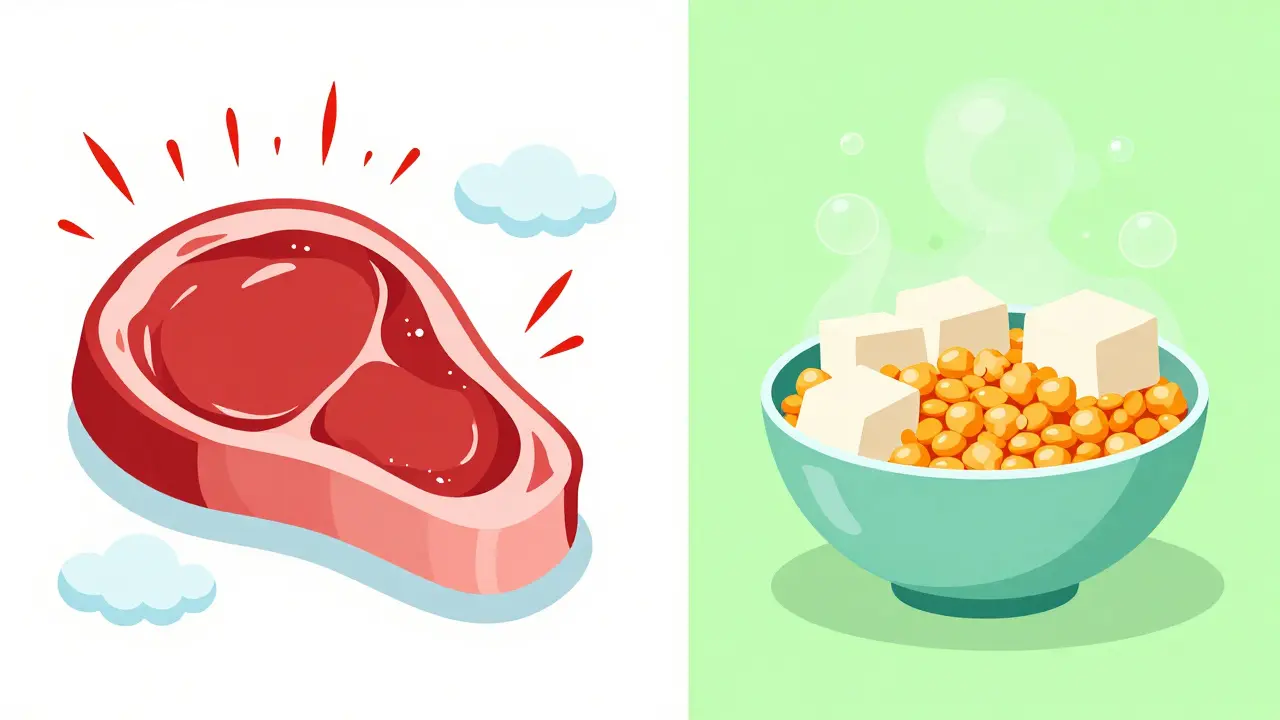
If you've been told to cut back on protein, you might be tempted to just eat less of everything. But shifting where your protein comes from is a game-changer. Plant-based proteins (like lentils, tofu, and chickpeas) are generally gentler on the kidneys. They produce significantly less urea and phosphate than steak or chicken.
A meta-analysis in the Clinical Journal of the American Society of Nephrology found that replacing just 30% of animal protein with plant protein reduced the risk of CKD progression by 14%. However, it's not a perfect switch. Plant proteins can be high in potassium, which is a major concern for people in Stage 4 or 5. If your potassium levels are spiking, you'll need to balance your beans and greens with low-potassium alternatives.
The Danger of Protein-Energy Wasting
Here is the catch: going too low on protein can be just as dangerous as going too high. This is called Protein-Energy Wasting (PEW). When you restrict protein too aggressively without replacing those calories with healthy fats and carbs, your body starts eating its own muscle for energy.
Up to 50% of patients in Stages 3-5 struggle with malnutrition. You might feel weak, lose muscle mass, and find it harder to fight off infections. This is why experts like Dr. T. Alp Ikizler emphasize that these targets must be individualized. If you are an older adult, the risk of frailty and cardiovascular events might outweigh the benefit of strict protein restriction. In those cases, a slightly higher intake may actually improve survival rates.
Practical Strategies for Daily Living
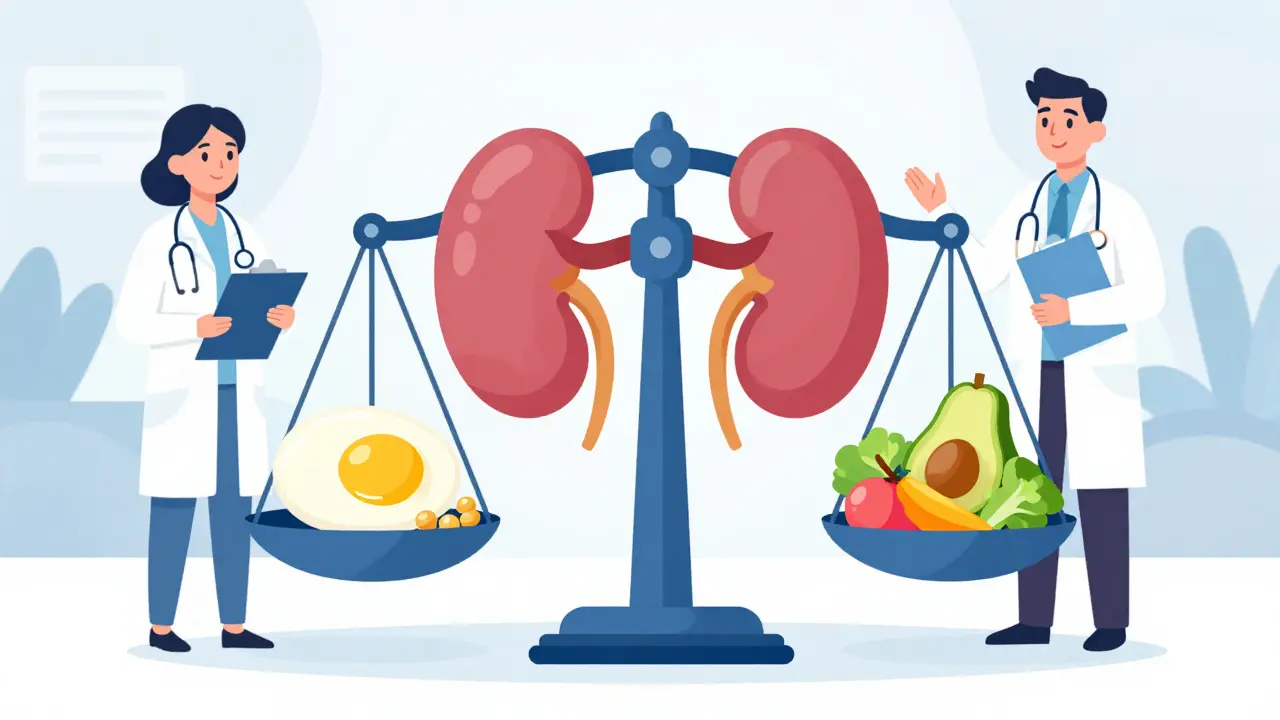
Let's be real: tracking grams of protein is a headache. Most people struggle to know exactly how much protein is in a mixed dish like a casserole or a stew. If you're feeling overwhelmed, try these human-centered approaches:
- Use High-Biological-Value (HBV) Proteins: Focus on proteins that provide all essential amino acids (like eggs or soy) so you get more "bang for your buck" with fewer grams.
- Leverage Technology: Use a protein calculator or apps like MyFitnessPal. While they aren't perfect, they help you spot patterns in your eating.
- Meal Prep for the Win: Using resources like the Kidney Kitchen allows you to control ingredients and pre-calculate your protein for the week, reducing the stress of daily decisions.
- Work with a Renal Dietitian: This is the single biggest factor in success. Patients who work with specialists have significantly higher adherence rates because the plan is tailored to their specific blood work.
If you're in Stage 4 or 5 and struggling to meet your amino acid needs while keeping protein low, ask your doctor about Keto acid analogues. These are medical foods that can help prevent malnutrition without adding to the urea load in your blood.
Can I eat too little protein if I have CKD?
Yes. Excessive restriction can lead to Protein-Energy Wasting (PEW), where your body breaks down muscle tissue for energy. This leads to weakness, fatigue, and a higher risk of hospitalization. It is vital to balance protein restriction with adequate calorie intake from healthy fats and carbohydrates.
Are plant proteins always better for kidneys?
Generally, yes, because they produce less urea and phosphate. However, many plant proteins are high in potassium. For patients in advanced stages (4 or 5), this can be dangerous. Always check your potassium levels before increasing plant-based protein intake.
How often should I adjust my protein targets?
Protein targets should be reviewed every 4 to 6 weeks or whenever there is a significant change in your GFR or albumin levels. As kidney function changes, your dietary needs will shift, requiring adjustments from your nephrologist or dietitian.
What is a "high-biological-value" protein?
These are proteins that contain all the essential amino acids your body cannot make on its own, in the right proportions. Examples include eggs, lean poultry, fish, and soy. They are more efficient for the body to use, meaning you can maintain muscle mass with a smaller total amount of protein.
Does the 0.6 g/kg rule apply to everyone?
No. While 0.6 g/kg is a common target for Stages 3-5, it is not a one-size-fits-all rule. Older adults, people with diabetes, or those experiencing severe malnutrition may require higher targets to prevent muscle loss and other health complications.
What to Do Next
If you're just starting this journey, don't try to change everything overnight. Start by tracking your current protein intake for one week to see where you stand. Then, schedule a consultation with a registered renal dietitian to set your specific target based on your most recent GFR and blood work.
If you feel constant hunger or muscle weakness after starting a restriction, don't just "tough it out." This is a sign you might be under-eating calories or missing essential amino acids. Bring a food diary to your next appointment so your care team can help you tweak the plan without compromising your kidney health.
Allison Maier
May 2, 2026 AT 04:09too much reading 🙄
Ken Baldridge
May 2, 2026 AT 14:53Managing the GFR through nutritional intervention is a total game-changer for avoiding the dialysis treadmill. We really need to emphasize the synergy between HBV proteins and the mitigation of Protein-Energy Wasting to keep the metabolic homeostasis in check. It is an absolute rollercoaster of a journey, but getting the macronutrient ratios right is the gold standard for renal longevity!
Bradley Gusick
May 3, 2026 AT 02:09Following these guidelines is just another way for the medical establishment to control what we put in our bodies. Why is it always about restriction? They want us weak and dependent on their 'medical foods' and keto analogues. It is a racket designed to keep you in the system until you are forced into a dialysis center owned by some corporate giant. Wake up and look at who is actually profiting from these 'stages'!
Seema Karanje
May 3, 2026 AT 20:06Stop stressing over the numbers and just get a dietitian already! If you are failing to hit your targets, it is because you lack the discipline to prep your meals. Stop making excuses and start fixing your diet now before your kidneys completely shut down!
nikki paurillo
May 5, 2026 AT 10:16There is a certain poetic irony in how we must prune our desires-even the simple joy of a steak-to preserve the very vessel that sustains us. It is a kaleidoscopic shift in perspective, turning the act of eating from a mindless habit into a conscious, curated ritual of survival. We are essentially negotiating with our own biology in a delicate dance of scarcity and sustenance.
J. Walter Jenkem
May 6, 2026 AT 00:05I think focusing on the high-biological-value proteins is a great way to make this feel less restrictive for people just starting out.
princess lovearies
May 6, 2026 AT 12:25It really is all about finding that middle ground where you're not stressing your kidneys but also not starving your muscles. Just taking it one day at a time and listening to how your body feels is just as important as the clinical numbers. We all have to find a rhythm that works for our own unique lives and health journeys.