
Why Severe Drug Reactions Demand Immediate Action
Imagine taking a pill for a headache and suddenly struggling to breathe. That fear drives many people to research their medications before they pop them into their mouths. While most of us take medicines without incident, severe adverse drug reactions are real and can happen unexpectedly. You need to know the difference between a minor rash and a life-threatening emergency.
Severe Adverse Drug Reactions are responses to medications that are harmful and unintended. They occur at normal doses used for therapy. Unlike mild side effects like nausea, these events require immediate medical intervention to prevent permanent damage or death. The World Health Organization defines them clearly, emphasizing that 'no' does not mean 'mild.' Some reactions develop slowly, while others strike within minutes.
According to data from the U.S. Food and Drug Administration, a serious adverse event is classified by its outcome. Did it result in hospitalization? Was the patient at risk of dying? These criteria separate dangerous reactions from manageable side effects. You should never guess whether your reaction falls into the 'serious' category. If you feel uncertain, treat it as an emergency until proven otherwise.
Recognizing the Warning Signs
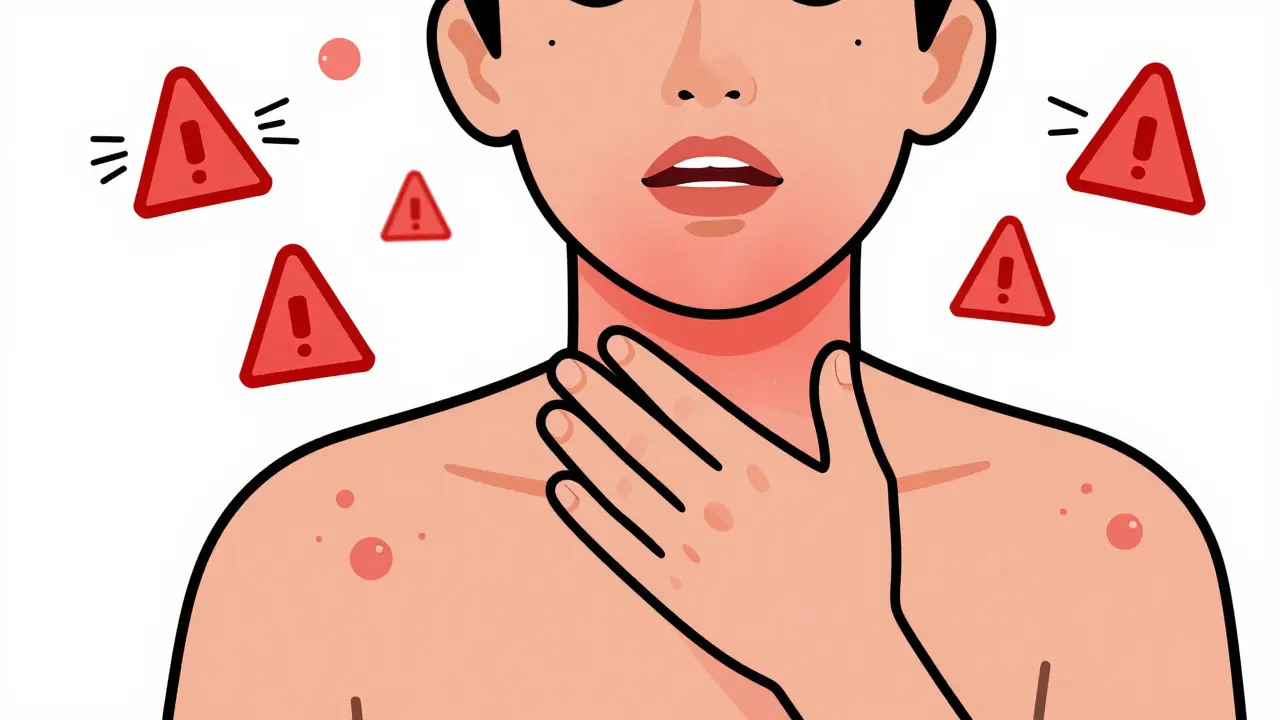
Your body sends signals when something goes wrong with a medication. Sometimes these signals are subtle, often starting as a feeling of unease before physical symptoms appear. Learning to identify the red flags means saving time when seconds count. The following symptoms indicate you need to stop the medication and seek help immediately.
- Airway Trouble: Tightness in the throat, wheezing, or difficulty swallowing.
- Skin Changes: Rapid spreading hives, blistering, or skin peeling off the surface.
- Circulatory Issues: Confusion, dizziness, fainting, or a sudden drop in blood pressure.
- Respiratory Distress: Severe shortness of breath or coughing that won't stop.
- Swelling: Puffiness around the eyes, lips, tongue, or face.
If you notice even one of these symptoms after starting a new drug, trust your gut. Do not wait to see if it gets worse. The Resuscitation Council UK guidelines emphasize that treatment should never be delayed by a lack of history. In an emergency setting, acting fast outweighs waiting for a perfect diagnosis.
Understanding Different Types of Severe Reactions
Not all bad reactions look the same. Medical professionals categorize them based on how your immune system reacts. Understanding the mechanics helps you grasp why some situations need epinephrine while others need burn unit care. There are four main immunological mechanisms identified by the American Academy of Family Physicians.
Anaphylaxis represents the most immediate danger. This Type I reaction involves IgE antibodies and can lead to collapse within minutes of exposure. The mortality rate for untreated cases ranges from 0.3% to 1%. Symptoms include bronchospasm and hypotension appearing quickly after ingestion or injection. Immediate administration of adrenaline is the gold standard here.
Conversely, delayed reactions like Type IV involve T-cells and manifest much later. Conditions such as Stevens-Johnson Syndrome fall here. These are severe cutaneous adverse reactions where the skin detaches. The National Library of Medicine notes mortality rates reach up to 50% in severe cases known as Toxic Epidermal Necrolysis. These conditions require specialized burn unit care rather than just an injection.
| Type | Onset Time | Key Symptom | Primary Treatment |
|---|---|---|---|
| Type I (Anaphylaxis) | Minutes to Hours | Difficulty Breathing | Epinephrine Injection |
| Type II (Cytotoxic) | 5-10 Days | Blood Disorders | Stop Medication |
| Type III (Immune Complex) | 7-14 Days | Serum Sickness | Corticosteroids |
| Type IV (Delayed) | Days to Weeks | Skin Peeling | Hospital Support Care |
The Immediate Action Plan
Knowing what to do when the alarm bells ring is crucial. Panic clouds judgment, so having a mental script helps you stay focused. When someone experiences signs of severe reaction, every minute lost increases the risk of permanent harm. Follow this sequence to ensure safety for yourself or others.
- Stop the drug immediately. Do not take another dose. If it is an infusion running in a hospital, alert staff instantly.
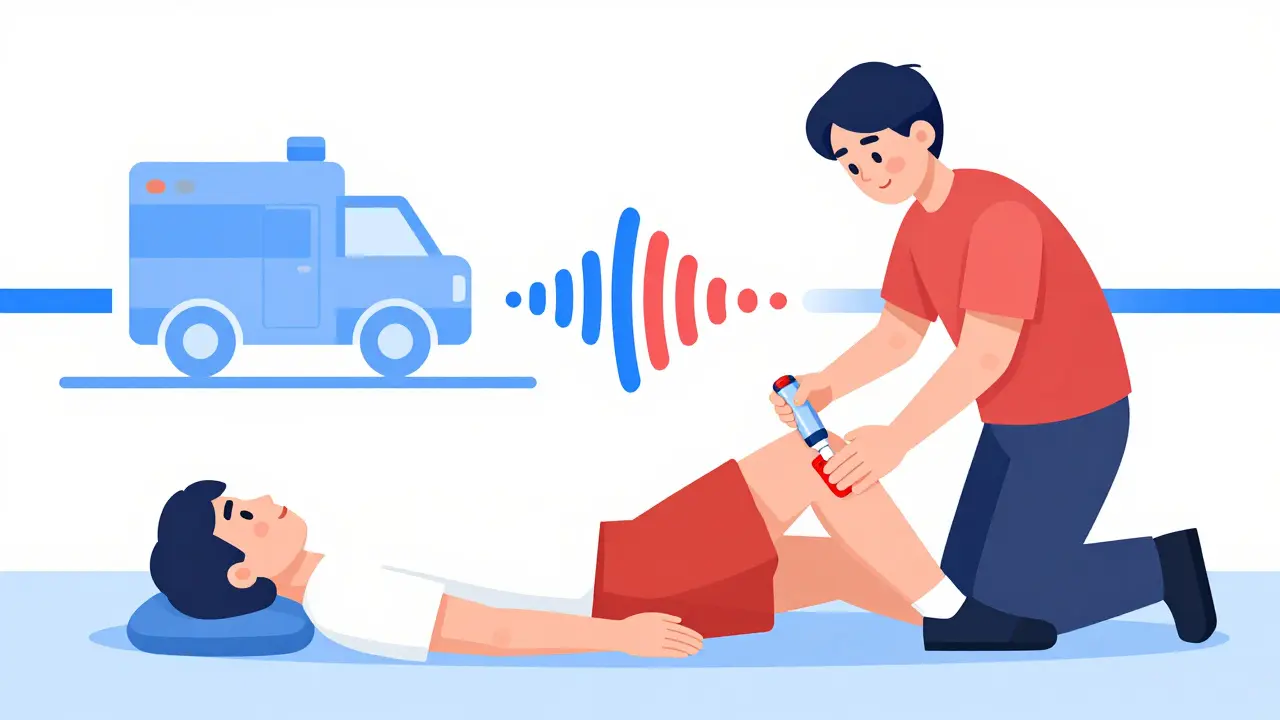
- Call emergency services. Dial 111 in New Zealand or 911 in the US. Tell them specifically, 'Suspected severe drug reaction.'
- Administer epinephrine if prescribed. If the person has an auto-injector, use it now. Inject into the mid-outer thigh. Do not worry about hitting bone; it is designed for muscle tissue.
- Lay the patient flat. Elevate legs if possible to improve blood flow to vital organs. Do not let them stand up.
- Stay with them. Monitor breathing and consciousness until paramedics arrive.
Dr. Ronna Campbell of Becker ENT emphasizes that you should not delay using epinephrine. Waiting for an ambulance to deliver it is too slow. The recommended dose is 0.01 mg/kg intramuscularly, maxing out at 0.5 mg. Guidelines from 2021 state that if symptoms persist, you may repeat the injection every five minutes.
High-Risk Medications to Watch
Some classes of drugs carry higher risks of severe reactions. While anyone can react to anything, certain medications are flagged by safety agencies as high-priority targets for prevention. Being aware of these helps you monitor your symptoms more closely when prescribed these specific agents.
Anticoagulants thin your blood to prevent clots. Their primary severe risk is bleeding, especially internal hemorrhage. These drugs require close monitoring of coagulation levels.
Opioids are pain relievers that suppress the brain's drive to breathe. Severe respiratory depression is the main danger, leading to unconsciousness and death if unmonitored.
Diabetes Agents lower blood sugar levels. The severe reaction here is hypoglycemia, which causes confusion, seizures, and coma if blood sugar drops too low.
Beyond these priority groups, antibiotics like penicillin are notorious triggers for allergic cascades. Even common painkillers like ibuprofen can trigger asthma attacks in sensitive individuals. Always read the warning leaflet included with your prescription. Your pharmacist is a valuable resource for understanding these risks.
Prevention and Future Management
Once a severe reaction occurs, preventing it from happening again is the next goal. Documentation plays a huge role in your long-term safety. Tell every doctor you visit about the drug that caused the problem. Ask them to put it in your electronic medical record under 'Allergies' so future prescriptions get flagged automatically.
Regulatory bodies like the FDA and the European Medicines Agency track millions of suspected adverse events worldwide. Systems like EudraVigilance help spot trends. By reporting your own reaction through official channels, you contribute to the safety of the wider population. The National Action Plan for Adverse Drug Event Prevention highlights that surveillance is key to reducing deaths from medication errors.
If you have a history of allergies, carry identification. Wearing a bracelet that lists your specific drug allergies ensures medical personnel know what to avoid even if you cannot speak. For those prone to anaphylaxis, always keep an epinephrine injector with you and check the expiration date regularly. Training on how to use it is mandatory for the device to be effective.
Frequently Asked Questions
Can antihistamines replace epinephrine in an emergency?
No. Antihistamines help with mild itching or hives but act too slowly to save a life during anaphylaxis. Epinephrine is the only first-line treatment that reverses airway swelling and blood pressure drops effectively.
How long after taking a drug do reactions start?
Timing varies widely. Anaphylaxis happens within minutes. Other severe skin reactions like DRESS syndrome can take 2 to 6 weeks to appear. Always link symptoms to recent medication changes.
What if I am allergic to multiple medications?
Work with an allergist to identify cross-reactive substances. They can prescribe alternative treatments that do not share chemical structures with the offending drugs.
Is a blistering rash always a medical emergency?
If blisters cover a large area or you have fever, yes. Mild localized blisters might be less urgent, but any widespread skin detachment requires immediate burn unit evaluation.
Should I report my drug reaction to authorities?
Yes. Reporting helps regulators track safety signals. Contact your local pharmacovigilance authority or the national reporting system found in your country's health ministry.
Victor Ortiz
April 1, 2026 AT 03:03The distinction between mild side effects and severe adverse reactions is often blurred by pharmaceutical marketing which conveniently omits the worst case scenarios from their brochures while the patient remains clueless until hospitalization occurs due to negligence. Most people ignore the warning labels because they assume modern medicine is perfectly safe without realizing the statistical probability of anaphylaxis exists regardless of previous tolerance levels. It is genuinely frustrating to see how little education patients receive regarding immunological cascades before they even swallow the first pill. You really need to understand that waiting for symptoms is already playing with fire when your immune system decides to attack its own tissues after exposure.
Amber Armstrong
April 2, 2026 AT 20:23I completely understand why you feel so strongly about this issue because safety should always be the absolute priority for every single person walking into a pharmacy today. Honestly reading through this made me think back to when my sister went through something similar with a routine antibiotic prescription and it changed our whole perspective forever on medication safety protocols. We spent so much time in the emergency room worrying and it was just absolutely heartbreaking watching her struggle with swelling that looked like she couldn't breathe at all. It makes me want everyone to carry their epinephrine injector with them everywhere just in case because you never know when your body might react badly to a new substance unexpectedly. We all deserve the right to know exactly what we are putting into our systems without any hidden surprises popping up days later when recovery becomes difficult. Please take care of yourselves and trust your instincts whenever something feels physically wrong inside your body during treatment. Sometimes the smallest symptom like a slight itch can grow into something major if left unchecked for too long. My family has learned to keep a detailed journal of every reaction we experience so doctors have better data for future prescriptions. Communication between healthcare providers is so vital yet it breaks down frequently in private practice settings across different regions. Insurance companies also play a huge role in limiting access to safer alternative medications that might cost more upfront initially. I wish there were more educational seminars available for the general public explaining these mechanisms without using complex medical jargon. Knowledge empowers us to advocate for ourselves when professionals seem hesitant to discuss risks openly during consultations. Every life lost to preventable drug reactions is a tragedy that could have been avoided with better awareness campaigns globally. We must prioritize prevention strategies alongside treatment options to truly reduce the incidence of these dangerous events statistically. Thank you for sharing such critical information with everyone who reads this thread today.
dPhanen DhrubRaaj
April 4, 2026 AT 05:48in my home we always check the leaflets carefully but sometimes the doctors do not explain enough about the allergies
Vikash Ranjan
April 4, 2026 AT 22:58You seem to forget that most side effects are actually reported underutilized due to lack of incentive for pharmacists. The industry benefits immensely from keeping these statistics vague so sales remain high without disruption. The motivation to document minor issues vanishes instantly when there is no financial gain involved in the process at all. Patients end up paying the price eventually when complications arise from unmonitored use patterns.
RONALD FOWLER
April 5, 2026 AT 12:37glad we can discuss this openly here as awareness helps prevent future incidents staying calm is key when administering emergency meds hope everyone stays safe
Biraju Shah
April 5, 2026 AT 19:17Awareness isn't enough without action when the signs appear. Everyone needs to commit to learning these protocols rather than hoping for the best outcome blindly. Proactive steps save lives far better than reactive measures in emergencies. Stop hesitating and start preparing yourself for potential threats immediately.
Cameron Redic
April 6, 2026 AT 21:13This info is basic stuff anyone should already know by heart. Why are we still debating this fundamental concept in 2026 like children in elementary school. The FDA data is public domain so stop acting surprised.
Marwood Construction
April 7, 2026 AT 13:59Fundamental concepts require reinforcement given the rate of non-compliance observed in clinical trials. Public understanding often lags behind regulatory publications by significant margins. Educational gaps persist despite availability of documentation. Continued vigilance remains necessary for optimal patient safety outcomes.
William Rhodes
April 7, 2026 AT 17:27We can beat this by being smarter than the disease and faster than the reaction speed. Confidence comes from preparation so get your auto-injector ready now. Do not fear the unknown when you have tools to fight back effectively. Life wins when you stand firm against these biological attacks bravely.
Dan Stoof
April 9, 2026 AT 16:06Yes!!! We totally can overcome anything together!! Prepare yourself!! Get those injectors checked regularly!!! Knowledge is power!!! Let's stay alive!!
Calvin H
April 10, 2026 AT 10:21Nothing ever changes even with all these warnings plastered on every package label available.
Carolyn Kask
April 10, 2026 AT 12:42Your cynicism ignores the progress made by American regulatory bodies compared to the rest of the world failing standards. We protect our citizens with laws you simply refuse to acknowledge in your lazy commentary. Stop whining and accept that compliance keeps you breathing longer overseas. Our systems work better than yours.
Katie Riston
April 10, 2026 AT 17:21There is a deep philosophical angle to why we trust substances to alter our internal chemistry so casually. Society conditions us to believe pills fix problems instantly without considering the fragility of human biology. We surrender control to chemicals hoping for magic results while ignoring the volatility of immune responses. True wisdom lies in respecting nature's boundaries rather than forcing intervention upon our bodies recklessly. We must align our health choices with ethical considerations regarding risk and benefit. Ignoring these signs reflects a broader societal disconnect from our physical reality entirely. Listening to the body speaks a truth that no doctor can fully capture in written guidelines alone. Prevention is ultimately an act of self-respect for the vessel we inhabit daily. We should honor the complexity of medicine by treating it with reverence.