
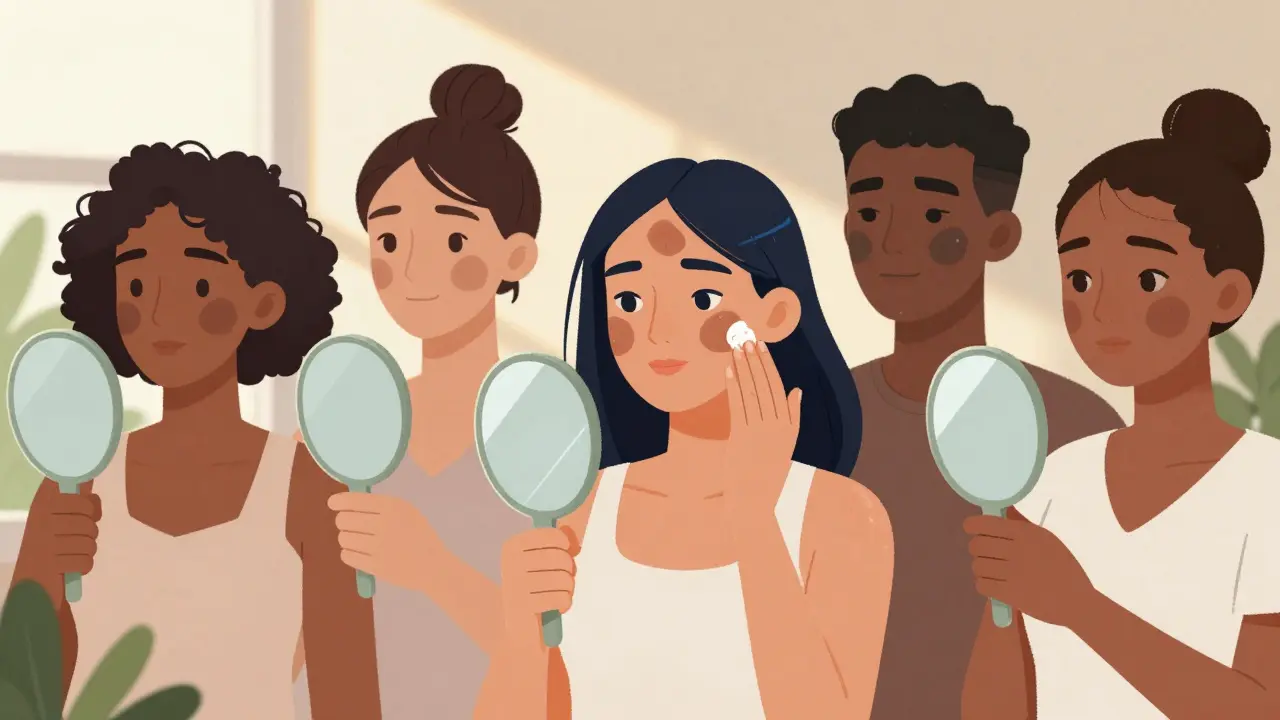
Why Hyperpigmentation Hits Harder on Darker Skin
When you have darker skin, a pimple doesn’t just fade away. It leaves behind a dark mark that can stick around for months-or even years. This isn’t just a cosmetic issue. For many people with skin of color, these dark patches feel like a permanent reminder of past breakouts, burns, or rashes. It’s called post-inflammatory hyperpigmentation, or PIH, and it’s one of the most common skin concerns in Black, Brown, and Asian skin tones.
Here’s why it happens: melanocytes, the cells that make pigment, go into overdrive after skin trauma. A cut, acne, eczema flare-up, or even a harsh scrub can trigger them to dump out extra melanin. In lighter skin, this might look like a faint pink spot. In darker skin, it turns into a deep brown or gray patch that’s hard to ignore. And unlike acne, which eventually clears, PIH can linger long after the original injury is gone.
The worst part? Sunlight makes it worse. UV rays don’t just burn-they signal melanocytes to keep producing pigment. Even on cloudy days or when you’re indoors near a window, UV exposure can darken those spots. Blue light from screens? It can too. That’s why tinted sunscreens with iron oxides are now a must-have. They block not just UVA and UVB, but also the blue light that aggravates hyperpigmentation in darker tones.
Melasma: More Than Just Sun Damage
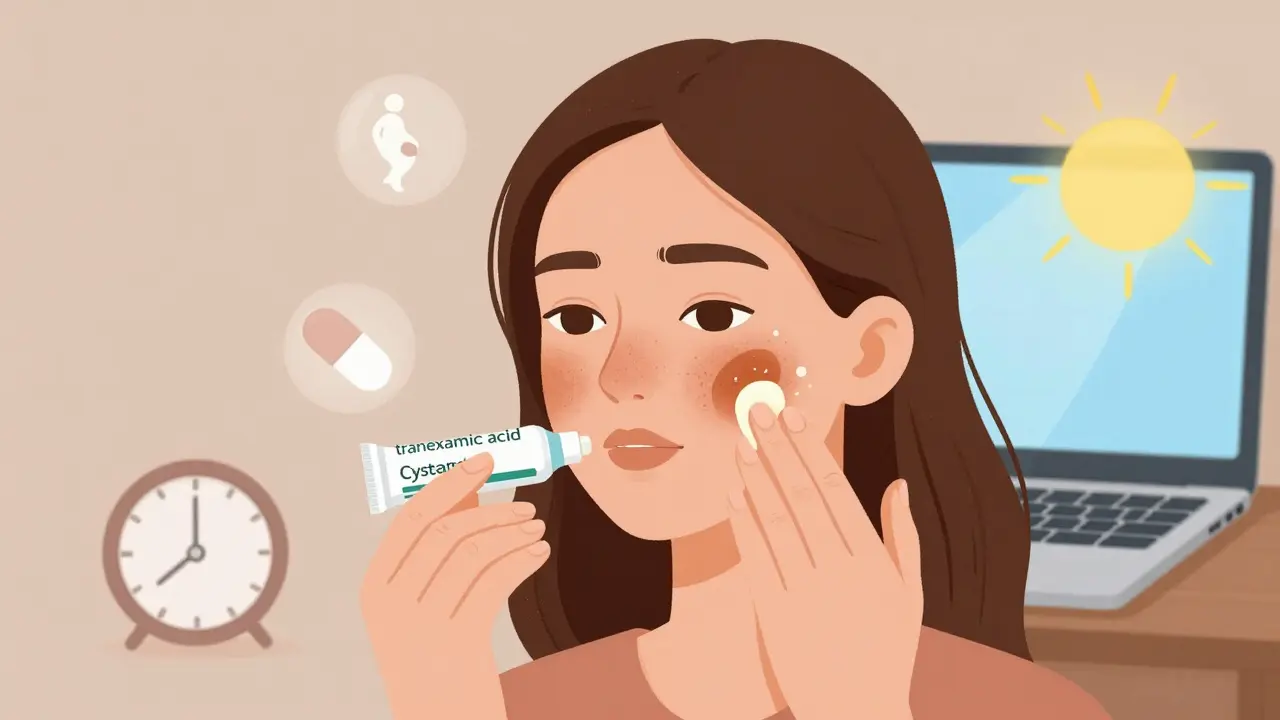
If you’re a woman with darker skin and you notice brown or gray patches showing up on your cheeks, forehead, or upper lip, you might be dealing with melasma. It’s not caused by a scratch or breakout-it’s hormonal. Pregnancy, birth control pills, and hormone replacement therapy can all trigger it. That’s why it’s sometimes called the “mask of pregnancy.”
Melasma is stubborn. It doesn’t go away just because you stop taking the pill or have your baby. And unlike PIH, which fades slowly on its own, melasma often needs targeted treatment. Topical creams with hydroquinone, azelaic acid, or kojic acid can help, but results take time. Recent studies show that tranexamic acid, applied topically or taken orally, and 5% cysteamine cream are promising alternatives to older treatments that sometimes irritate sensitive skin.
One key difference between melasma and PIH? Melasma doesn’t care about your age or gender-it’s mostly women, but it can affect men too. And it’s not just a face issue. It can spread to the neck and arms if you’re not protecting your skin daily.
What Actually Works: Skincare That Doesn’t Irritate
Too many people with darker skin have tried aggressive treatments-strong peels, lasers, or high-percentage acids-only to end up with darker spots or burns. That’s because darker skin has more active melanocytes, and it reacts badly to trauma. The goal isn’t to strip the skin, but to calm it down and gently correct pigment.
Start with the basics: sunscreen every single day. Not just when you’re at the beach. Every morning. Even if it’s raining. Use a broad-spectrum SPF 30 or higher with iron oxides. Look for formulas labeled “tinted”-they blend better and offer extra protection against blue light.
Next, add brightening ingredients that are proven to work without irritation:
- Vitamin C: A gentle antioxidant that blocks pigment production and brightens skin over time.
- Azelaic acid: Reduces inflammation and fades dark spots. Safe for sensitive skin and even during pregnancy.
- Kojic acid: Derived from fungi, it inhibits melanin without the harshness of hydroquinone.
- Tretinoin: A retinoid that speeds up skin cell turnover. Start low-0.025%-to avoid redness or peeling.
- Tranexamic acid and cysteamine: Newer options backed by research. They’re especially helpful for melasma and stubborn PIH.
Don’t use multiple strong actives at once. Layer them slowly. Use vitamin C in the morning, tretinoin at night, and skip acids on days you feel sensitivity. Consistency beats intensity.
When to See a Dermatologist
If you’ve been using sunscreen and gentle brighteners for three to four months with no change, it’s time to see a specialist. Not every dermatologist understands skin of color. Look for one who specifically treats patients with darker tones and has experience with PIH and melasma.
A good dermatologist will:
- Check for underlying causes like acne, psoriasis, or fungal infections that feed hyperpigmentation.
- Review your medications-some antibiotics, antimalarials, and even certain chemotherapy drugs can darken skin.
- Recommend chemical peels only if they’re mild (like lactic or mandelic acid) and performed by someone experienced with pigmented skin.
- Avoid aggressive lasers unless absolutely necessary. Q-switched lasers can work, but they carry a high risk of worsening pigmentation if not done right.
Many patients don’t realize that treating the root cause is half the battle. If you’re still breaking out, the dark spots will keep coming. Acne control is often the missing piece.
Keloids: When Scars Grow Beyond the Wound
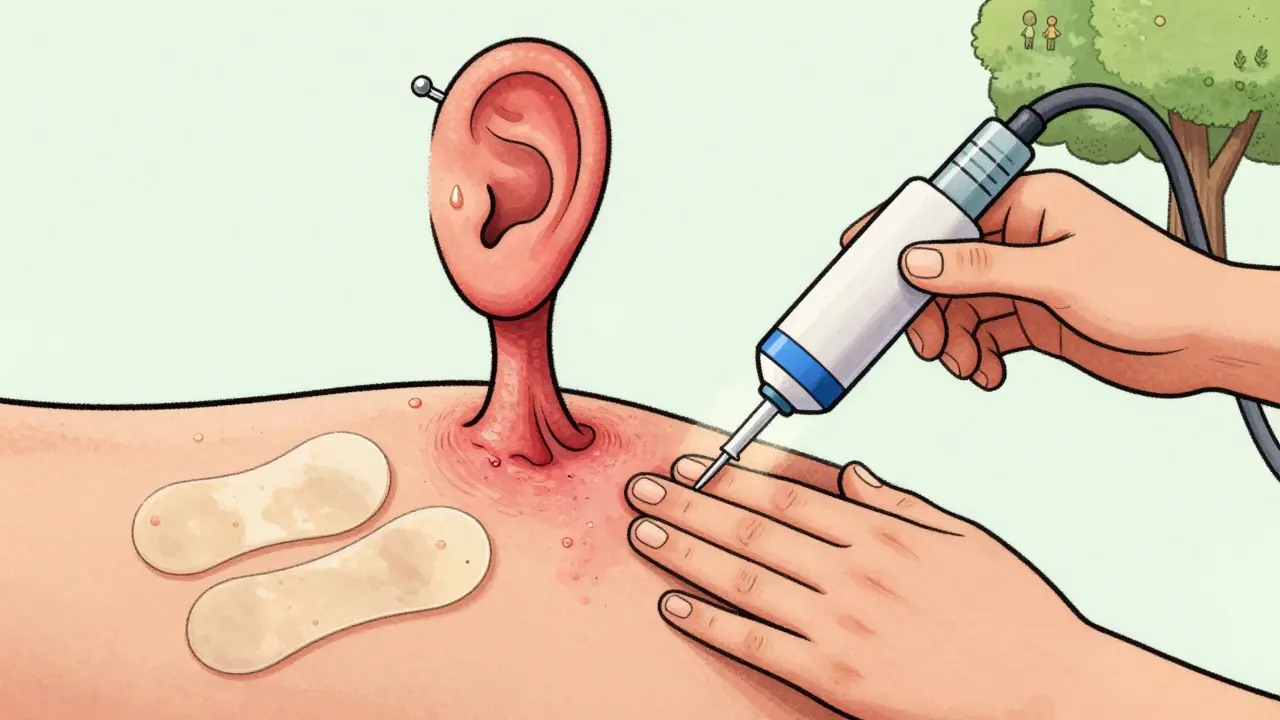
While hyperpigmentation leaves flat dark marks, keloids are different-they’re raised, thick, rubbery scars that grow far beyond the original injury. They can form after piercings, cuts, surgery, or even minor acne. And they’re far more common in people with skin of color.
Studies show that Black, Hispanic, and Asian individuals are up to 15 times more likely to develop keloids than those with lighter skin. They’re not dangerous, but they can be painful, itchy, and deeply distressing. Many people avoid piercings or surgeries because they fear keloids.
Treatment is tricky. Unlike hyperpigmentation, you can’t just apply a cream and wait. Keloids need a multi-pronged approach:
- Silicone sheets or gel: Applied daily, they flatten and soften keloids over months.
- Corticosteroid injections: These reduce inflammation and shrink the scar. Usually done every 4-6 weeks.
- Cryotherapy: Freezing the keloid can help, especially when combined with injections.
- Laser therapy: Pulsed dye lasers reduce redness and flatten the scar, but must be used carefully to avoid triggering more growth.
- Surgery: Cutting out a keloid alone often makes it worse. It’s only done with follow-up radiation or steroid injections to prevent recurrence.
The key? Start early. The sooner you treat a new keloid, the better the outcome. If you know you’re prone to them, talk to your doctor before any procedure-especially ear piercings, C-sections, or tattoos.
Living With It: Beyond the Cream
Hyperpigmentation and keloids aren’t just skin deep. They affect confidence, social life, and mental health. A 2023 study by the American Society for Dermatologic Surgery found that patients with visible skin discoloration reported anxiety, avoidance of social situations, and even depression.
That’s why treatment isn’t just about creams and lasers. It’s about support. Joining a community, talking to others who’ve been through it, or seeing a therapist who understands skin-related trauma can be as important as your skincare routine.
And remember: progress isn’t linear. Some weeks your skin looks clearer. Other weeks, stress or sun exposure brings back the dark spots. That’s normal. Healing takes patience. What matters is that you’re consistent, protected, and not giving up.
What Not to Do
There are so many myths out there. Don’t:
- Use lemon juice or baking soda on your face. They’re acidic and can burn darker skin, making pigmentation worse.
- Wait until summer to wear sunscreen. UV damage happens year-round.
- Try to pop pimples or pick at scabs. Every time you do, you risk a new dark spot.
- Assume a treatment that worked for a friend will work for you. Skin of color isn’t one-size-fits-all.
- Ignore keloids thinking they’ll go away. They won’t. Early intervention saves you from bigger problems later.
Final Thoughts: You’re Not Alone
Having darker skin doesn’t mean you’re doomed to live with dark marks or raised scars. The tools to manage them exist. It’s not about perfection-it’s about progress. Sunscreen every day. Gentle products. Professional help when needed. And patience.
Hyperpigmentation fades. Keloids can shrink. Your skin can heal. But it starts with knowing your skin, protecting it, and refusing to accept that these conditions are just ‘normal’ for your tone. They’re treatable. And you deserve to feel confident in your skin-no matter what it looks like.
Why does hyperpigmentation last longer in darker skin?
Darker skin has more active melanocytes, which produce more pigment. After inflammation or injury, these cells overproduce melanin and don’t shut off quickly. The pigment also gets trapped deeper in the skin layers, making it harder to fade. This is why PIH can last months or years, while in lighter skin, it often clears in weeks.
Can I use hydroquinone safely on my skin of color?
Yes, but only under medical supervision. Hydroquinone is effective at blocking pigment production, but long-term or high-dose use can cause ochronosis-a rare condition where the skin turns blue-black. Dermatologists typically prescribe 2-4% hydroquinone for short-term use (3-6 months) combined with retinoids and sunscreen to minimize risks.
Is laser treatment safe for keloids in dark skin?
Some lasers can be used safely, but only by experts familiar with skin of color. Pulsed dye lasers reduce redness and flatten keloids without damaging surrounding tissue. However, aggressive lasers like CO2 or IPL carry a high risk of triggering more keloid growth or worsening pigmentation. Always ask about the provider’s experience with keloids in darker skin before proceeding.
What’s the best sunscreen for dark skin with hyperpigmentation?
Look for a broad-spectrum SPF 30+ with iron oxides and a tint that matches your skin tone. Iron oxides block blue light from screens and sunlight, which can worsen dark spots. Tinted formulas also help blend naturally without leaving a white cast. Mineral sunscreens with zinc oxide are less irritating and ideal for sensitive skin.
Can stress make hyperpigmentation worse?
Yes. Stress triggers inflammation in the body, which can activate melanocytes and lead to new dark spots. It can also worsen acne or eczema, both of which cause PIH. Managing stress through sleep, exercise, or mindfulness can help reduce flare-ups and support skin healing.
Are keloids hereditary?
Yes. If one or both of your parents have keloids, you’re more likely to develop them. Genetics play a strong role in how your skin heals. If you have a family history, take extra care with piercings, tattoos, or surgeries, and talk to a dermatologist before any skin trauma.
Next Steps: What to Do Today
- Check your current sunscreen. Does it have iron oxides and SPF 30+? If not, switch today.
- Look at your skincare routine. Are you using anything that causes peeling, redness, or burning? Replace it with gentler options like azelaic acid or vitamin C.
- Take a photo of any dark spots or keloids. Track changes over the next 30 days.
- Book a dermatologist appointment if you’ve tried basics for 3 months with no improvement.
- Start a habit: every morning, apply sunscreen before you do anything else-even if you’re staying inside.
Janette Martens
December 29, 2025 AT 04:24Also, sunscreen? In Canada? It's snowing. Why are you telling me to wear sunscreen when my nose is literally freezing off?
Marie-Pierre Gonzalez
December 30, 2025 AT 16:02Many dermatologists dismiss our concerns as 'cosmetic'-but the psychological toll is real. I’ve cried in front of mirrors, avoided photos, and declined job interviews because of my skin.
Thank you for validating that this is not vanity-it is health. And thank you for mentioning cysteamine. I’ve been using it for six months now, and my cheeks are finally returning to their natural tone.
Louis Paré
December 31, 2025 AT 22:58Meanwhile, they’re selling you $200 serums while Black women in Lagos are using shea butter and lemon juice because they can’t afford your 'tinted iron oxide' nonsense.
Also, who gave you the right to speak for 'skin of color'? You sound like a Sephora influencer with a medical degree.
Payton Daily
January 2, 2026 AT 18:02I got a scar from a burn when I was 12 and I still rock it. It’s a badge. You know what I’m saying?
Also, sunscreen? Bro, I don’t even go outside. I live in my room. My phone screen is my only sun.
Kelsey Youmans
January 3, 2026 AT 10:08I particularly appreciate the emphasis on the psychological impact. Skin health is inseparable from mental well-being, and this perspective is too often absent in medical literature.
Thank you for writing with both precision and compassion.
Sydney Lee
January 3, 2026 AT 17:23It’s 2024. We have AI that can diagnose melanoma from a photo, but we still have white doctors treating Black patients with the same protocols they use for fair skin.
And don’t get me started on the fact that 'tinted sunscreen' is still considered a 'niche' product. It’s not niche. It’s essential.
Also, why are we still calling it 'hyperpigmentation'? That’s just a fancy way of saying 'dark skin.' We’re not the problem. The system is.
oluwarotimi w alaka
January 4, 2026 AT 06:38My cousin got keloids after a tattoo and now he can't get a job. He's been followed in stores for 10 years. You think that's coincidence?
They want us to spend money on creams while they sell us fake hope. The real cure? Stop using tap water. Drink rainwater. And stop using phones. Blue light is a weapon.
Debra Cagwin
January 4, 2026 AT 11:22I used to think I had to use every product on the shelf to 'fix' myself. Then I learned: consistency > complexity.
Start with sunscreen. One step. One day. Then add vitamin C. Then maybe tretinoin.
You don’t need to be perfect. You just need to show up. And you’re already doing that by reading this. That’s courage.
Hakim Bachiri
January 5, 2026 AT 23:01Did you know that in Nigeria, women use shea butter mixed with turmeric? That’s not 'natural'-it’s science. Turmeric has curcumin, which inhibits tyrosinase better than kojic acid.
And why are we still using 'tinted' sunscreen? Tinted is for people who don’t want to look like themselves.
Also, lasers? No. Never. They’re just fancy burners. The real solution? Stop eating sugar. Sugar = inflammation = dark spots.
And if you’re using hydroquinone? You’re playing with fire. Ochronosis isn’t rare-it’s just ignored.
Celia McTighe
January 7, 2026 AT 20:27My mom used to say, 'Just cover it with foundation.' But no one ever said, 'It’s not your fault your skin reacts this way.'
Thank you for saying it’s okay to take 6 months. For saying it’s okay to cry. For saying it’s okay to not be fixed.
Also, I just bought a tinted sunscreen with iron oxide. And I’m not sorry. 😊
Ryan Touhill
January 7, 2026 AT 22:11It’s not cosmetic. It’s cultural. It’s racial. It’s systemic.
And yet, dermatology journals still publish studies with 95% white participants.
Someone needs to sue the American Academy of Dermatology. This isn’t healthcare. It’s exclusion dressed up as science.
Teresa Marzo Lostalé
January 8, 2026 AT 18:41It’s not about looks. It’s about control.
My body doesn’t heal like yours. And no one told me that until I was 32.
Thank you for saying it out loud.
Samantha Hobbs
January 10, 2026 AT 02:21