
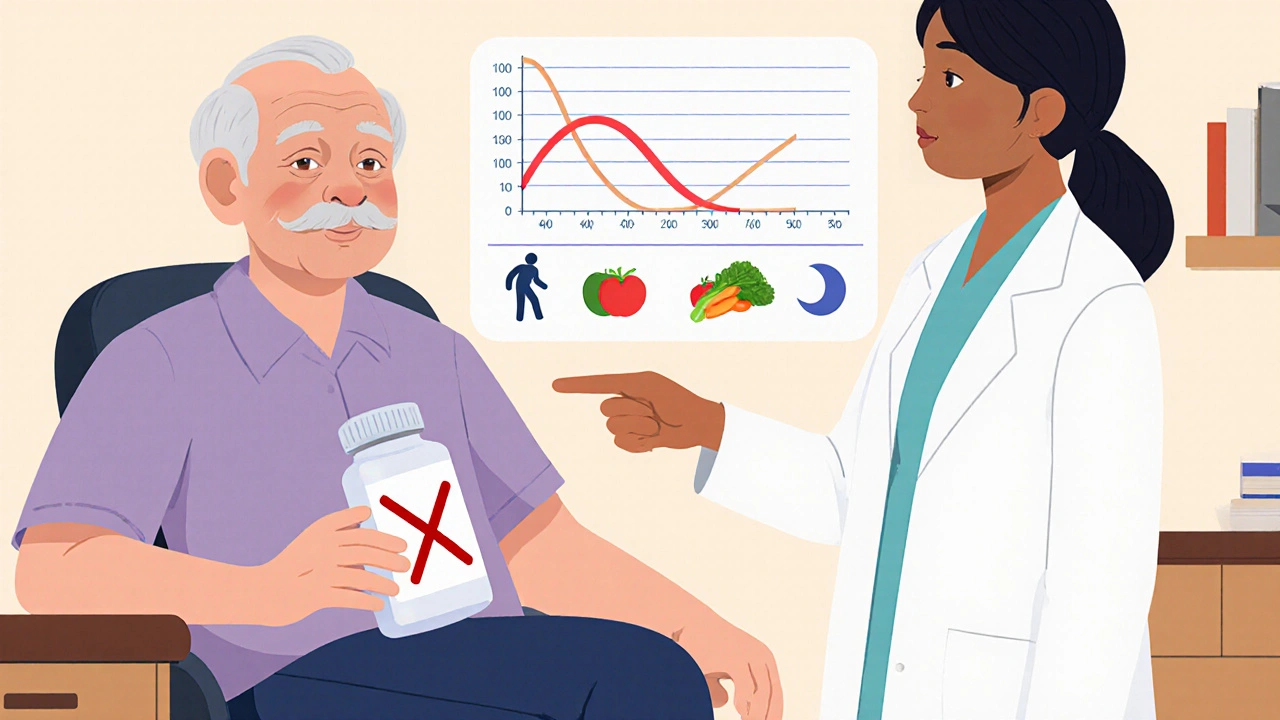
Statin Discontinuation Risk Calculator
What this calculator helps you understand
This tool helps you assess whether stopping statins might be appropriate for you based on your personal health situation. It considers factors like age, health status, history of heart disease, and current symptoms.
Important: This calculator provides an estimate only. Always consult with your doctor before making decisions about stopping any medication.
Personal Risk Assessment
Your Personal Risk Assessment
Millions of people take statins every day to lower cholesterol and prevent heart attacks and strokes. But what happens when the benefits no longer outweigh the risks? For many, especially older adults or those with serious illnesses, continuing statins may do more harm than good. The question isn’t just when to stop statins-it’s how to do it without putting your health at risk.
Why Do People Stop Statins?
About 19% of people taking statins stop them for at least a year, according to a large 2013 study. Most don’t stop because their doctor told them to. They stop because they feel bad. Muscle pain, weakness, or fatigue are the top reasons. Many worry about developing type 2 diabetes, liver damage, or memory problems-even though research shows these side effects are rare for most people. The truth is, a lot of the side effects people blame on statins aren’t actually caused by them. In clinical trials, patients given a placebo reported the same muscle aches as those on statins. But when people hear their doctor says, “You’re on a statin,” they start noticing every twinge. Fear becomes a self-fulfilling prophecy. Still, for some, the side effects are real. And when they’re severe enough to affect daily life, continuing the drug doesn’t make sense.Who Should Consider Stopping Statins?
Not everyone should stop. But certain groups have strong reasons to reconsider:- People with a life expectancy under two years. If you’re in hospice, recovering from advanced cancer, or have severe heart failure, statins won’t extend your life. They just add pills to your routine. A 2023 clinical guide from MyPCnow says stopping statins in these cases is not just safe-it’s often the right choice.
- Older adults with multiple chronic conditions. If you’re 75 or older, taking five or more medications, and have no history of heart attack or stroke, the long-term benefit of statins is unclear. A 2020 review in the Journal of the American Geriatrics Society found that three major guidelines now recommend considering discontinuation in frail or multimorbid older adults.
- People who had side effects but never got proper testing. Many stop statins after one bad reaction. But not all statins are the same. Switching from atorvastatin to pravastatin, or reducing the dose, might solve the problem without losing protection.
What Happens When You Stop?
Stopping statins doesn’t mean your cholesterol instantly spikes back to dangerous levels. But your risk for heart events does rise-especially if you’ve already had a heart attack or stroke. A 2021 JAMA study tracked over 100,000 people who stopped statins. For those with prior heart disease (secondary prevention), stopping led to one extra major heart event for every 77 people per year. For those without prior heart disease (primary prevention), it was one extra event for every 112 people per year. That sounds scary. But context matters. If you’re 90, in a nursing home, and can’t walk without help, that 1% extra risk doesn’t change your daily reality. Your goal isn’t to live 20 more years-it’s to feel better now. For people nearing the end of life, a 2024 review of studies found no increase in short-term death after stopping statins. One randomized trial even showed patients with terminal cancer felt less bloated and had fewer digestive issues after stopping.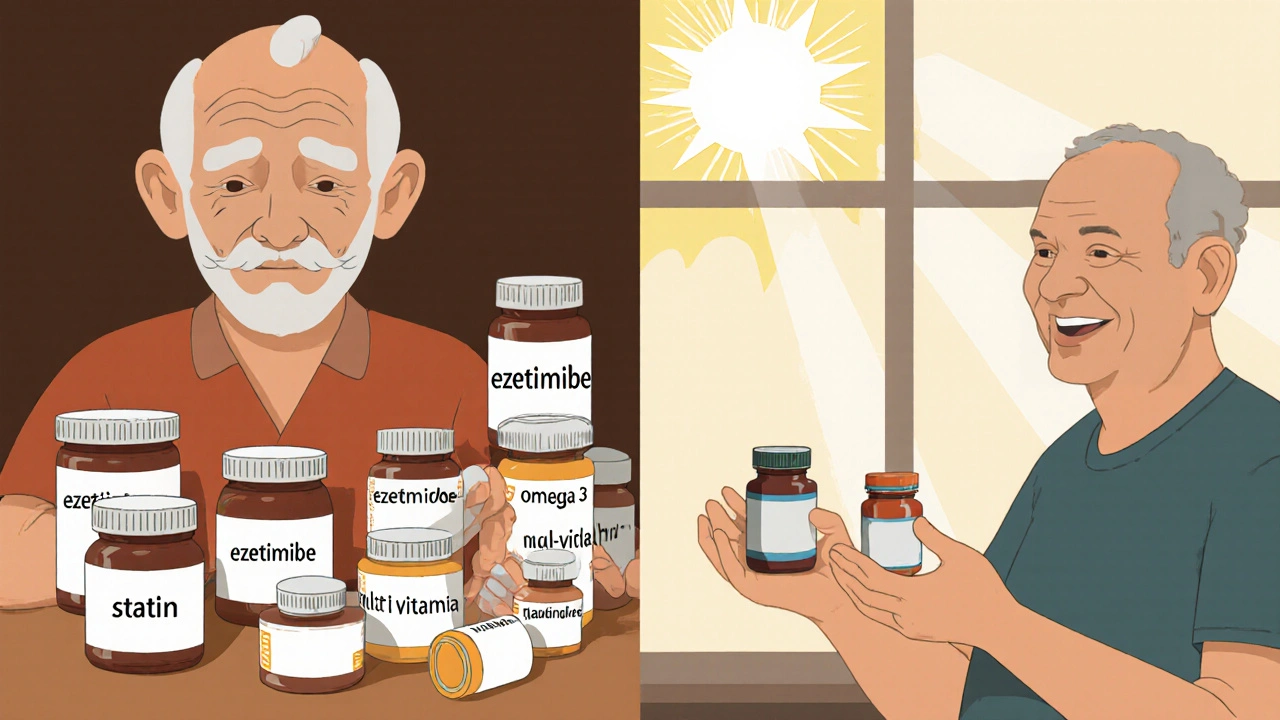
How to Stop Safely
Never just quit cold turkey without talking to your doctor. But you also don’t need to taper slowly like you would with antidepressants or blood pressure meds. Statins don’t cause withdrawal symptoms. Here’s how to do it right:- Have a real conversation. Don’t let your doctor assume you’re stopping because you’re noncompliant. Tell them why. Are you tired? Do you have muscle pain? Are you worried about side effects? Write it down if you need to.
- Check your risk level. If you’ve had a stent, bypass surgery, or heart attack, stopping is riskier. If you’ve never had heart disease, your risk is lower-and so is the benefit of statins.
- Try alternatives first. If muscle pain is the issue, switch to a different statin (like rosuvastatin or fluvastatin) at half the dose. Or try taking it every other day. Some people tolerate intermittent dosing just fine.
- Consider non-statin options. Ezetimibe (Zetia) lowers cholesterol without muscle side effects. PCSK9 inhibitors like Repatha or Praluent are powerful but expensive. Fibrates or high-dose omega-3s may help if triglycerides are high. These aren’t magic bullets, but they’re tools.
- Monitor after stopping. Get your cholesterol checked in 3-6 months. If LDL jumps above 190 mg/dL, talk to your doctor about restarting. Also watch for new chest pain, shortness of breath, or swelling in your legs.
What About the Long-Term?
Many people feel trapped. They were told statins are for life-and now they’re stuck with pills they don’t want to take. But medicine isn’t static. Your body changes. Your goals change. A major trial called “Discontinuing Statins in Multimorbid Older Adults” is currently underway in Europe. It’s following 1,800 people over 70 with multiple chronic conditions who are randomly assigned to either keep or stop statins. The goal? To see if stopping affects quality of life, muscle strength, falls, and heart events over two years. Results are expected in late 2025. This isn’t about giving up on heart health. It’s about being smarter about it. If you’re not living longer because of statins, are you living better?What Doctors Miss
Most doctors don’t ask about deprescribing. Electronic records often log statin discontinuation as “no longer necessary”-a vague term that hides the real reason: muscle pain, confusion, or patient preference. That makes it harder to study patterns and improve care. Pharmacists are often better at this. They see your full pill bottle. They know what you’re actually taking-and what you’re struggling with. Ask to talk to your pharmacy’s clinical pharmacist. They can help you weigh risks, suggest alternatives, and even call your doctor on your behalf.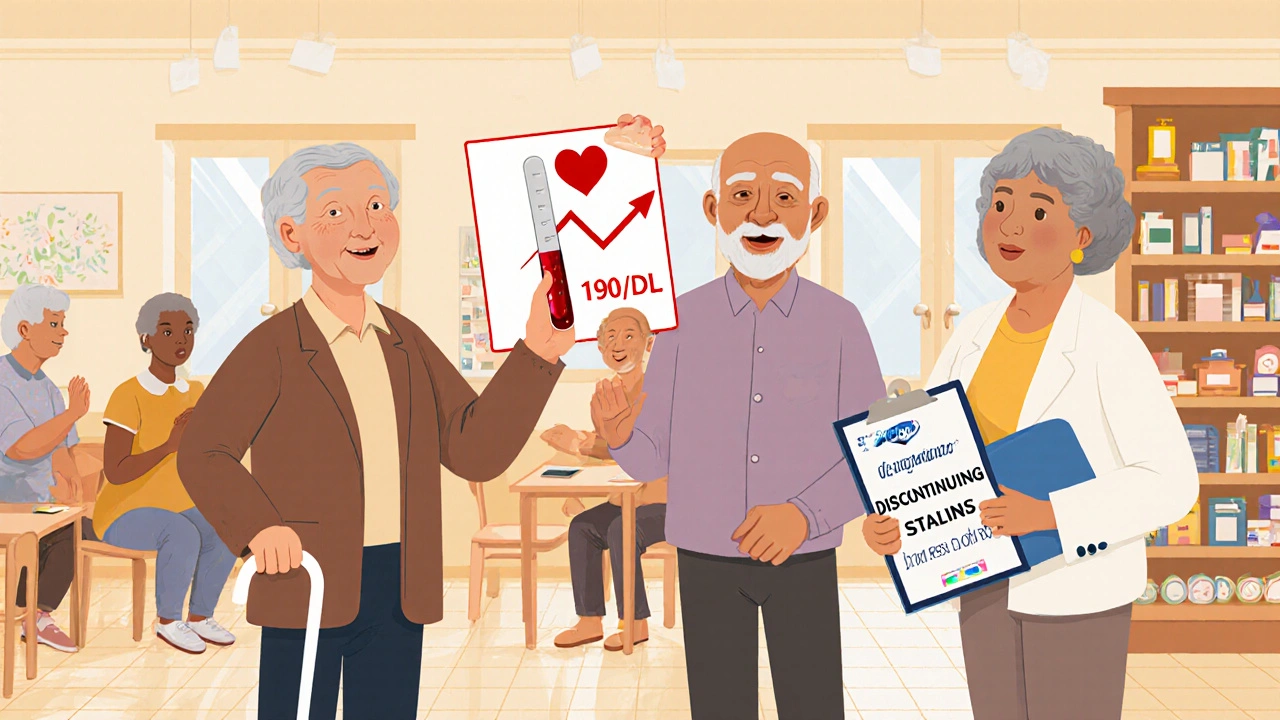
Real Stories, Real Choices
One 82-year-old woman stopped her statin after years of muscle pain. She didn’t have heart disease. Her LDL was 140. She felt stronger within weeks. Her doctor agreed: the risk of a future heart event was low, and her quality of life had improved. Another man, 70, with a history of heart attack, stopped his statin because he thought he was “cured.” His LDL jumped to 210. Six months later, he had chest pain. He restarted the statin. He’s fine now. The difference? One had no prior heart disease. The other did. That’s the line.Final Thought
Statins save lives-but not for everyone, all the time. The decision to stop isn’t about being lazy or rebellious. It’s about aligning your treatment with your life. If you’re young and healthy, keep taking them. If you’re older, sick, or tired of side effects, ask: “Is this still helping me?” There’s no shame in stopping. There’s only shame in never asking the question.Can I stop statins on my own?
You can stop taking statins without a prescription, but you shouldn’t. Stopping without medical guidance means you might not know if your cholesterol is rising or if you’re at risk for a heart event. Always talk to your doctor first. They can help you assess your risk and decide if stopping is safe for you.
Will my cholesterol go back up if I stop statins?
Yes, your LDL cholesterol will likely rise within weeks of stopping. How high it goes depends on your genetics, diet, and baseline risk. For people with inherited high cholesterol or prior heart disease, it can climb quickly. For others, especially older adults without heart disease, the rise may be slower and less dangerous. A follow-up blood test in 3-6 months will show you where you stand.
Are there natural ways to replace statins?
Diet and exercise help lower cholesterol, but they rarely replace statins for people at high risk. Eating more fiber, nuts, and plant sterols can lower LDL by 10-15%. But if your risk is high-like after a heart attack-you’ll still need medication. Supplements like red yeast rice contain natural statins and carry the same risks. Don’t rely on them as a safe alternative without medical advice.
Is it safe to stop statins if I’m over 75?
It can be. For people over 75 with no history of heart disease, the benefit of statins is small. The American Geriatrics Society says it’s reasonable to consider stopping in older adults with poor health, multiple medications, or limited life expectancy. But if you’ve had a heart attack, stroke, or stent, stopping increases your risk of another event. Talk to your doctor about your personal risk, not just your age.
What if I stop statins and feel worse?
If you feel worse after stopping-like new chest pain, shortness of breath, or swelling in your legs-contact your doctor right away. These could be signs of worsening heart disease. Muscle pain that returns might mean the statin side effect was real, but not necessarily from the drug itself. Your doctor can help you figure out what’s going on and whether you need to restart or switch.
Can I restart statins later if I change my mind?
Yes. Many people stop statins and later restart them after a heart event or if their risk changes. There’s no penalty for restarting. In fact, a 2019 study found that 42% of people who stopped statins eventually restarted them. The key is to make the decision with your doctor-not in fear or frustration.
Do statins cause dementia or memory loss?
No strong evidence supports this. Early reports caused concern, but large studies from the FDA and the American Heart Association found no link between statins and dementia. Some people report fuzzy thinking when they start statins, but it’s usually temporary and rare. If you notice memory changes, tell your doctor-but don’t assume it’s the statin. Other medications, sleep issues, or aging are more likely causes.
What’s the best time of day to take statins?
It depends on the type. Older statins like simvastatin and lovastatin work best when taken at night because your liver makes most cholesterol while you sleep. Newer ones like atorvastatin and rosuvastatin last longer and can be taken any time of day. Your doctor or pharmacist can tell you which one you’re on and when to take it.
Graham Moyer-Stratton
November 28, 2025 AT 13:56tom charlton
November 28, 2025 AT 18:42anant ram
November 28, 2025 AT 18:48king tekken 6
November 29, 2025 AT 07:13DIVYA YADAV
November 30, 2025 AT 19:57Jacob Hepworth-wain
December 2, 2025 AT 07:18Craig Hartel
December 3, 2025 AT 08:54Chris Kahanic
December 3, 2025 AT 17:11Geethu E
December 3, 2025 AT 19:01Kim Clapper
December 5, 2025 AT 03:42Bruce Hennen
December 6, 2025 AT 21:11