
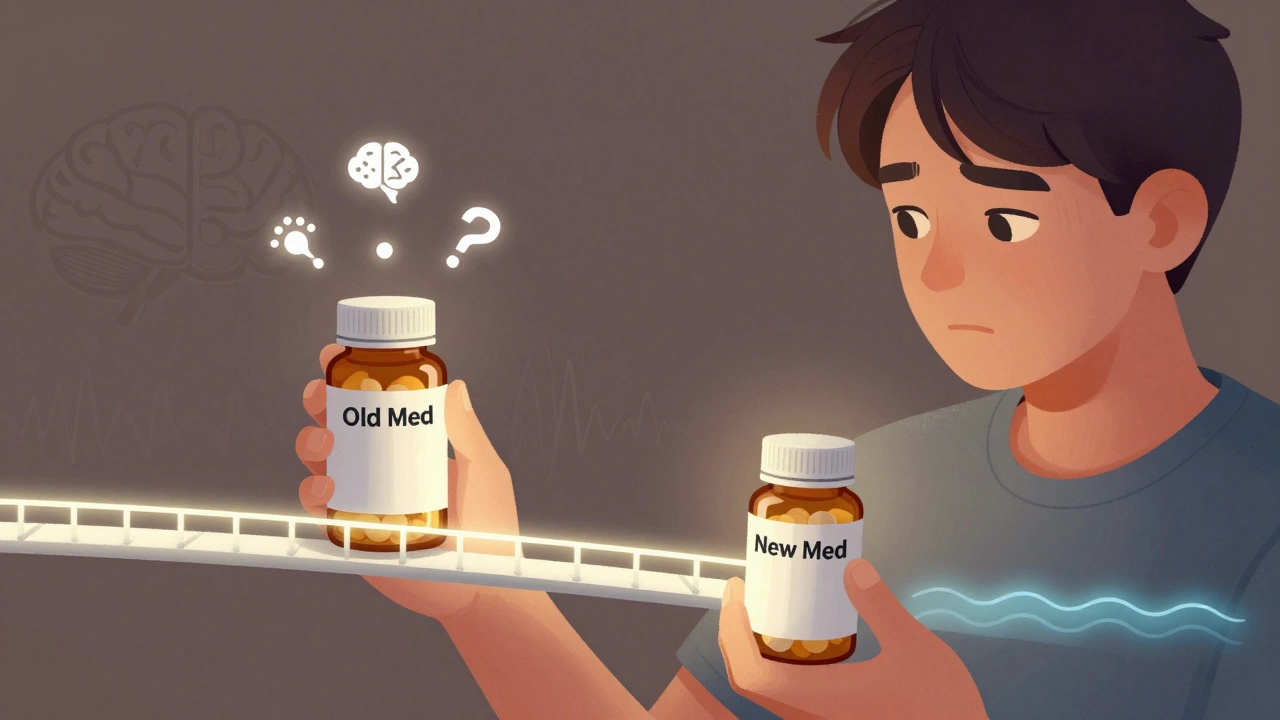
Antidepressant Switching Method Calculator
This tool helps determine the safest method for switching antidepressants based on your current medication, duration of use, and other risk factors. Always consult your doctor before making any medication changes.
Changing antidepressants isn’t something most people plan for. It usually happens because the current medication isn’t working, or the side effects are too hard to live with. Sexual problems, weight gain, nausea, or constant fatigue can make daily life feel impossible. But switching isn’t just stopping one pill and starting another. Do it wrong, and you could end up with brain zaps, dizziness, panic attacks, or worse-serotonin syndrome. The good news? With the right approach, you can make the transition smoother, safer, and far less disruptive.
Why Switching Antidepressants Is So Tricky
Not all antidepressants are created equal. Some leave your system quickly. Others stick around for weeks. That’s why jumping from one to another can trigger withdrawal symptoms that feel like a relapse of depression-but they’re not. Withdrawal hits fast: within days. Relapse takes weeks. If you feel dizzy, nauseous, or get electric-shock-like sensations in your head (called ‘brain zaps’) right after cutting your dose, it’s likely withdrawal-not your depression coming back. The biggest culprits for sudden withdrawal are medications with short half-lives: paroxetine and venlafaxine. These can cause symptoms within 24 to 48 hours of skipping a dose. Fluoxetine, on the other hand, sticks around for up to six weeks because of its long-lasting metabolite, norfluoxetine. That makes switching off fluoxetine slower but less likely to cause sudden withdrawal. Serotonin syndrome is the most serious risk when switching. It happens when too much serotonin builds up in your system-usually when you start a new serotonergic drug too soon after stopping another. Symptoms range from mild (sweating, shivering, restlessness) to life-threatening (high fever, muscle rigidity, seizures). This is why you can’t just switch from an SSRI to an MAOI without a long break. The rules are strict: at least two weeks between most antidepressants, and five weeks if you’re coming off fluoxetine.The Four Ways to Switch (And Which One Works Best)
There are four main strategies doctors use. None are one-size-fits-all, but one stands out as the safest for most people.- Direct switch: Stop the old drug and start the new one the next day. Fast, but risky. Only used when switching between drugs with low serotonin activity (like from an SSRI to bupropion) and even then, only if you’ve been on a low dose.
- Taper and switch: Stop the old drug completely, wait a few days, then start the new one. Works okay for drugs with long half-lives like fluoxetine, but leaves you vulnerable to withdrawal during the gap.
- Taper and switch with washout: Stop the old drug, wait weeks (especially important with fluoxetine or MAOIs), then start the new one. This is the gold standard when switching to or from MAOIs or when you’ve been on high doses for a long time.
- Cross-taper: Slowly reduce the old drug while slowly increasing the new one over 1-2 weeks. This is the most recommended method for most people. Studies show it cuts withdrawal symptoms by 42% compared to direct switches.
Who Needs Extra Caution?
Some people are at higher risk when switching. If any of these apply to you, your doctor should plan a slower, more careful transition:- You’ve been on the medication for more than 8 weeks
- You’re taking a high dose (over 40mg daily of most SSRIs)
- You’ve had withdrawal symptoms before
- You’re switching from paroxetine or venlafaxine
- You’re over 65 or have liver or kidney problems
- You’re under 25-this age group has higher risk of suicidal thoughts when starting or changing antidepressants
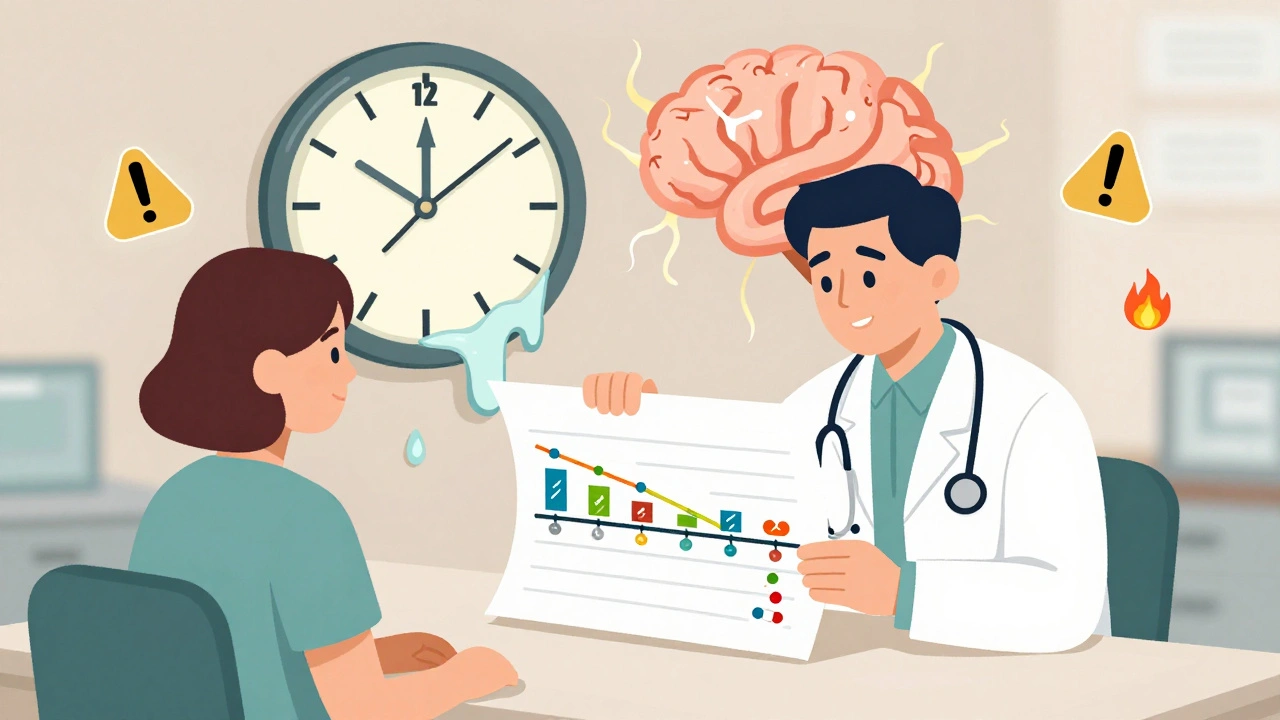
What to Expect During the Switch
Side effects during transition are common-but not always a sign something’s wrong. Here’s what most people experience:- Dizziness (28% of cases)
- Nausea (24%)
- Headaches (22%)
- Insomnia or sleep changes (19%)
- Brain zaps (33% with paroxetine)
- Rebound anxiety (common with venlafaxine)
How to Reduce Side Effects
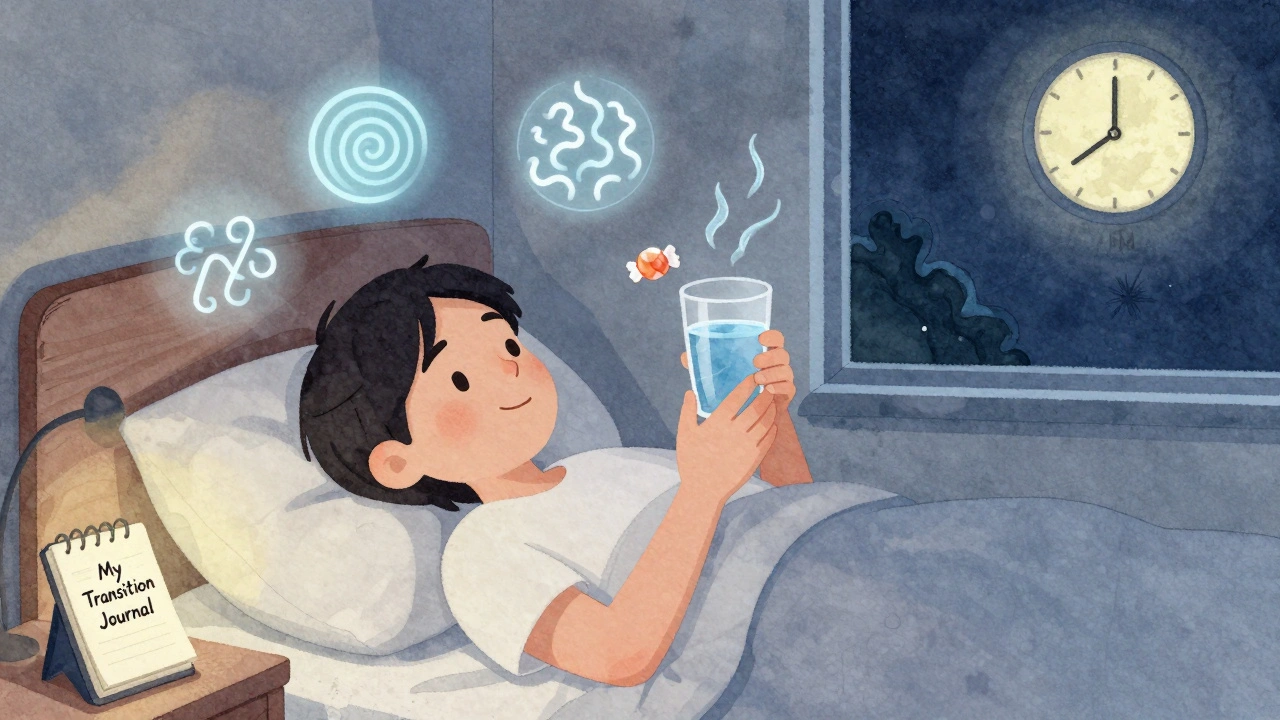
Small habits make a big difference during this time:- Take your new medication with food. It cuts nausea by up to 35%.
- Eat smaller, more frequent meals. Heavy meals can make nausea worse.
- Suck on sugar-free hard candy. Helps with dry mouth and nausea.
- Drink plenty of water. Dehydration makes dizziness and headaches worse.
- Don’t drink alcohol. It can worsen drowsiness, dizziness, and mood swings.
- Stick to your sleep schedule. Irregular sleep makes withdrawal symptoms feel worse.
When to See Your Doctor
You should have a check-in within two weeks of starting the new medication. If you’re under 25, have a history of suicidal thoughts, or had severe side effects before, you should be seen within one week. Call your doctor right away if you experience:- High fever (over 38°C)
- Severe muscle stiffness or twitching
- Rapid heartbeat or confusion
- Seizures
- Thoughts of self-harm
The Role of Patient Education
One of the biggest reasons people quit antidepressants or switch too fast is fear. They don’t know what’s normal. A 2022 UK study found that when patients were clearly told what withdrawal symptoms to expect, they were 37% less likely to stop treatment early. Knowledge reduces panic. Your doctor should explain:- Which symptoms are normal and temporary
- Which symptoms mean danger
- How long the transition will take
- What to do if things get worse
What’s New in Switching? (2025 Update)
Research is moving fast. One promising area is pharmacogenetic testing-like GeneSight. These blood tests look at your genes to predict how you’ll respond to certain antidepressants. In a 2022 trial, patients who used this testing had 28% higher remission rates. But it costs around $400 out-of-pocket in the U.S., and insurance rarely covers it yet. In New Zealand, it’s still mostly private and not widely used in public clinics. Another emerging option is ultra-low-dose naltrexone, a drug usually used for addiction. Early trials show it can reduce withdrawal symptoms by a third when taken during SSRI transitions. It’s still experimental, but it’s a sign that doctors are getting better at managing this process.Final Thoughts: You’re Not Alone
About 30% of people on antidepressants will need to switch at least once. It’s not a failure. It’s part of finding what works for your body. The key is patience, communication, and a careful plan. Don’t rush. Don’t self-adjust. Don’t compare your timeline to someone else’s. Your brain isn’t a light switch-it’s a slow-burning flame. Treat it that way.Can I stop my antidepressant cold turkey to switch faster?
No. Stopping abruptly, especially with medications like paroxetine or venlafaxine, can trigger severe withdrawal symptoms including brain zaps, intense dizziness, nausea, and anxiety. Even fluoxetine, which has a long half-life, shouldn’t be stopped suddenly without medical supervision. Always taper under your doctor’s guidance.
How long does it take for a new antidepressant to start working?
Most antidepressants take 4-6 weeks to reach full effect, even if you start feeling better sooner. During the transition, you may feel worse before you feel better. Don’t assume the new drug isn’t working just because you’re still experiencing side effects. Give it time-unless symptoms become dangerous.
What if the new antidepressant doesn’t work either?
It’s not uncommon to try more than one medication before finding the right fit. If the new drug doesn’t help after 6-8 weeks, talk to your doctor about other options: adjusting the dose, adding another medication (like lithium or buspirone), or exploring non-drug treatments like CBT or transcranial magnetic stimulation (TMS). Switching isn’t the end-it’s one step in a longer journey.
Can I switch antidepressants without seeing a doctor?
Never. Antidepressants affect your brain chemistry in complex ways. Switching without medical supervision risks serotonin syndrome, severe withdrawal, or worsening depression. Even if you feel fine, your body may be silently adjusting. Always work with a psychiatrist or GP who knows your full history.
Are there natural ways to help with withdrawal symptoms?
While nothing replaces medical supervision, some people find relief from gentle exercise, mindfulness practices, or magnesium supplements (which may help with muscle tension and sleep). Avoid herbal supplements like St. John’s Wort-they interact dangerously with antidepressants. Always check with your doctor before trying anything new.
Jessica Baydowicz
December 3, 2025 AT 02:06This post is a lifesaver. I switched from paroxetine to sertraline last year and thought I was dying-brain zaps, nausea, the whole nightmare. Turns out I just didn’t know what was normal. If I’d had this guide, I wouldn’t have panicked and almost quit cold turkey. Seriously, share this with anyone you know on meds.
Martyn Stuart
December 4, 2025 AT 23:48Excellent breakdown-especially the cross-tapering section. I’ve been a GP for 18 years, and I still see patients rush this. The 42% reduction in withdrawal symptoms with cross-tapering? That’s not just a stat-it’s a clinical win. Also, liquid formulations are underused. If someone needs to drop 2.5mg at a time, a compounding pharmacy can make that feasible. Don’t let pill size dictate your taper.
Yasmine Hajar
December 6, 2025 AT 19:47I’m a 29-year-old woman who switched from escitalopram to fluoxetine after 3 years of awful side effects. I did a 6-week cross-taper-yes, it was slow. Yes, I cried in the shower. But I didn’t have one single brain zap. And now? I’m sleeping through the night for the first time in 5 years. To anyone reading this and scared: you’re not broken. You’re just adjusting. Your brain is not your enemy. It’s learning.
Shofner Lehto
December 7, 2025 AT 08:58The serotonin syndrome warning is critical. Too many people think it’s just a bad day. It’s not. I once had a patient who started venlafaxine two days after stopping paroxetine. She ended up in the ER with a fever of 104°F and rigid muscles. She survived. But she won’t forget it. Never skip the washout. Ever.
Karl Barrett
December 8, 2025 AT 02:44From a neuropharmacological standpoint, the half-life dynamics of SSRI metabolites are the most under-discussed variable in clinical practice. Norfluoxetine’s 7–15 day half-life creates a pharmacokinetic buffer that fundamentally alters the risk profile compared to drugs like paroxetine, which exhibit first-order elimination kinetics with a half-life of 21–24 hours. This is why direct switches with fluoxetine are less perilous-its autoinduction and slow clearance provide endogenous serotonergic homeostasis during transition. Most clinicians overlook this nuance and treat all SSRIs as equivalent, which is pharmacologically unsound.
Jake Deeds
December 8, 2025 AT 04:25Look, I get it. People want quick fixes. But this isn’t a TikTok trend. You can’t just ‘swap meds like socks.’ I’ve seen too many young people try to self-switch after reading Reddit posts. You think you’re being ‘proactive’? You’re just gambling with your neurochemistry. And if you’re using St. John’s Wort? That’s not ‘natural healing’-that’s a chemical grenade with a pull tab. Please, for the love of your future self, see a doctor.
val kendra
December 9, 2025 AT 01:41Take with food. Drink water. No alcohol. Sleep schedule. That’s it. No magic. Just basics. I did a 3-week cross-taper. Felt weird. Felt tired. Felt nothing for a week. Then-boom-clarity. Not euphoria. Just… calm. And I didn’t even need hydroxyzine. Sometimes the simplest advice is the most powerful.
George Graham
December 10, 2025 AT 01:24I’ve been on antidepressants for 11 years. Switched three times. Each time felt like losing a part of myself-then slowly, piece by piece, finding a new version. This post didn’t just give me facts. It gave me permission to be patient. To trust the process. To not feel weak for needing help. You’re not failing because you need to switch. You’re evolving. And that’s brave.