
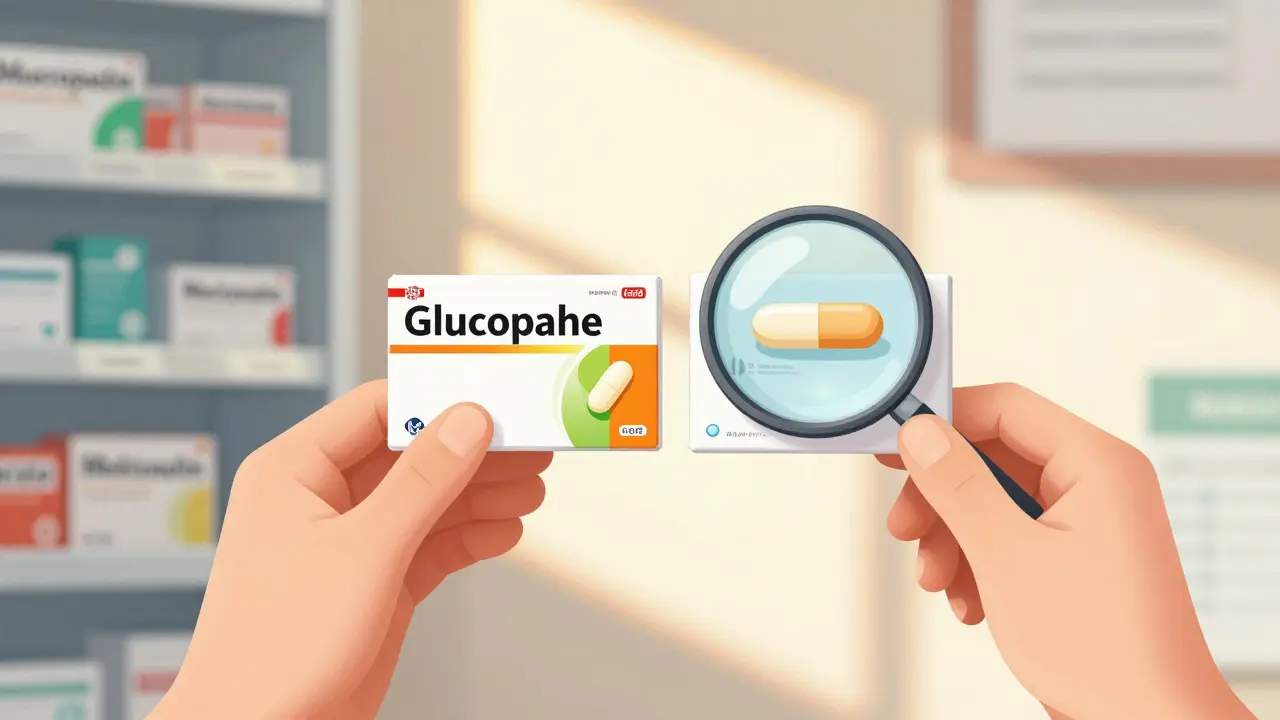
When your prescription switches from the brand-name drug you’ve been taking to a cheaper version, it’s easy to panic. Did something change? Is this safe? Will it even work the same? The answer, more often than not, is yes - and the reason is something called an authorized generic.
What Exactly Is an Authorized Generic?
An authorized generic isn’t just another generic. It’s the exact same pill, capsule, or injection that you’ve been getting from the brand-name manufacturer - just without the brand name on the label. It’s made in the same factory, with the same ingredients, using the same machines and processes. The only difference? The box says “metformin” instead of “Glucophage,” or “amlodipine” instead of “Norvasc.” The FDA requires these to be identical in every way: active ingredient, strength, dosage form, and even inactive ingredients like fillers and dyes. That’s why they’re approved under the original brand’s New Drug Application (NDA), not the usual generic route (ANDA). No extra testing. No guesswork. Just the same drug, cheaper. You might not even know you’re on one until you look at the receipt. That’s because pharmacies often substitute them automatically - especially if your insurance plan pushes for lower-cost options.Why Do Authorized Generics Exist?
They weren’t created to help patients save money - at least not originally. They came out of the 1984 Hatch-Waxman Act, which gave the first generic company 180 days of exclusive rights to sell a generic version after a brand patent expired. But brand companies soon realized they could undercut that exclusivity by launching their own generic version - an authorized generic - at the same time. The result? Prices dropped faster. Instead of one generic competitor keeping prices high, now you had two: the first generic and the brand’s own version. That’s why, according to FTC data from 2011, retail prices fell 4-8% and wholesale prices dropped 7-14% when an authorized generic entered the market during that 180-day window. Today, about 20-25% of brand-name drugs with generic competition have an authorized generic version. For the top 200 drugs losing patent protection in 2022, 42% had an authorized generic launched within six months.How Do You Know If You’re Getting an Authorized Generic?
You can’t always tell by looking. The pill might look different - different color, shape, or imprint - but that doesn’t mean it’s not an authorized generic. Some are identical to the brand; others aren’t. The only way to be sure is to check the FDA’s quarterly list of authorized generics, available on their website. Your pharmacist can also tell you. Ask: “Is this an authorized generic of [brand name]?” They’ll have access to databases that flag these drugs. If you’re on a specialty medication - say, for diabetes, high blood pressure, or thyroid issues - this step matters even more. A 2022 Medicare Part D report showed that when an authorized generic was available, 80-90% of prescriptions were automatically switched, saving patients $15-$30 per prescription on average.Will It Work the Same?
Yes. Studies show no meaningful difference in effectiveness or safety compared to the brand. A 2018 NCBI study tracked patients switching from brand to authorized generic and found identical rates of hospitalization and medication discontinuation. Another study from Health Affairs found that patients didn’t experience more side effects or worse outcomes. Even the American Academy of Allergy, Asthma & Immunology confirms that authorized generics are safe for patients with sensitivities - because they contain the exact same inactive ingredients as the brand. No surprises. No hidden fillers. The only real difference? The price.
What About Insurance?
Most insurance plans - including Medicare Part D and private insurers - treat authorized generics the same as traditional generics. They’re usually on Tier 1 or 2, meaning you pay the lowest copay. Some plans even require you to switch to an authorized generic if one exists. You won’t get the brand unless you pay the full cash price. If you’re on a specialty drug and your plan doesn’t automatically switch you, call your insurer. Ask: “Is there an authorized generic for my medication? If so, can you approve it?” Many will approve it immediately if you explain you want to save money without changing effectiveness.What to Do When You Switch
Switching is simple, but a few steps help avoid confusion:- Check your pill. If it looks different, don’t assume it’s wrong. Compare the imprint code (the letters/numbers on the pill) to the FDA’s list or ask your pharmacist.
- Ask your pharmacist. Confirm it’s an authorized generic. They can show you the manufacturer and NDA number - if it matches the brand, you’re good.
- Update your records. If you use a medication tracker app or keep a list, note the change. Even if it’s the same drug, having it documented helps during doctor visits.
- Watch for side effects. Rarely, people report minor differences - usually due to psychological factors or slight variations in inactive ingredients. If you feel off after switching, talk to your doctor. But don’t assume it’s the drug. Most times, it’s not.
Common Myths Debunked
- Myth: Authorized generics are lower quality. Truth: They’re made in the same facility as the brand. The FDA inspects them the same way.
- Myth: They’re not as effective. Truth: They’re chemically identical. No bioequivalence studies needed because they’re the same product.
- Myth: Only big pharma makes them. Truth: While 92% of authorized generics between 2001-2008 were launched by brand companies, some are licensed to other manufacturers - but still under the original NDA.
- Myth: I’ll lose my brand’s patient support program. Truth: You will. But the savings usually outweigh the loss of free samples or copay cards.
When Not to Switch
There are rare cases where switching might need caution:- If you’ve had a severe allergic reaction to a specific inactive ingredient in the past, confirm the authorized generic has the same fillers.
- If you’re on a narrow-therapeutic-index drug - like warfarin, levothyroxine, or lithium - your doctor might prefer you stay on one version. But even then, an authorized generic is often safe because it’s identical to the brand.
- If you’re on a medication with a complex delivery system - like extended-release capsules - make sure the authorized generic uses the same release technology.
What’s Next for Authorized Generics?
The trend is growing. From 2020 to 2022, authorized generic introductions jumped 22% year-over-year. The FDA is now integrating its authorized generic list into pharmacy systems, so pharmacists get automatic alerts when one is available. Analysts predict 35% of biologic drugs losing patents by 2028 will have authorized versions. That’s good news for patients. Authorized generics are one of the few tools that can bring down drug prices quickly - without waiting for a new generic to get approved. They’re not a loophole. They’re a legitimate, FDA-approved way to get the same medicine for less.Final Thoughts
Switching from brand to authorized generic isn’t a compromise. It’s a smart financial move that doesn’t cost you anything in quality or safety. If you’re paying full price for a brand-name drug and a generic version is available, ask if it’s an authorized one. You might be surprised how much you save - and how little changes. The bottom line? Your health isn’t affected. Your wallet is.Are authorized generics the same as regular generics?
No. Regular generics must prove they’re bioequivalent to the brand through testing, but they can use different inactive ingredients or be made in different factories. Authorized generics are made by the brand company itself, using the same formula, same factory, and same process. They’re identical - not just equivalent.
Why does my pill look different now?
It’s common. Even authorized generics may have different colors, shapes, or imprints because the brand company sometimes uses a different packaging partner. But the active ingredient and dosage are unchanged. Check the imprint code against the FDA’s list or ask your pharmacist to confirm it’s still the same drug.
Can I ask my doctor to prescribe an authorized generic?
You can ask, but most doctors don’t prescribe by brand vs. authorized generic - they write the generic name. The switch usually happens at the pharmacy level. If you want to ensure you get an authorized generic, ask your pharmacist to fill with that version, or request it on your prescription as “dispense as written” with the name of the authorized generic if known.
Do authorized generics have the same side effects as the brand?
Yes. Since they contain the exact same active and inactive ingredients, side effects are identical. If you tolerated the brand well, you’ll tolerate the authorized generic the same way. Any new side effects are likely due to other factors - like diet, stress, or a new medication - not the switch.
How do I find out if my drug has an authorized generic?
Go to the FDA’s website and search their quarterly updated list of authorized generics. You can also ask your pharmacist - they have access to databases that flag these drugs. If your drug is on the list, your insurance will likely push you toward it automatically to save money.
Emma Hooper
December 30, 2025 AT 13:37Okay but have y’all seen the price drop on my metformin? Went from $80 to $12 a month. I thought I was getting scammed until I checked the label - same damn pill, just no fancy logo. My bank account is crying tears of joy. 🙌
Harriet Hollingsworth
December 31, 2025 AT 12:52This is irresponsible. You’re telling people to just swap pills like they’re trading baseball cards? What if your body reacts to a different filler? This isn’t just about money - it’s about trust.
Chandreson Chandreas
January 1, 2026 AT 18:13Life’s funny, right? We spend years stressing over brand names, then find out the real hero was hiding in plain sight. Same pill. Same factory. Just cheaper. 🤷♂️✨ Sometimes the simplest truths are the ones we ignore the longest.
Darren Pearson
January 1, 2026 AT 19:46While the premise is theoretically sound, the conflation of FDA regulatory pathways with patient-perceived efficacy is a dangerous oversimplification. One must consider pharmacokinetic variance even within NDA-authorized products - particularly in geriatric populations with altered hepatic metabolism.
Stewart Smith
January 3, 2026 AT 15:43So let me get this straight - the drug companies made a generic version of their own drug… to make money? Brilliant. I’m sure the shareholders are thrilled. Meanwhile, I’m just glad I don’t have to pay $200 for my blood pressure med anymore. 😏
Aaron Bales
January 3, 2026 AT 23:26Check your pill imprint. Ask your pharmacist. Confirm with FDA’s list. Done. No drama. No fear. Just save your money and keep taking your meds. Simple.
Lawver Stanton
January 4, 2026 AT 09:14Okay, but what if the authorized generic is made on the same line as the brand, but the guy who packs it is on his third cup of coffee and forgot to calibrate the machine? Or what if the dye batch from the supplier was off because the plant in Mexico had a power surge? I mean, yeah, technically it’s the same - but how many times has the FDA actually checked that batch? Like, really? I’m not saying it’s dangerous - I’m saying I’d rather pay extra for the one I know I can trust. My anxiety is worth $30 a month.
Sara Stinnett
January 4, 2026 AT 20:15Of course the FDA approves it - they’re part of the same system that lets Big Pharma charge $1000 for insulin. This isn’t transparency. It’s rebranding exploitation. You think they care about your wallet? They care about market share. And now they’ve got you eating out of their hand with a cheaper version of the same thing. Pathetic.
linda permata sari
January 5, 2026 AT 08:28In Indonesia, we call this ‘kembaran resmi’ - the official twin. People are scared of change, but when they find out the medicine is exactly the same, they’re shocked how much they save. My aunt switched her thyroid med and said, ‘I feel the same, but now I can buy rice for the week.’ That’s power.
Branden Temew
January 5, 2026 AT 09:42If the brand company makes the exact same pill and sells it under a different name… then why did we ever need the brand name in the first place? Are we paying for the logo? The marketing? The placebo effect of a fancy bottle? Maybe the real drug is the one we stopped believing in.
Hanna Spittel
January 6, 2026 AT 00:32Wait… so the government lets drug companies make their own generics? That’s not a loophole… that’s a conspiracy. Who’s really controlling the FDA? 🤔👁️
anggit marga
January 7, 2026 AT 05:21Why should Americans care about authorized generics when their own system is broken? In Nigeria we don’t even have access to brand drugs half the time. You guys argue over $10 savings while we fight for any pill at all. This isn’t progress - it’s privilege
Joy Nickles
January 9, 2026 AT 03:32Okay so I switched to the authorized generic for my anxiety med… and now I feel kinda… off? Like my brain is foggy? Maybe it’s the filler?? Or maybe I’m just paranoid?? I don’t know!! I just know I miss my little blue pill with the smiley face on it!! 😭