
Antidepressant Tapering Schedule Generator
Your Details
Withdrawal Symptom Tracker
Track symptoms during your taper to share with your doctor.
Your Personalized Taper Plan
Next Steps
- Print this schedule and bring it to your next appointment.
- If you experience severe symptoms at any step, pause the taper or return to the previous dose.
- Consider asking your doctor about liquid formulations if standard steps cause discomfort.
Enter your details to generate an evidence-based tapering schedule.
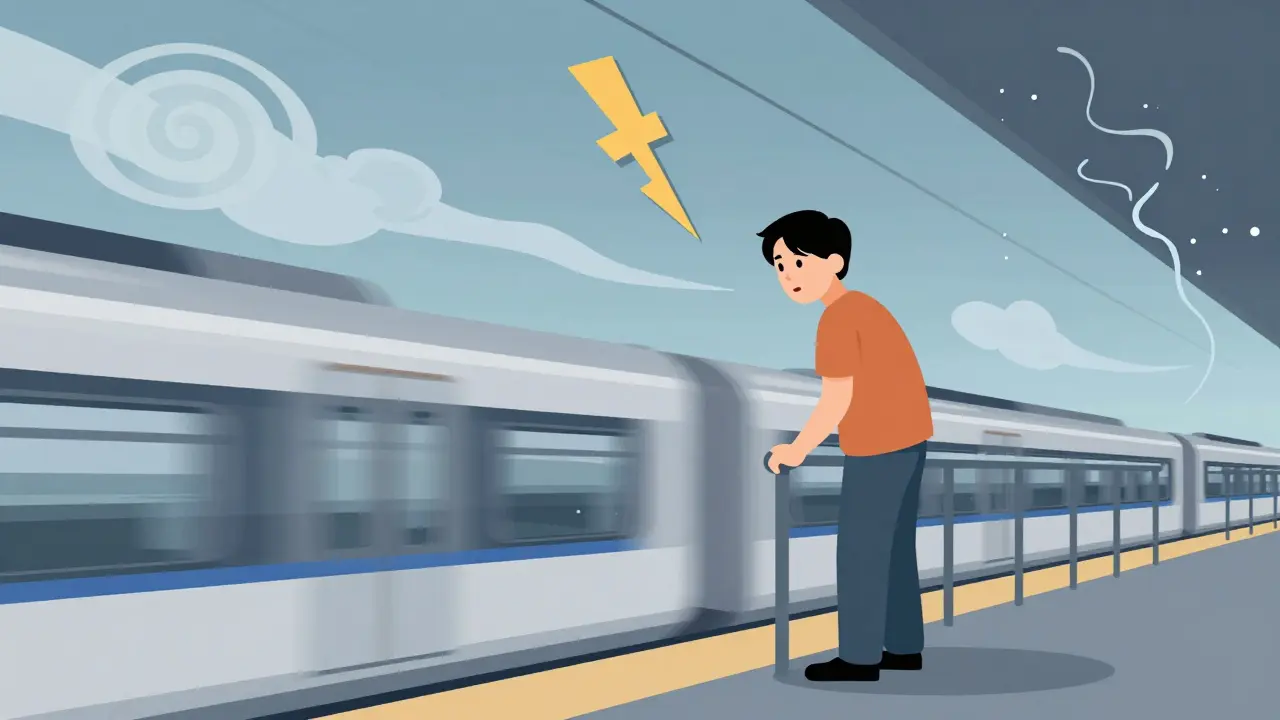
Stopping antidepressants is rarely as simple as swallowing the last pill and walking away. For many people, the process feels like stepping off a moving train while it’s still in motion. You might expect relief from side effects, but instead, you’re hit with dizziness, nausea, or those jarring "brain zaps" that make your head feel like it’s short-circuiting. This isn’t just your imagination-it’s antidepressant discontinuation syndrome, a well-documented physiological response affecting up to 86% of patients who stop too quickly. The goal isn’t just to quit; it’s to quit without suffering. Research shows that how you taper matters more than whether you taper at all. A 2022 study published by Harvard Medical School found that patients who tapered over two weeks or longer had a 19% relapse rate within six months, compared to 32% for those who stopped abruptly. That’s a massive difference. But here’s the catch: most medical guidelines are frustratingly vague, often saying only to "taper gradually." They don’t tell you what that actually looks like in milligrams or days. This guide bridges that gap, offering specific, evidence-based schedules based on medication type, half-life, and individual risk factors.
Why Your Body Reacts So Strongly to Stopping
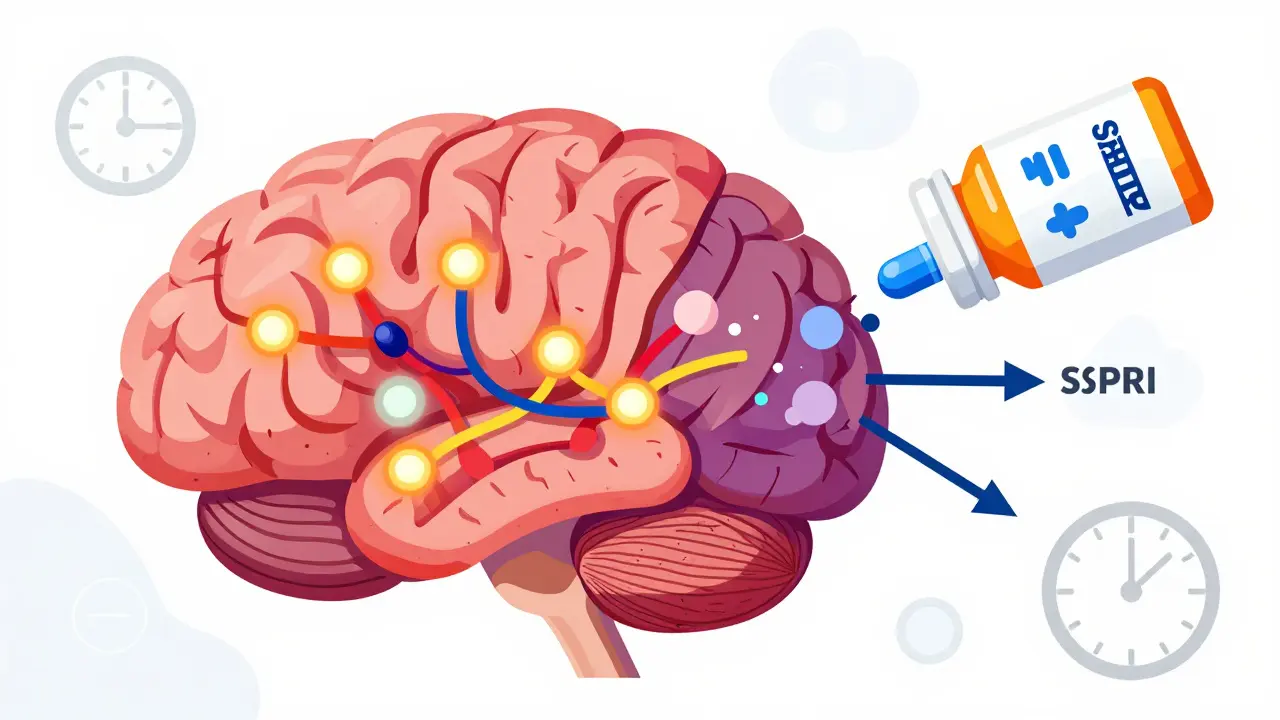
To understand why tapering needs to be so precise, you have to look at what these drugs do inside your brain. Selective serotonin reuptake inhibitors (SSRIs) and serotonin-norepinephrine reuptake inhibitors (SNRIs) work by blocking the reabsorption of neurotransmitters, keeping them available in the synaptic cleft for longer periods. Over time, your brain adapts. It downregulates receptors-essentially turning down the volume because there’s already enough signal noise. When you remove the drug suddenly, that adaptation doesn’t reverse instantly. You’re left with a brain that has fewer active receptors and less neurotransmitter availability than before you started treatment. This creates a temporary chemical deficit. Dr. David Healy, a prominent psychiatrist at Cardiff University, notes in his 2022 textbook *Psychiatric Drugs Explained* that "the last 10% of dose reduction often causes 50% of withdrawal symptoms." This non-linear relationship means that cutting your dose in half early on might feel fine, but dropping from 10mg to 5mg can trigger severe symptoms. Understanding this mechanism helps explain why slow, micro-adjustments are critical, especially in the final stages of tapering.
The Role of Half-Life in Withdrawal Severity
Not all antidepressants are created equal when it comes to withdrawal. The key differentiator is half-life, which is the time it takes for the concentration of the drug in your blood to reduce by half. Shorter half-lives mean the drug leaves your system faster, leading to sharper drops in serotonin levels and more intense withdrawal symptoms. Consider paroxetine (Paxil), which has a half-life of about 21 hours. Studies show it causes discontinuation symptoms in 44% of patients who stop abruptly. In contrast, fluoxetine (Prozac) has an active metabolite with a half-life of 2 to 4 days. It lingers in the body, acting as its own natural taper. As a result, only 18% of patients experience significant symptoms when stopping fluoxetine suddenly. Venlafaxine (Effexor) sits on the extreme end of the difficult spectrum with a 13-hour half-life, making it one of the hardest medications to discontinue comfortably. Knowing where your medication falls on this spectrum dictates your tapering strategy. If you’re on a short-half-life drug, you need a slower, more cautious approach than someone on a long-half-life option.
Evidence-Based Tapering Schedules by Medication Class
While every patient is unique, clinical guidelines from organizations like the Royal Australian and New Zealand College of Psychiatrists provide a solid framework. The general rule is to reduce the dose by 10-25% every 1-4 weeks. However, "every 1-4 weeks" is too broad for practical use. Here are more specific protocols based on recent data:
- SSRIs (excluding Fluoxetine): Reduce by 10-25% every 1-2 weeks. For example, if you’re taking citalopram 20mg, drop to 15mg for two weeks. If tolerated, go to 10mg for another two weeks, then 5mg for two weeks before stopping. Total duration: 6-8 weeks minimum.
- Venlafaxine (SNRI): Due to its high withdrawal potential, reduce by smaller increments. If taking 75mg daily, drop to 37.5mg for 2-4 weeks, then to 25mg (if using extended-release capsules, you may need to open them or switch to liquid) for 2-4 weeks, then stop. Total duration: 8-12 weeks.
- Fluoxetine: Can often be reduced by 25% weekly due to its long half-life. From 20mg, go to 10mg for one week, then stop. Total duration: 2-4 weeks.
- MAOIs: These require special handling. You must taper slowly and wait 14-21 days after stopping before starting any other antidepressant to avoid serotonin syndrome, a potentially fatal condition.
The Micro-Tapering Method for Difficult Cases
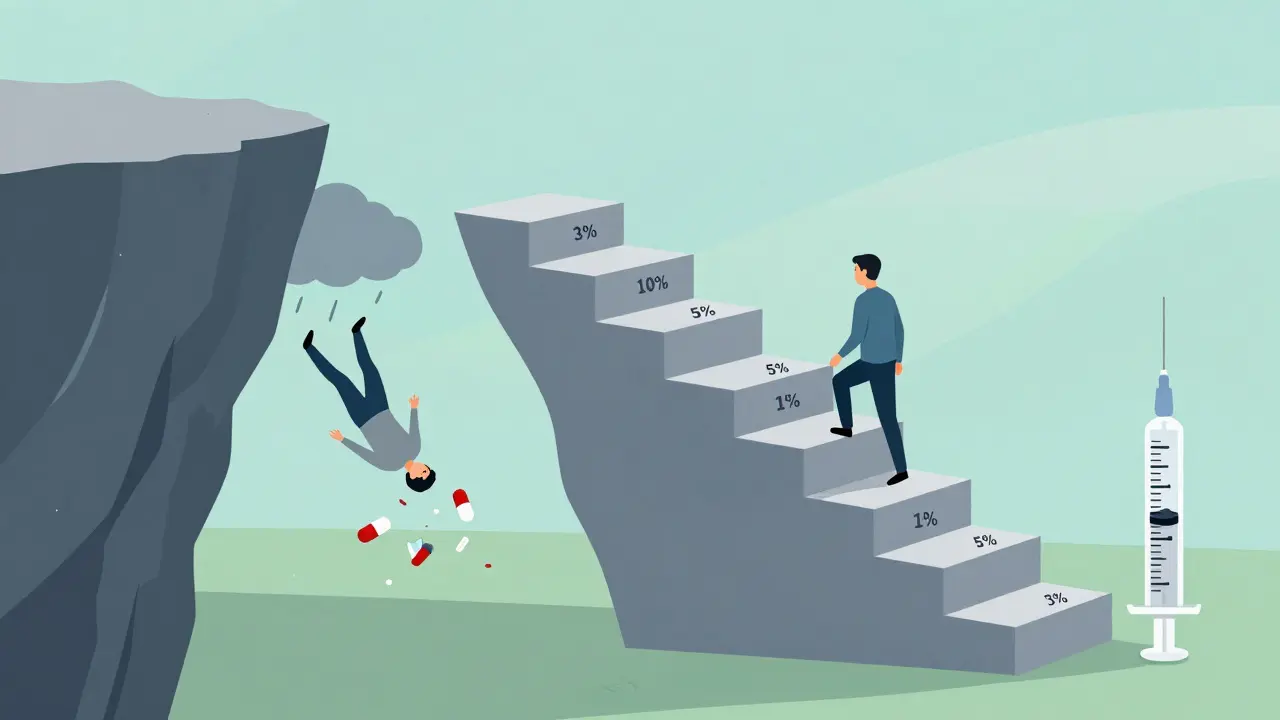
If standard tapering leaves you feeling ill, consider micro-tapering. This approach, recommended in the 2022 TRED guidelines, involves reducing doses by 5-10% every 1-2 weeks during the final 25% of the process. Why so small? Because receptor sensitivity changes drastically at low doses. Standard tablets make micro-tapering hard. A 50mg sertraline tablet can’t easily be split into 2.5mg increments. This is where liquid formulations shine. Research from King’s College London (2023) showed that using liquid antidepressants allowed for 1mg dose reductions, which cut severe withdrawal symptoms by 62% compared to tablet tapering. If you’re struggling, ask your doctor about switching to a liquid version of your medication temporarily. It provides precision that pills simply can’t match. You can measure exact milligram drops using an oral syringe, allowing you to tailor the taper to your body’s real-time feedback rather than a rigid calendar.
Switching Medications: Cross-Tapering vs. Washout
Sometimes you aren’t stopping antidepressants entirely-you’re switching to a different one. How you transition matters. There are four main strategies, each with specific use cases:
- Direct Switch: Stop Drug A, start Drug B immediately. Only safe for long-half-life drugs like fluoxetine. Never do this with venlafaxine or paroxetine.
- Taper & Switch Immediately: Gradually reduce Drug A to zero, then start Drug B the next day. This works for most SSRIs.
- Taper & Washout: Stop Drug A, wait 1-3 weeks, then start Drug B. Required when switching from or to MAOIs to prevent dangerous interactions.
- Cross-Tapering: Slowly decrease Drug A while simultaneously increasing Drug B. This is common when switching between classes, like from an SNRI to an SSRI. For example, when switching from venlafaxine to sertraline, British Columbia guidelines suggest reducing venlafaxine by 37.5mg every 3-7 days while increasing sertraline by 25mg every 3-7 days. This overlap minimizes the gap in coverage and reduces withdrawal peaks.
Distinguishing Withdrawal from Relapse
One of the biggest fears during tapering is that your depression is coming back. But withdrawal symptoms and relapse symptoms often look similar, yet they have distinct timelines and characteristics. Withdrawal typically starts within days of a dose reduction and resolves within weeks. Symptoms include physical sensations like dizziness, electric shock feelings, nausea, and insomnia. Relapse, on the other hand, develops more slowly over weeks or months and primarily involves mood symptoms like persistent sadness, loss of interest, and hopelessness. A 2023 Australian Prescriber report noted that 73% of patients experiencing discontinuation symptoms mistakenly believe they are relapsing. This leads to unnecessary restarts of medication. To differentiate, ask yourself: Did these symptoms start right after I lowered my dose? Are they mostly physical? If yes, it’s likely withdrawal. Keep a symptom diary. Track not just how you feel emotionally, but also sleep quality, appetite, and physical sensations. This data helps your doctor decide whether to hold the taper, slow it down, or treat a genuine relapse.
Monitoring and Support During the Process
You shouldn’t navigate this alone. Regular check-ins with your healthcare provider are essential. Schedule appointments every 2-4 weeks during the taper. Bring your symptom diary. Be honest about struggles-even minor ones matter. If you experience severe symptoms like suicidal thoughts, agitation, or confusion, seek immediate medical attention. Support systems also play a crucial role. Inform close friends or family members about your tapering plan. They can help monitor for changes in behavior or mood that you might miss. Additionally, consider non-pharmacological supports like cognitive behavioral therapy (CBT) or mindfulness practices. These tools build resilience and coping mechanisms that remain effective even after the medication is gone. Exercise, particularly aerobic activity, has been shown to boost serotonin and dopamine naturally, providing a gentle buffer against withdrawal dips.
How long should I stay on antidepressants before trying to taper?
Current guidelines generally recommend staying on antidepressants for at least 6-12 months after achieving remission from a first episode of depression. For recurrent depression, maintenance therapy may be longer. Attempting to taper too soon increases the risk of relapse. Always consult your doctor to determine if you’re stable enough to begin.
Can I speed up the tapering process if I feel fine?
It’s tempting to rush if you feel good, but caution is advised. Withdrawal symptoms can appear suddenly even if previous reductions were well-tolerated. Stick to the planned schedule unless your doctor advises otherwise. Speeding up increases the risk of rebound symptoms and potential relapse.
What if I experience severe withdrawal symptoms?
If symptoms become unmanageable, do not push through. Contact your doctor immediately. They may advise reinstating the previous dose to stabilize symptoms, then restarting the taper at a slower pace. Sometimes, switching to a longer-half-life medication like fluoxetine temporarily can ease the transition before tapering off completely.
Are there supplements that help with withdrawal?
Some people find relief with omega-3 fatty acids, magnesium, or L-theanine, which may support nervous system regulation. However, evidence is mixed. Always discuss supplements with your doctor first, as some can interact with antidepressants or affect serotonin levels unpredictably.
Does genetics affect how hard it is to taper?
Yes. Pharmacogenetic testing reveals that variations in genes like CYP2D6 and CYP2C19 influence how quickly your body metabolizes antidepressants. Poor metabolizers may experience higher drug levels and more severe withdrawal. A 2023 study found these genetic markers predict 38% of the variance in withdrawal severity. If you struggle repeatedly, ask your doctor about genetic testing.