

You might feel tired after lunch. You might find it harder to lose weight around your middle, even when you watch what you eat. These aren’t just signs of getting older or having a busy schedule. They could be early signals that your body is struggling with insulin resistance, a condition where your cells stop responding properly to insulin. If left unchecked, this resistance often leads to Type 2 Diabetes and a cluster of conditions known as metabolic syndrome.
This isn't about willpower. It’s biology. Understanding how these pieces fit together-the hormone insulin, the fat cells, and your liver-can help you take control before the damage becomes permanent. Let’s break down what’s happening inside your body and what you can do about it right now.
What Is Insulin Resistance?
Think of insulin as a key. Its job is to unlock your cells so glucose (sugar) from your food can enter and provide energy. In a healthy body, you eat, blood sugar rises, the pancreas releases insulin, the doors open, and energy flows in. Simple.
In insulin resistance, those locks get rusty. The cells in your muscles, liver, and fat tissue don’t hear the signal clearly. Glucose stays stuck in your bloodstream instead of going into the cells. Your pancreas notices this and pumps out even more insulin to force the doors open. For a while, this works. Blood sugar stays normal, but insulin levels remain high.
This stage is called hyperinsulinemia. You might not know it’s happening because standard blood sugar tests can still look okay. But your body is working overtime. Over time, the beta cells in your pancreas-the ones making insulin-get exhausted. When they can no longer keep up, blood sugar spikes, and Type 2 Diabetes develops.
Dr. Ralph DeFronzo, a pioneer in this field, noted that insulin resistance is present in 80-90% of people diagnosed with Type 2 Diabetes before their diagnosis. It’s the silent driver behind the disease.
Metabolic Syndrome: More Than Just One Problem
Insulin resistance rarely travels alone. It usually brings along a group of related health issues. Doctors used to call this cluster "Syndrome X," but today we refer to it as metabolic syndrome or increasingly, metabolic dysfunction syndrome (MDS).
To be diagnosed with metabolic syndrome, you need at least three of these five factors:
- Central Obesity: Excess fat around the waist. For European men, a waist circumference of 94 cm or more is a risk factor; for women, it’s 80 cm or more. South Asian, Chinese, and Japanese populations have lower thresholds (90 cm for men, 80 cm for women).
- High Triglycerides: 150 mg/dL or higher.
- Low HDL Cholesterol: Below 40 mg/dL for men or below 50 mg/dL for women.
- High Blood Pressure: 130/85 mmHg or higher.
- High Fasting Glucose: 100 mg/dL or higher.
Why does this matter? Because having all these factors together is worse than having them separately. Data from the Mayo Clinic shows that metabolic syndrome increases your risk of heart disease by 200-300% compared to someone without any of these markers. It’s a warning sign that your cardiovascular system is under stress.
The Link Between Liver Fat and Blood Sugar
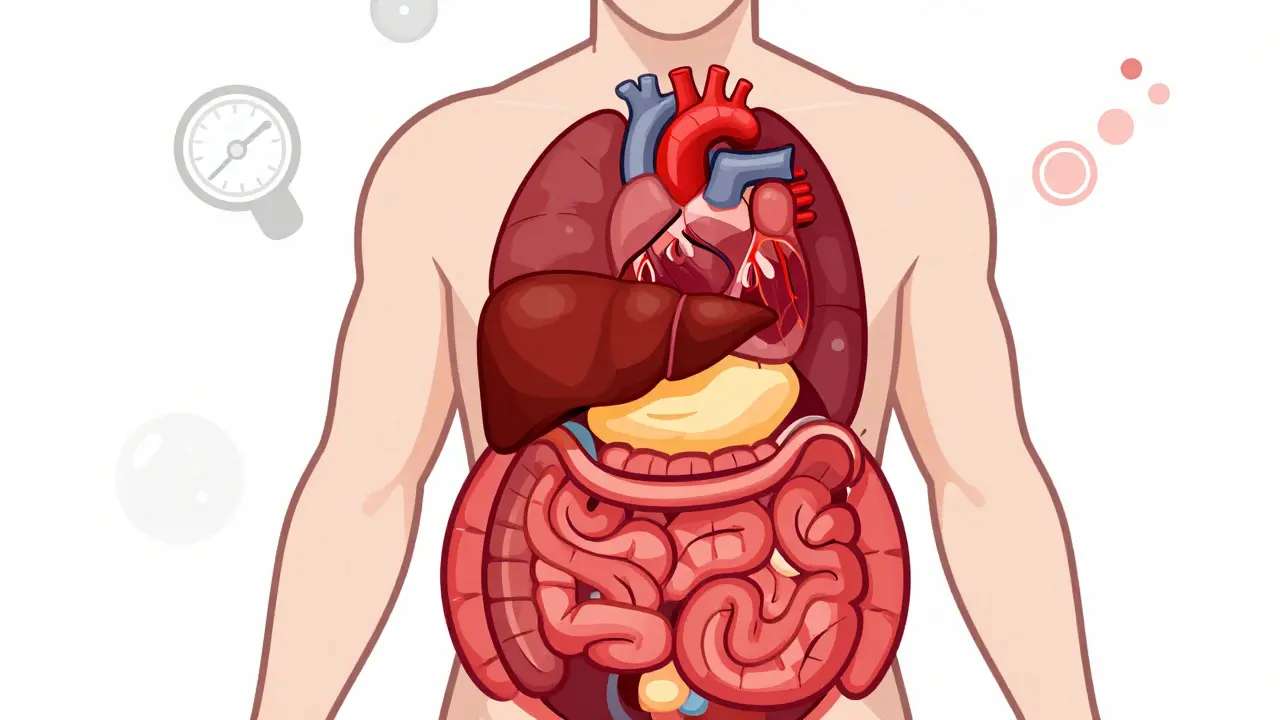
One of the most overlooked drivers of insulin resistance is fat in the wrong places. We often think of obesity as just being heavy, but where that fat sits matters more. Visceral fat-the kind stored deep in your abdomen around your organs-is metabolically active. It releases inflammatory chemicals and free fatty acids directly into the liver.
When your liver gets flooded with these fats, it stops listening to insulin. This leads to nonalcoholic fatty liver disease (NAFLD). Research published in Frontiers in Endocrinology (2023) highlights that patients with NAFLD have more than double the risk of developing Type 2 Diabetes. If the inflammation progresses to NASH (nonalcoholic steatohepatitis), that risk skyrockets further.
This creates a vicious cycle: insulin resistance causes fat to build up in the liver, and liver fat worsens insulin resistance. Breaking this cycle requires reducing the fat load on your liver, which starts with dietary changes and weight management.
Early Signs You Should Not Ignore
Type 2 Diabetes doesn’t appear overnight. It creeps up over years. Many people live with prediabetes for decades without knowing it. Here are the subtle signs that your metabolism might be struggling:
- Persistent Fatigue: Feeling drained even after a good night’s sleep. Since your cells aren’t getting enough glucose, you lack energy.
- Increased Hunger: Despite eating, you feel hungry soon after. This is because your body thinks it’s starving since the glucose isn’t entering the cells.
- Difficulty Losing Weight: High insulin levels tell your body to store fat, not burn it. Even small calorie deficits can feel impossible to achieve.
- Darkened Skin Patches: A condition called acanthosis nigricans appears as dark, velvety patches on the neck, armpits, or groin. It’s a direct marker of severe insulin resistance.
- Frequent Urination: As blood sugar rises above the kidney’s ability to reabsorb it, excess sugar spills into urine, pulling water with it.
If you recognize these symptoms, don’t wait. Early intervention is powerful. The Diabetes Prevention Program showed that lifestyle changes can reduce the risk of developing Type 2 Diabetes by 58% in high-risk individuals.
How to Reverse Insulin Resistance
Here is the good news: insulin resistance is reversible. Your cells can heal and start responding to insulin again. It takes consistency, but the results are life-changing.
1. Lose 5-7% of Your Body Weight
You don’t need to become an athlete to see benefits. Losing just 5-7% of your body weight can dramatically improve insulin sensitivity. For a person weighing 200 pounds, that’s only 10-14 pounds. The Look AHEAD trial found that intensive lifestyle interventions led to significant improvements in metabolic markers and even partial diabetes remission for many participants.
2. Move Your Muscles Daily
Muscle is your biggest consumer of glucose. When you move, your muscles pull sugar from the blood without needing as much insulin. Aim for 150 minutes of moderate-intensity activity per week. This could be brisk walking, cycling, or swimming. Strength training is even better because building muscle mass increases your body’s capacity to store glucose long-term.
3. Change What You Eat
Not all calories are equal. Refined carbohydrates (white bread, sugary drinks, pastries) spike blood sugar rapidly, forcing your pancreas to work harder. Focus on whole foods:
- Fiber-rich vegetables: Broccoli, spinach, kale.
- Healthy fats: Avocados, nuts, olive oil.
- Lean proteins: Fish, chicken, tofu.
Reducing added sugars and refined grains lowers the demand on your pancreas and helps reduce liver fat.
4. Manage Stress and Sleep
Chronic stress raises cortisol, a hormone that increases blood sugar. Poor sleep does the same. If you’re sleeping less than 6 hours a night, your insulin sensitivity drops significantly the next day. Prioritize 7-9 hours of quality sleep and find ways to decompress during the day.

Medical Treatments and New Therapies
Lifestyle changes are the foundation, but sometimes medication is necessary. Metformin is often the first drug prescribed. It works by decreasing glucose production in the liver and improving insulin sensitivity. The American Diabetes Association recommends it for people with prediabetes who have metabolic syndrome.
However, the landscape is changing fast. Newer drugs like GLP-1 receptor agonists (such as semaglutide and tirzepatide) are showing remarkable results. These medications mimic hormones that regulate appetite and insulin release. Clinical trials like STEP and SELECT have shown that these drugs can lead to significant weight loss (up to 15%) and high rates of diabetes remission. Tirzepatide, approved in 2023, targets two hormone receptors (GIP and GLP-1), offering even greater efficacy.
If you are struggling to manage your numbers despite lifestyle efforts, talk to your doctor about these options. They are not magic bullets-they work best when combined with diet and exercise-but they can be powerful tools.
Monitoring Your Progress
You can’t manage what you don’t measure. Regular testing is crucial. Here’s what to track:
| Test | Normal Range | Prediabetes / Risk | Diabetes / High Risk |
|---|---|---|---|
| HbA1c | Below 5.7% | 5.7% - 6.4% | 6.5% or higher |
| Fasting Glucose | 70-99 mg/dL | 100-125 mg/dL | 126 mg/dL or higher |
| Waist Circumference | <90cm (Men), <80cm (Women)* | Approaching threshold | Above threshold |
| Triglycerides | Below 150 mg/dL | 150-199 mg/dL | 200 mg/dL or higher |
*Thresholds vary by ethnicity. Consult your doctor for specific targets.
Get your HbA1c checked every 3-6 months if you have risk factors. Continuous glucose monitors (CGMs), once reserved for diabetics, are becoming available for general use. Devices like the Dexcom G7 allow you to see real-time data on how different foods affect your blood sugar, providing immediate feedback for dietary choices.
FAQ
Can I reverse Type 2 Diabetes completely?
While Type 2 Diabetes is a chronic condition, it can often be put into remission. Remission means your blood sugar levels return to normal ranges without the need for medication. This is achieved through significant weight loss, dietary changes, and increased physical activity. However, you must maintain these lifestyle changes indefinitely, as the genetic predisposition remains.
Is metabolic syndrome the same as being overweight?
No. While obesity is a major risk factor, not all overweight people have metabolic syndrome, and some people with a normal BMI do. Metabolic syndrome is defined by specific clinical markers: high blood pressure, high blood sugar, excess body fat around the waist, and abnormal cholesterol levels. You need at least three of these five criteria to be diagnosed.
What is the best diet for insulin resistance?
There is no single "best" diet, but diets low in refined carbohydrates and added sugars are most effective. The Mediterranean diet, rich in vegetables, healthy fats, and lean proteins, is widely recommended. Intermittent fasting can also help by giving your pancreas a break from producing insulin. Focus on whole, unprocessed foods.
How long does it take to fix insulin resistance?
Improvements can happen quickly. Some studies show insulin sensitivity can improve within weeks of starting a low-carb diet or regular exercise regimen. However, reversing the full spectrum of metabolic syndrome and achieving diabetes remission typically takes several months to a year of consistent lifestyle changes.
Are GLP-1 medications safe for everyone?
GLP-1 agonists like semaglutide are generally safe but have side effects, primarily nausea and gastrointestinal discomfort. They are not suitable for people with a personal or family history of medullary thyroid cancer. Always consult your healthcare provider to determine if these medications are appropriate for your specific health profile.