

When a worker spots a serious flaw in a product-like lead paint on a children’s toy, a faulty brake component, or unsanitary conditions in a food processing line-reporting it can save lives. But speaking up often comes with real risks: demotion, isolation, or even losing your job. That’s why whistleblower protections exist. They’re not just legal fine print; they’re lifelines for people who step forward to fix dangerous quality issues in manufacturing.
These protections aren’t new. They’ve been built over decades, starting with the Whistleblower Protection Act of 1989. But since then, Congress has added layer after layer of rules tailored to specific industries. If you work in toy manufacturing, food production, medical devices, or automotive parts, you’re covered by specific laws that protect you if you report problems. The key is knowing which law applies to you.
Which Laws Protect You?
There’s no single federal law for all manufacturing whistleblowers. Instead, your protection depends on what you make and where the defect lies.
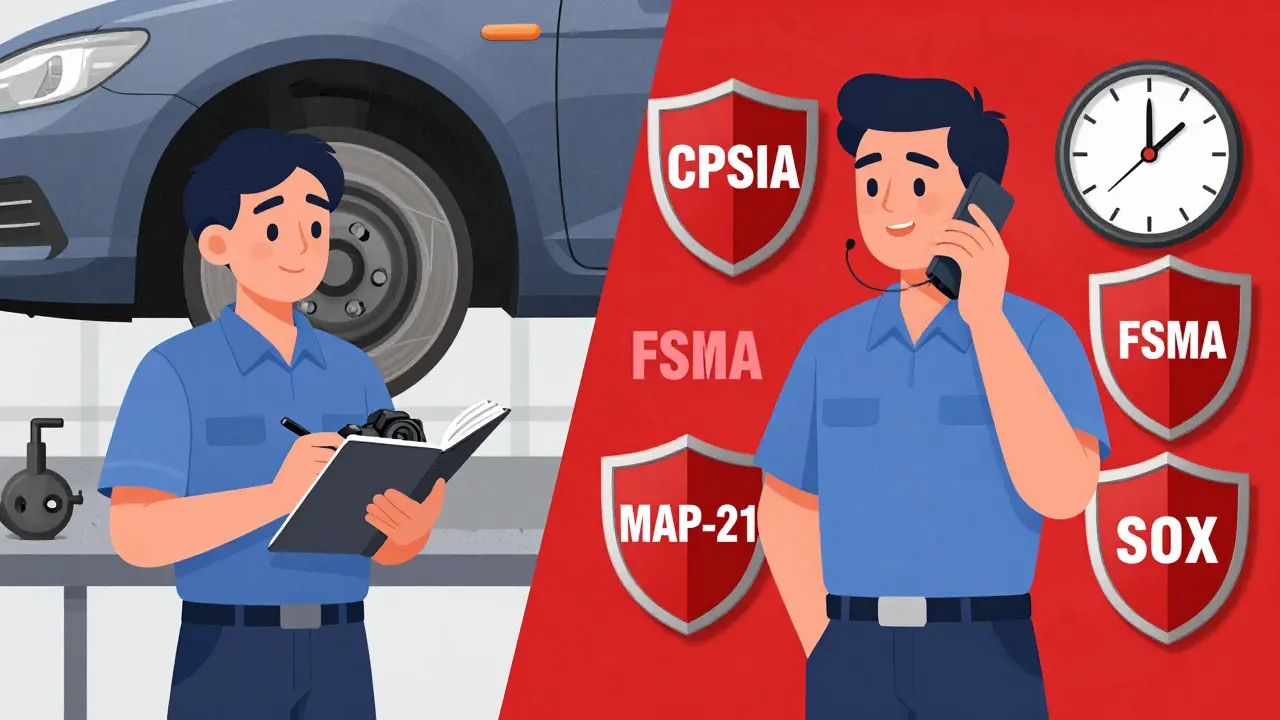
- CPSIA (Consumer Product Safety Improvement Act): Covers toys, children’s products, household goods, and anything regulated by the Consumer Product Safety Commission (CPSC). This law protects workers who report lead content, flammability hazards, or choking risks. In 2022, over half of all CPSIA whistleblower complaints came from people reporting lead in children’s products.
- FSMA (FDA Food Safety Modernization Act): Applies to food manufacturers, packers, and transporters. If you see mold, contamination, or unclean equipment, you’re protected. In 2022, 63% of FSMA complaints involved unsanitary conditions in food plants.
- MAP-21 (Moving Ahead for Progress in the 21st Century Act): Covers vehicles and auto parts. If you notice a defect that could cause crashes-like faulty airbags, brake failures, or software glitches-you’re protected. Nearly half of all vehicle recalls in 2022 started because someone inside the company spoke up.
- Sarbanes-Oxley (SOX): If you work for a company that’s publicly traded-even if you’re a subcontractor-you may be protected under SOX. A 2014 Supreme Court ruling expanded this to cover employees of private contractors working for public companies. About 73% of manufacturing workers in supply chains for public firms now qualify.
- 41 U.S.C. § 4712: Protects employees of government contractors, especially those making medical devices or defense equipment. In 2022, over half of complaints under this law involved defective medical parts.
These laws don’t just protect you if you report to the government. They also cover internal reports-telling your manager, safety officer, or compliance team. In fact, 62% of CPSIA protections apply to reports made inside the company first.
What Counts as Retaliation?
Retaliation doesn’t have to be firing you. It can be anything that makes your job harder because you spoke up:
- Being moved to a worse shift or location
- Being denied promotions or raises
- Being given impossible workloads or constant criticism
- Being isolated or cut off from team communication
- Being forced out through pressure-called “constructive discharge”
- Being blacklisted from future jobs in the industry
Even if your employer claims you were fired for “poor performance,” if it happened right after you reported a defect, it’s likely retaliation. OSHA investigates these claims and can order reinstatement, back pay, and even damages for emotional distress.
Deadlines Matter-And They’re Tight
One of the biggest reasons whistleblower cases get dismissed? Missing the deadline.
- 30 days: For transportation-related laws like MAP-21
- 45 days: For environmental violations
- 180 days: For CPSIA and FSMA complaints
That’s not a suggestion-it’s a hard cutoff. If you wait too long, OSHA won’t even look at your case. The Government Accountability Office found that 41% of manufacturing whistleblower complaints were thrown out just because they were filed late. Don’t assume you have months. Start documenting the moment you notice a problem.
How to Report Correctly
There’s a right way and a wrong way to report quality issues. Here’s what works:
- Document everything. Write down dates, product IDs, batch numbers, and specific defects. Take photos if safe to do so. Save emails, texts, and meeting notes. A 2022 study found whistleblowers in medical device and auto manufacturing needed an average of 14.2 weeks to gather enough proof.
- Use internal channels first. Most laws protect you even if you report to your supervisor or compliance officer. This gives your company a chance to fix it-and strengthens your case if they don’t.
- Don’t rely on social media. A 2022 NLRB decision ruled that posting about quality issues on Facebook or LinkedIn without linking them to workplace safety isn’t protected. Stick to official reporting.
- Call OSHA if you’re retaliated against. If you’re punished after reporting, contact OSHA’s Whistleblower Protection Program at 1-800-321-OSHA within 10 days. They offer free legal help and can start an investigation immediately.
Many workers don’t realize they’re eligible for free legal support. A 2023 GAO report found that 47% of whistleblowers didn’t know OSHA provided lawyers until they were already in trouble.
Why Most Cases Fail
Even with strong laws, many reports don’t lead to justice. Here’s why:
- Too vague. Saying “the quality is bad” isn’t enough. You need specifics: “Batch #X789 of Model Y-2025 has inconsistent welds that fail under 150 psi pressure.” Experts say vague claims are the #1 reason cases get dismissed.
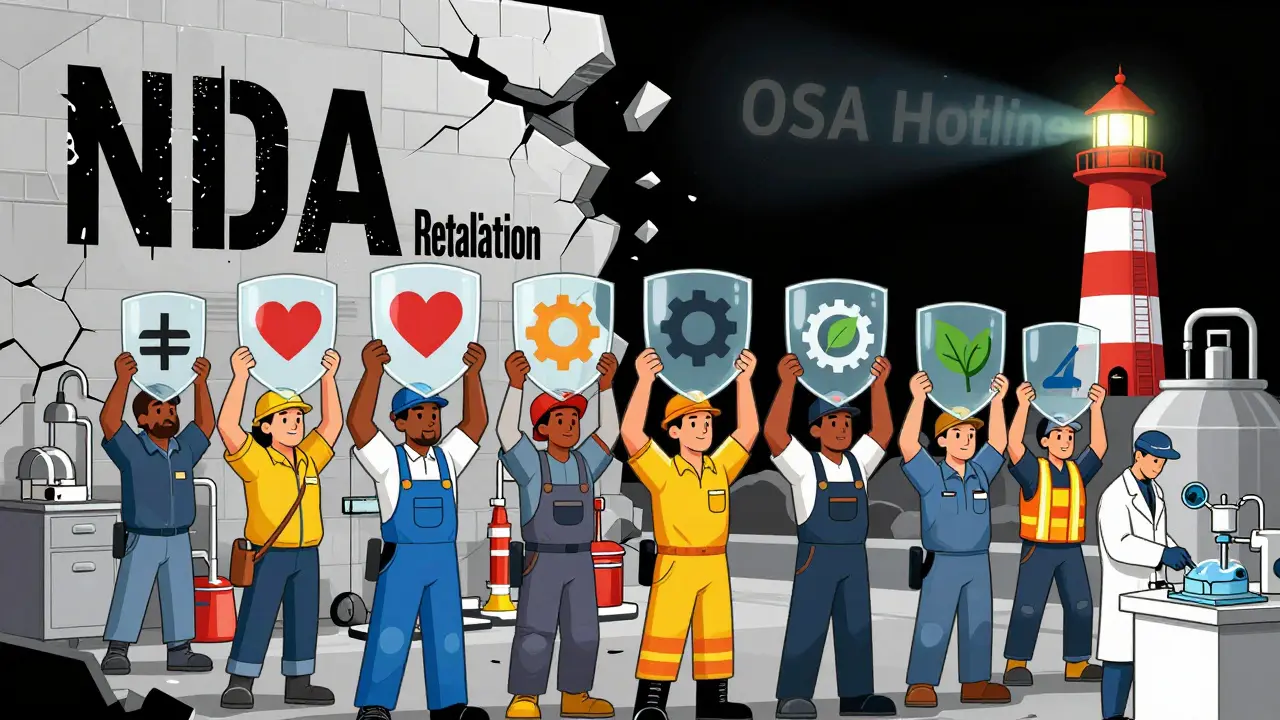
- Confidentiality agreements. Some employers make you sign NDAs that say you can’t talk about quality issues. But a 2023 Department of Energy rule clarified: those agreements can’t override whistleblower protections. If you’re pressured to stay silent, you’re still protected.
- Proving intent. After a 2022 Supreme Court ruling, whistleblowers now have to prove they had “definitive and detailed” knowledge-not just a “belief” that something was wrong. This has caused a 15% drop in filings.
Professor Tom Devine of the Government Accountability Project says: “Manufacturing whistleblowers face unique challenges because quality issues often involve complex technical specifications that require expert testimony to establish violations.” That means if you’re reporting a defect in a medical device or engine part, you might need help from a quality engineer or inspector to back up your claim.
What You Can Do Today
You don’t need to be a lawyer to protect yourself. Here’s what to do now:
- Check if your company has a formal whistleblower policy. Only 34% of manufacturers do.
- Know which law applies to your industry. Look up CPSIA, FSMA, or MAP-21 based on what you make.
- Start keeping a personal log. Date, time, product, defect, who you told, and how they responded.
- Save your OSHA hotline number: 1-800-321-OSHA. Bookmark it on your phone.
- Reach out to OSHA’s Regional Office if you’re unsure. They have staff in 10 locations nationwide.
Whistleblowers aren’t traitors-they’re the last line of defense between a defective product and a real person who might get hurt. The system isn’t perfect. But if you act quickly, document carefully, and know your rights, you can make a difference without losing your job.
Can I report a quality issue anonymously?
Yes, you can file a whistleblower complaint anonymously with OSHA. But if you do, they can’t contact you for more details, which might slow down the investigation. It’s better to give your name and trust that OSHA will keep your identity confidential during the process. Retaliation based on a known whistleblower complaint is illegal, and OSHA will investigate if your identity is leaked.
What if my employer says I signed a confidentiality agreement?
Signing an NDA doesn’t remove your whistleblower rights. A 2023 Department of Energy rule explicitly states that confidentiality agreements cannot block employees from reporting safety or quality violations to government agencies. Even if your contract says you can’t talk, you’re still protected under CPSIA, FSMA, MAP-21, and other laws. Employers who threaten you for reporting are breaking the law.
How long does an OSHA investigation take?
Since 2023, OSHA has standardized procedures across all 22 whistleblower laws. The average investigation now takes 147 days-down from 192 days. They issue a preliminary finding within 60 to 90 days. If you disagree with the result, you can request a hearing before a Department of Labor administrative law judge.
Can I be fired for reporting a problem I later found out wasn’t real?
Yes, as long as you had a reasonable belief that a violation existed. You don’t need to be 100% right. If you genuinely thought there was a safety issue and reported it in good faith, you’re protected-even if an investigation later found no violation. The law protects honest mistakes, not malicious false reports.
Do these protections apply to contractors and temporary workers?
Yes. The laws cover employees of contractors, subcontractors, and temporary agencies working in manufacturing. Whether you’re hired through a staffing firm or working on-site for a manufacturer, you’re protected under CPSIA, FSMA, MAP-21, and SOX if your job relates to those industries. Your employment status doesn’t matter-what matters is the nature of the work and the defect you reported.
Denise Jordan
March 10, 2026 AT 20:17Gene Forte
March 12, 2026 AT 09:13Kenneth Zieden-Weber
March 13, 2026 AT 11:01Chris Bird
March 14, 2026 AT 01:05David L. Thomas
March 15, 2026 AT 00:34Bridgette Pulliam
March 16, 2026 AT 15:39Mike Winter
March 16, 2026 AT 23:36Randall Walker
March 18, 2026 AT 02:23