
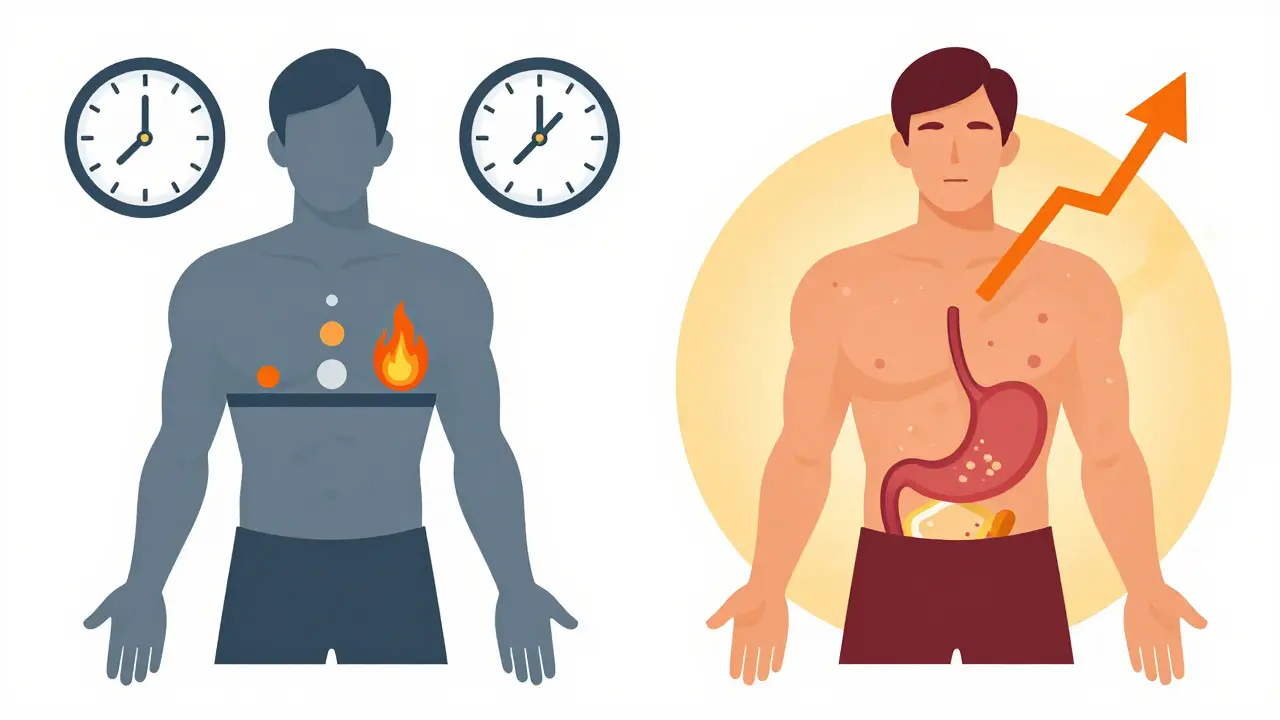
Have you ever taken a pill on an empty stomach and felt sick, only to take the same one with food later and feel fine? Or maybe you tried running before breakfast and collapsed, while powering through a post-dinner jog without breaking a sweat? These aren't just random quirks of your body. They are biological realities driven by two distinct states: fasted and fed.
In both pharmaceutical development and exercise science, understanding the difference between these conditions is not optional-it's mandatory. Whether we are talking about how a new medication dissolves in your gut or how your muscles burn fuel during a workout, the presence or absence of food changes everything. This article breaks down why dual-condition testing matters, what the data actually says, and how you can apply this knowledge to your health and training.
The Biological Divide: What Happens in Your Body?
To understand why testing requires both conditions, we first need to look at the machinery inside us. The human body operates differently depending on whether it has recently processed nutrients or is waiting for them.
Fasted state is a physiological condition occurring after 8-12 hours without caloric intake, characterized by low insulin levels and high reliance on stored energy sources like fat. In this window, your liver has depleted its immediate glucose reserves, and your body shifts gears. It starts pulling free fatty acids from adipose tissue to use as fuel. Insulin levels drop significantly, which signals the body to stop storing energy and start burning it.
Conversely, the Fed state is the period following meal consumption where insulin rises, promoting nutrient storage and glycogen replenishment in muscles and liver. When you eat, especially carbohydrates, your blood sugar spikes. Insulin floods the system to shuttle that glucose into cells. Your digestive tract becomes active, churning out acid and enzymes, and blood flow redirects toward the stomach and intestines to aid digestion.
This switch isn't subtle. It’s a complete overhaul of your metabolic environment. That’s why scientists can’t just test a drug or an exercise protocol once and call it a day. The results would be skewed if they ignored which side of the metabolic coin was facing up.
Pharmaceuticals: The FDA’s Strict Rules on Food Effects
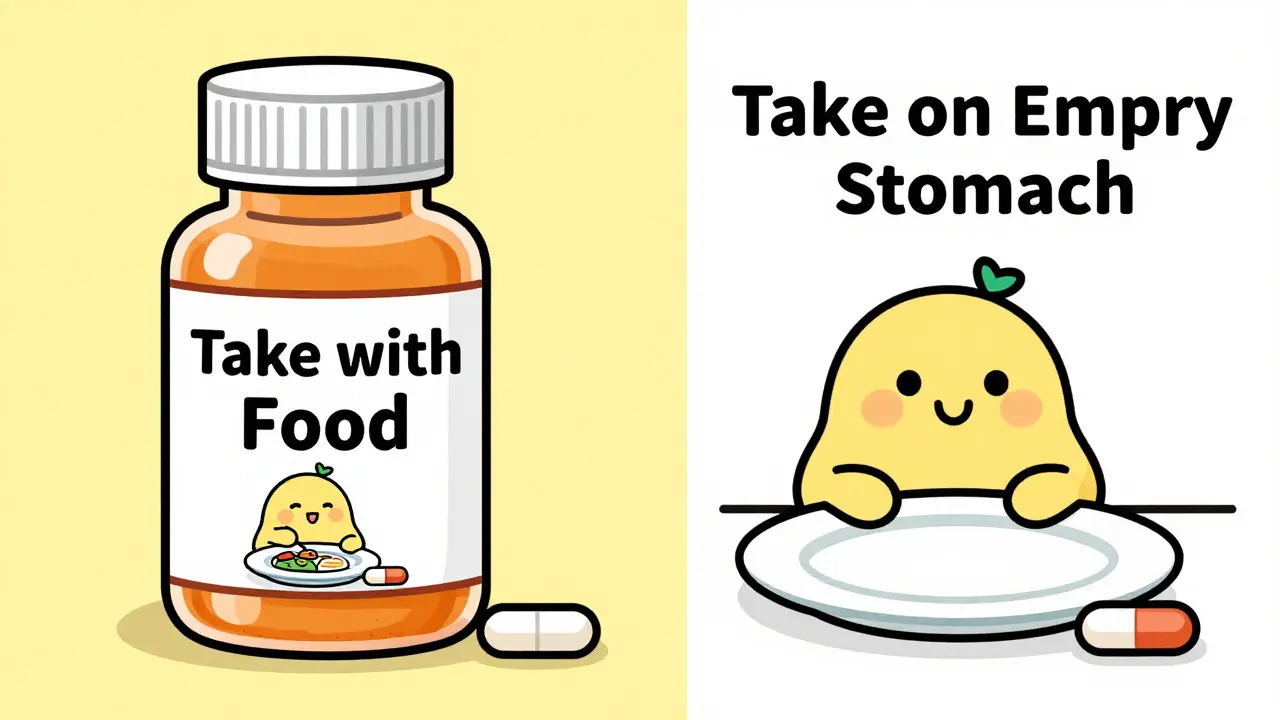
If you’ve ever read the label on a prescription bottle, you’ve likely seen instructions like “take with food” or “take on an empty stomach.” These aren't suggestions; they are conclusions drawn from rigorous bioequivalence studies mandated by regulatory bodies like the U.S. Food and Drug Administration (FDA) and the European Medicines Agency (EMA).
In the 1990s, the FDA formalized guidance requiring manufacturers to prove how food affects drug absorption. Today, dual-condition testing is standard for most new oral drugs. Here is why:
- Bioavailability Changes: Food can dramatically alter how much of a drug enters your bloodstream. For some lipophilic (fat-loving) compounds, like fenofibrate, eating a high-fat meal can increase absorption by 200-300%. For others, like griseofulvin, food can decrease absorption by 50-70%.
- Gastric Emptying Time: This is the speed at which food leaves your stomach. Studies using SmartPill capsules show that in a fasted state, gastric residence time averages just 13.7 minutes. In a fed state, that jumps to 78.3 minutes. If a drug needs to reach the small intestine quickly to work, food might delay it too long.
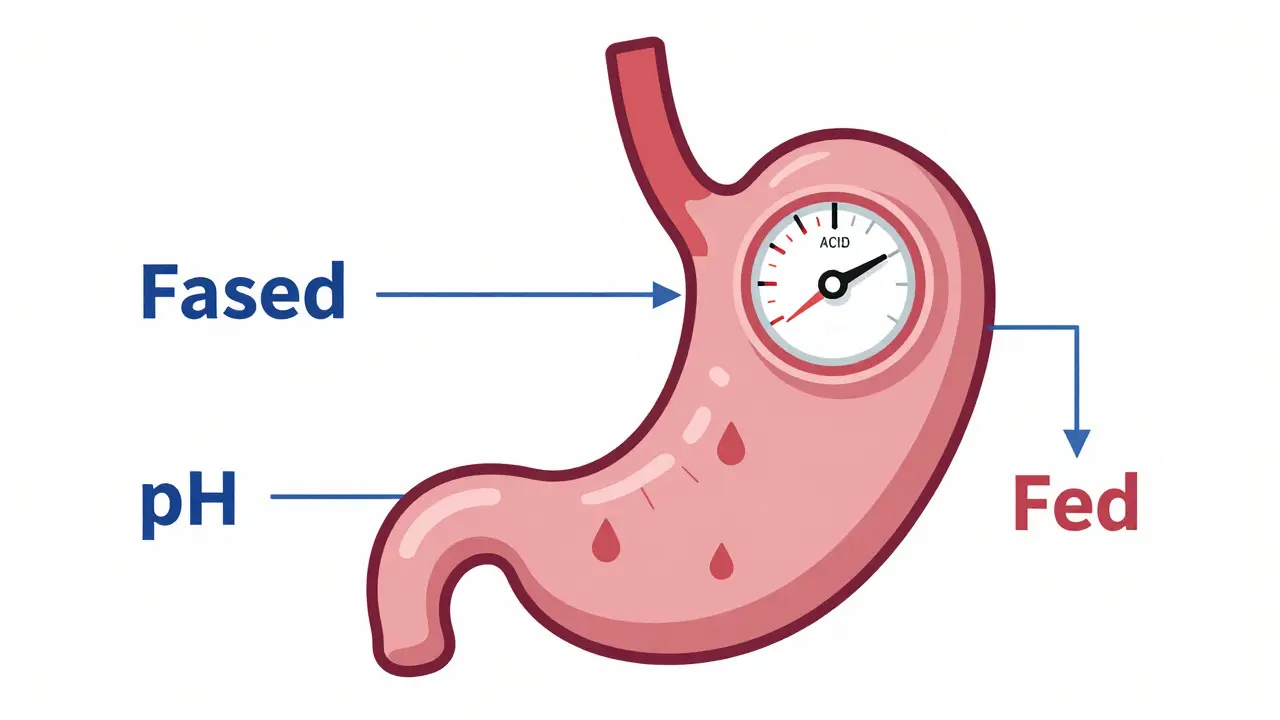
- pH Levels: The acidity of your stomach changes. Fasted-state pH might hover around 2.5, but after a meal, it can drop to a median minimum of 1.5. Some drugs degrade in high acid, while others need it to dissolve.
The FDA defines a specific "high-fat, high-calorie" meal for these tests: approximately 800-1,000 calories, with 500-600 of those calories coming from fat. This extreme standard ensures that if a drug works under these heavy conditions, it will likely work under normal dietary variations. Without this dual testing, patients could accidentally overdose or underdose simply because they ate lunch before taking their morning meds.
| Parameter | Fasted State | Fed State |
|---|---|---|
| Gastric Residence Time | ~13.7 minutes | ~78.3 minutes |
| Intragastic pH (Median Min) | 2.5 | 1.5 |
| Pressure Variations | 30-304 mbar | >240 mbar consistently |
| Insulin Level | Low | High |
Exercise Science: Fat Burning vs. Performance Power
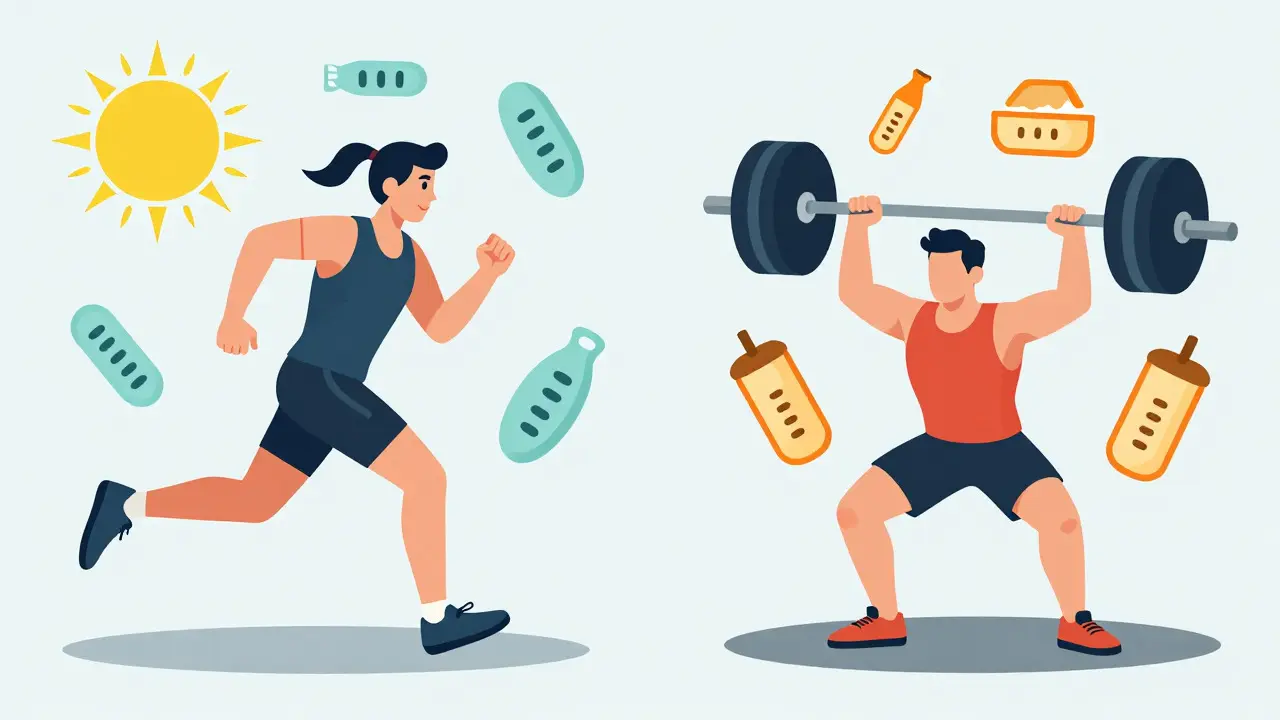
The debate over fasted versus fed training is heated in fitness circles. You’ll hear coaches swear by morning cardio before coffee for fat loss, while sports nutritionists insist you need carbs pre-workout to lift heavy. Who is right? The answer, backed by a 2018 meta-analysis of 46 studies by Lundsgaard et al., is that both have distinct roles.
Fasted Exercise: When you train fasted, your body has no fresh glucose to tap into. It compensates by increasing lipolysis-the breakdown of fats. Research shows circulating free fatty acids can rise by 27.6% post-exercise in fasted conditions compared to fed. Furthermore, fasted training upregulates PGC-1α expression by 40-50%, a marker linked to mitochondrial biogenesis (creating more energy-producing mitochondria). This suggests fasted training may offer superior long-term metabolic adaptations, particularly for improving insulin sensitivity in sedentary individuals.
Fed Exercise: However, if your goal is performance, food is fuel. The same meta-analysis found that fed-state exercise enhances prolonged aerobic performance by 8.3%. Why? Because glycogen utilization is 15-25% greater in fed states during moderate-intensity efforts. Your muscles have the immediate energy they need to sustain higher intensities. Fasted training, conversely, can reduce high-intensity work capacity by 12-15%. If you’re trying to hit a personal best in a sprint or a heavy squat, going fasted is likely working against you.
Here’s the catch: acute fat burning doesn’t always equal long-term fat loss. A 2021 study by Van Proeyen et al. found no significant difference in body composition changes between fasted and fed training groups over six weeks, despite the fasted group burning more fat during the actual workouts. So, while fasted training tweaks your metabolism, it doesn’t magically melt more pounds off the scale than fed training if your total calorie intake is the same.
Why Dual-Condition Assessment Is Non-Negotiable
Whether you are a researcher designing a clinical trial or an athlete planning your week, relying on only one condition gives you a blind spot. Here is why the full picture requires both perspectives.
1. Real-World Variability People don’t live in labs. We eat at different times, skip meals, and binge occasionally. Drugs must work safely across this spectrum. Similarly, athletes compete under various nutritional states. Understanding how your body responds in both extremes helps build resilience. If you know how to perform when fueled and how to adapt when depleted, you become a more versatile athlete.
2. Safety Margins In pharmacy, ignoring fed-state testing could lead to toxic peaks in blood concentration for drugs that absorb better with fat. In exercise, ignoring fasted-state responses might mean pushing a client too hard when their blood sugar is low, leading to dizziness or fainting-issues reported by 31% of fasted trainers in online surveys.
3. Personalization Potential Recent research highlights genetic factors. Variants in the PPARGC1A gene explain 33% of individual response variability to fasted versus fed training. By studying both conditions, scientists are moving toward precision nutrition, where recommendations are tailored to your DNA rather than a one-size-fits-all rule.
Practical Takeaways for Everyday Life
You don’t need a lab coat to benefit from this knowledge. Here is how to apply the principles of fasted and fed state dynamics to your daily routine.
- Read Your Meds Labels Carefully: If a drug says "take with food," do it. The manufacturer tested this. Ignoring it might mean you’re absorbing half the dose or irritating your stomach lining. If it says "empty stomach," wait at least 1 hour before eating or 2 hours after.
- Match Nutrition to Goal: Want to build muscle or run faster? Eat 1-4 grams of carbohydrate per kilogram of body weight 1-4 hours before exercise. Want to improve metabolic flexibility or insulin sensitivity? Try some low-to-moderate intensity cardio in the morning before breakfast, but keep the duration manageable to avoid fatigue.
- Hydrate Regardless: Fasted states can sometimes mask dehydration. Ensure your urine specific gravity is below 1.020 before intense sessions. Water is permitted in fasted protocols, so drink up.
- Listen to Your Body: Individual variation is huge. If fasted training makes you dizzy or weak, switch to fed. If eating before bed ruins your sleep quality, consider lighter evening meals. Your subjective experience is valid data.
The divide between fasted and fed isn’t just academic jargon. It’s the fundamental rhythm of human physiology. By respecting both states, we optimize everything from the medications we trust to save our lives to the workouts we use to enhance them.
What exactly defines a fasted state for testing purposes?
A fasted state is typically defined as 8-12 hours without any caloric intake. Only water is permitted. This ensures that insulin levels are low and the body is relying on stored energy reserves like glycogen and fat rather than recent food consumption.
Does fasted exercise burn more fat than fed exercise?
Yes, acutely. Studies show fasted exercise increases circulating free fatty acids by roughly 27.6% and enhances fat oxidation during the session. However, long-term body composition changes (total fat loss) are often similar between fasted and fed groups if total calorie expenditure and diet are matched.
Why do pharmaceutical companies test drugs with high-fat meals?
High-fat meals slow gastric emptying and change stomach pH, which can drastically alter how a drug is absorbed. Testing with a standardized high-fat meal (approx. 800-1000 calories, 50%+ from fat) ensures the drug remains effective even under worst-case digestive scenarios, ensuring patient safety and efficacy.
Can I take my medication with a snack instead of a full meal?
It depends on the specific drug. Some medications require a substantial amount of food to buffer stomach acid or stimulate bile production for absorption. Others just need something in the stomach to prevent nausea. Always check the label or consult a pharmacist, as a small snack may not replicate the "fed state" required for optimal absorption.
Is fasted training bad for muscle growth?
Not necessarily, provided total daily protein and calorie intake are sufficient. While fasted training may slightly reduce high-intensity performance capacity (by 12-15%), it does not inherently cause muscle loss. However, for maximal strength gains or hypertrophy, having available glycogen (from a fed state) generally supports higher volume and intensity, which drives growth.
How does ethnicity affect drug absorption in fed states?
Recent research indicates ethnic differences in gastric emptying rates. For example, some studies suggest Asian subjects may exhibit 18-22% slower gastric emptying times than Caucasian subjects in fed conditions. This is why regulatory bodies are expanding diversity requirements in bioequivalence trials to ensure drugs work safely across all populations.