
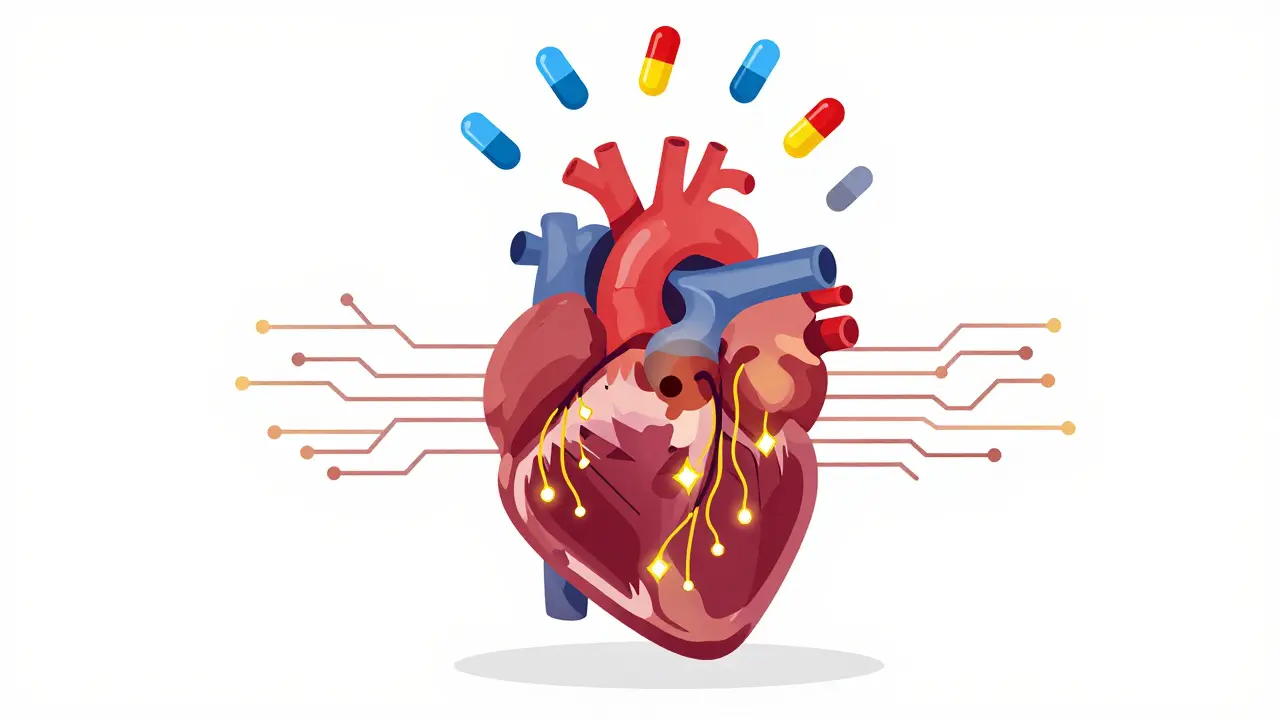
Drug-Induced Arrhythmia Risk Estimator
Select the factors that apply to your situation to estimate your relative risk profile. This tool is for educational purposes only.
Age Group
+0 to +2 ptsElectrolyte Levels
+0 to +2 ptsMedication Types
+0 to +4 ptsHeart History
+0 to +2 ptsDrug-induced arrhythmias are abnormal heart rhythms triggered or worsened by medications you take for other conditions. It sounds counterintuitive, right? You take a pill to feel better, but it messes with your heartbeat. Yet, this is a real and serious issue. Over 400 commonly prescribed drugs can disrupt your heart’s electrical system. From antibiotics to antidepressants, the list is long. The American Heart Association published a major statement in 2020 highlighting that these reactions account for a significant portion of adverse drug events. Understanding the warning signs and management strategies isn’t just medical trivia; it could save your life.
How Medications Mess With Your Heart Rhythm
Your heart beats because of tiny electrical signals. These signals rely on ions-like potassium, magnesium, and calcium-moving in and out of heart cells through channels. Many drugs interfere with these channels. When they do, the electrical signal gets delayed or distorted. This delay often shows up as a prolonged QT interval on an electrocardiogram (ECG). A long QT interval sets the stage for dangerous rhythms like Torsades de Pointes, which can lead to sudden cardiac arrest.
It’s not just about one drug. The risk skyrockets when you combine medications. Dr. Victoria L. Vetter from Children's Hospital of Philadelphia notes that using multiple QT-prolonging drugs together increases your risk by 300-500% compared to taking just one. Think about it: you might be on an antibiotic for an infection, an antihistamine for allergies, and an antidepressant for mood. Each alone might be safe, but together, they create a perfect storm for your heart.
Genetics also play a huge role. About 15% of people of African ancestry carry the S1103Y genetic variant, and 12% of those of East Asian ancestry have the R1193Q variant. If you have one of these variants, your heart is much more sensitive to certain drugs. This means a dose that’s safe for someone else could trigger severe arrhythmias in you. Personalized medicine is starting to address this, but for now, awareness is your best defense.
Common Culprits: Which Drugs Carry the Risk?
You don’t need to memorize a list of 400 drugs, but knowing the high-risk categories helps. Here are the main offenders:
- Antibiotics: Macrolides like azithromycin and erythromycin, and fluoroquinolones like levofloxacin and moxifloxacin. These are common for infections but can prolong the QT interval in 3-5% of users, especially in the first week.
- Antidepressants: Certain tricyclic antidepressants and some SSRIs/SNRIs can affect heart rhythm. They account for 12-18% of drug-induced arrhythmia cases.
- Antiarrhythmics: Ironically, drugs used to treat irregular heartbeats can cause them. Flecainide and propafenone can worsen atrial flutter. Amiodarone can induce atrial fibrillation in 2-5% of patients due to thyroid issues.
- Antipsychotics: Haloperidol and quetiapine are known to affect heart conduction. They represent 10-15% of cases.
- Beta-blockers: While generally safe, drugs like metoprolol can cause symptomatic bradycardia (slow heart rate) if the dose is too high. Symptoms include fatigue, dizziness, and fainting.
- Digoxin: Used for heart failure and atrial fibrillation, digoxin has a narrow therapeutic window. Toxicity can cause paroxysmal atrial tachycardia, especially if kidney function is poor or electrolytes are off.
| Medication Class | Common Examples | Primary Risk | Incidence Rate |
|---|---|---|---|
| Macrolide Antibiotics | Azithromycin, Erythromycin | QT Prolongation | 3-5% |
| Fluoroquinolones | Levofloxacin, Moxifloxacin | QT Prolongation | 3-5% |
| Antidepressants | Citalopram, Amitriptyline | QT Prolongation / Palpitations | 12-18% of cases |
| Antiarrhythmics | Flecainide, Amiodarone | Proarrhythmic Effects | 5-10% |
| Beta-Blockers | Metoprolol, Atenolol | Symptomatic Bradycardia | Variable |
Warning Signs You Should Never Ignore
Your body sends signals before things go critically wrong. Recognizing these early can prevent emergency room visits. The most common warning signs include:
- Palpitations: Feeling like your heart is racing, pounding, or skipping beats. Reported by 70-80% of patients with drug-induced arrhythmias.
- Dizziness or Lightheadedness: Often happens when your heart isn’t pumping enough blood to your brain. Seen in 40-50% of cases.
- Fatigue: Unusual tiredness that doesn’t go away with rest. Affects 30-40% of patients, especially those on beta-blockers.
- Chest Discomfort: Not always pain, but a sense of pressure or unease. Occurs in 15-20% of cases.
- Syncope (Fainting): Losing consciousness briefly. This is a red flag. It happens in 5-10% of cases and indicates a serious drop in cardiac output.
If you start a new medication and notice any of these symptoms, don’t brush them off as “just stress” or “getting older.” Contact your doctor immediately. The Texas Cardiac Arrhythmia Institute reports that 65-75% of severe outcomes could be prevented if patients recognized these early signs and sought help quickly.
Who Is at Higher Risk?
Not everyone who takes these drugs will develop arrhythmias. However, certain factors make you more vulnerable. Knowing where you stand helps you advocate for yourself.
Age matters. People over 65 are at significantly higher risk. In fact, 60-70% of severe drug-induced arrhythmia cases occur in this age group. Older hearts are less resilient, and kidneys clear drugs more slowly, leading to higher drug levels in the blood.
Electrolyte imbalances are a major trigger. Low potassium (hypokalemia) affects 20% of hospitalized patients, and low magnesium (hypomagnesemia) affects 10-15%. Diuretics (“water pills”) commonly used for high blood pressure can deplete these minerals. If your potassium drops below 4.0 mEq/L or magnesium below 2.0 mg/dL, your risk of arrhythmias jumps dramatically.
Lifestyle factors add fuel to the fire. Excessive alcohol consumption (more than 3 drinks daily) increases risk by 200-300%. Smoking damages blood vessels and nerves that control heart rate. Chronic stress and lack of sleep also strain your cardiovascular system.
Existing heart conditions. If you already have heart failure, prior heart attack, or structural heart disease, your heart is more susceptible to drug-induced electrical disturbances.
Management and Prevention Strategies
The good news? Drug-induced arrhythmias are largely preventable. Here’s how doctors and patients work together to keep hearts safe.
Before Starting a New Medication
Get a baseline ECG. If you’re prescribed a high-risk drug, ask for an electrocardiogram first. This establishes your normal QT interval. Repeat the ECG within 72 hours of starting the drug to catch any immediate changes.
Check your electrolytes. Blood tests for potassium and magnesium should be done before and during treatment. Keep potassium above 4.0 mEq/L and magnesium above 2.0 mg/dL. If you’re on diuretics, your doctor may prescribe supplements.
Review all your meds. Bring a complete list of prescription drugs, over-the-counter medicines, and supplements to every appointment. Many interactions happen between seemingly harmless OTC drugs and prescriptions. For example, combining diphenhydramine (Benadryl) with a macrolide antibiotic significantly raises arrhythmia risk.
If Symptoms Appear
Don’t stop abruptly without consulting your doctor. Suddenly stopping beta-blockers or antiarrhythmics can cause rebound effects. Instead, call your provider. They may lower the dose, switch to a safer alternative, or adjust timing.
Dose reduction works in many cases. For beta-blocker induced bradycardia, lowering the dose resolves symptoms in 60-70% of patients. Sometimes, splitting the dose throughout the day helps maintain stable levels.
Monitor closely. Wearable devices like smartwatches with ECG capabilities can detect irregular rhythms. While not diagnostic, they provide valuable data to share with your cardiologist.
When Intervention Is Needed
In persistent cases, medication adjustments manage the issue in 75-85% of patients. For those who don’t respond, catheter ablation-a procedure that scars small areas of heart tissue to block abnormal signals-is necessary in 5-10% of cases. Surgical intervention is rare, required in less than 2% of patients. Permanent pacemakers may be needed if you require essential rate-control medications but cannot tolerate their heart-slowing effects.
Living Safely With Heart-Medicated Regimens
Prevention extends beyond the pharmacy. Lifestyle choices directly impact your heart’s resilience. The Mayo Clinic recommends exercising for 30 minutes daily on most days, maintaining a healthy weight, and eating a low-salt, low-saturated fat diet. These steps reduce overall cardiac stress.
Limit caffeine and alcohol. While caffeine causes palpitations in 25-30% of patients, serious arrhythmias from caffeine alone are rare. However, combined with QT-prolonging drugs, even moderate intake can be risky. Alcohol, especially binge drinking, is a potent trigger for atrial fibrillation (“holiday heart syndrome”).
Manage stress and prioritize sleep. Aim for 7-9 hours nightly. Poor sleep disrupts autonomic nervous system balance, making your heart more reactive to chemical triggers. Techniques like mindfulness, deep breathing, or yoga can lower sympathetic tone and protect your rhythm.
Stay hydrated. Dehydration concentrates electrolytes and reduces blood volume, straining the heart. Drink water consistently, especially if you’re on diuretics.
The Future of Personalized Cardiac Safety
Science is moving toward precision medicine. Genetic screening for variants like S1103Y and R1193Q is becoming more accessible. Researchers at Vanderbilt University Medical Center showed that CRISPR-edited stem cell models carrying these variants are highly susceptible to drug-induced arrhythmias. This suggests future testing could identify high-risk patients before prescribing.
The FDA has added black box warnings for QT prolongation to 25 medications since 2010, with 8 new warnings in 2022 alone. Regulatory bodies are tightening scrutiny. Meanwhile, the American College of Cardiology is developing a clinical decision support tool expected in 2024. This tool will integrate age, genetics, electrolytes, and drug combinations to calculate individualized risk scores before prescribing.
Polygenic risk scores, which combine multiple genetic markers, currently achieve 75-85% sensitivity in predicting high-risk patients. Experts predict a 30-40% reduction in severe drug-induced arrhythmia events within five years as these tools become standard care.
Until then, vigilance is key. Know your medications, know your risks, and listen to your body. Your heart beats for you-protect it wisely.
Can common over-the-counter medications cause heart arrhythmias?
Yes. Some antihistamines like diphenhydramine (Benadryl) and certain cold medicines containing pseudoephedrine can affect heart rhythm, especially when combined with prescription drugs that prolong the QT interval. Always check labels and consult your pharmacist if you’re on multiple medications.
What is the QT interval, and why does it matter?
The QT interval measures the time it takes for your heart’s ventricles to electrically charge and discharge between beats. A prolonged QT interval delays this process, increasing the risk of dangerous arrhythmias like Torsades de Pointes. It’s measured on an ECG and is a key marker for drug-induced cardiac risk.
Should I stop taking my medication if I feel palpitations?
Do not stop abruptly without medical advice. Suddenly discontinuing certain heart medications can cause rebound effects or worsen your condition. Contact your doctor immediately. They may adjust the dose, switch medications, or order tests to determine the cause.
Are natural supplements safe for heart rhythm?
Not necessarily. Supplements like St. John’s Wort, ephedra, and high-dose licorice root can interact with heart medications or directly affect heart rhythm. Always disclose all supplements to your healthcare provider, as “natural” does not mean “risk-free.”
How often should I get an ECG if I’m on high-risk medications?
You should get a baseline ECG before starting therapy. Then, repeat it within 72 hours of initiation. After that, frequency depends on your risk profile. High-risk patients may need periodic monitoring every few months, while others may only need annual checks. Follow your cardiologist’s specific guidance.