
You’ve probably heard the term "herpes" whispered in hushed tones, often accompanied by a mix of fear and stigma. But here’s a fact that might surprise you: Herpes Simplex Virus is incredibly common. According to the World Health Organization, about 3.7 billion people under age 50 have HSV-1. That’s nearly two-thirds of the global population. Yet, many people live with it without ever knowing they’re infected. Why? Because the virus is sneaky. It can hide in your nerves for years, waking up only occasionally or not at all. Understanding how this virus works, what it looks like, and how to manage it isn’t just medical trivia-it’s essential knowledge for anyone navigating modern relationships and health.
The Two Faces of Herpes: HSV-1 and HSV-2
Most people think of herpes as one thing, but it’s actually two distinct viruses: HSV-1 and HSV-2. While they share about 50% of their DNA structure, they behave quite differently in the body. Traditionally, HSV-1 was linked to cold sores around the mouth, while HSV-2 was the culprit behind genital herpes. But those lines are blurring fast. Thanks to changing social norms and oral sex practices, HSV-1 now causes 30-50% of new genital herpes cases in high-income countries. So, if you get a sore on your genitals, it’s not automatically HSV-2.
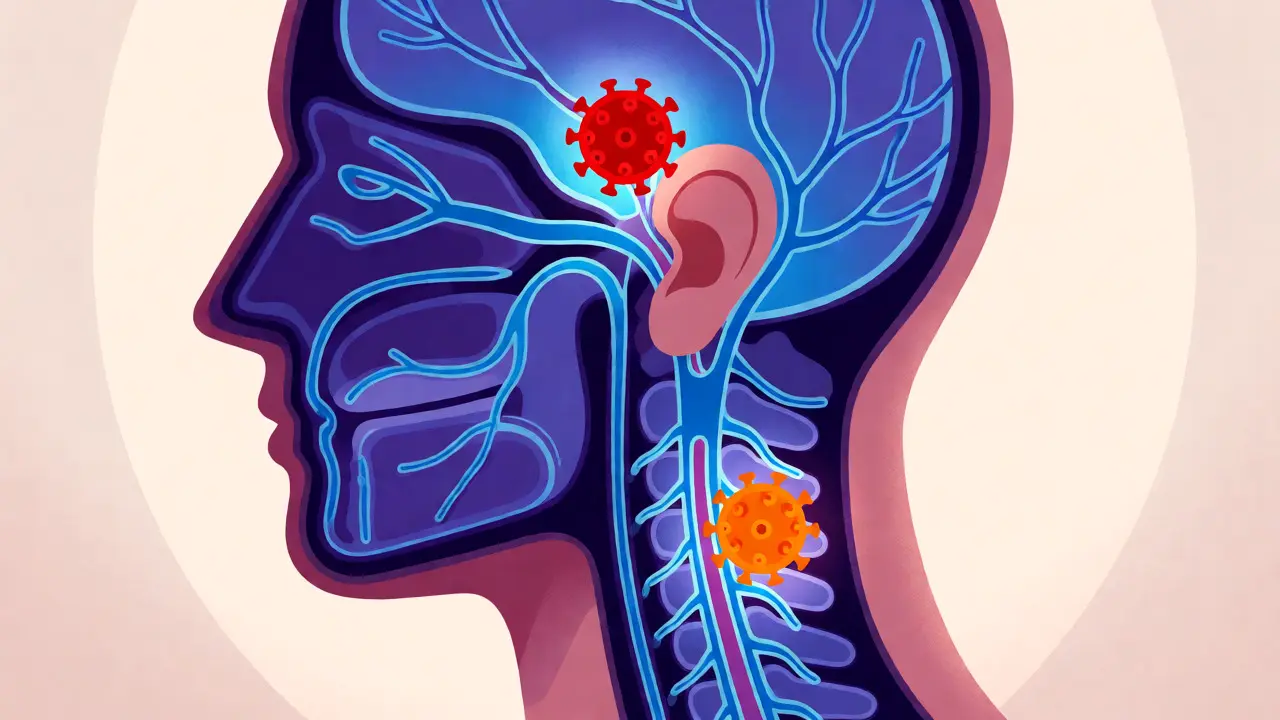
Once you catch either type, it’s yours for life. The virus travels up your nerve endings and parks itself in a ganglion-a cluster of nerve cells near your spine or skull. For HSV-1, that’s usually the trigeminal ganglion (near your ear); for HSV-2, it’s the sacral ganglia (lower back). Here, it goes dormant, invisible to your immune system. When stress, illness, or sunlight triggers it, the virus wakes up, travels back down the nerve, and causes an outbreak. This lifelong latency is why there’s no cure yet, but plenty of ways to keep it quiet.
Spotting the Signs: What Outbreaks Look Like
Not everyone gets symptoms. In fact, most people with HSV-1 never notice anything. But when symptoms do appear, they follow a predictable pattern. After an incubation period of 2-20 days (median 4 days), you might feel a tingling, burning, or itching sensation before any visible signs show up. This is called prodrome, and it’s your cue to act.
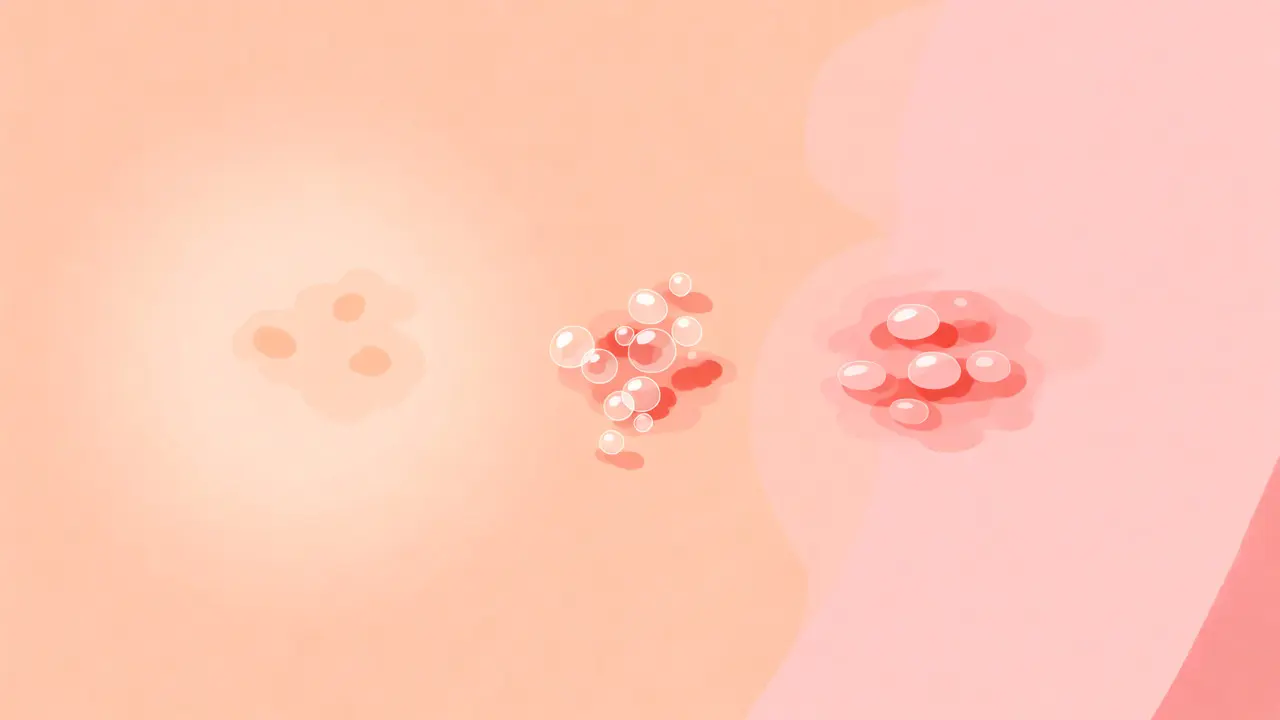
Then come the blisters. Small, fluid-filled vesicles cluster together on red, inflamed skin. They look like tiny grapes. These burst, form shallow ulcers, crust over, and heal-usually without scarring. A primary (first) outbreak is often severe. If it’s oral HSV-1 in kids, it can cause gingivostomatitis: fever, painful mouth ulcers, and swollen gums. If it’s genital HSV-2, expect painful ulcers, painful urination, and swollen lymph nodes in the groin. Systemic symptoms like fever and muscle aches can hit hard during that first episode.
Recurrent outbreaks are milder and shorter. They last 5-10 days instead of 14-21. Pain scores drop from a miserable 7/10 to a manageable 4/10. But even when you don’t see sores, the virus can still shed. Asymptomatic shedding happens on 10-20% of days for HSV-2 genital infections, meaning you can transmit the virus without knowing it.
Diagnosis: Beyond the Naked Eye
If you suspect herpes, don’t rely on guesswork. Visual diagnosis is unreliable because other conditions mimic herpes lesions. The gold standard is PCR testing. Swabbing an active lesion gives 95-98% sensitivity, much higher than older viral culture methods. Results take 24-72 hours.
If you don’t have active sores, blood tests can help. Type-specific serology checks for antibodies against glycoprotein G, a protein unique to each HSV type. Tests like the EUROIMMUN recomLine HSV IgG assay are highly accurate (96.5% concordance) after 16 weeks post-infection. Keep in mind: antibodies take time to develop. Testing too soon after exposure can give false negatives. If you test positive, ask your doctor about type-specific results. Knowing whether you have HSV-1 or HSV-2 changes management strategies significantly.
Fighting Back: Antiviral Therapy Options
While you can’t eliminate the virus, antivirals can suppress it effectively. The big three are acyclovir, valacyclovir, and famciclovir. These drugs stop the virus from replicating, shortening outbreaks and reducing transmission risk.
| Medication | Typical Dosage (Episodic) | Typical Dosage (Suppressive) | Key Benefit |
|---|---|---|---|
| Acyclovir | 400mg 3x/day for 5 days | 400mg 2x/day | Cheapest option; widely available generic |
| Valacyclovir | 500mg 2x/day for 3 days | 500mg once daily | Better absorption; fewer doses per day |
| Famciclovir | 1000mg 2x/day for 1 day | 250mg 2x/day | Shortest episodic course; good for frequent outbreaks |
Timing matters. Starting medication within 24 hours of prodrome cuts healing time by half. Daily suppressive therapy is another game-changer. Taking valacyclovir 500mg every day reduces HSV-2 transmission to uninfected partners by 48%. It also cuts recurrence rates dramatically. For someone having four outbreaks a year, suppressive therapy might reduce that to zero or one.
Side effects are generally mild. Headaches and nausea are the most common complaints, reported by about 22% and 15% of users respectively. Rarely, kidney issues can arise in patients with pre-existing renal disease. If you’re immunocompromised, such as living with HIV, resistance can develop. In those cases, foscarnet or newer drugs like pritelivir may be needed.
Special Considerations: Eyes, Babies, and Brains
Herpes isn’t just skin deep. HSV-1 loves the eyes. Ocular herpes, or keratitis, affects the cornea and can lead to blindness if untreated. About 50,000 new cases occur annually in the US. Treatment involves topical trifluridine drops or oral antivirals. Never use steroid eye drops alone-they can worsen the infection.
Newborns face serious risks. Neonatal herpes occurs in roughly 1 in 3,200 births. Most cases come from HSV-2 passed during delivery. Without treatment, mortality is high. Cesarean sections are recommended for mothers with active genital lesions at labor. Screening pregnant women with recurrent outbreaks helps prevent these tragedies.
Rarely, HSV-1 attacks the brain, causing encephalitis. This is a medical emergency with symptoms like seizures, confusion, and personality changes. HSV-2 more commonly causes meningitis (inflammation of the lining around the brain), which is less dangerous but still painful. Both require immediate IV acyclovir.
Living With HSV: Mindset and Management
The physical symptoms are manageable, but the psychological impact is real. A survey by the American Sexual Health Association found that 74% of people with HSV experience stigma-related anxiety. Many delay telling partners for months. Open communication is key. Most people won’t judge you as harshly as you judge yourself. Plus, knowing your status empowers you to protect others.
Adherence to medication is tricky. Only 65% of patients stick to daily suppressive therapy for a full year. Cost can be a barrier-valacyclovir might cost $300/month without insurance-but generics and discount cards help. Find a routine that works for you. Pairing meds with lifestyle tweaks like stress reduction and adequate sleep can further lower outbreak frequency.
Can I get rid of herpes?
No, there is currently no cure that eliminates the virus from your body. However, antiviral medications can suppress the virus so effectively that many people go years without outbreaks and rarely transmit it to others.
Is HSV-1 worse than HSV-2?
Neither is inherently "worse," but they differ in behavior. Genital HSV-1 recurs less frequently (0.2-0.5 times/year) than genital HSV-2 (4-5 times/year). However, HSV-1 is more likely to cause ocular herpes and encephalitis, while HSV-2 is more associated with neonatal complications.
How long does an outbreak last?
Primary outbreaks typically last 14-21 days. Recurrent outbreaks are shorter, lasting 5-10 days. With prompt antiviral treatment started within 24 hours of symptoms, healing time can be reduced by up to 50%.
Can I transmit herpes without symptoms?
Yes. Asymptomatic shedding occurs even when no sores are visible. For genital HSV-2, shedding happens on 10-20% of days. Using condoms and daily suppressive therapy significantly lowers, but does not completely eliminate, transmission risk.
What triggers an outbreak?
Common triggers include stress, fatigue, illness, sunlight exposure (for oral herpes), hormonal changes, and local trauma to the area. Identifying personal triggers can help predict and prevent outbreaks.
Marshall Stephens
August 31, 2026 AT 20:24It is genuinely refreshing to see a breakdown that strips away the shame associated with this virus. We need more of this kind of objective, factual reporting to help people understand that HSV is just another part of the human condition rather than a moral failing or a dirty secret. The statistics about asymptomatic shedding are particularly important because they explain why so many relationships face unexpected challenges despite best intentions.
Aaron Gragg
September 2, 2026 AT 13:49The distinction between HSV-1 and HSV-2 has become increasingly nuanced in recent epidemiological studies, particularly regarding the shift in primary infection sites due to changing sexual behaviors and oral hygiene practices among younger demographics.
While the article correctly identifies the latency periods within the trigeminal and sacral ganglia, it is worth noting that the immunological response to these latent viral reservoirs can vary significantly based on individual genetic factors and overall immune system health. Furthermore, the efficacy of suppressive therapy such as valacyclovir is well-documented in reducing transmission rates, yet adherence remains a critical variable that often determines long-term success in managing recurrent outbreaks.
Curtis Surpless
September 4, 2026 AT 09:06honestly the stigma is way worse than the actual virus for most people i know who have hsv2 barely get outbreaks maybe once every few years but still act like theyre radioactive
the whole "lifelong" thing sounds scary but its basically just a cold sore on a different nerve path so stop treating it like leprosy
Harry Falk
September 4, 2026 AT 22:20Good summary. Awareness is key.
Rose Boerner
September 5, 2026 AT 19:02I find it absolutely disgraceful that society continues to ostracize individuals with this common viral infection while ignoring far more dangerous lifestyle choices that plague our nation. It is high time we stopped shaming victims of a virus that nearly two-thirds of us carry and started demanding better healthcare access for those suffering from severe recurrences. The psychological toll described here is unacceptable and requires immediate cultural reform rather than mere medical management.
Akeem Feiton
September 7, 2026 AT 00:42typical liberal nonsense trying to normalize STDs instead of teaching basic hygiene and discipline
if you cant keep your body clean dont whine about getting herpes from some random hookup at a frat party
americans have no standards anymore thats why everything is falling apart
Kristina Rhodes
September 7, 2026 AT 05:07Perhaps the true challenge lies not in the biology of the virus, but in our collective inability to view the body as something other than a site of judgment. When we detach the clinical reality from the social narrative, we might find that acceptance is simply a matter of perspective shifting from fear to understanding.
It is a gentle reminder that resilience is often found in the quiet moments of self-compassion rather than in the loud declarations of cure.
Eryn Manchego
September 8, 2026 AT 16:35love how this breaks down the science without being dry
the bit about hsv1 causing genital cases is huge for people who think theyre safe just cause they had cold sores as kids
also valacyclovir is a lifesaver literally changed my life quality wise
Crystal Torres
September 9, 2026 AT 20:58This information is crucial for public health education. I appreciate the detailed explanation of diagnostic methods, particularly the emphasis on PCR testing over visual inspection which is prone to error. The data regarding asymptomatic shedding provides a clear rationale for consistent preventive measures even during symptom-free periods.
Patrick van der Velde
September 9, 2026 AT 21:49One must consider that the prevalence of HSV is merely a symptom of a broader societal failure to maintain rigorous personal hygiene standards and discerning social interactions. While the medical facts are sound, the lack of moral fortitude in modern dating culture exacerbates the spread of what should be manageable conditions. We are too quick to accept viral permanence when we should be striving for stricter personal accountability.