
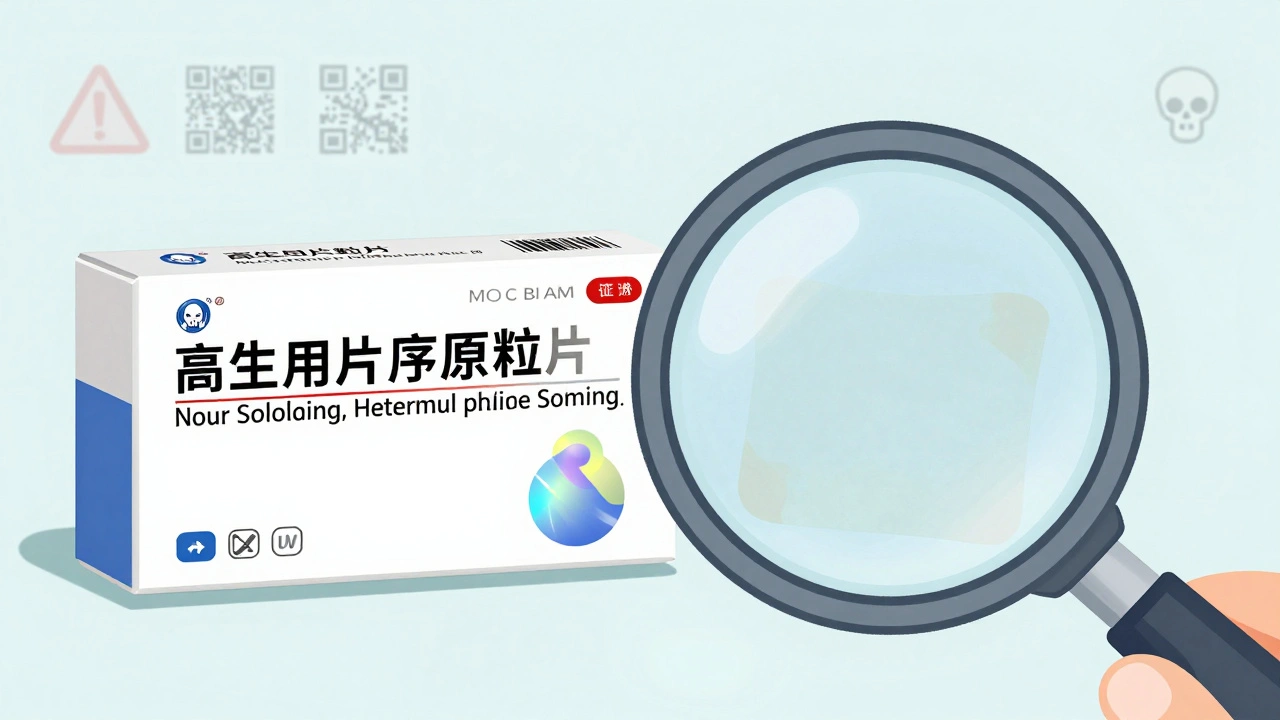
Every year, millions of people around the world take medication without knowing if what they’re holding is real. Counterfeit drugs aren’t just a problem in faraway countries-they’re in online pharmacies, overseas shipments, and sometimes even in local stores. The packaging looks right. The seal looks intact. But inside? It could be chalk, drywall dust, or the wrong dose of active ingredient. In 2023, the FDA confirmed over 4,800 reports of fake medications in the U.S. alone. Most of these were caught because someone noticed something off about the packaging-not the pill itself.
What Makes Packaging Fake? The Subtle Signs
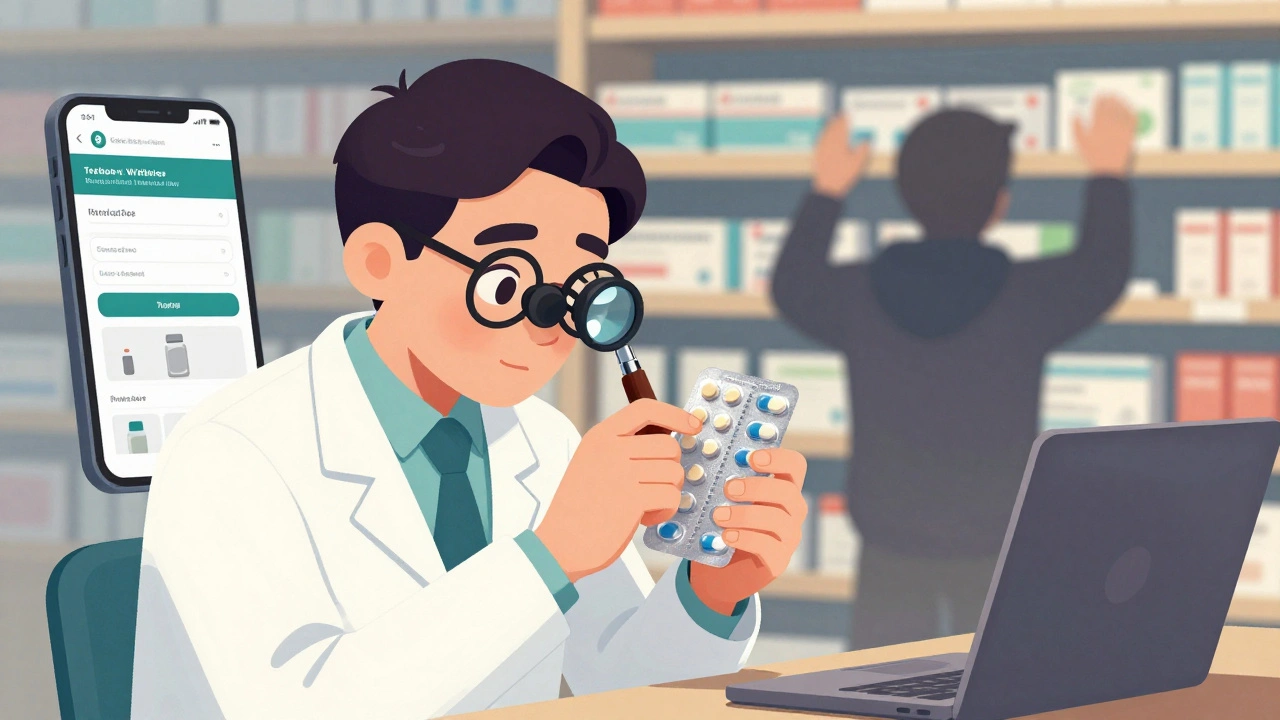
Counterfeiters don’t just slap on a fake label. They copy everything: the logo, the font, the color, even the barcode. But they can’t replicate every detail perfectly. Real pharmaceutical packaging is made with precision. The paper weight, the ink composition, the alignment of text-all of it follows strict standards. Fake packaging often has tiny mismatches that only show up under close inspection. Look at the color. Genuine packaging uses specific Pantone colors. In 2019, counterfeit Lipitor pills were caught because their packaging used a blue shade that hadn’t been used since 2002. The real thing? A slightly deeper, more consistent tone. Under normal light, it looks the same. Under UV light? The fake glows differently. Check the print quality. Real blister packs have crisp, sharp lettering. The edges of letters don’t bleed. The imprint on pills is uniform in depth-usually between 0.14mm and 0.16mm. Counterfeit versions often have shallow or uneven imprints. One pharmacist in New Zealand noticed counterfeit Adderall pills had imprints that were 0.03mm shallower than the real ones. That’s less than the thickness of a human hair, but a handheld 10x loupe makes it obvious.Seals and Tamper-Evident Features
The seal is your first real line of defense. Real medication boxes often have tamper-evident features: holograms, shrink bands, or peel-back labels that leave a pattern when removed. Counterfeiters can copy holograms-but they rarely get the alignment right. The image might be slightly off-center, or the colors don’t shift properly when you tilt it. Look at the seal’s texture. Genuine seals are made with special laminates that feel smooth and slightly rigid. Fakes often use cheaper plastic that feels floppy or sticky. If the seal looks like it was glued on rather than heat-sealed, walk away. QR codes and serial numbers are another clue. Most prescription drugs now have unique identifiers printed on the box. Scan it with your phone. Does it take you to the manufacturer’s official verification site? Or does it lead to a random website with bad grammar and broken images? Fake QR codes often redirect to phishing pages. The real ones are registered in national databases like the U.S. Drug Supply Chain Security Act (DSCSA) system or the EU’s Falsified Medicines Directive portal.Tools You Can Use at Home
You don’t need a lab to spot fakes. Here’s what you can do with things you already have:- Flashlight with UV mode: Many real medications use UV-reactive ink. Shine it on the box. If nothing glows, or if the glow looks uneven, that’s a red flag.
- Magnifying glass or 10x loupe: Check the fine print. Real packaging has microtext-tiny letters that spell out the drug name or manufacturer. Counterfeiters often skip this or make it blurry.
- Phone camera in macro mode: Take a close-up photo of the pill imprint. Compare it to images on the manufacturer’s website. Differences in font thickness or spacing are easy to spot when zoomed in.
- Weight scale (even a kitchen scale): Weigh the blister pack. Real packaging has consistent weight. A counterfeit pack of Ozempic was found to be 8% heavier due to thicker cardboard and extra layers.
What to Do If You Suspect a Fake
If something feels off, don’t take the risk. Stop using it. Don’t throw it away. Keep the packaging and the pills. Then:- Contact the pharmacy where you bought it. Ask them to check their supplier records.
- Report it to your national health authority. In the U.S., use FDA’s MedWatch program at 1-800-FDA-1088. In New Zealand, contact Medsafe.
- Check the manufacturer’s website. Most major companies have a “Verify Your Medicine” section with photos of authentic packaging.
Why Online Pharmacies Are the Biggest Risk
Over 80% of counterfeit drugs sold in New Zealand and other high-income countries come from unverified online sources. Websites that look professional-complete with logos, testimonials, and secure checkout-are often fronts for criminal networks. Avoid sites that:- Don’t require a prescription for controlled medications
- Offer “discounts” that are too good to be true (e.g., 80% off insulin)
- Ship from countries with weak pharmaceutical regulations
- Have no physical address or contact number
What’s Being Done to Stop This
Governments and drugmakers are fighting back. Since 2019, the European Union has required every prescription medicine to have a unique identifier and anti-tamper seal. The U.S. is rolling out a similar system. By 2023, 92% of top pharmaceutical companies had implemented serialization-meaning every bottle or box has a digital fingerprint. New technologies are emerging too. Some companies are embedding plant DNA tags into packaging that can be scanned with a $500 handheld reader. Others are using edible, unique patterns on pills called ePUFs-patterns so complex they can’t be copied, even by AI. In 2023, Pfizer’s handheld Raman spectrometer, which analyzes chemical composition in seconds, was used in 12 countries to catch fake cancer drugs. But the most effective tool is still human eyes. A 2022 Johns Hopkins survey found that 74% of counterfeit drugs were detected by pharmacists who noticed a tiny misalignment in the blister pack. Not a lab. Not a machine. Just someone who knew what to look for.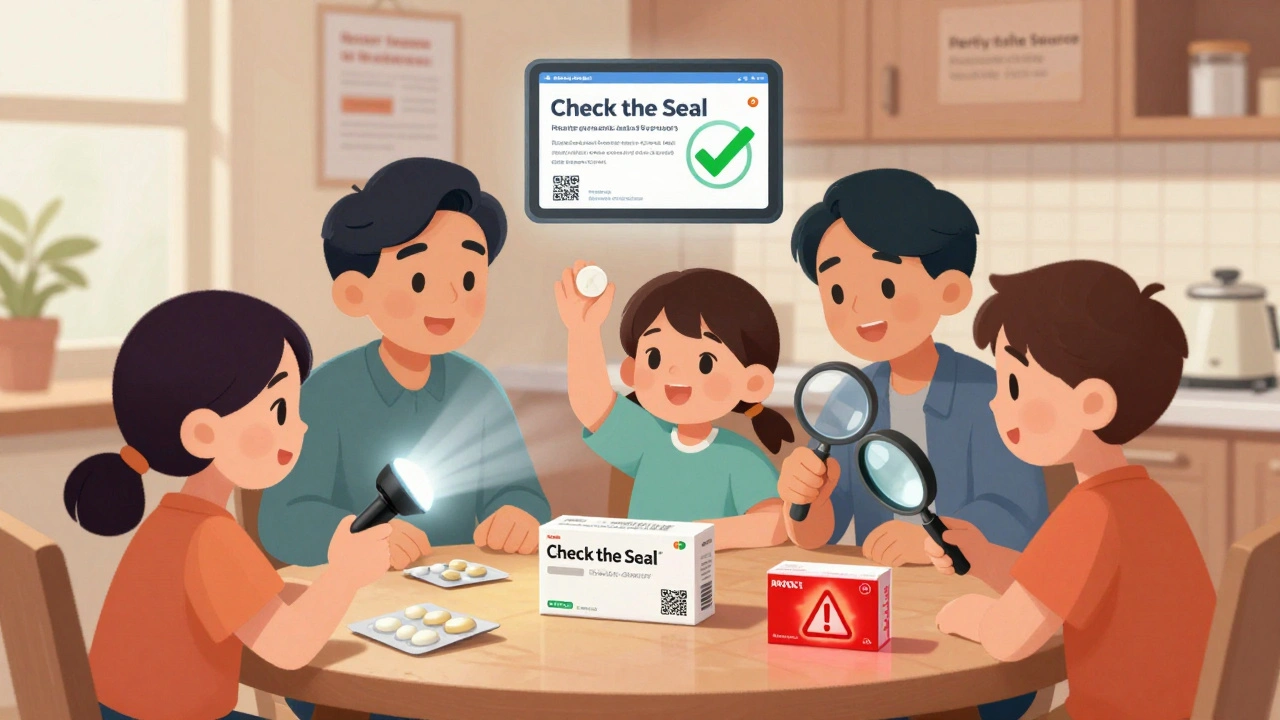
What Not to Do
Don’t rely on a single check. Fake packaging is getting smarter. One batch of counterfeit Viagra had perfect holograms, correct QR codes, and matching colors-but the paper was 5% heavier. That’s the kind of detail you miss if you only glance at the seal. Don’t assume your doctor’s prescription is safe. Counterfeiters have forged prescription pads and stolen patient data to order drugs under fake names. Always inspect the physical package, even if it came from your trusted pharmacy. Don’t discard suspected fakes without reporting them. In 2022, 378 people in the U.S. threw away real medication because they thought it was fake. That cost an estimated $4.2 million in wasted drugs.Final Checklist: 5 Quick Checks Before Taking Any Pill
Before you swallow anything:- Color check: Does the pill match the color and shape shown on the manufacturer’s website?
- Print check: Use a magnifier. Is the imprint sharp? Are the letters evenly spaced?
- Seal check: Is the tamper-evident seal intact? Does it feel like it was heat-sealed?
- Code check: Scan the QR code. Does it go to the official brand site?
- Source check: Did you buy it from a licensed pharmacy? If unsure, call the manufacturer’s customer service line.
How common are counterfeit medications in New Zealand?
Counterfeit medications are rare in New Zealand compared to other countries-less than 0.5% of medicines are estimated to be fake. But most cases come from online purchases, not local pharmacies. The risk increases significantly if you buy from websites outside New Zealand, especially those offering deep discounts on high-demand drugs like Ozempic or Viagra.
Can I trust the barcode on a medicine box?
Not always. Counterfeiters can generate fake barcodes that scan correctly but link to invalid or fake websites. Always verify the barcode by scanning it and checking if it redirects to the official manufacturer’s site-not a random URL or a shopping page. Legitimate barcodes are registered in national drug tracking systems like the U.S. DSCSA or the EU’s FMD database.
What should I do if I find a fake medicine?
Do not use it. Do not throw it away. Keep the packaging and pills, then report it immediately. In New Zealand, contact Medsafe at [email protected] or call 0800 766 777. In the U.S., use FDA’s MedWatch at 1-800-FDA-1088. Your report helps authorities track and shut down counterfeit operations.
Are holograms on medicine packaging reliable?
No, not on their own. Since 2018, counterfeiters have been able to replicate 83% of standard holograms using modern printers. Holograms are still useful, but only as part of a layered check. Always combine hologram inspection with print quality, color, QR code, and weight checks. A real hologram will shift colors smoothly when tilted; a fake often looks flat or pixelated.
Can AI help detect fake medicine packaging?
Yes, but not for consumers. AI systems trained on thousands of real and fake packaging images can detect anomalies with over 90% accuracy. These are used by regulators and large pharmacies, not individuals. For example, the European Medicines Agency launched a public database of 14,852 real and 2,147 fake packaging images to train these systems. Consumers should rely on visual and simple tools-not apps that claim to scan for fakes.
Next Steps for Safer Medication Use
If you take medication regularly, make this part of your routine:- Always buy from licensed pharmacies-physical or verified online.
- Keep a photo of your medication’s packaging when you first get it. Compare future refills.
- Sign up for drug safety alerts from your country’s health agency.
- Teach family members, especially older adults, how to spot fake packaging.
- Never buy medication from social media sellers or unverified websites.
Inna Borovik
December 6, 2025 AT 09:04Let’s be real - most people don’t care enough to check the Pantone code on their blood pressure pills. The FDA reports are scary, but the real problem is that pharmacies are outsourcing fulfillment to third-world warehouses with zero oversight. You think a $20 bottle of insulin from a ‘trusted’ online vendor is safe? It’s not. It’s a lottery where the prize is organ failure.
Chris Park
December 6, 2025 AT 17:11Interesting how they mention the EU’s FMD and DSCSA like it’s some kind of silver bullet - but they don’t mention that the same systems were hacked in 2021 to inject fake serial numbers into the supply chain. The entire verification infrastructure is a honeypot. The real counterfeiters don’t bother copying seals anymore - they just bribe the database admins. You’re being sold a myth of security.
Jackie Petersen
December 8, 2025 AT 15:35U.S. pharmacies are the worst. I bought a box of metformin from CVS last year and the seal was perfect - but the pills were chalky and tasted like plastic. Called them. They said ‘it’s probably just a bad batch.’ Bad batch? That’s what they say when they know it’s fake and they don’t wanna lose their Medicare reimbursements. The system is rigged.
Saketh Sai Rachapudi
December 9, 2025 AT 08:29India makes 40% of the world’s generic meds and you people still act like we’re the problem? You import our drugs then act shocked when they’re not perfect? We follow WHO standards. You don’t even know how to read a label. If you want real safety, stop buying from Amazon and go to a local pharmacist who’s been in business since 1987. Stop blaming the developing world for your laziness.
Myles White
December 11, 2025 AT 05:01I’ve been a pharmacist for 22 years and I can tell you - the most dangerous thing isn’t the fake packaging, it’s the complacency. People assume because it’s from a ‘reputable’ pharmacy, it’s safe. But I’ve seen boxes with perfect holograms, correct QR codes, and even matching batch numbers - all from the same manufacturer - that contained zero active ingredient. The counterfeiters are now using real packaging from diverted or stolen inventory. The only way to be sure is to compare the pill imprint with the manufacturer’s official database, and even then, you’re not guaranteed. It’s a cat-and-mouse game where the mice are getting smarter and the cats are too busy doing paperwork.
Annie Gardiner
December 12, 2025 AT 08:55It’s funny how we’re all terrified of fake pills but we’ll still scroll through Instagram ads for ‘discount Ozempic’ while ignoring the fact that the website has no HTTPS padlock. We want safety, but we want convenience more. We’re the problem. We’re the ones who created this market. The counterfeiters are just filling a void we dug with our impatience and greed. We’re not victims - we’re accomplices.
Arjun Deva
December 14, 2025 AT 03:21And yet… the FDA still hasn’t released the full list of compromised batches from 2023… why? Because they don’t want to panic people. But here’s the thing - if you’re taking anything that costs more than $50 a month… you’re already playing Russian roulette. The holograms? Useless. The QR codes? Tracked. The seals? Glued on by machines that don’t care. The only thing that matters is the batch number… and even that’s been faked since last year. I’ve seen it. I’ve held it. I’ve watched a man die from it. And no one talks about it. Because the truth is too ugly.
Mayur Panchamia
December 15, 2025 AT 22:32Oh, so now we’re supposed to carry a 10x loupe in our pocket like some kind of pharmaceutical detective? And a UV flashlight? And a kitchen scale? What’s next - a DNA sequencer in our purse? This is ridiculous. You want to live? Stop buying pills from strangers on the internet. That’s it. That’s the entire solution. Stop making it a tech problem. It’s a human problem. People are too damn lazy to verify their sources. End of story.
brenda olvera
December 16, 2025 AT 03:22I’m 72 and I’ve been on statins for 15 years. I never check the seal. I never scan QR codes. But I’ve always bought from the same pharmacy downtown - the one with the lady who remembers my name. I don’t need gadgets. I need trust. And if that trust is broken? I’ll find another pharmacy. Not because I’m paranoid - because I’m smart. Sometimes the simplest solution is the best one.
joanne humphreys
December 16, 2025 AT 17:21One thing everyone’s missing: the emotional toll. I had a friend who took fake insulin for three weeks. She didn’t die - but she lost her job, her savings, and her sense of safety. She doesn’t even trust her own prescriptions anymore. That’s the real cost - not the number of counterfeit pills, but the erosion of trust in healthcare itself. We need compassion, not just checklists.
Kenny Pakade
December 18, 2025 AT 10:12And yet the U.S. government still lets Amazon sell prescription meds without a license. Meanwhile, China is building AI-powered drug verification systems that can detect fakes in under 2 seconds. We’re stuck with magnifying glasses and QR codes while the rest of the world moves on. This isn’t about pills - it’s about American decline. We’re too lazy, too distracted, and too proud to fix our own broken system.