

Missing a dose of your daily medication because you forgot to adjust for the time difference is one of the most common-and dangerous-mistakes travelers make. If you take prescription drugs regularly, crossing time zones isn't just about jet lag; it’s a logistical puzzle that can affect how well your treatment works. Whether you’re flying from New York to London or Auckland to Sydney, getting your medication adherence right ensures your body stays stable while your clock changes.
The good news? With a little planning and the right tools, managing your meds on the road is straightforward. You don’t need to be a pharmacologist to do it, but you do need a clear strategy before you pack your bags. Here’s how to keep your doses on track, no matter where you land.
Key Takeaways
- Small shifts are safe: For time zone changes under three hours, keep your original schedule. Your body will handle the minor adjustment easily.
- Big jumps need a plan: Crossing more than three time zones requires a specific transition strategy, often shifting doses gradually over two to three days.
- Critical meds are different: Insulin, seizure medications, and birth control pills have stricter timing rules. Always consult your doctor at least two weeks before flying.
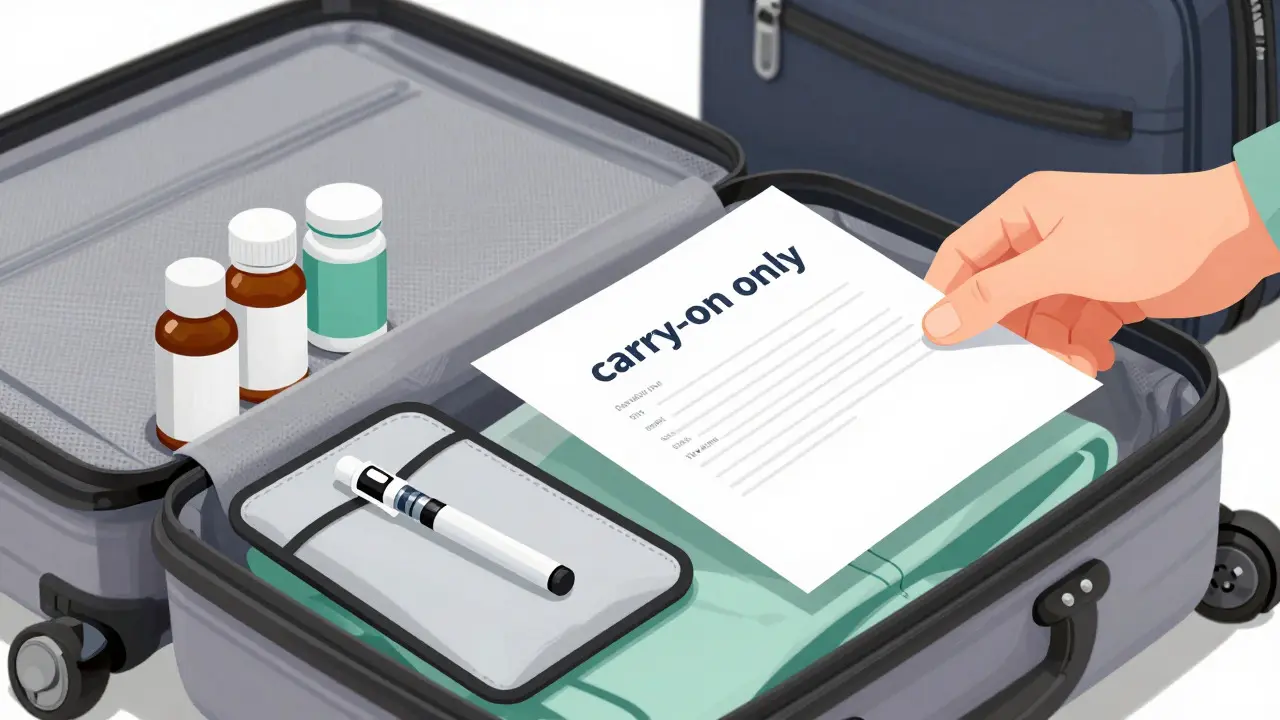
- Pack smart: Keep all medications in your carry-on bag. Checked luggage risks losing your supply due to delays or lost baggage.
- Use tech to your advantage: Apps with automatic time zone adjustments reduce missed doses by nearly half compared to standard phone alarms.
Why Time Zones Mess With Your Meds
Your body runs on an internal clock called the circadian rhythm. Most medications are designed to work best when taken at consistent intervals, aligning with this natural cycle. When you fly across time zones, your external environment changes instantly, but your internal biology doesn’t. This mismatch can lead to what experts call "therapeutic failure," where the drug levels in your blood drop too low or spike too high.
This isn't just an inconvenience. For people taking drugs with a "narrow therapeutic window"-like certain heart medications or anticoagulants-even a small timing error can cause serious side effects or reduced efficacy. According to recent clinical data, proper medication management during international travel can reduce medication-related health emergencies by up to 67%. In other words, a simple schedule change can mean the difference between a smooth trip and a hospital visit.
The General Rule: The Three-Hour Threshold
Not every flight requires a complex new schedule. Healthcare providers generally use a simple rule of thumb based on the number of time zones crossed.
- Less than 3 hours: Keep your original schedule. If you usually take your pill at 8 AM, take it at 8 AM local time at your destination. The shift is small enough that your body won't notice the disruption.
- More than 3 hours: Start transitioning. Don't try to jump straight to the new time. Instead, shift your dosing times gradually. A common approach is to move your dose by 1-2 hours each day until you match the destination's schedule.
For example, if you're flying from Auckland (UTC+12) to Los Angeles (UTC-8), that's a 20-hour difference. You wouldn't suddenly start taking your morning med at midnight. Instead, you'd begin shifting your doses earlier or later in the days leading up to the flight, or immediately upon arrival, depending on your doctor's advice.
Special Cases: Meds That Can't Wait
While the gradual shift works for most blood pressure or cholesterol meds, some drugs are unforgiving. These require a customized plan from your healthcare provider.
| Medication Type | Timing Sensitivity | Travel Strategy |
|---|---|---|
| Insulin | High | Adjust basal doses by 20% for every time zone beyond 3. Consult doctor 14 days prior. |
| Anti-seizure meds | Critical | Must stay within a 2-hour window of regular schedule. Deviations increase seizure risk significantly. |
| Oral Contraceptives | High | Take at same local time daily. Use backup contraception if a dose is delayed >12 hours. |
| Antibiotics | Moderate | Continue prescribed schedule. Never double up, as inconsistent dosing breeds resistance. |
| Blood Pressure/Cholesterol | Low-Moderate | Gradual shift over 2-3 days is usually safe and effective. |
If you rely on insulin, talk to your endocrinologist early. The American Diabetes Association recommends adjusting basal insulin doses specifically based on flight direction and duration. For those managing epilepsy, consistency is king. Research shows that missing a window by more than two hours can increase the risk of a breakthrough seizure by nearly four times. And if you're on birth control, remember that "same time" means the same local time, not the same absolute moment in the universe. If you miss a pill by more than 12 hours, grab some backup protection just to be safe.
Packing and Documentation: Don't Get Caught Out
You’ve planned the schedule, but now you need to physically get the meds to the airport without them being confiscated or lost. The biggest mistake travelers make is putting prescriptions in checked luggage. Statistics show that over 60% of medication-related travel emergencies happen because the meds were stuck in a delayed bag.
Here’s how to pack correctly:
- Carry-on only: Keep all active medications in your hand luggage. This includes liquids like liquid antibiotics or insulin pens. While TSA allows larger containers for medical needs, always notify the security agent at the start of screening to avoid confusion.
- Cold chain matters: If you need refrigerated meds like insulin, use an insulated pouch with ice packs. Insulin loses potency if exposed to temperatures above 30°C (86°F) for more than 24 hours.
- Bring extra: Pack at least a seven-day surplus for domestic trips and a 14-day supply for international travel. Delays happen, and pharmacies abroad might not stock your exact brand.
- Document everything: Carry a printed list of your meds, including generic names, dosages, and your doctor’s contact info. For controlled substances, get a letter from your physician explaining why you need them. Countries like Japan, South Korea, and the UAE have strict laws about bringing certain medications across borders.

What to Do If You Miss a Dose
Even with the best plans, life happens. Maybe your flight was delayed, or you got distracted. So, what do you do? The golden rule is: never double up. Taking two doses at once to "catch up" increases the risk of adverse reactions significantly.
Instead, follow these guidelines:
- Check the window: Most medications can be taken safely within a four-hour window of their scheduled time. If you remember within two hours of the missed time, take it immediately.
- Wait for the next one: If more than two hours have passed, skip the missed dose and wait for your next regular one.
- HIV and critical meds: For antiretrovirals or other drugs where blood levels must stay constant, take the missed dose as soon as possible, even if it’s close to the next one. Ask your specialist for their specific protocol before you fly.
Using Technology to Stay On Track
Your phone is your best friend here, but only if you set it up right. Standard alarms often fail because they don't account for time zone changes automatically. Instead, use medication reminder apps that sync with your location or allow you to set "time zone-aware" reminders.
Studies indicate that travelers using these specialized apps miss almost half as many doses as those relying on manual alarms. Additionally, consider setting countdown timers rather than fixed-time alarms for flights. If you know you need to take a med every 8 hours, set a timer for 8 hours after your last dose, regardless of what the clock says. This method improved adherence rates by 32% in recent studies.
Before you leave, download offline copies of your medication instructions. You don't want to be searching for dosage info in a foreign country with spotty internet. Also, check if your pharmacy offers pre-travel consultations. Many major chains now provide this service, helping you map out your exact schedule based on your itinerary.
Frequently Asked Questions
Should I change my medication schedule before I fly?
It depends on the time difference. For short trips or small time zone changes (under 3 hours), keep your normal schedule. For longer trips or big jumps, ask your doctor if you should start shifting your doses a few days before departure to ease the transition.
Can I take my meds in checked luggage?
No. Always keep essential medications in your carry-on bag. If your checked bag is lost or delayed, you could run out of critical drugs. Liquids and refrigerated items also fare better in the cabin where temperature is more stable.
What if I miss a dose while traveling?
Don't double up. If you remember within 2 hours of the missed time, take it. If it's been longer, skip it and wait for the next scheduled dose. For critical meds like HIV drugs, follow your doctor's specific instructions, which may differ.
Do I need special permission to bring meds abroad?
Yes, for controlled substances. Countries like Japan and South Korea have strict rules. Carry a letter from your doctor explaining the medical necessity and keep the meds in their original labeled containers. Check the destination country's regulations at least 30 days before your trip.
How much extra medication should I pack?
Pack a 7-day surplus for domestic travel and a 14-day supply for international trips. This buffer accounts for flight delays, lost luggage, or difficulty finding your specific medication at a foreign pharmacy.