
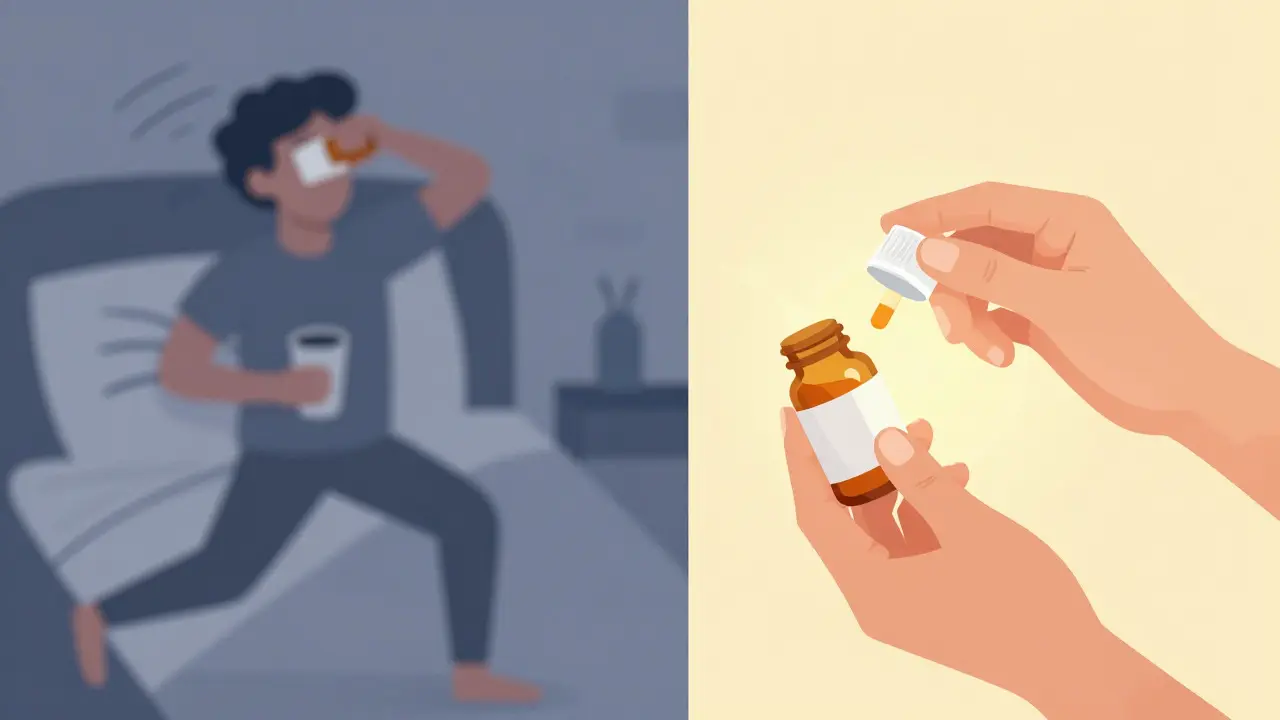
Imagine reaching for your morning pills without thinking. You grab the bottle, pop out a tablet, and swallow it with coffee. It feels efficient, but what if that wasn't the right dose? Or worse, what if it was someone else's medication entirely? Medication errors are not just rare accidents; they are a leading cause of preventable harm. In the United States alone, these mistakes contribute to thousands of deaths annually. The good news is that you hold the primary defense in your hands every single time you take a pill: the label.
Checking your medication label before every dose isn't just a suggestion from cautious doctors. It is a critical safety practice that can reduce your personal risk of medication error by up to 76%. Yet, most people treat this step as optional or skip it entirely because it feels tedious. The goal here is not to scare you into paranoia, but to help you build a simple, automatic habit that protects your health. By training yourself to verify labels consistently, you transform a chore into a reflex, ensuring that every dose is safe, correct, and effective.
The Anatomy of a Safe Label Check
To check a label effectively, you first need to know exactly what to look for. Scanning the bottle quickly often leads to missing crucial details. Research from SmithRx identifies ten essential elements that must be verified during each check. Think of this as a quick mental checklist rather than a long reading assignment.
| Element | What to Look For | Why It Matters |
|---|---|---|
| Patient Name | Must match yours exactly | Prevents taking another family member's meds |
| Drug Name | Brand and generic names | Ensures you are taking the prescribed substance |
| Dosage/Strength | Milligrams (mg) or units | Confirms the potency matches your prescription |
| Prescriber | Doctor's name | Verifies the source of the order |
| Expiration Date | Date printed on label | Ensures the drug is still effective and safe |
| Instructions | "Take one daily," "With food," etc. | Guarantees proper administration timing and method |
New FDA labeling standards effective in 2025 have made this easier by mandating standardized single-page labels with enhanced readability. These labels now feature minimum 6-point sans-serif fonts for essential information and high-contrast color schemes. This design specifically helps the 21% of adults aged 65 and older who experience vision impairment. If your current bottles don't look like this, ask your pharmacist about updated packaging options or request larger print labels.
Building the Habit: From Conscious Effort to Automatic Reflex
Knowing what to check is only half the battle. The real challenge is doing it every single time, even when you're rushed, tired, or distracted. Dr. Angela Smith from Carolinas HealthCare System warns that over-reliance on memory fails 83% of patients within two weeks without structured habit formation techniques. To succeed, you need to move beyond willpower and use behavioral conditioning strategies.
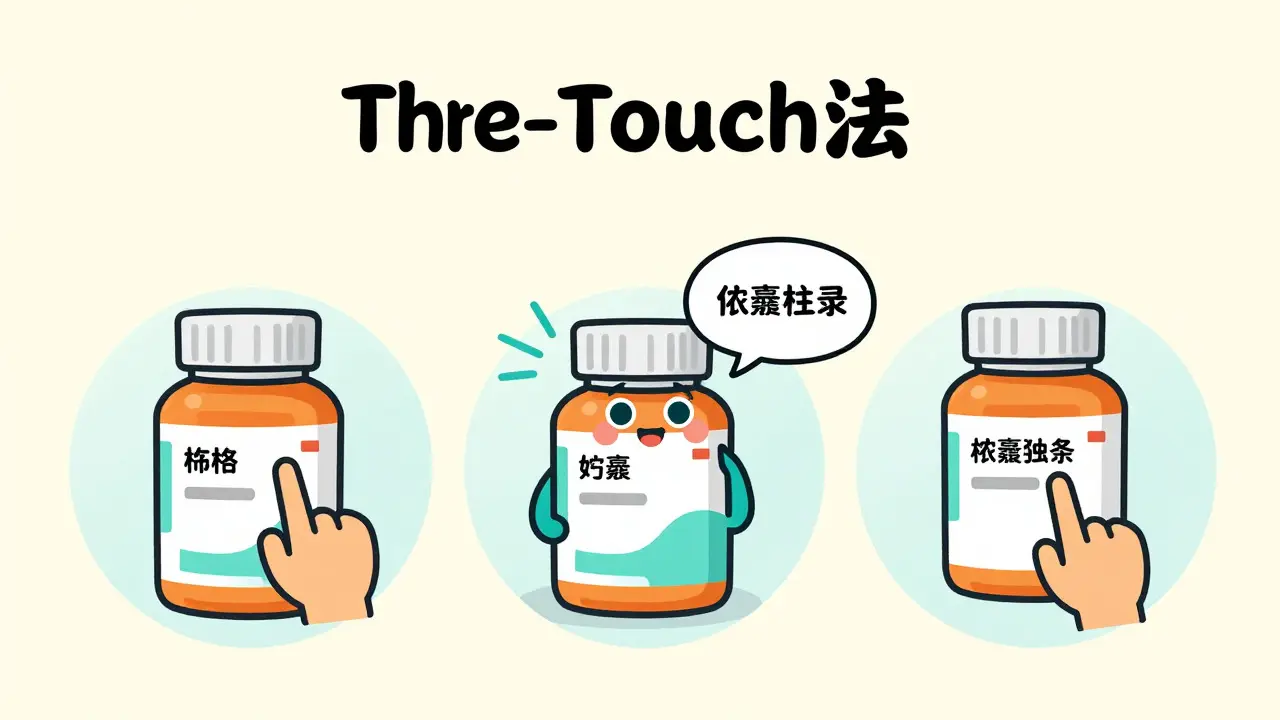
The most effective technique recommended by experts is the Three-Touch Method a physical verification protocol where you touch the label while verbalizing key details. Here is how it works:
- Touch: Physically place your finger on the patient's name on the label.
- Speak: Say aloud, "This is [Your Name] for [Condition]."
- Verify: Touch the dosage strength and say, "[Dose] milligrams, [Frequency]."
This multisensory approach-combining touch, sight, and speech-engages more parts of your brain than silent reading. Clinical trials by SmithRx showed that this method increased adherence to 92% after 30 days, compared to just 64% for those who checked silently. It sounds awkward at first, but like brushing your teeth, it becomes automatic with repetition. Most adults require 18 to 22 repetitions to automate this behavior. Aim for three weeks of consistent practice.
Optimizing Your Environment for Success
Habits thrive in environments designed to support them. If your medication routine is chaotic, label checking will slip through the cracks. Consider these environmental tweaks to make verification easier and more likely:
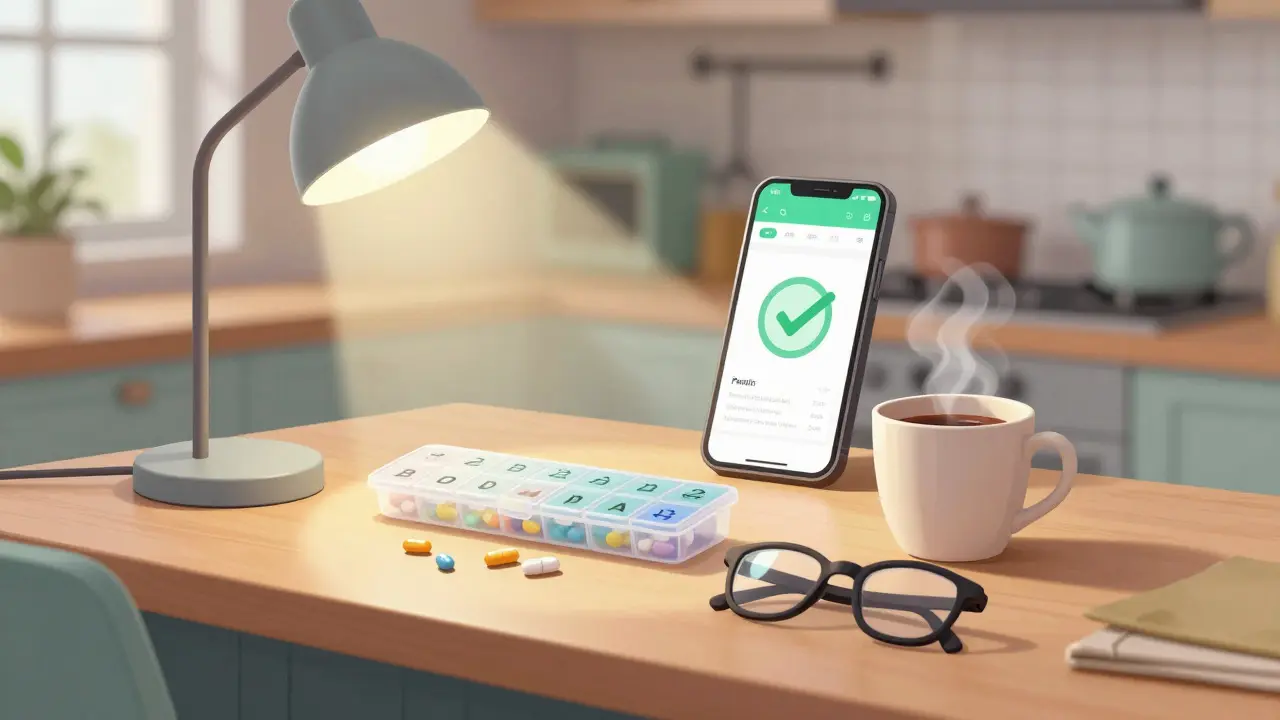
- Lighting is Critical: Ensure your medication area has adequate lighting. The FDA recommends a minimum of 500 lux for label readability. If your bathroom or kitchen counter is dim, add a small lamp or LED strip light near your medicine cabinet.
- Remove Visual Barriers: Keep corrective lenses nearby. If you wear glasses for reading, keep a spare pair next to your medication organizer. Trying to squint at small text increases error rates significantly.
- Strategic Placement: Place your medication bottles directly in the path of your daily routine. For example, if you always make coffee in the morning, put your pillbox next to the coffee maker. MedPak's behavioral research found that this simple placement reduces missed checks by 53%.
- Use Magnification Tools: For those with vision impairment, a handheld magnifier can reduce errors by 38%. Alternatively, many pharmacies offer large-print labels or braille stickers upon request.
Avoid rushing. Morning routines are often frantic, which is why 67% of patients report skipping checks due to time pressure. Build a buffer into your schedule. Set your alarm five minutes earlier if needed. Treat the label check as non-negotiable, just like locking your front door before leaving the house.
Technology as a Safety Net
While human habits are powerful, technology can provide an extra layer of security. However, not all apps are created equal. Basic reminder apps that simply beep at you have limited impact on safety. Look for applications that incorporate mandatory verification steps.
Data shows that apps requiring users to photograph or scan the label before logging a dose have 63% higher user retention at 90 days compared to basic reminder tools. This forced interaction ensures you engage with the label physically. Additionally, major pharmacy chains are increasingly implementing barcode scanning features. When you scan the bottle, the app confirms the drug name, dose, and timing against your digital profile. This double-check mechanism catches discrepancies that the eye might miss.
Be cautious of relying solely on technology. Apps can glitch, batteries die, and screens crack. Technology should support your habit, not replace it. The goal is to use digital tools to reinforce the manual Three-Touch Method, creating a robust system where both methods back each other up.
Overcoming Common Pitfalls
Even with the best intentions, obstacles arise. Understanding these common pitfalls helps you navigate them proactively.
Look-Alike Sound-Alike Drugs: Many medications have similar names (e.g., Levothyroxine vs. Levofloxacin). CareSfield reports that 25% of errors stem from name confusion. Always read the full generic name, not just the brand. If two bottles look identical, separate them visually using colored tape or distinct organizers.
Cognitive Decline and Fatigue: For elderly patients or those managing complex regimens, cognitive load can impair verification. If you notice yourself forgetting steps frequently, involve a caregiver. Use the "teach-back method": explain the label details to your partner or child. Caresfield documented that this improves retention by 57% and provides immediate feedback if you are confused.
Complex Regimens: Managing five or more prescriptions (polypharmacy) affects 45% of adults aged 65+. Complexity breeds error. Simplify your routine by asking your doctor if doses can be aligned to the same times of day. Use a weekly pill organizer, but remember: fill the organizer while checking the original bottle labels, not just trusting the compartments.
When to Seek Professional Help
If you find yourself consistently struggling to verify labels despite these strategies, it may be time to consult a healthcare professional. Pharmacists are trained medication safety experts. Don't hesitate to ask them to review your regimen for potential interactions or simplifications. They can also provide personalized tips based on your specific medications and health conditions.
Remember, checking labels is not about distrust; it is about empowerment. You are the final gatekeeper of your own health. By mastering this simple habit, you join the millions of patients who have turned a mundane task into a life-saving ritual. Start today. Pick up your bottle. Touch the label. Speak the words. Your future self will thank you.
How long does it take to form the habit of checking medication labels?
Research suggests that most adults require 18 to 22 repetitions to automate the behavior. With consistent daily practice, this typically translates to about 3 to 4 weeks. Using the Three-Touch Method accelerates this process by engaging multiple senses, making the habit stick faster than silent visual checks alone.
What should I do if my medication label is hard to read?
First, ensure you have adequate lighting (at least 500 lux) and use corrective lenses if needed. If visibility remains an issue, ask your pharmacist for large-print labels or braille stickers. You can also use a handheld magnifier, which has been shown to reduce errors by 38% for patients with vision impairment. New 2025 FDA standards mandate better font sizes, so new prescriptions should be easier to read.
Is it necessary to check the label every single time I take a dose?
Yes. Consistency is key to preventing errors. Even if you have taken the same medication for years, mistakes can happen due to packaging changes, refills, or momentary distractions. Checking every time reduces personal medication error risk by up to 76%, far outperforming occasional checks or reliance on memory alone.
Can medication reminder apps replace manual label checking?
No, apps should supplement, not replace, manual checking. While apps with mandatory label scanning features improve retention and safety, they are not infallible. Technical glitches or battery issues can occur. The safest approach combines digital reminders with the physical Three-Touch Method to create a redundant safety system.
What are the most common causes of medication errors related to labels?
The top causes include name confusion (look-alike sound-alike drugs), poor lighting, small font sizes, and rushing through the routine. Additionally, 33% of medication errors are linked to packaging and labeling mistakes. Verifying the patient name, drug name, and dosage strength addresses the majority of these risks.
Padraic Cepek
July 24, 2026 AT 01:32Great advice for the helpless masses who can't even manage their own bodies without a checklist. The government wants you dependent on these safety nets because they know we're too stupid to handle freedom.
Mildred Fierce
July 25, 2026 AT 03:15It is absolutely pathetic that one requires such elementary instructions to avoid ingesting poison. The decline of cognitive function in the general population is staggering, and this article merely bandages a gaping wound in our societal intellect. We are drowning in mediocrity while pretending to be safe.
Trey Newkerk
July 25, 2026 AT 19:12You think checking a label saves you? It's all an illusion! The pills are just colored chalk designed to keep you docile and compliant with the system. Touching the label won't stop the chemical warfare being waged against your mind every single day. Wake up!
Charles PINSON
July 25, 2026 AT 20:57A rather pedestrian guide for those lacking the intellectual fortitude to manage basic pharmacology. One would assume that verifying the contents of a vessel before consumption is a prerequisite for survival, yet here we are, spoon-feeding the populace like infants.
John Anderson
July 27, 2026 AT 09:17Just do it. Stop complaining about how hard it is. You have eyes. Use them.
Patrick Plummer
July 28, 2026 AT 02:23Oh, really?? Is that so??? Well, I suppose if you must insist on living in a world of labels and rules, then by all means, touch the bottle!!! But don't come crying to me when the real danger isn't the pill, but the lack of spiritual alignment!!!
Kieran Healy
July 28, 2026 AT 18:31I actually found this super helpful! :) I've been struggling with my morning routine lately and always feel rushed. Putting the meds next to the coffee maker makes so much sense. Thanks for sharing! :)
Kevin Burke
July 30, 2026 AT 05:50The ritual of verification is not merely a task; it is a meditation on mortality. To ignore the label is to invite chaos into your ordered existence. You must become the gatekeeper of your own soul, lest the pharmaceutical overlords consume your essence through negligence.
neal vince
July 30, 2026 AT 20:27According to federal regulations, the font size must meet specific criteria, yet many patients still fail to comply with basic visual inspection protocols. This suggests a systemic failure in patient education rather than a flaw in the labeling standards themselves.
Sinead Doyle
July 31, 2026 AT 08:45Big Pharma wants u to trust the app but the apps r rigged!! They track ur biometrics thru the camera lens when u scan the code. The labels r changing to hide the truth about what's inside. DONT TRUST THE SCANNERS!!!
Samuel Friday
July 31, 2026 AT 09:18How quaint. The average person treats their health with the same disregard they show for public property. If you cannot be bothered to read a few lines of text, perhaps you deserve the consequences of your apathy. It is truly disheartening to witness such collective incompetence.
Emily Schor
August 2, 2026 AT 05:21This is a very practical approach. I agree that environmental cues are crucial for habit formation. Placing items in high-traffic areas reduces the cognitive load required to remember tasks.
Arun Krishnan
August 3, 2026 AT 02:35Well done for taking control of your health journey. Small steps lead to big changes. Keep going and stay consistent. You got this!