
Imagine waking up not to the sound of a chainsaw in your bedroom, but to silence. For millions of people, snoring isn't just a nuisance; it's a barrier to intimacy, rest, and peace of mind. You’ve probably tried sleeping on your side, used nasal strips, or even bought one of those boil-and-bite gadgets from the pharmacy shelf. If you’re still hearing that noise-or if your partner is complaining-you might be looking for something more substantial than a quick fix.
This is where Oral Appliance Therapy, specifically using Mandibular Advancement Devices (MADs), comes into play. It’s not magic, and it’s not surgery. It’s a mechanical solution rooted in simple physics: move the jaw forward, open the airway, stop the vibration. But does it actually work? Is it worth the money? And why do some people swear by them while others hate them?
How Mandibular Advancement Actually Works
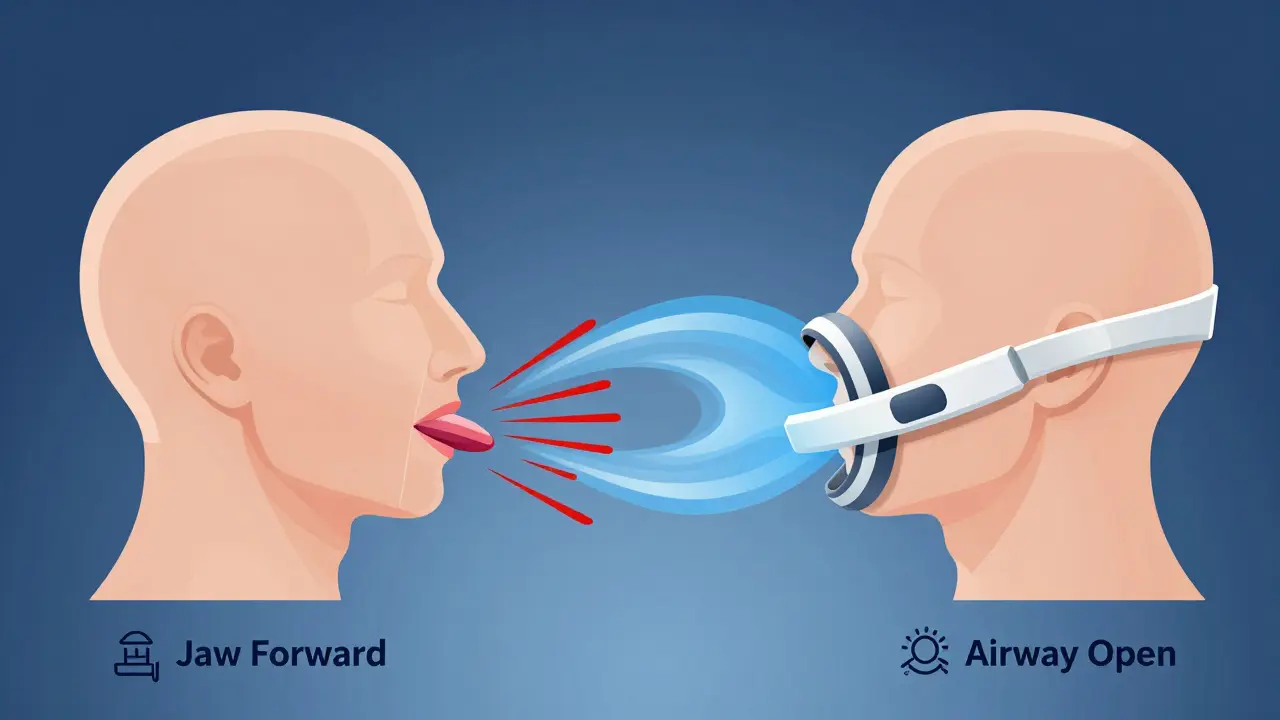
To understand why these devices work, you have to look at what happens when you sleep. When you lie down, gravity pulls your tongue and soft tissues in the back of your throat backward. In many people, this narrows the airway enough to cause turbulence. That turbulence creates the sound we call snoring. If the airway closes completely, you get obstructive sleep apnea (OSA).
A Mandibular Advancement Device works like a retainer, but with a specific job. It holds your lower jaw slightly forward-usually between 3mm and 10mm beyond its natural resting position. By pulling the jaw forward, you also pull the tongue and attached soft tissues forward. This physically widens the space in your throat, allowing air to flow freely without causing the tissue collapse that leads to snoring.
The science behind this isn't new. Dr. Nobuyoshi Kato’s landmark study in 1999 showed a clear dose-dependent relationship: the further you advance the jaw, the better the result, up to a point of comfort. Modern devices allow for precise adjustments, often in increments of 0.5mm to 1.0mm. This titration process is key. You don’t just pick a size; you find the sweet spot where your airway stays open but your jaw doesn’t ache.
Custom Prescription vs. Over-the-Counter: The Real Difference
If you walk into a drugstore, you’ll see boxes promising to stop snoring for under $100. Brands like Zyppah or Good Morning Snore Solution are popular because they’re cheap and easy to get. They use thermoplastic materials that soften in hot water, letting you bite into them to create a mold.
Here’s the problem: one size fits no one. These over-the-counter (OTC) devices typically offer fixed advancement (around 3-5mm). They cannot be adjusted precisely. A 2015 meta-analysis by the American Academy of Sleep Medicine (AASM) found that custom, titratable devices achieved a 72.3% reduction in snoring, compared to just 48.6% for non-custom alternatives. More importantly, OTC devices can fit poorly, leading to gum irritation, tooth movement, or simply falling out during the night.
Custom prescription MADs, such as the SomnoDent MAS or TAP 3, are fabricated by dental professionals using digital scans or physical impressions. They use semi-rigid acrylic materials and titanium connectors for durability. While they cost significantly more-often between $1,800 and $2,500-they offer adjustable settings, a precise fit, and long-term stability. Think of it like shoes: you can buy generic sneakers online, or you can get custom orthotics from a podiatrist. One is convenient; the other solves the structural problem.
| Feature | Custom Prescription MAD | Over-the-Counter (Boil-and-Bite) |
|---|---|---|
| Cost | $1,800 - $2,500+ | $50 - $150 |
| Adjustability | Yes (0.5mm - 1.0mm increments) | No (Fixed position) |
| Fabrication | Dental lab / Digital scan | User molded in hot water |
| Efficacy (Snoring Reduction) | ~72% | ~49% |
| Fit & Comfort | Precise, stable | Variable, often bulky |
Is It Better Than CPAP?
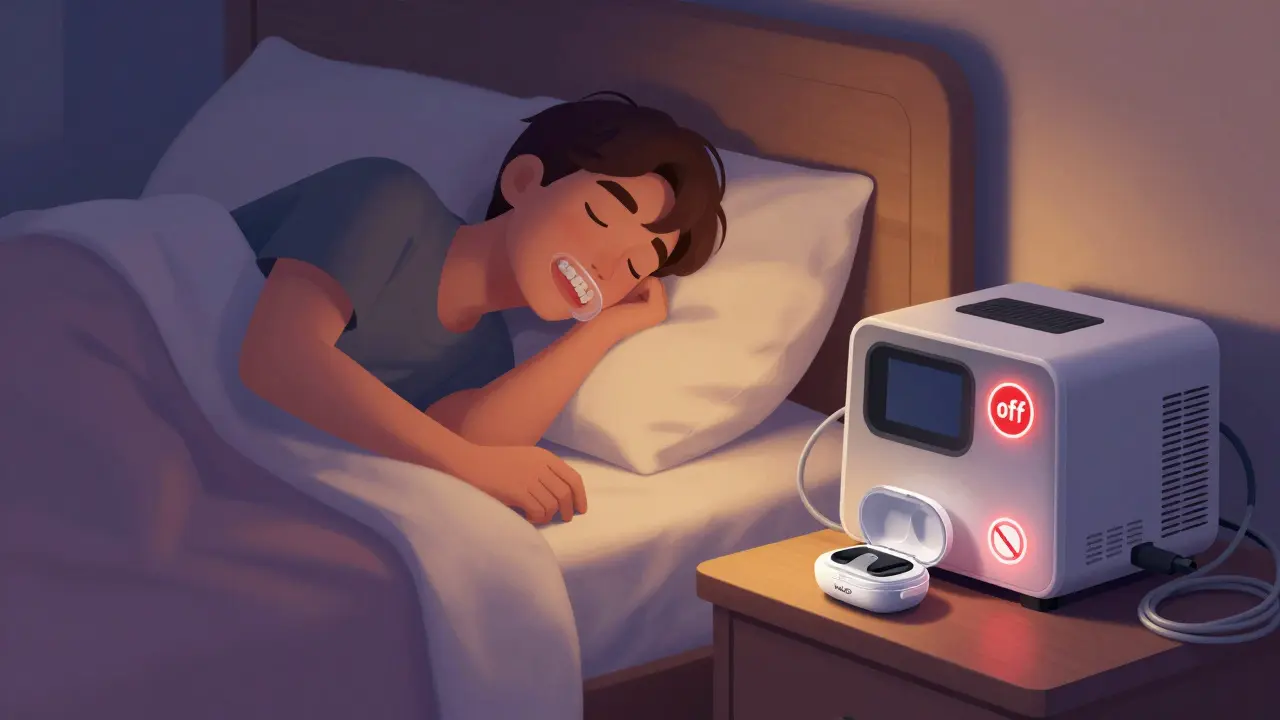
Continuous Positive Airway Pressure (CPAP) machines are the gold standard for treating moderate-to-severe sleep apnea. They force air into your lungs to keep the airway open. For pure snoring or mild apnea, however, CPAP can feel like overkill. It’s noisy, requires electricity, involves wearing a mask that can leak or feel claustrophobic, and demands daily cleaning.
MADs win on compliance. Data from the SAVE trial extension showed that 76.4% of patients stuck with their oral appliances after 12 months, compared to only 45.2% who continued using CPAP. Why? Because MADs are portable, silent, and discreet. You can wear one on a plane, in a hotel, or anywhere you travel without hauling a machine.
However, efficacy varies. CPAP eliminates snoring in 85-95% of cases. MADs reduce snoring intensity by 50-75% in compliant users. If your goal is total silence, CPAP is superior. If your goal is significant reduction with minimal lifestyle disruption, MADs are often the preferred choice. For severe anatomical obstructions (like Mallampati class IV airways), MADs may fail entirely, with failure rates reaching nearly 40%. In those cases, surgery or CPAP remains necessary.
The Side Effects: What No One Tells You
You won’t find this highlighted on the marketing brochures, but moving your jaw forward every night has consequences. Your teeth and jaw are designed to meet in a specific way. Disrupting that alignment for 7-8 hours a night, every night, causes stress.
The most common complaint is morning jaw pain. About 68% of new users report some discomfort during the first few weeks. Excessive salivation affects roughly 43% of users initially. Tooth sensitivity and minor shifting are also frequent. The real concern, however, is long-term occlusal change. Dr. Avram Gold from SUNY warns that approximately 25% of long-term users develop irreversible bite changes that may require orthodontic correction later in life.
This is why professional oversight is critical. A dental sleep specialist will monitor your bite every six months. They check for signs of excessive pressure, gum recession, or joint issues (TMJ disorders). If you experience persistent pain, clicking in your jaw, or numbness in your teeth, you need to see your dentist immediately. Do not ignore these signals.
Who Should Get an Oral Appliance?
Not everyone is a candidate. Before investing thousands of dollars, you need to know if you qualify. Here is a realistic checklist:
- You have primary snoring or mild-to-moderate OSA. If you have severe sleep apnea, a MAD might not be enough.
- You have healthy teeth. You generally need at least 6-8 natural teeth per arch for the device to grip securely. Severe periodontal disease is a contraindication.
- Your TMJ is healthy. If you already suffer from chronic jaw pain or arthritis, advancing the jaw could worsen your condition.
- You failed or couldn’t tolerate CPAP. Insurance companies often require proof that you tried and failed CPAP before covering a MAD.
If you fall into the "cannot tolerate CPAP" category, you are in the prime demographic for success. Studies show that patients who switch from CPAP to MADs due to intolerance often report higher satisfaction scores, provided the device is properly fitted.
The Process: From Diagnosis to Silence
Getting a custom MAD isn’t like buying a shirt off the rack. It’s a medical-dental partnership. Here is what the journey looks like:
- Sleep Study: First, rule out severe apnea. A home sleep test or polysomnography determines your Apnea-Hypopnea Index (AHI). If your AHI is high, talk to your sleep doctor about whether a MAD is safe.
- Dental Evaluation: Visit a certified dental sleep specialist. They will examine your gums, teeth, and jaw joint. They’ll take digital impressions or molds of your mouth.
- Fabrication: The device is sent to a lab. This takes 2-4 weeks. During this time, you might receive a temporary device or continue with your current management plan.
- Titration Phase: This is the most important step. You’ll start with a conservative advancement (e.g., 2-3mm). Over 4-6 weeks, you’ll return to the dentist 2-3 times to increase the protrusion by 1mm increments. The goal is to find the maximum comfortable advancement that stops the snoring.
- Follow-Up: Once set, you’ll need check-ups every 6 months to monitor your bite and adjust if necessary.
Expect a learning curve. Most users need 10-14 days to get used to the feeling of having a foreign object in their mouth. Some dentists recommend wearing the device during the day for short periods initially to help your muscles adapt. Warm water immersion can also help soften the material slightly for better comfort during adjustment.
Cost and Insurance Reality Check
Let’s talk money. As of 2026, the average cost for a custom MAD ranges from $1,800 to $2,500. This includes the initial consultation, fabrication, and follow-up visits. Additional visits for adjustments may cost $150-$300 each.
Insurance coverage is spotty. According to 2023 data from AHIP, only about 38% of U.S. commercial insurance plans cover oral appliances for snoring or sleep apnea. Many plans consider it "experimental" or "cosmetic" unless you have a diagnosed sleep disorder. If you have sleep apnea, your insurer is more likely to pay. If you only have primary snoring, you will likely pay out-of-pocket.
Before committing, ask your dentist for a pre-determination letter from your insurance company. Also, check if your Flexible Spending Account (FSA) or Health Savings Account (HSA) allows you to use pre-tax dollars for this expense, which can save you hundreds.
Future Trends: Smarter Appliances
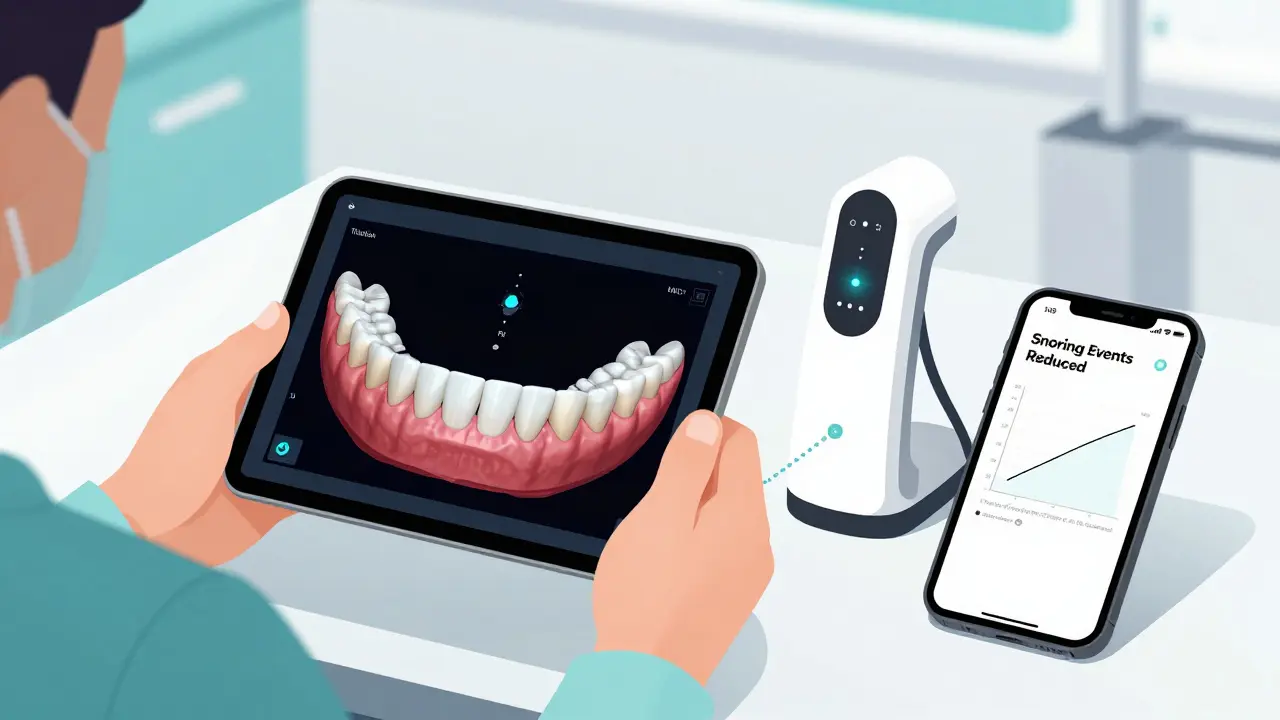
The technology isn’t standing still. We are seeing the rise of smart MADs. Devices like the SomnoDent EVO 3, cleared by the FDA in 2023, include integrated sensors that track usage and snoring events. They connect to smartphone apps, giving you and your dentist real-time data on how well the device is working. Imagine getting a notification that says, "Your snoring increased last night; try increasing advancement by 1mm." This personalized feedback loop could drastically improve outcomes.
Researchers are also exploring genetic markers to predict which patients will respond best to MADs versus CPAP. Within the next five years, we may see more personalized protocols based on individual anatomy and biology, reducing the trial-and-error phase.
Final Thoughts on Making the Decision
Oral Appliance Therapy is not a cure-all. It won’t fix severe anatomical blockages, and it requires discipline. You have to wear it every night, clean it daily, and maintain regular dental appointments. But for the right person-the snorer who wants a quiet night, the traveler who hates cables, the CPAP user who feels suffocated-it can be life-changing.
If you decide to pursue this path, do not cut corners. Skip the $100 boil-and-bite kit if you want lasting results. Find a certified dental sleep specialist. Be patient during the titration phase. Monitor your bite. The investment is significant, but so is the value of uninterrupted sleep-for you and your partner.
Does oral appliance therapy permanently stop snoring?
No, it does not provide a permanent cure. MADs work mechanically while you wear them. If you stop using the device, your jaw returns to its natural position, and snoring typically resumes within 48 hours. Long-term success depends on consistent nightly use.
Can a mandibular advancement device damage my teeth?
It can cause changes if not monitored. Common side effects include temporary tooth sensitivity and jaw soreness. However, long-term use (5+ years) can lead to irreversible bite changes in about 25% of users. Regular dental check-ups every 6 months are essential to detect and manage these shifts early.
How long does it take to get used to a MAD?
Most users adapt within 10 to 14 days. Initial symptoms like excessive saliva, mild jaw pain, and speech difficulty usually subside after the first week. Some dentists recommend daytime wear for short periods to help your muscles adjust faster.
Is oral appliance therapy covered by insurance?
Coverage varies widely. Many insurers cover MADs if you have a diagnosed sleep apnea (OSA) and have failed CPAP therapy. Coverage for primary snoring alone is rare. Always check with your provider and request a pre-determination before starting treatment. FSA/HSA funds can often be used.
What is the difference between a MAD and a tongue-retaining device?
A Mandibular Advancement Device (MAD) moves your lower jaw forward to open the airway. A tongue-retaining device (TRD) uses suction to hold your tongue forward. TRDs are less common, often considered less comfortable, and generally less effective for severe cases. MADs are the standard of care for oral appliance therapy.
Can I use an over-the-counter device instead of a custom one?
You can, but the results are significantly worse. OTC devices lack adjustability and precise fit, leading to lower efficacy (~49% vs ~72% for custom) and higher risk of poor fit. They are suitable only for very mild snoring or as a temporary trial. For reliable, long-term relief, a custom device is strongly recommended.