
Medication Side Effect Triage Tool
Not every side effect requires immediate action, but some are red flags. Use this tool to assess your current symptoms based on clinical guidelines for therapeutic timelines and adverse reaction probability.
Check any that apply to you currently:
Recommendation
Score: 0Suggested Next Steps
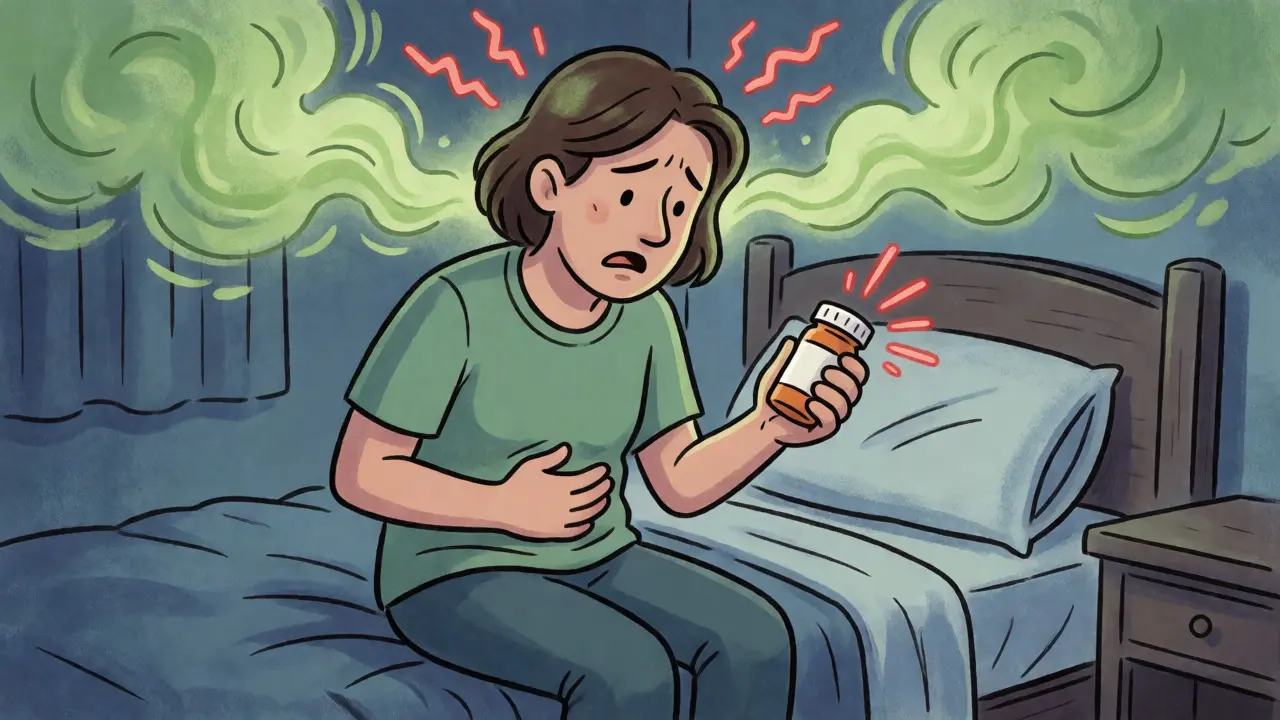
You start a new medication, hoping for relief. Instead, you get nausea that won't quit, brain fog that makes work impossible, or a rash that spreads. You call your doctor. They say, "Give it time." Two weeks later, you feel worse. Do you push through? Or do you ask someone else?
Here is the uncomfortable truth: second opinions on medication aren't just for cancer diagnoses anymore. They are critical for managing everyday prescriptions. According to Solace Health's 2023 data, 42% of patients who sought a second opinion about their meds found significant errors in their initial plan. That’s nearly half. If you are sitting there wondering if your suffering is "normal," this guide will help you decide when to stop waiting and start asking.
The Red Flags That Demand Immediate Action
Not every side effect needs a specialist. A mild headache in the first week of an SSRI? Often normal. But some signs are screaming for attention. If you experience severe side effects that hit more than two areas of your daily life-like work, relationships, or self-care-the American Medical Association suggests you seek another perspective immediately.
Watch for these specific physical indicators:
- Persistent Nausea: If vomiting or nausea stops you from eating properly for more than 72 hours, your body isn't adapting; it's rejecting the treatment.
- Rapid Weight Changes: Losing or gaining more than 5% of your body weight within two weeks without changing your diet is a major metabolic signal.
- New Neurological Symptoms: Tremors, sudden cognitive impairment, or dizziness that wasn't there before starting the pill are not things to "wait out" indefinitely.
Timing matters. Dr. John Goldberg from Harvard Medical School notes that symptoms appearing within 72 hours of starting a new drug have a 78% correlation with that medication. If the timing lines up, don't let anyone tell you it's coincidence.
No Improvement After the Expected Timeline
Every class of drug has a "therapeutic window" where you should see benefits. If you pass that window and still feel bad-or no better-you need a review.
| Drug Class | Time to Expect Benefit | Action if No Change |
|---|---|---|
| Antidepressants (SSRIs/SNRIs) | 4-6 Weeks | Seek second opinion if no mood shift |
| Cholesterol Meds (Statins) | 2-3 Months | Review lipid panel and muscle pain |
| Osteoporosis Treatments | 3-6 Months | Check bone density markers |
| Blood Pressure Meds | 1-2 Weeks | Re-evaluate dosage or type |
If you've been on antidepressants for six weeks and your anxiety is unchanged, but your sex drive has vanished, that’s a failed trade-off. A second prescriber might switch you to a different mechanism entirely rather than tweaking the dose.
Dosage and Interaction Concerns
Sometimes the drug is right, but the amount is wrong. The Clinical Pharmacogenetics Implementation Consortium sets therapeutic ranges for many drugs. If your blood tests show levels outside the 10-20% target range, you are either under-dosed (no benefit) or over-dosed (toxicity). This is especially true for anticoagulants like warfarin or diabetes meds like metformin.
Interactions are another silent killer. The FDA’s 2024 database lists over 14,000 documented drug interactions. Did you start taking St. John's Wort for mood while on birth control? Or add a calcium supplement while on antibiotics? These can alter absorption dramatically. A pharmacist or clinical pharmacologist can spot these clashes faster than a busy general practitioner.

How to Prepare for Your Second Opinion
A second opinion fails if you walk in empty-handed. A 2024 study in Annals of Internal Medicine showed that bringing comprehensive data increased the chance of meaningful treatment changes by 63%. Don't just say, "I feel sick." Bring proof.
Use the SOMA framework to organize your thoughts:
- Situation: When exactly did symptoms start? (e.g., "Day 3 after starting Lisinopril")
- Objective: What does the data say? (e.g., "BP dropped to 90/60, heart rate 110")
- Modifications: What have you tried? (e.g., "Took with food, moved dose to morning")
- Activities: What can't you do? (e.g., "Can't climb stairs without dizziness")
Also, bring a complete list of everything you take. Not just prescriptions. Include over-the-counter painkillers, vitamins, herbal supplements, and even occasional antacids. The National Institutes of Health reports that 31% of reported side effects are actually due to hidden supplement interactions.
What Happens During the Consultation?
Expect a deeper dive than your usual check-up. In New Zealand and Australia, as well as the US, access varies. Psychiatric second opinions can take 18+ days to schedule, while primary care reviews might happen in two weeks. Telehealth platforms have cut this wait time by 28%, according to a 2024 Health Affairs study.
The second doctor will likely use the Naranjo Adverse Drug Reaction Probability Scale. This tool scores how likely a symptom is caused by the drug. Scores above 5 indicate a "probable" link. If you score high, they won't just ignore you. They will adjust, switch, or stop the med.
Be ready for the "teach-back" method. Good doctors will ask you to explain your understanding of the side effects back to them. This ensures you know what to watch for next. It also validates that you’re being heard. In a HealthPartners survey, 89% of patients felt their concerns were taken more seriously during a second opinion.

Special Cases: Oncology and High-Risk Drugs
There is one big exception to the "always get a second opinion" rule. If you are on specialized oncology regimens, the room for change is narrow. The American Society of Clinical Oncology found only a 9.3% chance of significant treatment modification via second opinion for complex cancer therapies. Why? Because the therapeutic window is tiny. Changing the drug might mean losing efficacy against the tumor.
However, for high-risk medications defined by the FDA’s Risk Evaluation and Mitigation Strategies (REMS), scheduled checkpoints at 30, 90, and 180 days are becoming standard. If you miss these, you risk serious adverse events. The Mayo Clinic pilot program showed a 37% reduction in these events when strict checkpoint protocols were followed.
FAQ: Common Questions About Medication Reviews
Will my insurance cover a second opinion for side effects?
In the US, Medicare covers second opinions for medication side effects in 28 specialized categories under the 2024 Physician Fee Schedule. Private insurers vary, but most cover consultations if medically necessary. In New Zealand, public hospital referrals may be free, but private specialist consults often require payment or ACC coverage if injury-related.
Is it rude to ask for a second opinion?
No. The American Medical Association explicitly supports patient autonomy in seeking additional perspectives. Doctors expect it, especially when quality of life drops below 60% of baseline. Frame it as collaboration: "I want to make sure we're optimizing this treatment."
How long should I wait before seeking a second opinion?
For acute side effects (nausea, dizziness), wait 72 hours. For chronic issues (weight gain, fatigue), wait until the expected therapeutic timeline passes (4-6 weeks for psych meds, 2-3 months for statins). If symptoms are severe, go immediately.
Can a pharmacist give a second opinion?
Yes, and they should. 76% of major hospital systems now employ clinical pharmacists dedicated to side effect evaluation. They are experts in drug interactions and dosing. Start with a pharmacist for interaction checks; go to a physician for diagnosis changes.
What if the second doctor agrees with the first?
This is valuable too. It confirms the side effect is likely unavoidable with that specific drug, prompting a discussion about switching classes entirely rather than adjusting doses. It saves you from endless tweaking.
Next Steps: Taking Control of Your Treatment
Don't suffer in silence because you think you're being difficult. Medication errors contribute to 1.3 million ER visits annually in the US alone. Your body is giving you data. Listen to it.
If you're experiencing persistent side effects, start a symptom diary today. Note the time, severity, and impact on your day. Then, book that appointment. Whether it's a GP, a specialist, or a clinical pharmacist, getting another set of eyes on your regimen could save you months of discomfort.
Curtis Surpless
August 31, 2026 AT 11:1942% error rate is insane but i still think most people just want validation for stopping meds they hate the taste of rather than actual clinical need
also pharmacists are overrated for second opinions they cant change your script they just tell you what the doctor already knows
Akeem Feiton
August 31, 2026 AT 22:08You Americans have no idea how good you have it with direct access to specialists here in the UK we wait months for a GP appointment let alone a second opinion on some side effect that isn't killing us yet and don't get me started on the NHS rationing logic where they treat you like a number not a person its absolute garbage and everyone knows it but pretends otherwise to feel superior about their 'free' healthcare which is actually just underfunded chaos disguised as virtue signaling
Aaron Gragg
September 1, 2026 AT 00:06The assertion regarding the Naranjo Scale is pertinent, particularly when one considers the subjective nature of patient-reported outcomes versus objective biomarkers. It is imperative to recognize that while the SOMA framework provides a structured approach to data collection, the efficacy of such an approach relies heavily on the prescriber's willingness to engage with granular physiological data rather than relying solely on heuristic decision-making patterns common in high-volume primary care settings.
Furthermore, the interaction between polypharmacy and individual metabolic variance, often mediated by cytochrome P450 enzyme polymorphisms, suggests that a 'second opinion' should ideally involve a clinical pharmacologist or a specialist in pharmacogenomics rather than merely another general practitioner who may lack the specific expertise required to deconstruct complex adverse event profiles.
Harry Falk
September 2, 2026 AT 22:21Good breakdown. The point about checking interactions first is solid advice for anyone starting multiple meds at once.
Kristina Rhodes
September 4, 2026 AT 11:11It’s fascinating how we’ve medicalized discomfort into a binary choice: suffer or quit. Perhaps the real issue isn’t the medication itself, but our collective inability to tolerate any deviation from a perceived 'normal' baseline without seeking external validation. We seek second opinions because we fear being wrong, not necessarily because we are right.
Still, if the brain fog makes work impossible, then yes, the utility of the drug has failed its purpose regardless of the statistical probability of side effects. Life is too short to be poisoned by pills that make you forget why you’re taking them in the first place. 😌
Rose Boerner
September 5, 2026 AT 00:46I find it deeply troubling that we must constantly advocate for ourselves against a system that seems designed to minimize patient experience in favor of administrative convenience. To suggest that patients should simply 'give it time' while enduring debilitating symptoms is not only medically negligent but morally bankrupt. We deserve better than to be treated as statistics in a 42% error margin; we deserve respect, thoroughness, and a genuine commitment to holistic well-being rather than quick fixes that compromise our quality of life.
It is high time the medical establishment recognized that patient autonomy is not an inconvenience but a fundamental right that demands rigorous adherence to ethical standards of care.
Marc-David Mayer
September 5, 2026 AT 11:22Love this guide! 📝 The SOMA framework is such a game changer for organizing thoughts before appointments. I used to just say "I feel bad" and now I bring my notes. Huge difference! 💪 Also, shoutout to clinical pharmacists-they are seriously underrated heroes in the med management world. 🦸♂️💊 Keep advocating for yourself!
Stuart Lorne
September 7, 2026 AT 01:22honestly most doctors dont read charts anyway so bringing data helps less than you think they just look at the vitals and nod yeah yeah next patient also 42% seems high probably includes minor tweaks that didnt change outcome much stop overthinking it just take the pill or dont simple
Marshall Stephens
September 8, 2026 AT 19:33I appreciate the balanced perspective here. It’s easy to fall into the trap of thinking every side effect requires a new specialist, but the article does a good job distinguishing between normal adjustment periods and red flags.
The emphasis on preparation is key. When I sought a second opinion for my blood pressure meds, having a log of my home readings made the conversation infinitely more productive than just describing how I felt. It turned a vague complaint into a solvable problem. Thanks for sharing this.
Sarah Leitschuh
September 10, 2026 AT 04:38This is exactly the kind of practical advice people need. I spent three years feeling guilty for wanting to switch off an SSRI because my doctor kept saying 'it gets better' while I was losing my ability to function at work.
What really stands out to me is the permission it gives to question authority without being rude. Framing it as collaboration is smart. Also, the tip about including supplements is crucial-I had no idea St. John's Wort could mess with other meds until a pharmacist pointed it out after I'd been suffering for months. If you're reading this and hesitating, trust your gut. Your body keeps score even if the lab tests look 'normal.' You are allowed to demand a plan that actually works for your life, not just one that looks good on paper. Be gentle with yourself during the transition, but be firm with your providers. They work for you, remember that. ❤️